Robotics reshaping dredging and downtime
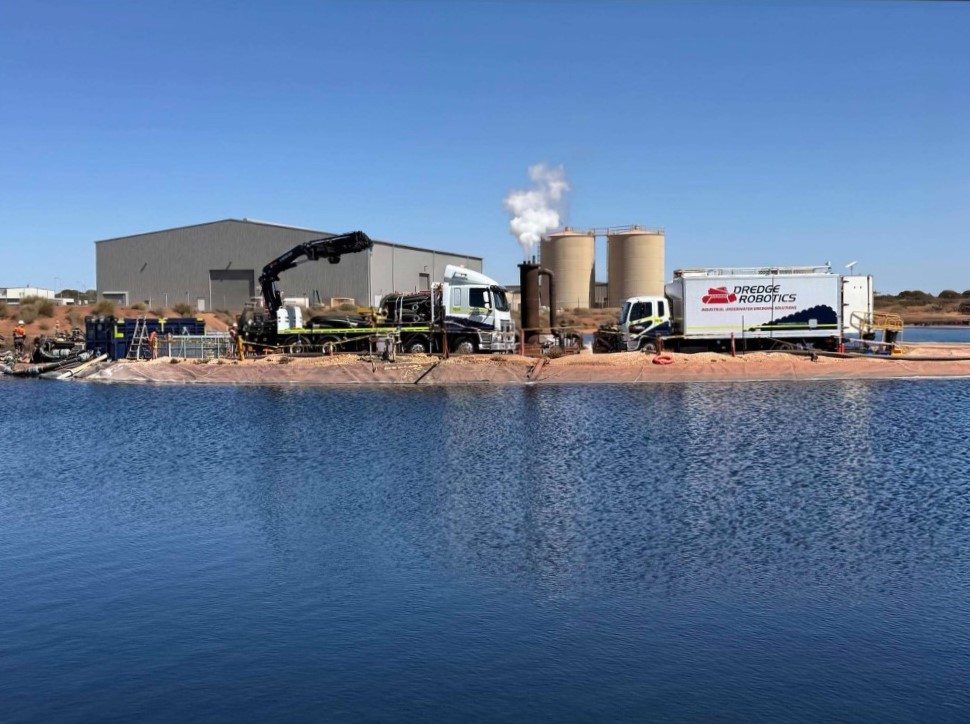
For mining operators, cleaning a lined pond or process tank has traditionally meant either accepting disruption to production or putting people and equipment in an environment where safety and asset protection are significant concerns.
Dredge Robotics has developed a range of robotic dredging and cleaning systems specifically for lined mining infrastructure, allowing sediment, vegetation and accumulated material to be removed while assets remain online.
At the heart of the technology is a deceptively difficult engineering challenge. The machines need enough force and torque to break down stubborn sediment and vegetation, while simultaneously protecting the thin HDPE liners beneath them.
“There’s a real dichotomy of needing to use brute force and torque to degrade the material while having to preserve a 2mm HDPE liner,” says Dredge Robotics chief executive Antony Old.
Accumulated material can reduce the available capacity of a pond, interfere with operations and, in process environments, trap minerals that may still have commercial value.
Dredge Robotics’ liner-safe dredging systems are designed to remove that material without requiring the pond to be drained or taken offline. For operators, that can turn a typically disruptive maintenance exercise into an activity that can occur alongside production.
“We can recover lost value, remove your people from hazards and service your assets, all without the need to shut down,” Mr Old said.
Dredge Robotics has also developed a liner-safe weeding robot capable of removing and degrading vegetation while protecting the underlying liner.
Conventional weed removal methods?place the pond liner at risk can be expensive and disruptive diving operations may struggle to completely remove root nodules that can remain behind and regenerate. A robotic system can provide a more controlled method of attacking the problem without taking the pond out of service.
For process tanks, robotic cleaning can remove accumulated material while the asset continues operating, reducing the requirement for people to work in hazardous environments and avoiding shutdowns.
Dredge Robotics validates its technology through an in-house liner-testing facility. The company tests robots on flat and sloped-wall liners and deliberately tries to push the systems into aggressive operating conditions before sending them to site. This gives clients confidence that the technology has been proven as liner-safe before deployment.
A recent project at a large copper mine demonstrated the technologies true potential. A conventional dredging barge had spent more than two years attempting to clean a process pond with limited progress. Dredge Robotics’ robotic system subsequently completed the campaign in a matter of weeks, fully cleaning the pond while recovering grade that had been lost in the sediment.
“Our clients will tell us what they’re struggling with, and then we’ll realise additional applications we never knew existed before,” Mr Old said.
The systems also include strong digital sensing capabilities. Dredge Robotics is advancing liner-safe dredging with AI and automation, AI learning chips have been embedded across its robotic fleet, enabling the systems to collect and analyse large volumes of sensor data. This supports predictive maintenance, AI model training and improved operational visibility.
“All of our robotic fleet now have systems that are utilising AI learning chips, so we are able to use sensors in the system to harvest a lot of data and analyse it in ways we were previously unable,” Mr Old said.
As mining operators look for ways to prioritise safety, extend asset life and minimise production interruptions, the ability to clean and maintain critical lined infrastructure without disrupting production becomes increasingly important.