Latest Headlines

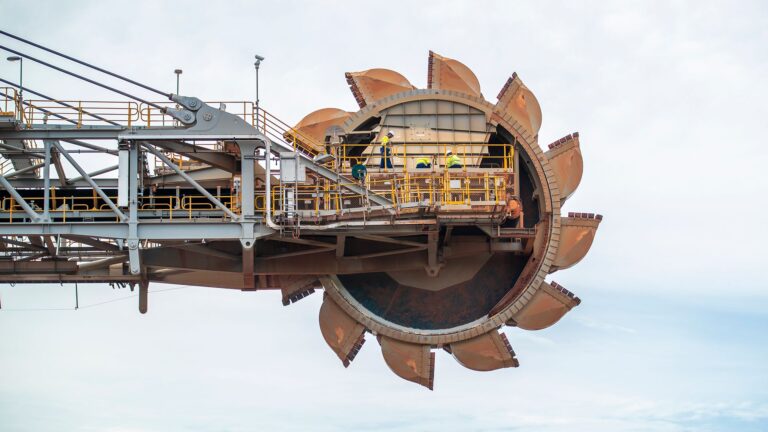
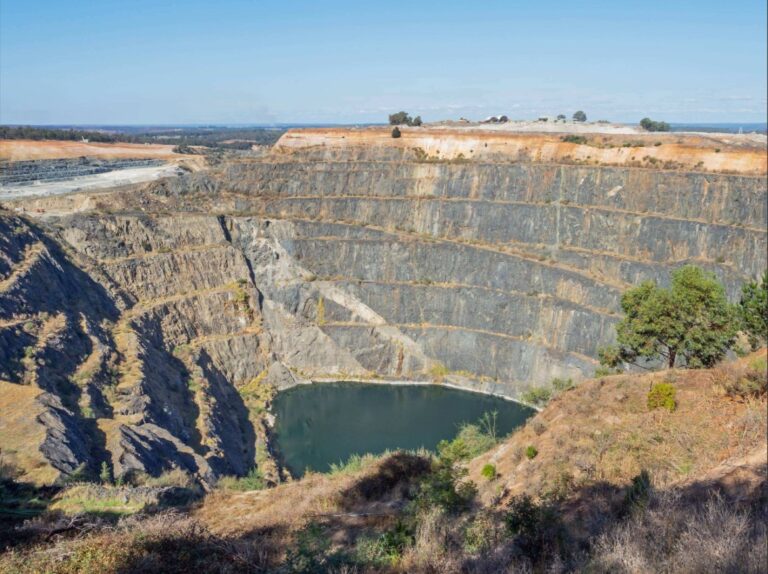
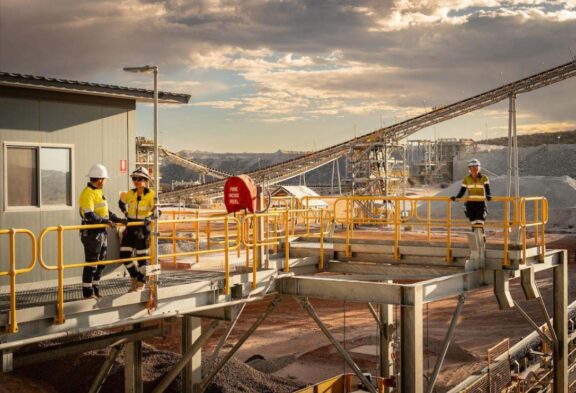
These new opportunities build on a 2023 agreement between Rio Tinto and BHP to mine the Mungadoo Pillar, which allowed mining of ore from the shared tenure boundary that was previously inaccessible.
Projects & Operations
Rio and BHP eye Pilbara iron ore deal
Rio and BHP eye Pilbara iron ore deal Rio Tinto (ASX: RIO) and BHP (ASX: BHP) will work together to extract up to 200mt from their neighbouring Pilbara iron ore operations, Yandicoogina and Yandi.This follows BHP’s wind down of operations at the Yandi mine as the ore body nears depletion. In late October, BHP had begun informing its workforce that operations would be scaled back over the next year before ceasing all together.BHP first proposed scaling down operations at Yandi in 2017 but strong demand for iron ore led to multiple life-of-mine extensions.Under two non-binding agreements, Rio and BHP will assess a potential collaboration to develop Rio’s Wunbye deposit and for BHP to supply Yandi Lower Channel Deposit ore for processing at Rio’s existing wet plants.Rio Tinto iron ore chief executive Matthew Holcz says by working smarter, the companies can better leverage existing infrastructure to unlock additional production with minimal capital requirements.“Together we will extend the life of these operations, create additional value and further support WA jobs and local communities,” he said.BHP WA iron ore asset president Tim Day says this is a clear example of productivity in action.“By sharing our expertise and infrastructure we will create new value and deliver benefit to our people, partners, customers and communities,” he said.Subject to a final investment decision, first ore from both deposits is anticipated early next decade. 
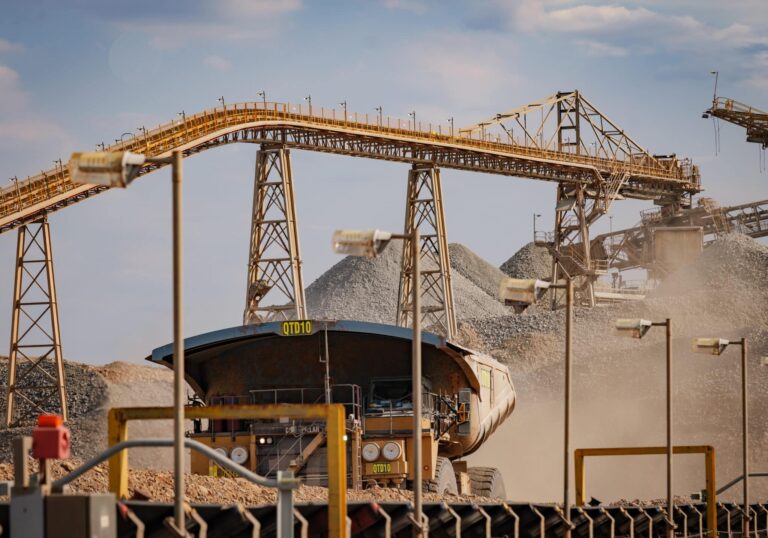
BlueScope operates the Port Kembla Steelworks in NSW, the largest manufacturer and supplier of flat steel in Australia by volume.
Economics & Commodity Prices
BlueScope returns millions after knocking back Stokes-led takeover
BlueScope returns millions after knocking back Stokes-led takeover BlueScope Steel (ASX: BSL) will return $438m in surplus cash to its shareholders via a special dividend of $1/share.The surplus cash has been generated by the sale of BlueScope’s 50% interest in the Tata BlueScope JV for $167m, the sale of 33ha of land at West Dapto for $76m and the ongoing realisation of the residual projects in the BlueScope Properties Group which are expected to deliver about $200m across FY25 and FY26.BlueScope says it elected to return the surplus cash via an unfranked special dividend as an on-market buy-back is currently not available in light of corporate activity and regulatory settings.This follows BlueScope’s rejection last week of a takeover proposal from SGH (ASX: SGH) and Steel Dynamics, which BlueScope said was an attempt to buy the company “on the cheap”.The unanimously rejected proposal offered to acquire all shares in BlueScope for $30/share.BlueScope managing director and chief executive Mark Vassella says the special dividend demonstrates the steelmaker’s ability to generate and distribute returns to its shareholders.“With a clear line of sight to the completion of our current significant capital investment program, BlueScope is positioned to not only return to the robust cash generation it has been known for, but to strengthen it further with the enhanced earnings of the business,” he said.In addition to these recent cash generating initiatives, BlueScope expects its free cash generation to ramp up in the next 12-18 months.
Australia prioritises military minerals in strategic reserve
Politics & Regulation
Australia prioritises military minerals in strategic reserve
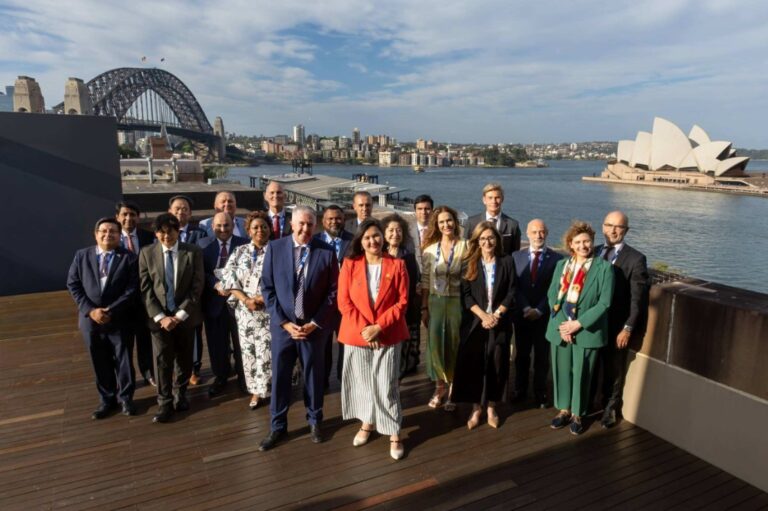
Australia prioritises military minerals in strategic reserve New details of the $1.2b Critical Minerals Strategic Reserve (CMSR) are emerging with the Federal Government confirming antimony, gallium and rare earth elements as early priorities. The announcement comes as Treasurer Jim Chalmers is scheduled to join a G7 meeting focused on critical minerals in Washington DC this Friday. In recent years, China’s dominance in the critical minerals sector has been a focal point of ongoing geopolitical tensions — particularly affecting G7 countries including the US and Japan.  With the development of the CMSR, the Federal Government is looking to leverage its abundant critical mineral reserves to diversify supply chains and shift China’s dominance. “The world needs critical minerals — Australia has plenty of them and our critical minerals reserve will help us weather global economic uncertainty and help to boost trade and investment,” Treasurer Chalmers said. “Ensuring we have a reliable reserve of these critical resources will strengthen supply chains and help to stabilise critical minerals markets.” The CMSR will secure rights to minerals produced in Australia and on-selling those rights to meet demand, giving an added boost to the critical minerals sector and strengthening reliable supply chains for trading partners Larvotto Resources (ASX: LRV), the developer of Australia’s largest antimony deposit, has voiced its support of the Federal Government’s plan. Larvotto managing director Ron Heeks says the Federal Government’s prioritisation of antimony validates the strategic importance of the company’s Hillgrove project in NSW. “Australia benefits from having a rich supply of critical minerals with the resources and expertise to produce these minerals responsibly,” he said.  “The strategic reserve supports the strong investment into the Hillgrove project and reinforces the importance of progressing final approvals efficiently as we move towards production in mid-2026.” Despite the urgency for diversification, Federal Resources Minister Madeleine King says Australia faces a long road to revenue with government seeking support for the industry which faces weak pricing and high startup capital.  “ the investment the Government is making in supporting the industry itself will be job-creating, both in the extraction side of the sector, but also in advanced processing and advanced manufacturing into the future,” she said. “There’ll be many upsides,  it won’t be revenue upside in the immediate term.  “ the outcome is yet to be determined, what we would hope for and have always advocated for is greater cooperation and collaboration with our international partners.” With a similar reliance on antimony, gallium and rare earths, the US has emerged as a major investor in the development of Australia’s critical minerals sector following the signing of a $13b critical minerals agreement between the countries in October last year. Minister King says that Australia as a nation is always dependent on international investments to build its industries and, despite the US’ recent interest in pursuing deposits in Greenland, Australia remains the superior choice for US investment. “Australia is recognised around the world as a globally important initiative into mineral exploration,” she said. “In the immediate, short to medium term, Australia is a much more desirable location  for extracting and processing minerals.”  
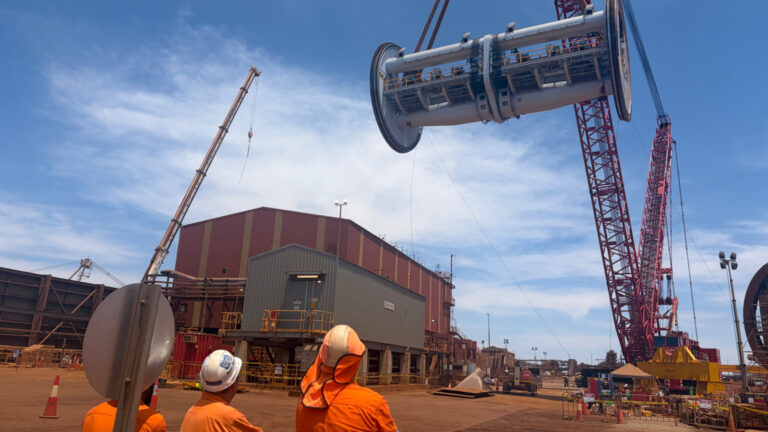
Although Image is focused on mineral sands mining and processing, the company holds four contiguous tenements known as the Erayinia/King gold project, located 140km southeast of Kalgoorlie, WA.
Projects & Operations
Image takes a second glance at gold
Image takes a second glance at gold A promising mineral resource estimate and a buoyant gold price have prompted Image Resources (ASX: IMA) to conduct a comprehensive review of its gold tenements.The strategy review will include potential divestiture or other commercialisation options for Image’s entire gold tenement package which contains a recently announced maiden mineral resources estimate of 2.0mt at 2.1 g/t gold for 139koz gold in the inferred category.Image Resources managing director and chief executive Patrick Mutz says the time is right to assess options for extracting the best value from the gold tenements.“We have been and remain focused on mineral sands mining and processing as our principal business. However, given the continuing buoyant gold price, it is appropriate to determine if any value can be unlocked from these gold assets in the shorter term,” he said.“We will also be evaluating the potential for Image to setup and control a contract mining, ore hauling, and toll-processing model with minimum capital requirements for the Erayinia/King project, to take advantage of the potential operating margins supported by the buoyant gold price.”If Image can extract appropriate value from the gold tenements, funds would be used to either repay remaining debt or for project development capital for the company’s next minerals sands development project.
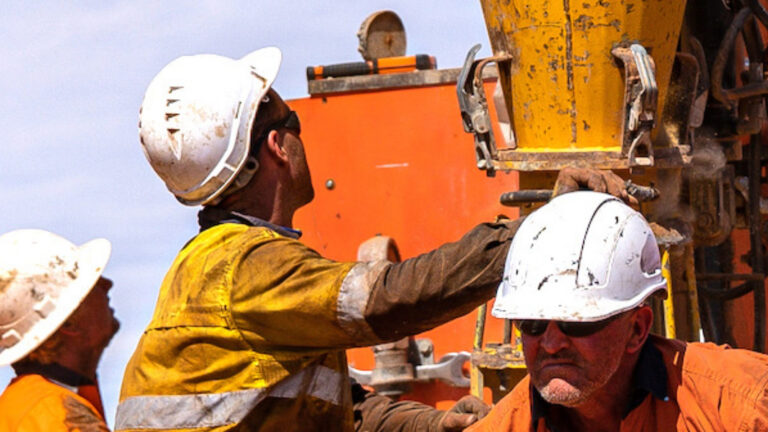
Lynas said it experienced a significant increase in demand from direct end customers and new metal and magnet maker projects following expanded export controls from China in September.
People & Workforce
Lynas Rare Earths CEO to retire after 12 years
Lynas Rare Earths CEO to retire after 12 years Amanda Lacaze will step down from her role as chief executive of Lynas (ASX: LYC), having led the company’s shift from a “troubled startup” to the largest rare earths producer outside China.Lynas’ market value has grown about $14.6b since 2014, according to Lynas board chair John Humphrey.“Under leadership, the company’s production and operating footprint has grown and our market value has increased from around $400m in 2014 to $15b,” Mr Humphrey said.“The company was in a very difficult position when took on the role of chief executive.“It is thanks to hard work, drive and tenacity that Lynas is today a leading rare earths producer and critical supplier to global manufacturing chains.”Ms Lacaze will remain with the company until the end of FY25 to enable a smooth transition as the board begins its search process for a new chief executive, considering both internal and external candidates.“It has been a great privilege to lead the company from a troubled startup to an ASX50 company,” Ms Lacaze said.“Having successfully concluded the Lynas 2025 capital investments program and launched the Towards 2030 growth strategy, it is the right time to make this transition.”The announcement comes as Australia refocuses on its previously announced $1.2b Critical Minerals Strategic Reserve, with Federal Treasurer Jim Chalmers briefing G7 members on new details this week.Antimony, gallium and rare earth elements will be the first minerals targeted by the reserve.Lynas stands as an example of Australia’s potential as a refiner, a crucial component of critical minerals value chains that are significantly concentrated in China.“We are refining right now. Lynas Rare Earths in Kalgoorlie is doing an important stage of this,” Federal Resources Minister Madeleine King said.“Lynas Rare Earths from the deposit at Mount Weld is the only Western supplier of rare earths processing at the moment.”In 2025, Lynas emerged as the only commercial producer of separated dysprosium and terbium ex-China after achieving first production at Lynas Malaysia.
Rio and Glencore at it again with mega merger talks
Projects & Operations
Rio and Glencore at it again with mega merger talks
Rio and Glencore at it again with mega merger talks  Mining majors Rio Tinto (ASX: RIO) and Glencore have confirmed they have entered preliminary takeover discussions for a merger that could create the world’s largest resources company.This is not the first time Rio and Glencore have been in merger negotiations. In 2024, discussions between the companies were unsuccessful due to valuation, leadership and cultural differences after Glencore sought a merger ratio of about 40%, implying a premium of more than 25% based on valuation at the time, and pushed for chief executive Gary Nagle to lead the combined company.  If successful, the merger would be the latest major transaction seen by the sector following last year’s Anglo American $85b merger and acquisition with Canadian copper miner Teck Resources.  The current preliminary discussions are exploring possible combinations of some or all of the businesses, which could include an all-share merger between the companies. Copper appears to be the focal point of the merger as Rio moves towards becoming a global copper leader and acquiring Glencore’s substantial copper assets, including its Mount Isa operations in Queensland, aligns strategically with this shift. This news is the latest in a wave of copper acquisitions as companies around the world look to take advantage of growing global demand and soaring prices. Rio has been advancing its copper portfolio, including ramping up operations at Oyu Tolgoi in Mongolia and pushing progress at Resolution Copper in the US. Rio expects to produce about 870,000t of copper in FY26, underpinned by production at its Oyu Tolgoi — which is anticipated to reach peak production of 500,000tpa in its lifetime — as well as its copper assets across the Americas.  Glencore’s copper outlook for FY26 is almost identical, with production expected to reach between 810,000 – 870,000t, and has a bullish growth outlook of 1.6mtpa by 2035.  Despite the shift in focus to copper, there is little synergy between the two miners’ current operations — with iron ore forming the backbone of Rio’s business and Glencore remaining one of the world’s largest coal producers. Considering Rio unloaded the last of its coal assets in 2018 following investor pressure, how Glencore’s significant coal assets will align with Rio’s future is yet to be determined.  Though there is no certainty that an agreement will be reached, Rio has until February 5 to make a formal offer to Glencore. 

The Australian Mining Review

Home and Editions

Mining news that matters

The Australian Mining Review delivers the stories that matter free, fast, and straight to your inbox. No paywalls, no barriers. Get unlimited access to every article, breaking news alerts and a free monthly newspaper delivered to your door.

Subscribe to The Australian Mining Review

Mining news, minus the paywall.

By subscribing to The Australian Mining Review, you agree to receive news updates and marketing communications from us.

Back to of the page