Author: admin

The,Farm,Consists,Of,12,Giant,Wind,Turbines,,Each,At
News
Solar and wind to lead Australia’s decarbonisation effort
Solar and onshore wind form the basis for the least costly electricity mix for Australia moving towards the 2030 renewables target, according to CSIRO’s new GenCost draft report.CSIRO and Australian Energy Market Operator (AEMO) released their annual GenCost draft report in light of the timely debate surrounding Australia’s energy transition and taxpayer funds.Gas (4%), hydrogen (6%), coal (18%), solar PV (31%) and wind (41%) were projected to be the least-cost large-scale generation mix to achieve the 2030 renewable energies target.Battery technologies continue to show double digit cost reductions with a 15% reduction in FY26. Onshore winds costs are stabilising shown through a 5% drop in cost. Costs of solar rebounded to FY23 increases of 9% after experiencing two years of cost reductions.Contrastingly, nuclear, coal and gas open cycle cost trends have increased due to higher steam and gas turbine energy costs.CSIRO chief energy economist and GenCost project leader Paul Graham comments on the findings.“Electricity systems will always require a diversity of resources to deliver all their functions and so no single technology will meet all the system’s needs regardless of its relative cost position,” he said.The report found the average cost of wholesale electricity would be $91MWh, under the assumption of meeting 82% of the 2030 renewables target, including costs for new transmission lines.To deliver net zero by 2050, generation costs were projected to be $135-$148MWh including transmission or $114-$125MWh for wholesale generation costs alone. The National Energy Market (NEM) volume-weighted generation prices in FY25 were in line with these ranges at around $129MWh.To deliver net zero by 2050, the report found the efficient electricity sector emissions intensity estimated at .02–.05t of carbon dioxide equivalent/MWh.Eliminating all electricity sector emissions (currently estimated at 0.5t of carbon dioxide equivalent/MWh) was reported to be more costly than reducing emissions elsewhere in the economy. If the electricity emissions intensity sat higher than .05 of carbon dioxide equivalent/MWh, it would make achieving net zero more expensive overall.AEMO executive general manager system design Nicola Falcon comments on the report which will be available for public consultation.“CSIRO’s process to regularly monitor, consult on and update generation technology cost trajectories is incredibly valuable in planning for a reliable and least-cost electricity market,” she said.Formal consultation on the Draft 2025-26 Report is open from December 23 until February 2.
shutterstock_2019208727
News
Westgold divests Mt Henry gold project for $64.6m
Westgold Resources (ASX: WGX) will divest the Mt Henry-Selene gold project in WA, closely following the announced spin-out of the company’s non-core Murchison projects.Alicanto (ASX: AQI) will acquire 100% of the 150moz project including all associated mining tenements, licences, heritage agreements, contracts and technical information.The Mt Henry project was acquired by Westgold in 2024 after being placed on care and maintenance in 2019 by Karora Resources. It hosts a combined mineral resource of 24.5mt at 1.2g/t gold for 915,000oz of contained gold and an ore reserve of 11.7mt at 1.3g/t gold for 478,300oz.Westgold will receive $15m cash and $19.6m via the issue of 19.9% of the ordinary shares in Alicanto post transaction close.Westgold says the transaction is aligned with its long-term strategic plans of focusing on larger, core operating assets rather than non-core assets such as Mt Henry.“This transaction delivers Westgold shareholders an attractive mix of cash, exposure to project upside via a large strategic shareholding and deferred consideration payable on specific project milestones,” Westgold managing director and chief executive Wayne Bramwell said.“Westgold is pleased to partner with Alicanto, whose board and management team are experienced and committed explorers and have a demonstrable record of rapidly advancing gold projects.“Westgold continues to progress discussions in relation to the potential sale of its Peak Hill and Chalice gold assets following strong inbound interest.”Alicanto interim executive chair Ray Shorrocks comments on the transaction.“The Mt Henry acquisition is an exceptional company-making opportunity for Alicanto,” he said.“It provides immediate scale, a high-quality, near-surface Resource and a clear platform for rapid growth and development.“The .9moz resource and pit shells were calculated when the gold price was one-quarter of its current level and the historic drilling data shows most holes ended in mineralisation.”The divestment follows Westgold’s recently announced demerger, with the company spinning out its non-core Reedy’s and Comet gold exploration assets to new stand-alone Valient Gold.The Reedy’s and Comet assets have a combined mineral resource of 15.6mt at 2.4g/t gold for 1.2moz.Both projects were previously in production before being placed on care and maintenance in FY23.“By establishing Valiant, we create an independent, well-funded gold company that can bring forward value from smaller assets such as the Comet and South Emu-Triton underground mines and unlock the exploration potential across the Reedy and Comet packages,” Mr Bramwell said.“Valiant will have a fast-track to cashflow with an ore purchase agreement (OPA) to be entered into with Westgold.“This collaborative, capital efficient model is proven, as demonstrated by Westgold’s investment and OPA with New Murchison Gold (ASX: NMG).“This model saw NMG transition from explorer to producer, with gold production from NMG’s Crown Prince deposit now delivering high grade oxide ore to Westgold’s Meekatharra processing hub.“Valiant can replicate this success. With several small underground mines in care and maintenance, a range of open pit opportunities and exploration upside, the Valiant team has multiple near-term restart and growth options to deliver near term cashflow.”Westgold will retain upside to exploration and production success through a substantial equity holding in Valiant.
(Image Source: Rio Tinto) Yinhawangka country includes areas of the Angelo, Ashburton and Hardey River catchments, the Kunderong Range and the Mount Vernon, Rocklea and Turee Creek stations.
News
Rio Tinto signs interim agreement with Yinhawangka Aboriginal Corporation
Rio Tinto signs agreement with Yinhawangka Aboriginal Corporation Rio Tinto (ASX: RIO) and Yinhawangka Aboriginal Corporation have signed an Interim Modernised Agreement, establishing a pathway to a fuller agreement that will govern how the miner operates on Yinhawangka Country in the long term. The agreement introduces a co-management approach allowing Yinhawangka to be involved earlier in mine planning.  It will establishment a joint committee where both parties work together to make decisions regarding the protection and management of cultural heritage and Country as well as new projects and major operational changes.  The interim agreement builds on the 2013 Participation Agreement between the Yinhawangka People and Rio Tinto. Yinhawangka Aboriginal Corporation board chairwoman Robyn Hayden (née Tommy) comments on the agreement.  "Mining on our Country always comes with hard decisions, and we have always been clear that Yinhawangka People must be at the centre of those decisions,” she said.  “This agreement with Rio Tinto reflects both parties’ commitment to working in partnership, strengthening respectful communication, and ensuring Yinhawangka voices are heard.  “It creates opportunities for both our current and future generations, supporting a stronger and more sustainable future for both our People and our Country.” Rio Tinto iron ore chief executive Matthew Holcz says the agreement will allow the company to keep learning from Yinhawangka knowledge and perspectives as it works towards a fully modernised agreement, based on respect, transparency and shared responsibility. “We thank the Yinhawangka People for their continued leadership and guidance, as we work together to strengthen our partnership,” he said. Yinhawangka Aboriginal Corporation and Rio Tinto will continue working together to finalise the agreement in 2026. 
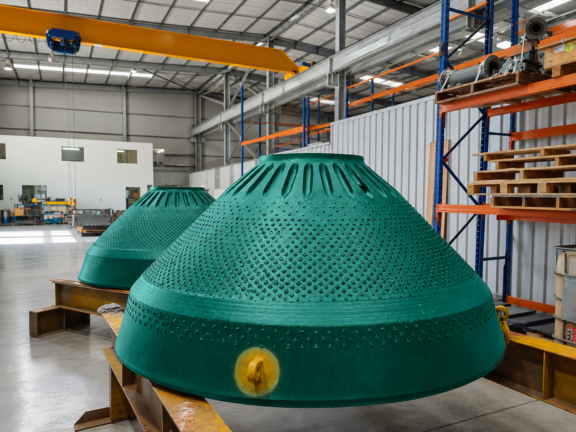
Metso grinding system
News
Metso launches new grinding classification system
Metso launches new grinding classification systemMetso has unveiled an innovative, configurable modular grinding classification system.The design consists of pumps, hydro-cyclones, product samplers, liquid resistance starters, particle size analysers, and mill lubrication units, which are easy to install and combine.The system, applicable for all types of grinding mills, is designed for maximised implementation efficiency while also reinforcing safety, quality and reliability in minerals processing.Metso grinding systems manager Jesse Ting comments on the new design.“Our customers get multiple benefits from this advanced system that integrates seamlessly into their operation and boosts the efficiency of their grinding systems,” he said.“Our pre-engineered modules are scalable for different mill types and classification stages, delivering exceptional performance with four times faster installation and more than 20% savings in overall cost compared to conventional solutions.“Each module is sized to match perfectly with standard 20ft or 40ft ISO shipping container dimensions, simplifying transport and installation. Safety is incorporated into every stage of the lifecycle, from installation to operation and maintenance.”The modules can be stacked, allowing for compact use of space, while the pre-engineered design eliminates the need for on-site modification and improves installation safety.
d8149e4d-09d3-40d9-a87c-a13006bce68a
UGL to construct Stage 3 of Western Downs battery
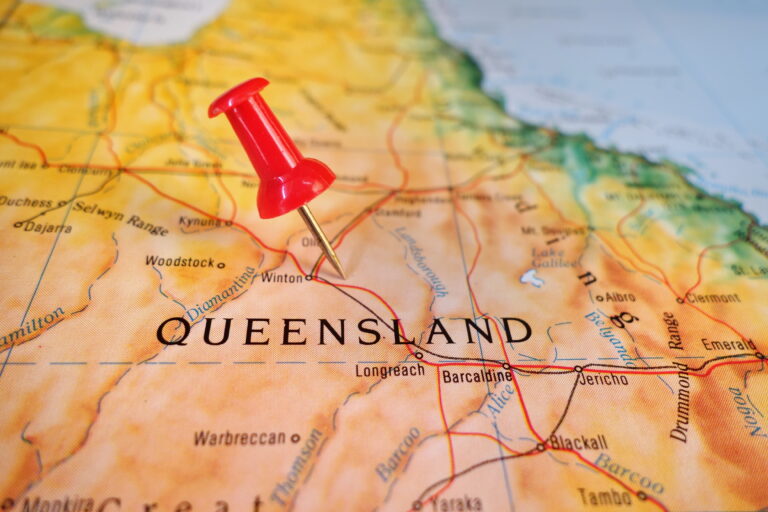
UGL to construct Stage 3 of Western Downs batteryThe CIMIC Group’s specialist engineering and services provider, UGL, has been selected by Neoen and Tesla to construct Stage 3 of the 305MV/1220MWh Western Downs battery in Queensland.This follows UGL’s successful delivery of Stage 1 and early completion of Stage 2 (270MW / 540MWh) in November.For Stage 3, UGL will install 312 Tesla Megapack 2XL units, along with high-voltage infrastructure, control and switchroom facilities, earthworks and footings. UGL will also provide testing and commissioning support to ensure seamless integration to the grid.Together, Stage 1 and Stage 2 provide 540MW/1080MWh of storage capacity. Once Stage 3 becomes operational, the battery will offer a combined total of 845MW/2.3GWh.ACS group and HOCHTIEF chief executive and CIMIC Group executive chairman Juan Santamaria comments on the major renewable energy storage project.“Stage 3 of the Western Downs Battery will add 305MW/1220MWh of storage capacity to Queensland’s energy network, building on the success of Stages 1 and 2 delivered by UGL,” he said.“This expansion strengthens grid reliability and supports the integration of renewable generation in one of Australia’s most important energy corridors.”UGL managing director Doug Moss comments on Stage 3.“Western Downs Battery Stage 3 will be our tenth battery installation project and our seventh in partnership with Neoen and Tesla,” he said.“As a leader in constructing and commissioning renewable energy assets and connecting them to the grid, we are helping to accelerate Australia’s energy transition.”Construction on Western Downs Battery Stage 3 will commence February 2026 with completion expected in the summer of 2027/28.
Back to of the page