
How modern compressed air systems can reduce costs, emissions and operational risk
Across Australia’s mining sector, operators are under growing pressure to improve productivity, reduce energy consumption and meet increasingly ambitious sustainability targets. While major processing equipment, electrification and fleet optimisation often dominate these discussions, one critical utility is frequently overlooked: compressed air.
Compressed air supports instrumentation, process control, pneumatic tools, workshops, dust management and numerous other applications. Yet it is often treated as a fixed operating cost rather than a strategic opportunity to improve efficiency, reliability and resilience.
The true cost of compressed air extends well beyond the initial investment in compressors. Energy consumption typically represents the largest component of lifecycle cost, meaning inefficiencies can quickly translate into higher electricity bills, maintenance costs and equipment wear.
Common sources of waste include air leaks, excessive system pressure, inefficient compressor sequencing and fixed-speed equipment operating when demand is low. These challenges are particularly significant on mining sites, where extensive pipe networks, fluctuating production requirements and harsh operating conditions can make inefficiencies difficult to identify.
Modern technologies offer practical solutions. Variable speed drive (VSD) compressors can automatically adjust output to match changing air demand, reducing unnecessary energy consumption while maintaining stable pressure. Connected monitoring systems provide greater visibility of energy use, equipment performance and asset condition, helping maintenance teams identify problems early and move towards predictive maintenance.
A comprehensive compressed air audit can further reveal hidden opportunities, including pressure losses, leaks, unnecessary demand and opportunities to redesign or optimise the system. For many operations, optimisation can deliver meaningful savings without major capital expenditure.
Heat recovery is another increasingly valuable opportunity as much of the energy consumed during compression is converted into heat. Rather than releasing this energy to atmosphere, recovery systems can redirect it towards applications such as process water, workshop heating or washdown systems, reducing overall energy consumption and emissions.
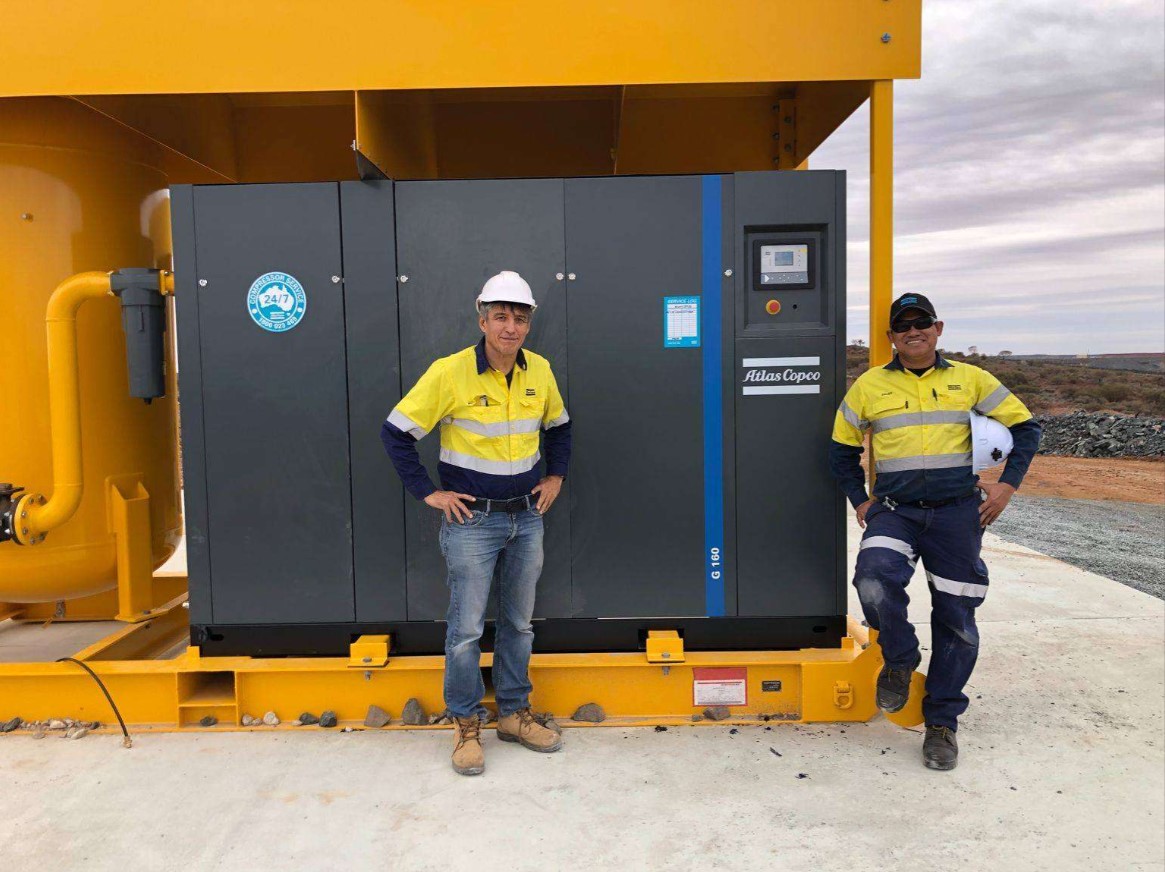
For greenfield developments, remote mines, plant expansions and temporary operations, the solution may also lie in how compressed air infrastructure is deployed. Engineered, containerised systems can integrate compressors, dryers, controls and ancillary equipment into a factory-built package. This can reduce on-site construction and engineering requirements, accelerate commissioning and provide a controlled environment for critical equipment.
Solutions such as Atlas Copco’s AIRCUBE demonstrate how a fully integrated compressed air utility can be deployed quickly and scaled as site requirements evolve.
For mining operations seeking to accelerate project execution while maintaining reliability and efficiency, containerised and engineered compressed air systems offer a practical pathway to faster deployment and reduced lifecycle complexity.
The right compressed air and gas partner can make all the difference. Contact Atlas Copco’s experts today to discuss your challenges and find the right solution for your operation.