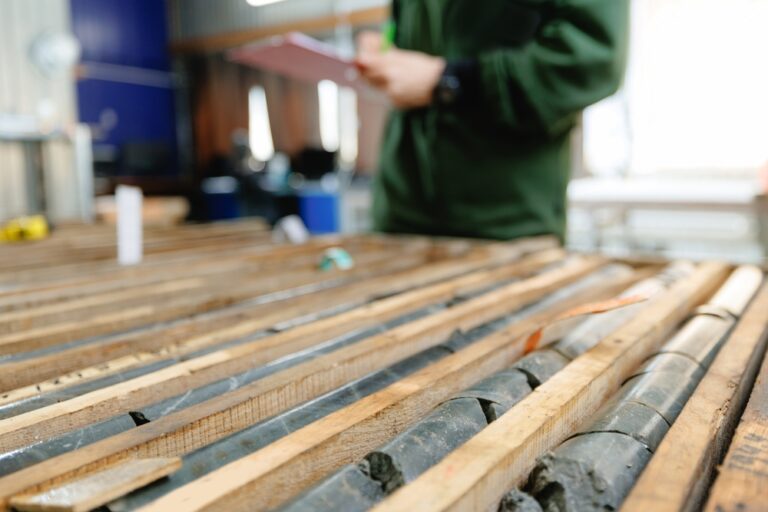
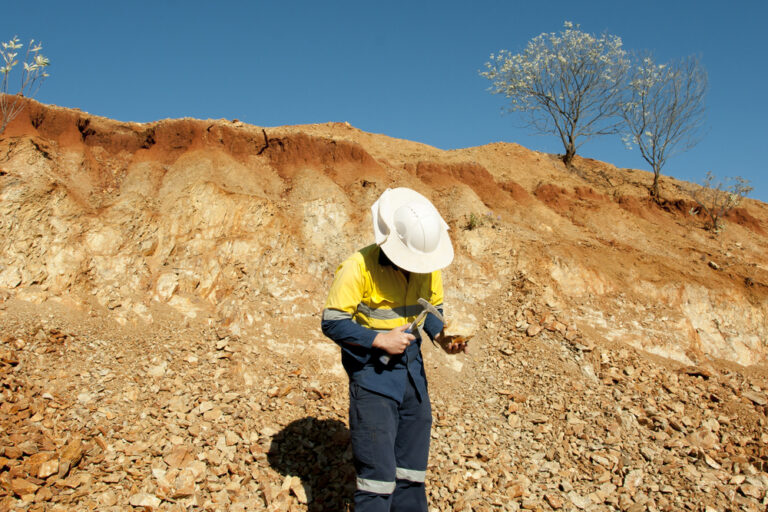
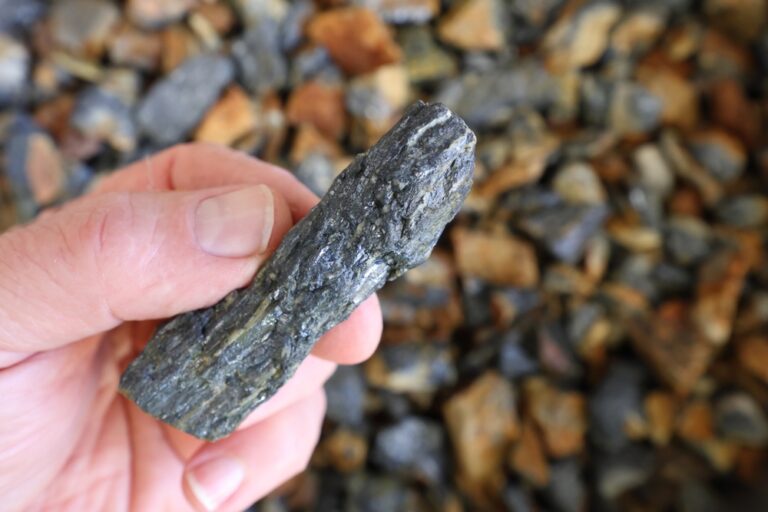
Kalamazoo Resources (ASX: KZR) has wrapped up a major resource definition drilling campaign at its Mt Olympus deposit in WA’s Pilbara, with the final assays delivering another batch of broad, high-grade gold hits ahead of an updated resource estimate later this year.
The headline result was 50m at 4.9g/t gold from 193m in hole KADD0021, while other standout intersections included 59m at 3.2g/t from 206m and 53m at 2.4g/t from 198m.
That brings Kalamazoo’s 72-hole, 13,726m resource definition program to a close, with the campaign returning 38 intercepts above 50 gram-metres and 16 above 100 gram-metres.
The company said about 61% of significant assay intercepts drilled since the 2022 resource estimate had come in at or above Mt Olympus’ current average resource grade of 2.7g/t gold.
The significance now shifts from individual drill hits to what they could mean for the economics of the broader Ashburton gold project.
Mt Olympus already carries the project’s development case, and any material addition to the resource — particularly ounces capable of being converted into higher-confidence categories — could help extend the 73-month mine life outlined in the scoping study and spread upfront development costs across a larger production base.
More ounces could be hiding
The drilling is doing more than simply tightening confidence around the existing resource.
Kalamazoo has hit mineralisation outside the current resource envelope but still inside the conceptual $4000/oz scoping study pit shell, potentially allowing additional ounces to be brought into the mine plan without necessarily requiring expansion of the conceptual pit footprint.
Ounces already sitting inside the pit shell can potentially be more readily incorporated into the development case than more distant exploration success because they may strengthen the existing development case rather than depend on an entirely new mining scenario.
Drilling has also identified mineralisation about 80m below the current scoping study pit shell and about 90m beyond the Zoe Fault.
That deeper mineralisation remains open at depth and down-plunge to the south-east, giving Kalamazoo another target for longer-term resource growth, although those ounces would need to demonstrate sufficient grade and scale to justify deeper mining.
Executive director Dr Ben Ackerman said the latest results reinforced the grade and continuity of the Mt Olympus mineralised system.
“The result of 50m at 4.9g/t gold, together with the broad intersections in KARCD0166 and KADD0024, reinforces the grade and continuity of the mineralised system,” he said.
Kalamazoo chief executive Andrew McDougall described Mt Olympus as the cornerstone of the wider Ashburton gold project, saying the program had increased confidence in the deposit and advanced it towards development.
Extra geological weight
The Ashburton gold project already contains a total mineral resource of 16.19mt at 2.8g/t for 1.436moz gold, including 1.073moz at Mt Olympus.
Kalamazoo is now feeding the latest drilling into an updated Mt Olympus mineral resource estimate targeted for Q4 CY26.
The tighter drilling pattern — about 20m by 20m across key parts of the deposit — is intended support conversion of inferred resources into the higher-confidence indicated category and ultimately support future reserve estimation.
That conversion could be just as important as headline resource growth.
More indicated ounces would give Kalamazoo a stronger geological foundation for the Ashburton pre-feasibility study targeted for the first quarter of 2027, while potentially increasing the proportion of the deposit that can be incorporated into economic mine planning.
The company has also substantially expanded its geological database, with more than 28,000 sulphur assays now available for modelling alongside new geotechnical drilling and wireline logging.
But a larger and higher-confidence resource would only solve part of the development equation.
The scoping study put pre-production capital expenditure at about $208m, compared with Kalamazoo’s market capitalisation of about $57m.
That funding gap means the next phase is likely to be shaped as much by capital as geology.
A longer mine life, greater resource confidence and stronger project economics could improve Kalamazoo’s ability to secure debt, strategic investment, an offtake-backed funding package or a joint venture partner.
At the same time, a development requiring capital several times the company’s current equity value exposes shareholders to financing and potential dilution risk if alternative funding structures cannot be secured on attractive terms.
That makes the upcoming resource estimate and pre-feasibility study key valuation catalysts rather than simply technical milestones.
If the new drilling can add mineable ounces, extend the current 73-month production profile and improve confidence in the early years of the mine plan, Kalamazoo will enter financing discussions with a stronger project.
If it cannot, the $208m development bill will remain the harder number for investors to look past.