Appin and Dendrobium
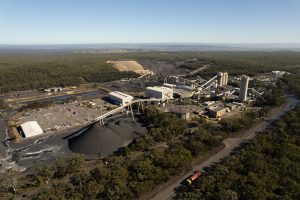
The cornerstone of NSW coal
In 2024, South32 (ASX: S32) initiated a turning point in the NSW coal industry when it sold its Illawarra Metallurgical Coal assets for nearly $2b to GM3.
GM3, a partnership between Golden Energy and Resources (GEAR) and M Resources, is an emerging leader in Australia’s metallurgical coal sector. Renowned for its strong commitment to environmental and safety standards, the company is well positioned to continue the Illawarra assets’ contribution to the local steel industry and the surrounding Illawarra and Macarthur regions.
Ushering in a new era for the mines and a commitment to long-term sustainability and growth and consistent production, the company prioritises responsible operations — a safety-first ethos combined with a focus on sustainability and community engagement.
Dendrobium mine
The Dendrobium underground mine has been extracting coal from the Wongawilli seam of the southern coalfield since 2005 and is currently the only producer. Its coal is essential for the trusted ‘Illawarra Coal Blend’, which has the coking properties that make it so valuable for steel production in the region.
Located immediately adjacent to Mount Kembla, about 8km west of Wollongong, NSW, on the Illawarra escarpment, construction at the site began in January 2002 with longwall mining commencing in April 2005. The mine is an essential supplier to Australian steelmakers including BlueScope Port Kembla Steelworks.
A network of underground conveyors takes the raw coal from Dendrobium mine to the coal loading facility at Kemira Valley. From here it is taken seven kilometres by rail to the Dendrobium coal preparation plant (DCPP) at Port Kembla.
Dendrobium currently has development consent until 2030, and three mining areas make up the approved mine plan — named Areas 1, 2 and 3 (including 3A, 3B and 3C).
Previous owner South32 had plans to extend operations at the site until 2041, however, the plans were abandoned in 2022.
Dendrobium is currently working on a proposal to extend mining into new areas within the existing mining lease, enabling operations to continue into the 2040s.
The proposed extension would unlock an additional 55mt of Wongawilli seam coal, supporting 700 jobs directly and sustaining critical coal supply to BlueScope Port Kembla Steelworks and other Australian steelmakers as they transition to lower emissions technologies.
Appin mine
Appin mine is located in the Macarthur region of NSW, about 25km north-west of Wollongong. Operating since 1962, Appin primarily produces metallurgical coal for steelmaking, extracted using underground longwall mining methods.
The site extracts coal from the Bulli seam and incorporates surface activities such as the West Cliff coal preparation plant (WCCPP) and the coal wash emplacement area (CWEA).
Run-of-mine (ROM) coal is extracted from the underground operations and delivered directly to the WCCPP by winder and conveyor or is transported from the Appin East pit top via truck along Appin and Wedderburn Roads.
Processed coal (clean coal product) from the WCCPP is transported by road to the Port Kembla coal terminal (PKCT) for shipping to both domestic and international customers.
Appin mine ventilation and access project
An integral requirement of underground mining is adequate ventilation and mine access, to ensure a safe and efficient working environment for workers.
As Appin mine moves further from existing surface infrastructure, we are constructing future infrastructure to support the mine which includes ventilation shaft number seven, ventilation shaft number eight and mine access facilities. The infrastructure will be located at 345 Menangle Road and is known as the Appin mine ventilation and access project.
Ventilation shaft number seven will be a downcast shaft, drawing fresh air into the mine doubling as an entry point to the mine for our people. Ventilation shaft number eight will be an upcast shaft, drawing air out of the mine.
The new ventilation shafts and mine access facilities will operate under strict environmental approval conditions set by the NSW Government. Environmental assessments have been developed and approved including noise, air quality, traffic, heritage and biodiversity. The project has been designed to avoid or minimise impacts on the local community.
Following a comprehensive assessment process, the project was approved by the NSW Government in April 2022. GM3 construction environment management plan (CEMP) has also been approved and provides specific environmental management and monitoring measures during construction, including minimising noise, dust and visual impacts.
Innovation at GM3
In November 2025, the NSW Government approved a modification to the Bulli seam operations to construct and operate a ventilation air methane (VAM) abatement demonstration plant at the Appin mine ventilation site.
The project will serve as a significant case study for the industry, showcasing the practical application of VAM abatement for fugitive emissions from underground coal mines. Its successful implementation and outcomes would provide valuable insights and data to inform future VAM abatement projects.
This system will capture ventilation air and heat it to break down methane into carbon dioxide and water, reducing emissions released into the atmosphere. Methane gas is one the most potent greenhouse gases, and more than 80 times more impactful than carbon dioxide.
VAM contains low concentration methane in the mine ventilation air that existing gas drainage technologies are unable to capture. The plant will trial Regenerative Thermal Oxidiser (RTO) technology to convert VAM from Appin mine into carbon dioxide and water through controlled oxidisation. With methane having about 28 times the global warming potential than carbon dioxide, VAM abatement offers a significant opportunity for GM3 to reduce its greenhouse gas emissions.
It’s estimated that using the oxidiser to convert emissions from methane to carbon dioxide will reduce the mine’s greenhouse gas emissions by 36,000tpa CO2e— equivalent to taking 8,500 petrol cars off the road for a year.
The approval marks a major step forward in advancing emissions reduction technologies in the mining sector and are a critical part of the plan to meet the state’s legislated climate targets.
GM3 chief executive Peter Baker says this project is an exciting step forward for the industry’s commitment to reducing greenhouse gas emissions and driving innovation in the mining sector.
“It reflects our long-term commitment to delivering sustainability across all aspects of our business,” he said.
The approved modification does not change how much coal the project is able to extract.
NSW Planning and Public Place Minister Paul Scully says the approval of this modification allows the Appin mine to improve its environmental performance while continuing to provide coal for steelmaking.
“Innovations like this one reduce emissions to progress towards our legislated emissions reduction targets,” he said.
The mine employs about 1100 people, and construction of the oxidiser will create around 20 to 30 jobs over 12 months.