Aging and depleted iron ore deposits are placing unprecedented pressure on global iron ore markets. Australia’s Pilbara region is no exception.
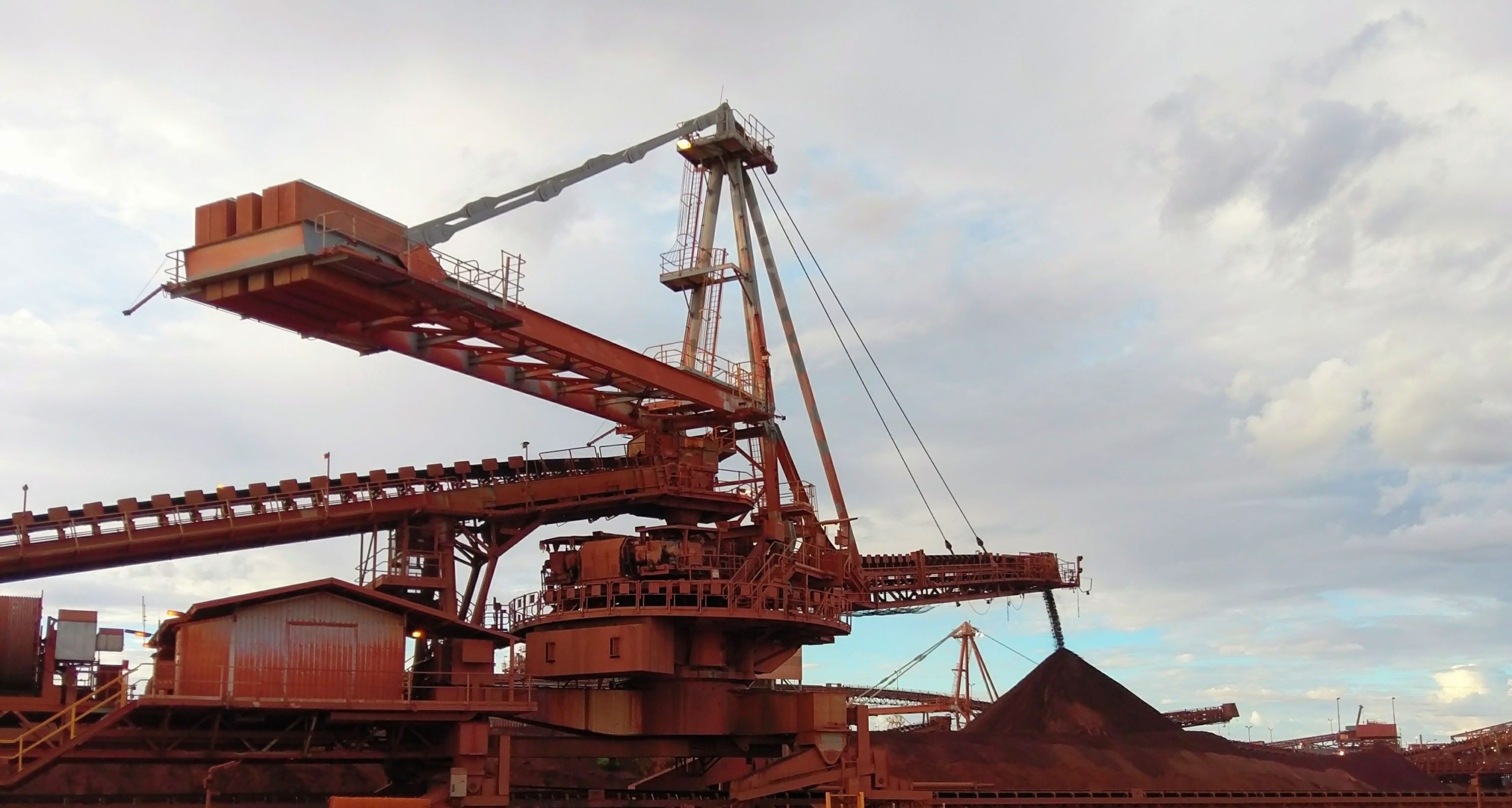
The Pilbara region in WA provides nearly half of the world’s seaborne iron ore supply, according to Pilbara Ports. To defend its position as the world’s undisputed iron ore titan, the Pilbara requires a systematic overhaul to sustain production capacity into the future.
Rio Tinto (ASX: RIO) is at the helm of this overhaul — extending the life of the Brockman region in the West Pilbara with its $2.8b [US$1.8b] Brockman Syncline 1 (BS1) project.
Leveraging a systematic approach to mine life extension reflecting the established position of operations in the region, Rio has identified BS1 as part of an integrated portfolio strategy.
In an approach differing substantially from the prolific greenfield expansion projects that drove Pilbara development in the 2000s, this strategy focuses on maintaining production levels — rather than expanding them — by integrating multiple replacement projects in coordination.
The economics of replacement projects differ fundamentally from expansion projects by focusing on profit optimisation and production maintenance with improved operational efficiency rather than incremental production growth.
BS1 is emerging as a critical project in maintaining Australia’s iron ore production sustainability, forming a pillar of Rio’s 130mtpa capacity replacement strategy to offset depleting reserves across the Brockman mining hub.
In 2025, the project — developed in consultation with the Puutu Kunti Kurrama and Pinikura (PKKP) Traditional Owners and the Muntulgura Guruma Traditional Owners — received all necessary state and Federal Government approvals.
Rio Tinto chief executive Simon Trott says Brockman 4 produced 43mt of iron ore in 2024 and securing this project extends the life of the Brockman hub.
“This is good for our business, good for WA and good for the Australian economy,” he said.
“Rio Tinto has been mining iron ore in the Pilbara for almost six decades and our tranche of new mines will ensure we can continue to supply the globe’s ongoing need for iron ore, for decades to come.”
BS1 is a large-scale investment within the Brockman region, which encompasses Brockman 4 and Greater Nammuldi. It will have capacity to process up to 34mtpa of iron ore, leveraging existing plants.
The Brockman 4 operations, located about 60km from Tom Price, began in 2010 at the Brockman 4 deposit.
Construction of the project has begun and includes the installation and commissioning of new primary crusher and overland conveyor, a non-process infrastructure precinct and a temporary camp for construction workers.
First ore is now scheduled for 2027, having previously been anticipated in 2028, suggesting that current market conditions have encouraged expedited project execution.
About 1000 jobs will be created during construction and once operational, BS1 will sustain a workforce of about 600. BS1 will also generate substantial indirect economic activity through suppliers and service procurement.
Major contracts awarded
In December, Monadelphous (ASX: MND) was awarded a $250m multidisciplinary contract at BS1 with works commencing immediately and expected to be completed in 2027.
Under the contract, Monadelphous will supply services including fabrication and supply, detailed earthworks and concrete, structural, mechanical, piping and electrical and instrumentation works associated with the construction of a new primary crusher and overland conveyor, as well as modifications to existing plant.
In July last year, NRW Holdings (ASX: NRW) subsidiary NRW Civil & Mining was awarded a $167m contract at BS1. Under the contract, NRW is responsible for the construction of earthworks, roadworks and drainage associated with the primary crusher, overland conveyor and non-process infrastructure, as well as the construction of haul roads, access roads and concrete structures.
The scope of works includes drill and blast along with supply and construction of the mechanically stabilised earth run-of-mine wall, two precast concrete overpass tunnels and in-situ concrete foundations for the primary crusher.
Engineering consultant Worley was appointed to deliver the engineering, procurement and construction management phase of the BS1 project. The contract follows Worley’s delivery of the definitive engineering study phase for the project and grows the trusted relationship between Worley and Rio Tinto that spans 25 years in the Pilbara, including the recent delivery of the Western Range iron ore mine development.
The scope of the services includes construction of a new primary crusher, overland conveyor, a non?process infrastructure precinct and a temporary camp for construction workers.
Rio Tinto’s Pilbara outlook
The BS1 project is just one amongst a plethora of replacement operations currently being advanced by Rio. Over the 2025 to 2027 period, the company expects to invest more than $13b on new mines, plant and equipment as part of its clear pathway to achieve and sustain mid-term system capacity of 345 to 360mtpa from its Pilbara iron ore business.
As part of Rio Tinto’s tranche of replacement projects, Rio confirmed late last year that it would work with Hancock Prospecting to facilitate a $2.5b expansion of Hope Downs 2 to add an additional 31mtpa capacity to the Hope Downs joint venture by 2027.
In December, the company approved a $294m feasibility study to progress development of the first phase of the Rhodes Ridge project which will leverage Rio Tinto’s existing rail, port and power infrastructure.
The progression to feasibility study follows Mitsui’s announcement earlier this year to acquire a 40% interest in the joint venture.
Rio Tinto iron ore chief executive Matthew Holcz says Rhodes Ridge is one of the best undeveloped iron deposits in the world.
“In partnership with the Nyiyaparli Traditional Owners, we are working to develop Rhodes Ridge, which, given its size and quality, has the potential to underpin Rio Tinto’s Pilbara iron ore business for decades to come,” he said.
The feasibility study, expected to conclude in 2029, will assess development of an operation with initial annual production capacity of 40 to 50mt of iron ore.
Rhodes Ridge will be a staged development, with this investment and feasibility study focusing on phase one and the likely development of an initial hub in the northern part of the project.
Subject to relevant regulatory approvals, first ore from the initial Rhodes Ridge development, located 40km north-west of Newman, is expected by 2030.
In October last year, Rio and its joint-venture partners Mitsui and Nippon Steel, agreed to invest $733m to extend the life of the West Angelas hub by developing new deposits within the region.
The West Angelas project has been a cornerstone of the company’s iron ore business since 2002 and first ore from the new deposits is expected in 2027.
BHP collaboration
In January, Rio and BHP (ASX: BHP) agreed to work together and explore the potential of extracting up to 200mt of iron ore at their neighbouring Yandicoogina and Yandi operations. This new proposal builds on a 2023 agreement between the companies to mine the Mungadoo Pillar, which allowed mining of ore from the shared tenure boundary that was previously inaccessible.
“By working smarter, we can better leverage existing infrastructure to unlock additional production with minimal capital requirements. “Together we will extend the life of these operations, create additional value, and further support Western Australian jobs and local communities,” Mr Holcz said.
Rio Tinto and BHP have agreed to progress a conceptual study followed by an order of magnitude study. Subject to a final investment decision, first ore from both deposits is anticipated early next decade.
BHP WA iron ore asset president Tim Day says this is a clear example of productivity in action — unlocking new opportunities by making the most of our existing resources.
“By sharing our expertise and infrastructure we will create new value and deliver benefit to our people, partners, customers and communities,” he said.
With established resources, extensive infrastructure networks and world leading mining workforce, Pilbara based operations — including BS1 — will uphold the region’s industry leading position well into the future.