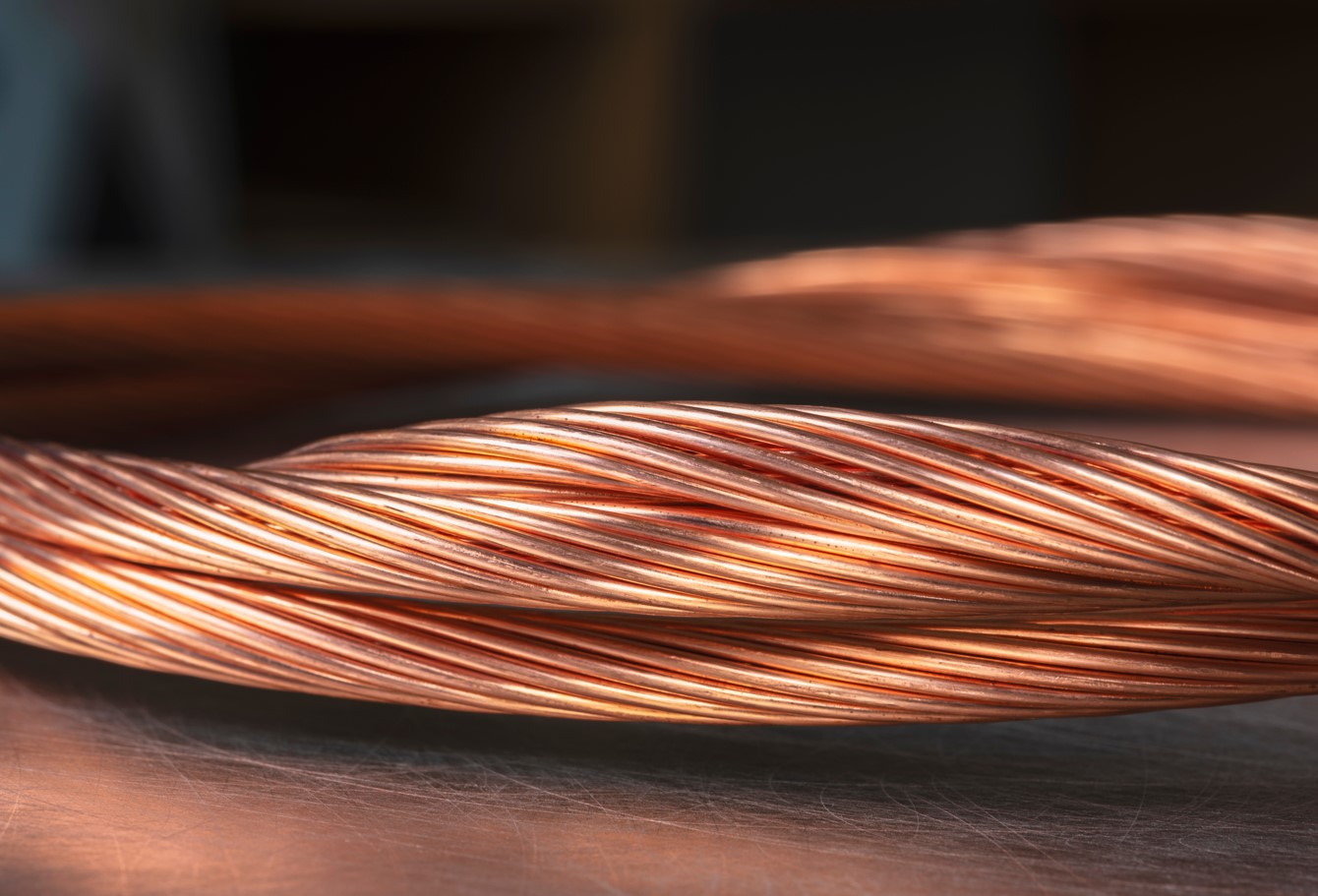
Since Thomas Edison established the world’s first public electric supply station in 1881, copper has been used to electrify the world. Copper is now one of the most essential metals of the 21st century, indispensable in an electrified future.
Now, the metal has been identified as the key to unlocking the age of AI. Data centres, the computational muscle AI systems rely on, are driving a massive surge in copper demand.
Electricity demand from data centres soared by 17% in 2025, and that of AI-focused data centres climbed even faster — well outpacing growth in global electricity demand of 3%, according to the International Energy Agency (IEA).
The pace of AI deployment is increasingly tied to how quickly data centres, power supply and supporting infrastructure can be built, with copper emerging as a significant material constraint.
A study by Schneider Electric found that copper intensity for data centres could fall anywhere between 20–40t for every 1MW of power — and that’s just for the build out.
Copper is also integral to the facilities that generate power for data centres and in the infrastructure that delivers this power. Electricity consumption from data centres focused on AI are poised to triple by 2030, according to the IEA, and — with investment in data centre construction rising rapidly — this is becoming an emerging demand driver in the global copper market.
However, on its current growth track, the copper industry is expected to fall short of this demand — by a significant margin.
S&P Global expects global copper demand to rise from 28Mt in 2025 to 42Mt by 2040, but says the market could still face a 10Mt shortfall without new investment and improvements in project delivery.
To meet the global power demand anticipated by 2040, S&P Global says the world will need to build the equivalent of more than 650 1GW nuclear reactors each year between now and then.
Yet, as assets age, supply is forecast to fall short by 10mt by 2040, according to S&P Global data. This looming gap represents systemic risk for not only global electrification but the global copper industry.
The copper industry is at a pivotal point.
To enable this massive growth in energy demand, the copper supply chain must overcome complex challenges both above and below ground.
The copper mining sector is facing declining ore grades as assets age, rising costs for energy, increasingly complex and difficult extraction conditions, extended project timelines and pressures from investors, communities and governments.
The industry is being asked to maintain output from operating mines while simultaneously enabling new capacity to meet expanding global demand.
Based on current price assumptions and investment condition, converting identified but undeveloped reserves typically takes 15-20 years, according to S&P Global.
To meet copper demand, the industry will have to undergo an exceptional effort across the entire supply chain to contend with the dual imperative of increasing supply from declining mines while also developing new mines to boost capacity.
Balancing risk with future profitability
It comes as no surprise that many mining majors are focusing on a copper-led growth strategy that reflects the broader anticipation of this looming supply gap.
Developing new major copper mines requires billions in upfront capital. It is no surprise that miners are increasingly constrained by strict capital discipline expectations, risk-averse investors and heightened ESG requirements. Miners remain cautious when it comes to greenfield project development and are instead focusing on brownfield expansion and sustaining output as ore grades decline.
Structurally shifting a company and its operations is complex, capital-intensive and subject to numerous geological, environmental and social constraints.
Glencore’s 2025 results highlight the challenges of achieving that shift.
In 2025, Glencore’s own-sourced copper production fell 11% to 851,600t, mainly due to lower head grades and recoveries associated with mine sequencing and ore feedstock, as well as the mid-year closure of its 70-year-old underground copper mine in Mount Isa, Queensland.
The company is now focused on processing and refining third-party copper concentrates at its copper refineries in Mount Isa and Townsville.
Despite no longer producing copper ore in Australia, Glencore still operates major copper mines in North America, South America and the Democratic Republic of Congo (DRC).
A structural shift
Despite its ambitions to pivot toward future-facing metals — targeting production of 1.6mtpa of copper by 2035 — Glencore remains deeply tied to coal, operating 13 coal mines in Australia alone.
In 2024, Glencore made a strategic decision to retain its coal business, abandoning earlier plans to offload, following strong shareholder support. Coal remains one of the company’s most reliable sources of cash flow, despite recent price softening.
Glencore has spent the past year navigating a shifting landscape marked by softer energy prices, strategic moves towards future-proof markets and renewed scrutiny of its legacy coal business.
The result is a company in transition — one that is still enormously profitable yet grappling with its long-term identity.
Developing new copper resources is getting more difficult and capital-intensive. New projects and expansions are contending with challenges including deeper resources, more complex geology and the associated logistics and infrastructure challenges, impacting both project economics and production volumes.
For a company under pressure to deliver returns while simultaneously expected to future-proof, the near-term profitability of its coal business is hard to ignore.
A year of financial mixed signals
While trading volumes for the year remained robust, Glencore’s 2025 margins thinned. The extraordinary energy market conditions that boosted profits in previous years have slowly retreated, leaving Glencore to operate in a far less lucrative environment.
Highlighting the company’s exposure to commodity price cycles, the primary driver for this was a drop in coal prices as markets normalised.
Though the coal market is facing a long-term decline, it remains highly profitable in the near-term even as prices stabilise. In 2025, Glencore produced 98mt of thermal coal and 32.5mt of coking coal and generated about
The company’s adjusted EBITDA dipped about 6% to US$13.5b and free cash flow declined sharply to US$1.8b from US$3.8b the year prior.
Despite this, the company returned a modest net profit of $363m for the year and delivered US$3.5b in shareholder returns and buybacks.
Copper assets and critical minerals
Large copper mining operations often yield more than just copper, producing critical byproducts like molybdenum, cobalt and rare earth elements. Such operations can be leveraged to secure diversified supply chains and generate additional capital at minimal cost for producers.
Glencore is one of the world’s largest producers of cobalt, primarily as a by-product from its DRC copper operations.
In 2025, Glencore produced 36,100t of cobalt despite significant export restrictions imposed by the DRC Government. Glencore expects its cobalt production profitability to increase in FY26 as the DRC lifted its export ban in Q4 and introduced export quotas.
Given that the miner has sufficient inventories to fully utilise its allocated cobalt quotas, Glencore says copper production in the DRC will be prioritised over cobalt, where it makes commercial sense.
This strategy is expected to continue while the quotas are in effect with additional cobalt stockpiles to either build as work in process inventory or be stored as final product in-country.
Mega-merger ruled out
Perhaps the most dramatic development Glencore saw in the last year was its attempted merger with Rio Tinto (ASX: RIO).
In early 2026, Glencore and Rio Tinto held preliminary merger discussions that would have created a mining group worth more than US$200b, with copper a central part of the strategic rationale.
Ultimately, the talks collapsed with neither company ceding on value nor deal structure. Glencore argued the proposal undervalued its standalone business and copper growth pipeline.
While scale would offer a strategic advantage, the failure of the merger highlighted the challenges of consolidating shareholder interests and valuations.
For now, Glencore continues its transformation journey independently.
Glencore’s graduate program
Glencore is prioritising early-career development through apprenticeships, graduate roles and vacation programs.
In 2026 Glencore Australia employed 69 new first-year graduates, demonstrating ongoing workforce expansion and we are hoping to increase these numbers further in our next intake.
These programs represent a direct investment in building a skilled workforce and supporting long-term career opportunities across the regions in which Glencore operates within Australia.
Glencore offers a structured graduate program with global opportunities that is designed to accelerate career development through a mix of practical experience, operational exposure and formal training.
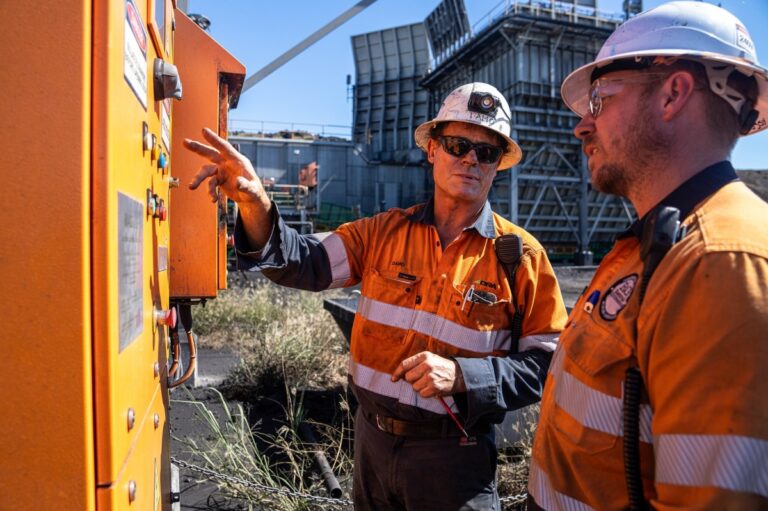
Glencore Metals Queensland operations human resources manager Shari Barwick says the graduate program helps early-career professionals build skills, confidence and leadership capability in a supportive and challenging environment, laying the groundwork for rewarding careers in regional Queensland.
“Alongside technical skills, graduates develop teamwork, communication and problem-solving abilities, graduates are guided by our strong focus on safety, integrity and real-world impact,” she said.
The program has a strong emphasis on on-the-job learning and real-world experience. With access to structured professional development plans and mentoring from experienced professionals, graduates work through a rotation across Glencore’s various assets and regions throughout Australia.
Graduates may also be eligible for relocation support, with assistance available for accommodation and living expenses where required.
Applications for the 2027 Graduate Program are now open.