From price to proof
What mining buyers should demand from aftermarket parts
For many mining operators, aftermarket parts have traditionally been assessed through the narrow lens of price. If a component is significantly cheaper than the OEM alternative, the immediate question is whether the saving justifies the perceived risk.
That question is understandable, but it is no longer enough.
Across the mining sector, maintenance and procurement teams are under pressure from every direction. OEM pricing remains high, lead times can be unpredictable and critical parts are not always available when machines need to return to work. At the same time, no fleet manager wants to reduce cost by introducing quality risk into a haul truck, excavator or shovel operating under continuous load.
This is the gap EM Parts & Components was created to address. A dedicated division of Equip Mining, the business supplies verified aftermarket parts and components for heavy mining equipment, with a focus on critical systems where quality, fit and documentation matter.
“The frustration we kept hearing from mining customers was not just about price,” EM Parts & Components Director Steve Green said.
“It was about availability, lead times and the lack of visibility.
“Customers wanted alternatives, but they needed to know the parts would perform. That is where verification becomes critical.”
The real question is not simply whether a part is OEM or aftermarket — it is whether its quality can be proven.
From cost savings to technical evidence
For critical components such as gearing, wheel motor assemblies, undercarriage, hydraulic cylinders, buckets, links and structural parts, price only becomes meaningful after the technical evidence has been examined.
A lower-cost part is only a saving if it fits correctly, performs reliably and is supported if something goes wrong. To ensure it does just that, buyer must ask a few questions.
What is the part made from?
Material selection is one of the clearest indicators of whether a component is built for mining duty. In high-load gearing, the steel must provide strength, toughness, fatigue resistance and the ability to respond correctly to heat treatment. For undercarriage and work equipment, steel selection must reflect impact, abrasion, weldability and structural load.
A serious aftermarket supplier should be able to explain the material grade, why it has been selected and how it compares with recognised international standards.
How is the part manufactured?
Modern mining components require more than basic machining or fabrication. Buyers should look for evidence of CNC machining capability, controlled welding processes, appropriate cutting equipment, gear grinding, heat treatment, induction hardening, carburising, nitriding or other processes relevant to the part being supplied.
For gearing, the process should include gear cutting, tooth profile control, heat treatment and final grinding. For structures, the focus should be on cutting accuracy, weld integrity, post-weld machining and dimensional control. For undercarriage, pin bores, bushing fits and alignment surfaces must be accurate because small errors can accelerate wear across the machine.
How is the part inspected?
This is where many low-cost supply channels fall short. A part can look correct and still fail because of poor material quality, internal defects, incorrect hardness, dimensional inaccuracy or uncontrolled welds.
Buyers should ask whether the facility uses coordinate measuring machines, gear measuring equipment, spectrometers for chemical composition, metallographic inspection, ultrasonic flaw detection, hardness testing and other non-destructive testing methods.
Just as importantly, they should ask whether inspections occur throughout production, not only at the end. Quality is not created by final inspection alone. It is built through each stage of production.
Has the part been tested in a way that reflects real operating conditions?
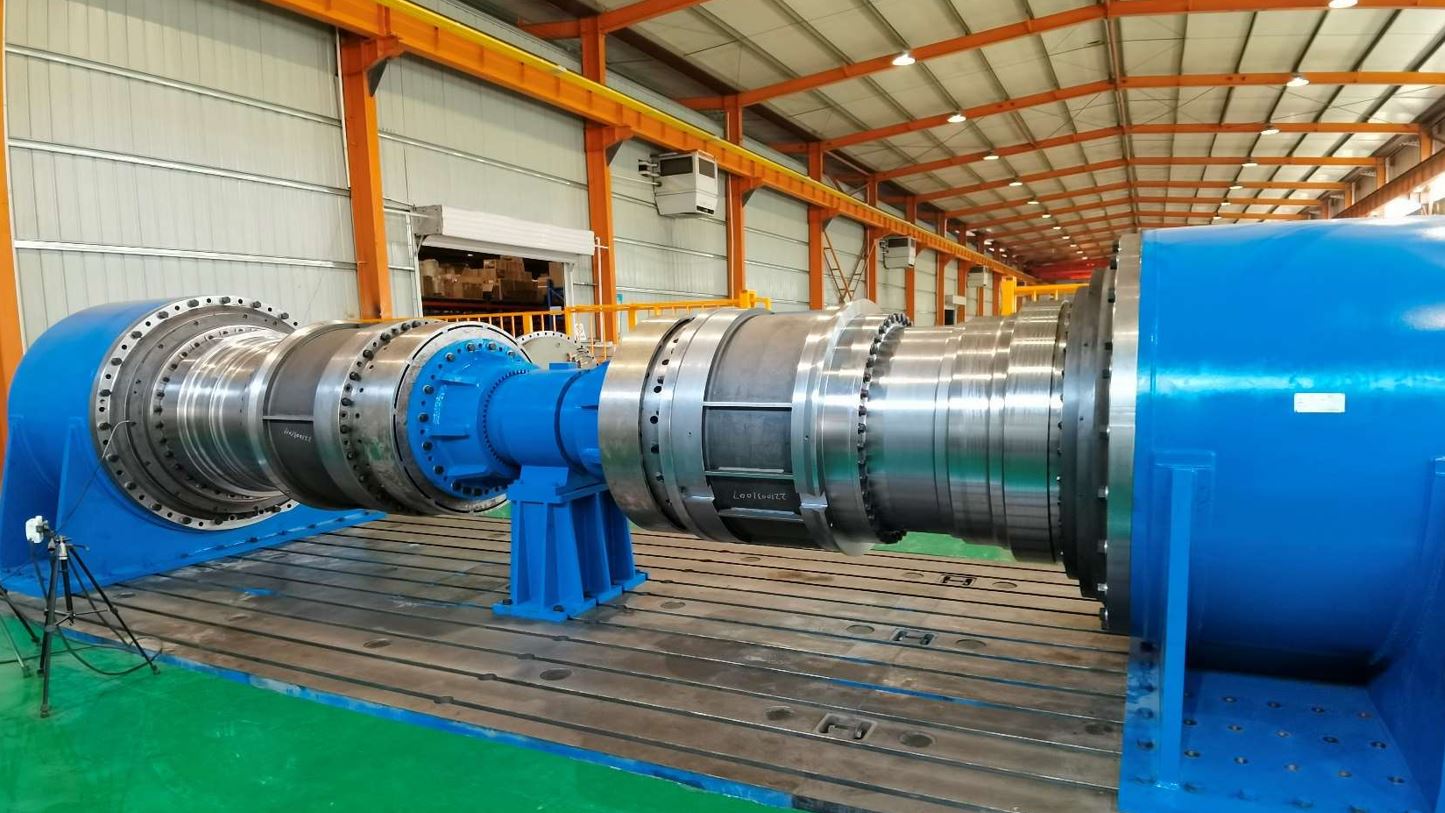
For a wheel motor assembly, loaded test capability is far more meaningful than a simple visual inspection. For hydraulic components, pressure and performance testing matter. For fabricated structures, weld inspection and non-destructive testing are critical.
What is the warranty?
A warranty does not replace quality, but it does reveal how seriously a supplier stands behind its product. EM Parts & Components provides warranty cover equal to or better than OEM.
Beyond the OEM box
For decades, OEM supply has been treated as the default path to confidence. In many cases, that confidence has been earned. OEMs have established engineering standards, documentation systems and product support networks that are vital to the mining industry.
But the presence of an OEM label should not be the only measure of quality, just as the absence of one should not automatically imply inferiority.
The global manufacturing landscape has changed. Some independent manufacturers now operate advanced facilities with high-precision machining, modern heat treatment, robotic welding, material testing, non-destructive inspection and quality systems capable of producing demanding mining components.
The challenge for buyers is separating verified manufacturing from unsupported claims.
That is where EM Parts & Components sees the aftermarket market maturing. Fleet managers and procurement teams should not be asked to trust an aftermarket part because it is cheaper. They should be given the evidence to assess it properly.
These questions move the conversation away from assumption and towards accountability.
The most effective procurement strategies are not built around choosing the cheapest part or defaulting to the most expensive supply channel. They are built around balancing cost, availability, quality evidence and operational risk.
For mining buyers, the next step is clear — don’t only ask how much it costs, ask if the quality be proven. And where can you get these? Visit www.em.parts