Is there a place for nuclear in Australia’s energy mix?
The discovery of nuclear fission in 1938 remains one of the most significant scientific breakthroughs of the 20th century. At the time, it was met with profound awe for its potential to revolutionise the way society produces and consumes energy.
But the rise of Nazi Germany and the looming threat of another all-out global war saw the discovery veer towards a much more sinister path.
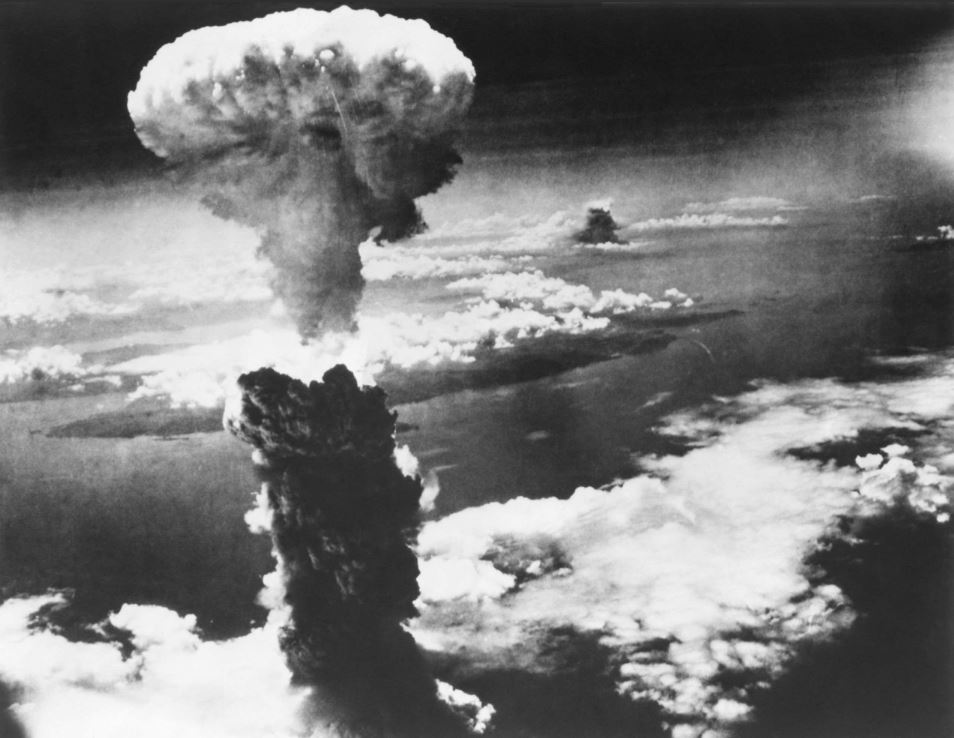
The ensuing race to build the atom bomb under the top-secret US-led Manhattan Project culminated in the devastating nuclear bombings of Japan in August 1945. Those attacks ushered in the nuclear age, forever altering the nature of warfare, international relations and global security.
In the decades that followed, nuclear technology evolved along two divergent paths. It became both a source of low-emissions electricity capable of powering entire nations and a symbol of existential risk, driving arms races and public fears following nuclear disasters such as Chernobyl and Fukushima.
Today, as debates over energy security, climate change and nuclear proliferation intensify, the legacy of splitting the atom remains as relevant, and as contested, as ever.
Fission to fallout
The atom’s double-edged legacy
Hungarian physicist Leo Szilard was one of the first to realise that nuclear fission could be used to create devastatingly powerful atomic weapons. In August 1939, Szilard wrote a letter to Albert Einstein imploring him to send US President Franklin D. Roosevelt a warning that an “extremely powerful bomb” might be constructed, according to the US Department of Energy.
Fearing ongoing research and development by Nazi Germany, President Roosevelt formed the Advisory Committee on Uranium, which met for the first time on October 21, 1939 — less than two months after Germany invaded Poland and officially ushered in the beginning of World War II.
The US formally entered World War II following Japan’s bombing of Pearl Harbor on December 7, 1941. With the US now at war, the Advisory Committee on Uranium concluded that an atomic bomb could be designed, built and used in time to influence the outcome of the war.
Thus, the Manhattan Project was born.
The road to the atom bomb
Over the next four years, the US and Allied scientists would undergo research and development at unprecedented speed as part of the US Government’s program to develop and deploy the world’s first atomic weapon. During this time, nuclear science advanced at an exponential rate with new discoveries being made in rapid succession.
As the project moved closer to the use of the first atomic bomb, the ethical considerations surrounding the use of such a destructive weapon — the intent of which was known by those involved in its development — began to surpass scientific curiosity. However, ending the war as quickly as possible remained the primary concern of Allied politicians.
Following Germany’s unconditional surrender on May 8, 1945, the full attention of the Allies shifted to the war in the Pacific. The US dropped its first uranium-fuelled atomic bomb on Hiroshima, Japan, on August 6, 1945. Days later, on August 9, the US dropped a plutonium-fuelled bomb on Nagasaki.
By the end of 1945, the bombings had killed about 140,000 people in Hiroshima, and a further 74,000 in Nagasaki, according to the International Campaign to Abolish Nuclear Weapons (ICAN). About 38,000 of those victims were children and, in the years that followed, many survivors would face leukaemia, cancer and other terrible side effects from the radiation, according to ICAN.
A discovery initially hailed as one of the greatest revelations in sustainable and cheap energy production had quickly been applied to instead create the most devastating weapon the world had ever seen. The use of these weapons ultimately became one of the most defining historical events of the 20th century, ushering in a nuclear age that would change the shape and scope of modern warfare forever.
From Hiroshima to Iran: the enduring challenge of nuclear proliferation
The bombings of Hiroshima and Nagasaki instigated a global nuclear arms race that saw many major powers compete to develop and acquire their own nuclear capability. The ensuing Cold War that occurred from 1945-1991 saw several countries, including the US, the UK, France, the Soviet Union, China and South Africa, establish themselves as nuclear states.
Seeking to prevent the nuclear weapon ranks from expanding further, the US and Allied countries negotiated the nuclear Non-Proliferation Treaty (NPT) in 1968 and the Comprehensive Nuclear Test Ban Treaty (CTBT) in 1996, according to the Arms Control Association. India, Israel and Pakistan, countries with known nuclear capabilities, never signed the NPT.
The development and adoption of nuclear weapons continued to proliferate throughout the Middle East and other parts of Asia significantly into the 90s and has since lead to multiple conflicts fought in the name of nuclear deterrence.
According to the World Nuclear Association (WNA), Iraq initiated a secret nuclear program under Saddam Hussein before the 1991 Persian Gulf War; North Korea announced its withdrawal from the NPT in January 2003 and has since successfully tested advanced nuclear devices; Iran and Libya have pursued nuclear activities, in violation of the treaty’s terms, and Syria is suspected of having done the same.
Nuclear proliferation remains one of the major drivers for modern conflicts. Most recently, the US and Israel-led conflict on Iran has been largely aimed at dismantling the nation’s nuclear program.
Nuclear negotiations between Iran and the US broke down in June 2025, raising concerns that time was running out to prevent Iran from attaining nuclear capabilities. On June 13, 2025, Israel launched an attack that targeted nuclear facilities in Iran and the conflict escalated rapidly.
As of June 2026, the US and Iran have signed a ceasefire. However, lasting peace between the nations likely hangs on the outcomes of negotiations surrounding Iran’s nuclear programme — which remain ongoing.
The ongoing tensions surrounding Iran’s nuclear program demonstrate that, despite decades of treaties and diplomacy, the challenges and consequences of nuclear proliferation remain as relevant today as they were at the end of World War II.
An energy evolution
Following World War II, the world moved to harness nuclear energy as a sustainable civilian power source. In the 1950s, nuclear power research and development focused mainly on technologies for civilian electricity generation and naval propulsion, particularly for applications in submarines.
In 1954, the Soviet Union connected the world’s first nuclear power plant to its energy grid in Obninsk and the US quickly followed suit in 1957 with the opening of its first commercial plant in Shippingport, Pennsylvania.
The global nuclear power industry grew exponentially in the 1960s, particularly in the US and Soviet Union, with many viewing the new form of power generation as economical, environmentally clean and safe, according to the US Department of Energy.
However, the global perception began to change in the 1980s, following two major nuclear accidents — the Three Mile Island partial meltdown incident in the US in 1979 and the Chernobyl full meltdown in the Soviet Union in 1986.
In 1979, a cooling malfunction at the Three Mile Island nuclear power plant in Pennsylvania caused part of the core to melt in the number two reactor. Consequently, the TMI-2 reactor was destroyed. According to the Nuclear Regulatory Commission (NRC), a combination of equipment malfunctions, design-related problems and worker errors led to TMI-2’s partial meltdown and small off-site releases of radioactivity.
The Three Mile Island incident is considered the most serious accident in US commercial nuclear power plant operating history, although the consequential radioactive releases had no detectable health effects on plant workers or the public, according to the NRC.
The accident incited sweeping changes involving emergency response planning, reactor operator training, human factors engineering, radiation protection and many other areas of nuclear power plant operations across the US’ nuclear industry to significantly enhance reactor safety.
On April 26, 1986, a catastrophic failure at the Chernobyl Nuclear Power Plant devastated the USSR and caused yet another re-evaluation of reactor safety, transparency and management within the global nuclear industry.
The Chernobyl disaster was the product of a flawed reactor design coupled with serious mistakes made by plant operators and a lack of safety culture, according to the WNA.
Two plant workers died on the night of the explosion and a further 28 people died within weeks from acute radiation syndrome.
The longer-term death toll remains contested. A UN-linked assessment estimated up to 4000 eventual radiation-related deaths among the most exposed groups, while the disaster also forced large-scale resettlement and contaminated about 150,000km² across Belarus, Russia and Ukraine.
Many planned energy expansion projects in the USSR were abandoned consequently, and the Soviet nuclear program’s reputation was severely damaged. An area spanning 30km around the plant was marked as the “exclusion zone” and remains essentially uninhabited to this day, according to the IAEA.
The Chernobyl meltdown shed a light on the harsh competition between the East and the West during this time, as the USSR was seen as prioritising achievement of milestones ahead of the US over safety and sustainability, according to the WNA.
Public sentiment was heavily shaped by memories of the Three Mile Island and Chernobyl disasters. Globally, nuclear energy was widely opposed, associated with high costs, catastrophic risks and unsolved radioactive waste disposal issues, according to the IAEA.
Despite the subsequent decline in nuclear power growth globally, by the end of 1991, 31 countries had nuclear power plants in either commercial operation or under construction, according to the US Department of Energy.
The US Department of Energy also reported that the US had twice as many operating nuclear power plants as any other country in 1991, accounting for more than one fourth of the world’s operating plants.
Today, nuclear energy accounts for about 9% of the world’s total electricity generation from about 440 reactors globally, according to the WNA.
The nuclear renaissance and Fukushima
The late 90s and early 2000s saw revived political interest in nuclear power generation instigated largely by rising fossil fuel prices and growing concerns surrounding climate change. This period is referred to as the “nuclear renaissance” and was backed by major plans to develop hundreds of nuclear power plants globally, according to the IAEA.
However, public opinion remained divisive with anti-nuclear movements gaining ground in countries across Europe, including France and Germany, the US and Australia. During this time, the War on Terror was escalating and the majority of civilian concerns centred around the risk of terrorists leveraging radioactive materials and nuclear facilities, according to data from the IAEA.
Simultaneously, as climate change activism gained traction, nuclear power generation became largely considered as the most sustainable power generation alternative, according to the IAEA.
However, perceptions around safety shifted again on March 11, 2011, when the Fukushima Daiichi nuclear power station in Japan suffered major damage after a magnitude 9.0 earthquake and subsequent tsunami hit Japan’s shores and disabled the power supply and cooling of three Fukushima Daiichi reactors.
All three reactor cores largely melted in the following three days resulting in massive amounts of radioactive material being released and tens of thousands of people being evacuated. It was the largest civilian nuclear accident since the Chernobyl disaster, according to the United Nations.
Following Fukushima, the Civil Society Institute (CSI) found that 58% of US citizens indicated less support for the use of nuclear power and more than two thirds said they would protest the construction of a nuclear reactor within 50 miles of their homes.
The disaster also incited major public pushback, in countries including Germany and Switzerland, to phase-out nuclear with some countries, including Italy, completely abandoning plans to develop nuclear power generation capacity, according to research from Stanford University.
The Fukushima disaster reinforced a recurring theme in the history of nuclear energy, defined by periods of optimism and expansion being repeatedly tempered by major disasters that reshape public perception, influence policy and redefine global nuclear safety standards.
The debate that never dies
Australia’s nuclear question
Since the 1970s, nuclear power has been a divisive topic throughout Australia. However, the country has maintained a largely anti-nuclear power policy stance.
Nuclear power is prohibited in Australia by two pieces of Federal legislation — the Environment Protection and Biodiversity Conservation Act 1999 (EPBC Act) and the Australian Radiation Protection and Nuclear Safety Act 1998 (ARPANS Act).
These laws effectively prevent the construction or operation of nuclear facilities for power generation, as well as facilities for the fabrication of nuclear fuel, uranium enrichment and the reprocessing of nuclear waste, according to the Australian Energy Council (AEC).
With pressure rising to cut emissions and transition to low-carbon technologies, many Australians are asking the same question: why not nuclear?
The answer — it’s complicated.
From Jervis Bay to today
The Australian nuclear debate reached its peak in 1970 when the Federal Government backed the building of a 500MW nuclear power station at Jervis Bay in NSW.
In a 1969 election speech Prime Minister John Gorton said the Federal Government would take Australia into the atomic age by beginning the construction of a nuclear plant at Jervis Bay.
“We believe that Australia will make increasing use of atomic power in the years ahead and that the time for this nation to enter the atomic age has now arrived,” he said at the time.
While there is debate whether the motivation to introduce nuclear power extended beyond its use solely for power generation, the development of Australia’s first nuclear plant came very close to finalisation in the early 1970s.
By December 1969 expressions of interest were sought for the construction of the Jervis Bay nuclear power plant and tender documents were issued the following February, according to the AEC.
The Australian Atomic Energy Commission reported an operational start date was nominated for December 31, 1975, and the 1970-71 Budget set aside $2.4m for work on the power station.
However, the plans for the nuclear plant were short-lived as Billy McMahon overtook the role of Prime Minister in 1971. The project was deferred for a year before the Treasury prepared the first comprehensive cost analysis in 1971 which found nuclear to be a far more expensive alternative to coal plants and the project was shelved.
The argument for nuclear remained out of question until May 2006 when Prime Minister John Howard called for a “full-blooded” debate discussing the establishment of a nuclear power industry in Australia.
The then Opposition environment spokesman, Anthony Albanese, called Prime Minister Howard’s nuclear policy “Australia’s nightmare”.
Prime Minister Howard then announced the approval of the establishment of a Prime Ministerial Taskforce to review uranium mining, processing and nuclear energy in Australia chaired by nuclear physicist Dr Ziggy Switkowski.
The taskforce’s final report, Uranium mining, processing and nuclear energy: opportunities for Australia, found there could be up to 25 reactors generating about a third of Australia’s electricity. However, the report also flagged the need for community and bipartisan support.
The report was released at a time when peak demand was growing faster than average demand and renewables were forecast to reach only a 10% share of capacity by 2030, according to the AEC.
The nuclear debate again made little headway until 2015 when South Australia, home to some of the country’s richest uranium reserves, established the South Australian Nuclear Fuel Cycle Royal Commission. The Commission delivered its final report in 2016, addressing four areas including the potential for expansion of exploration and extraction of minerals, the further processing of minerals and manufacture of radioactive materials, nuclear generation and the storage and disposal of radioactive and nuclear waste. The report also acknowledged the potential of nuclear power plants to supply zero emissions electricity.
“Taking into account the South Australian energy market characteristics and the cost of building and operating a range of nuclear power plants, the Commission has found it would not be commercially viable to develop a nuclear power plant in South Australia beyond 2030 under current market rules,” the report said.
Over the next decade, several states and political leaders would continue to rehash the nuclear debate in Parliament. However, the development of nuclear power has remained closely tied to public confidence.
At the 2025 Federal Election, Australians made a resounding choice to keep powering on with renewables and storage, showing little appetite for nuclear, according to the Climate Council.
Australian Conservation Foundation nuclear-free campaigner and ICAN co-founder Dave Sweeney says nuclear in Australia has missed the boat.
“We have a Federal Government that has a very clear mandate to advance renewables and a very clear opposition to domestic nuclear,” he said.
According to the draft FY26 GenCost report, CSIRO and the Australian Energy Market Operator’s annual energy cost study, solar PV and onshore wind remain the basis of the least-cost electricity generation mix for Australia.
The report’s indicative levelised generation cost estimates put large-scale nuclear at $200–$328/MWh. By comparison, solar PV was estimated at $52–$88/MWh and onshore wind at $78–$129/MWh.
Small modular reactors remain among the highest-cost technologies assessed by GenCost, although nuclear advocates argue these estimates do not fully reflect the potential benefits of standardised reactor designs, repeat construction and long operating lives.
Research conducted by the IEEFA in 2025 found that building nuclear generation capacity in Australia could increase electricity bills by an average of $665.
The Australian Nuclear Association (ANA) argues that the cost problem isn’t in nuclear itself, but how projects are managed. The ANA maintains that, if managed appropriately, nuclear power plants provide a stable, long-term investment.
Nuclear advocates argue the GenCost figures do not capture the full strategic case for nuclear in Australia’s energy mix. For heavy industry, mining and mineral processing, the attraction is not only low-emissions generation, but firm, continuous power that can support energy-intensive operations as coal exits the grid.
Supporters also point to Australia’s uranium resources, existing mining capability and regional industrial workforces as reasons the country should at least keep the nuclear option open.
Despite frequently being dubbed as “the cheapest” low-emissions power generation option, in almost all cases around the world, the cost of nuclear power plant construction and financing is not fully reflected in market prices for power, according to the Institute for Energy Economics and Financial Analysis (IEEFA). The IEEFA reports this is due to either nuclear power plants being very old and their costs largely depreciated, or governments have acted to recover the costs either through taxes or via levies which are independent of electricity markets.
Civilian nuclear power
A Trojan horse for weaponisation?
One of the most prevalent arguments surrounding the development of nuclear power capacity in Australia is the potential for a civilian industry to be exploited and weaponised, according to ICAN.
In 1969, Australian Atomic Energy Commission chair JP Baxter said the connection between the peaceful and military uses of nuclear materials is indissoluble.
In Australia, it was recognised by the 1977 Ranger Uranium Environmental Inquiry, which preceded the expansion of commercial uranium mining in Australia, that nuclear power contributes to an increased risk of nuclear war.
On the contrary, according to the WNA, current global safeguards are effective and the nuclear power industry does not increase the risk of nuclear weapons proliferation.
Though much has changed since the Cold War nuclear arms race, the nuclear power and nuclear weaponisation debates seem to remain inextricably linked.
In 2020, French President Emmanuel Macron said without civil nuclear power, there is no military nuclear power; without military nuclear power, there is no civil nuclear power.
“One does not go without the other,” he said.
Russia’s 2022 invasion of Ukraine also highlighted the dangers of a radiological disaster from nuclear facilities in a war zone, particularly with military attacks on, ongoing occupation and weaponisation of the Zaporizhzhia nuclear power plant (ZNPP) — the largest nuclear plant in Europe.
Uranium mining in Australia
Australia is home to the world’s largest known uranium reserves, accounting for about one third of the world total, according to the WNA. While the Federal Government does not prohibit uranium mining, it is inconsistently regulated across Australia’s states and territories by local governments and there are only two uranium mines currently operating — BHP’s (ASX: BHP) Olympic Dam, where uranium has been produced as a byproduct of its copper operations since 1988, and Four Mile in South Australia.
Uranium was first confirmed in Australia as a mineral in a cobalt deposit in Carcoar, NSW, in 1894, and has been mined since 1954, according to the WNA. Uranium ores as such were mined and treated in Australia initially from the 1950s until 1971 with Radium Hill in South Australia, Rum Jungle in the Northern Territory and Mary Kathleen in Queensland being the largest producers, according to the WNA.
During this time, uranium mined in Australia was exported to the US and the UK for use in weapons programs, according to the WNA. Now, uranium is exported out of Australia under strict non-proliferation and bilateral agreements to regulate the use of Australian uranium for peaceful purposes, such as energy generation, only, according to the Minerals Council of Australia (MCA).
There remains much debate surrounding the contradictory ethics of exporting uranium for power uses in other countries despite banning the product’s use within our own borders. The MCA argues that if Australian uranium is safe enough to be used as a power source in other countries, it should be considered safe enough to use domestically.
Though the nuclear power generation debate seems to have hit a dead end in Australia, uranium mining has gained momentum recently.
In May this year, the NSW Legislative Council passed a private member’s bill seeking to repeal the state’s prohibitions on uranium mining and nuclear facilities, which have been in place since 1986.
The Uranium Mining and Nuclear Facilities (Prohibitions) Repeal Bill 2025 has since been sent to the Legislative Assembly for consideration and is not yet law.
In WA, the Liberal and National parties announced in June that a future Coalition Government would lift the state’s uranium mining ban, arguing projects should be assessed on their merits through existing environmental and regulatory processes.
MCA chief executive Tania Constable says policy bans limit future options and investment.
“Australia is highly competitive on resource quality, safety standards and trust, but not on policy,” she said.
“We hold around a third of the world’s uranium resources yet produce well below our potential because of state and federal restrictions, not economics.”
Uranium mining remains controversial throughout Australia for the potential associated environmental risks,implications for Traditional Owners and concerns regarding nuclear proliferation.
The Aboriginal peoples of the Northern Territory have perhaps the longest association with uranium mining of any people in Australia. With the opening of the Rum Jungle and South Alligator Valley mines in the 1950s and 1960s, there has been near continuous operation of uranium mines on their lands.
According to the Australian Parliament, the experience of Traditional Owners in these regions with uranium mine operators has overwhelmingly been negative with the environmental standards applied regarded as woefully lax, and the attempts at rehabilitation superficial.
“The Australian uranium industry is an industry that is over promised and has under delivered consistently,” Mr Sweeney said.
“A lot of players and promoters in the uranium sector are mining the market more than the mineral.
“When it comes to uranium promotion, there is a lot more enthusiasm than evidence.”
As policymakers revisit long-standing restrictions, the future of uranium mining in Australia will likely depend on whether economic opportunities can convincingly outweigh persistent concerns over environmental impacts, Traditional Owner rights and non-proliferation.