Coal at a crossroads
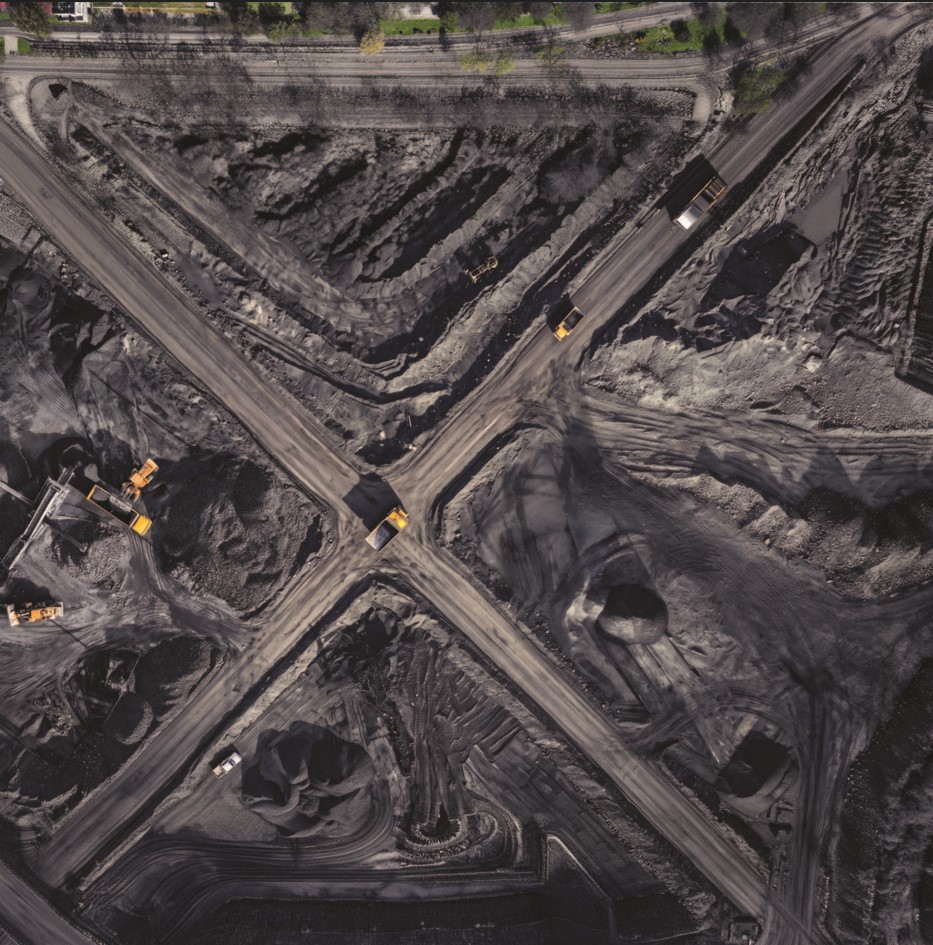
For an industry supposedly running on borrowed time, Australia’s coal sector has proven remarkably difficult to diminish.
In 2025, Australia was the world’s fifth largest coal producer and second largest exporter, according to the International Energy Agency (IEA).
The Federal Government’s June 2026 Resources and Energy Quarterly forecasts metallurgical coal export earnings to reach $38b in FY26, while thermal coal exports are forecast to generate another $30b in the same period.
However, coal occupies an increasingly complicated position as Australia tries to maintain its coal supremacy while becoming a country committed to reducing carbon emissions.
As Australia continues to export a commodity that many of its major trading partners are trying to use less of, while relying on the revenues, investment, royalties and regional employment generated by that same commodity, the industry’s future is being called into question.
Coal mining remains the backbone of communities and economies throughout the Bowen Basin and Hunter Valley regions. From Moranbah and Blackwater in Queensland, to Muswellbrook and Gunnedah in NSW, operators and residents are asking the same question — what is going to replace coal?
The reality of coal’s decline
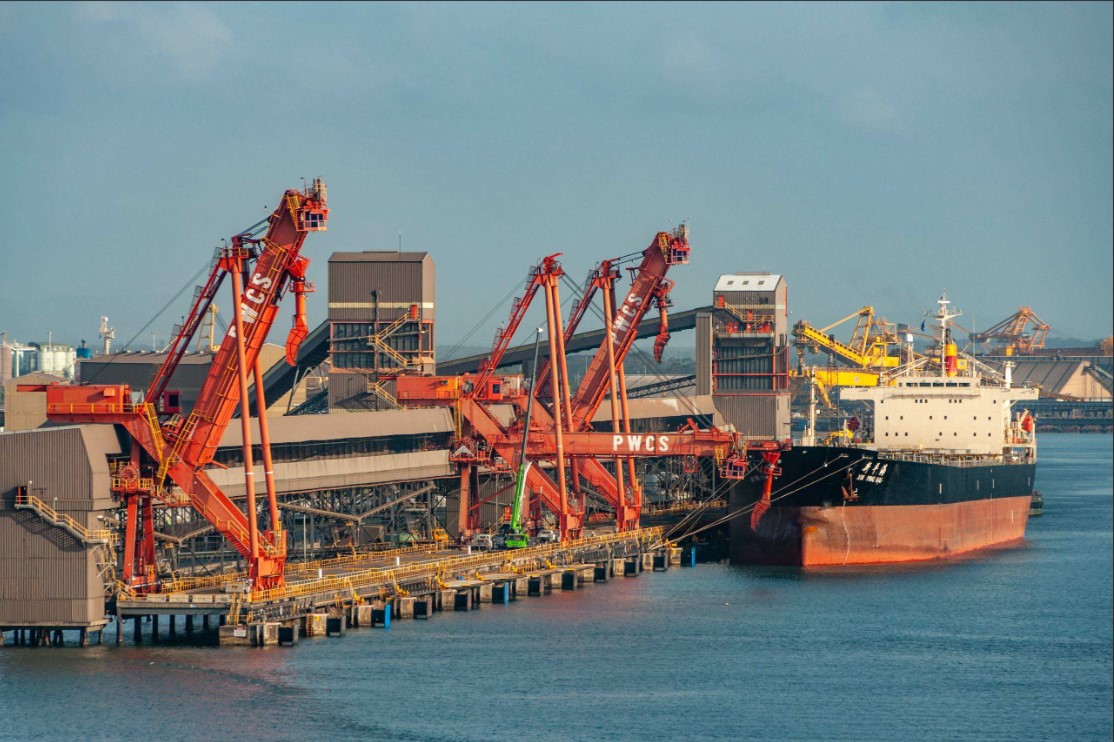 Coal is not defined by a single market, and this distinction is essential to understanding Australia’s position. Thermal coal is primarily used to generate electricity while metallurgical coal is used in steelmaking, and the outlook for the two commodities is markedly different.
Australia’s coal exports have grown substantially in the past three decades in response to strong demand from Asia, although volumes have fluctuated in recent years.
However, as the world electrifies, thermal coal markets are expected to face greater downward pressure than metallurgical coal.
According to Federal Government data, Australia accounted for about 46% of global metallurgical coal exports in 2023, making it the world’s largest exporter. In the same year, Australia accounted for about 19% of global thermal coal exports.
Australia remains exceptionally well positioned in metallurgical coal. Currently more than 95% of Australia’s metallurgical coal production is exported, according to the Federal Government’s June 2026 Resources and Energy Quarterly.
In 2025, Australia exported about 153mt of metallurgical coal and 209mt of thermal coal, according to Geoscience Australia.
Despite forecasts for softer demand, the Federal Government forecasts that in FY31 metallurgical coal will generate about $34b in export earnings while thermal coal will account for about $23b.
Though those are not the numbers of an industry in danger of disappearing overnight, it is evident that it is undergoing a transition.
NSW Minerals Council chief executive Stephen Galilee says there’s a fundamental contradiction in some policy frameworks in relation to the coal industry.
“Over the last fifteen years I’ve heard many confident predictions of the imminent demise of coal,” he said.
“Yet here we are, in 2026, with three consecutive years at or near record global coal demand, NSW coal exports stable at near record levels, NSW coal jobs close to all-time records set in 2012 and [there are] 12 NSW coal mines currently seeking extensions, representing more than 136 years of combined potential additional mining activity.
“This does not sound like an industry facing imminent decline to me.”
Global markets
Recent policy changes supporting coal have the potential to drive consumption higher, as could surging electricity demand in economies across the world, according to the IEA.
On the other hand, the rapid expansion of renewable energy capacity — particularly in China — has the potential to curb demand, according to the IEA.
The IEA also reports that globally, increasing liquefied natural gas (LNG) export capacity is likely to bring more abundant supplies and lower prices to natural gas markets, which could prompt some regions to favour gas over coal.
China consumes 30% more coal than the rest of the world put together and produces more coal than all other countries combined, according to the IEA.
This dominance by a single country makes coal markets very dependent on developments in China. The Chinese government has emphasised its ambition of reaching peak coal consumption before 2030 and, as the world’s most significant coal consumer, China will ultimately shape global trends.
As it stands today, Chinese imports are forecast to decline by around 2.5% per year on average through 2030, though the decrease will be concentrated in thermal coal, according to the IEA.
In 2025, coal generation in China declined by about 1.5%, falling for only the second time since the 1970s, according to the IEA.
The IEA reports that while China saw continued strong electricity demand growth in 2025, this was met by a combination of renewable energy output and growth in nuclear power. However, the IEA also found commissioning of coal power plants in China accelerated significantly in 2025, reaching almost 80GW.
This was the result of an elevated number of approvals between 2022 and 2024 following power shortages in 2021, according to the IEA. The construction of new plants is primarily intended to meet peak electricity demand and support China’s energy security goals.
Climate Energy Finance (CEF) director Tim Buckley says energy independence is China’s driving motivator.
“There is no lack of ambition in China to be a world leader in all zero emissions industries of the future, and there is a clear and well-structured national plan to deliver on this,” Mr Buckley said.
“However, China will build the new before dismantling the old.”
In 2025, Chinese steel output fell below 1bt for the first time in five years. Australian metallurgical coal exports also fell 9% during the year, according to the Federal Government.
While the weak Chinese property sector is expected to continue to weigh on steel demand, the Federal Government expects metallurgical coal import demand to rebound.
India, another significant global coal consumer, has plans to expand steel production and limited domestic supply of metallurgical coal which is expected to boost metallurgical coal imports and offset declines elsewhere, according to the IEA.
India is targeting crude steelmaking capacity of 300mtpa by 2030, up from about 222mtpa in June 2026. The Federal Government forecasts India’s rapid economic growth and expanding steel production capacity will sustain metallurgical coal demand in the near term.
Southeast Asian economies, particularly Indonesia and Vietnam, are among the fastest growing in the world and have recorded strong growth in metallurgical coal imports in recent years.
The Middle East conflict has also tightened LNG supply, increasing demand for thermal coal in parts of Asia as countries seek to secure their energy supplies.
“In 2021, there were 2439 coal-fired power plants operating around the world,” Mr Galilee said.
“At the start of this year there were 2428, a decline of just eleven.
“Across our major export markets in Japan, Korea and Taiwan there are currently 129 operating coal-fired power plants — the same as in 2021.”
The IEA estimated global coal demand reached a record 8.85bt in 2025 but forecasts a very gradual decline of about 3% by 2030.
“In other words, [Australia’s coal market will be determined] by whether or not our trading partners can find a suitable replacement for their national energy needs,” Mr Galilee said.
“A good example is Japan, where we export around 60mt of thermal coal annually, representing around 40% of our total exports and 70% of their own needs.
“Like us, Japan is undergoing an energy transition. Yet Japan’s recently released Seventh Energy Plan outlines a likely need for between 40 – 60mt of thermal coal imports in 2040.
“Even after 2040, Japan is likely to remain a substantial market for Australian coal, although export volumes may be lower.
“China, currently our second biggest export market, [has] half the world’s coal-fired power plants and is building 177 more. There’s clearly going to be a strong export market for our coal for a long time to come.”
China’s State Council’s action plan for carbon peaking during the 15th Five-Year Plan period says that by 2030, the country’s carbon dioxide emissions per unit of GDP will be reduced by 17% compared with 2025 and the share of non-fossil fuel energy consumption will reach 25%.
Despite these ambitions, according to CEF, China is building on average one new coal-fired power plant each week.
“However, for every coal plant that China builds, they build about 10 solar plants, five wind plants, one offshore wind plant and about 500 batteries,” Mr Buckley said.
“China now exports more clean tech per month than US exports in fossil fuels per month.
“Its exports of clean tech are up 25% in the last three months versus the first three months of this year and they’re up 50% on where they were a year ago.”
In 2025, Australia delivered 8.86mt of metallurgical coal to China, accounting for 7.5% of China’s total imports, down from 8.5% in 2024, according to the IEA.
“Pakistan was previously flagged as a potential future buyer, but Pakistan is now the third largest installer of solar in the world for the last three years in a row,” Mr Buckley said.
“Now, the number one source of electricity in Pakistan is solar modules powered by the sun and brought in from China.
“The reality is that there is no other market to absorb the volumes of coal Australia exports to China.”
Coal country
Hunter in the spotlight
Though Australia is primarily an exporter of coal, 85% of the country’s domestic coal use is for coal-fired power generation, according to the Federal Government’s Australian Energy Update 2025.
The iron and steel production market, which uses metallurgical coal to produce coke for blast-furnace steelmaking, also accounts for a portion of domestic coal use. However, Australia’s domestic steel industry is much smaller than its coal-export industry, so the volume of metallurgical coal consumed domestically is relatively modest.
According to the Australian Energy Update 2025, coal supplied 42.7% of Australia’s electricity generation in 2025.
In 2024, the Australian Energy Market Operator (AEMO) released a 25-year roadmap to transition the National Electricity Market (NEM) to net zero by 2050.
The Integrated System Plan (ISP) confirmed that renewable energy connected with transmission and distribution, firmed with storage and backed up by gas-powered generation, was the lowest-cost way to supply electricity to homes and businesses as Australia transitions to a net zero economy.
Though South Australia, Tasmania and the Northern Territory do not use coal-fired power, it continues to dominate in NSW, Victoria and Queensland where it accounted for more than half of generation in 2025, according to Federal Government data.
However, WA appears to be leading the transition with the WA Government flagging the complete exit of state-owned coal-fired power by 2030.
In the 2026 wholesale electricity market (WEM) electricity statement of opportunities (ESOO), the AEMO projects that all coal-fired generators in WA will retire or become unavailable by 2031, with the potential for some ageing gas-fired generation to also exit the market.
Mr Buckley says WA’s phase-out was accelerated by the catastrophic failure of ageing coal-fired power plants like the Collie Power Station.
“The WA Government realised how vulnerable end-of-life coal-fired power plants made the State’s energy system and economy,” Mr Buckley said.
“They realised its exit was inevitable, and not just for climate reasons.
“In WA, the cost of coal was way too expensive, and the quality of the coal was really low.”
Based on a combination of public and industry-provided information, AEMO projects 1661MW of coal and gas-fired generation will retire or become unavailable in WA during the outlook period.
The uptake of distributed energy resources including household batteries has contributed to the AEMO’s positive near-term outlook. However, the AEMO notes maintaining reliability as coal-fired generation retires will require a mix of technologies and improved infrastructure.
“WA is able to walk both sides of the street by using the State’s current $10b annual windfall from iron ore royalties to fund its energy transition,” Mr Buckley said.
“By doing so, the State is unlocking massive investment within WA and building its industries of the future.
“Those royalties are not going to last forever, and the WA Government is making the most of it now to set itself up for the future.
“Comparatively, Queensland is still spending $1.8b to modernise and maintain its coal fleet because they’re captured by the coal industry.
“Australia as a whole is still a petrostate, but the opportunity to become an electro state is enormous for our country.”
No one-for-one coal replacement
Coal mining in Australia began near Nobbys Head in Newcastle in the 1790s. Coal soon became Australia’s first commodity export with the first coal shipment leaving Newcastle for India in 1799.
Since then, Newcastle and the Hunter Valley have become central to NSW’s coal industry and export economy, with generations of regional communities developing around mining and its associated supply chains.
According to NSW Mining, Singleton was first settled in the 1820s but began to thrive when the first mine opened in 1860, ultimately becoming the biggest service town for mining in the Hunter Valley.
Now, NSW produces about 37% of Australia’s coal for export, according to the NSW Government.
The Hunter is NSW’s most productive and trade-driven coal region. However, the region’s significance is now matched by an uncertain future.
Mr Galilee says there are about 38 coal mines operating throughout NSW currently.
“Some of those mines are going to close in years ahead. But there are twelve others seeking approvals to operate for longer into the future,” he said.
“More than 8000 people work at those mines, or nearly one third of the state’s coal mining workforce.
“These are important jobs, not just for those in them, but also for the communities around them.”
Several of these proposed extensions are in the Hunter Valley, where more than half of NSW’s operating coal mines are located, one of the most significant of which is Glencore’s application to extend operations for its two Hunter Valley Operations (HVO) mines.
“There are about 20 operating coal mines in the Hunter, 15,000 direct coal mining jobs and 3400 supply chain businesses,” Mr Galilee said.
“Over recent years the industry has been spending more than $9b annually, generating about 25% of the Hunter’s economic activity.
“We know some mines are closing in the years ahead. BHP [will] close its Mt Arthur operation in 2030, while depletion of coal resources will see Glencore’s Mangoola operation follow afterwards.”
According to the NSW Minerals Council, those two mines combined currently provide more than 2500 jobs in the region.
In June, Yancoal announced it would close its Ashton coal mine in the upper Hunter Valley by early 2028, almost eight years earlier than expected. The company attributed the early closure to significant technical challenges and operational risks as well as evolving market conditions.
Operators are also facing increasing climate change pressures from surrounding communities and climate groups.
In July 2025, the NSW Court of Appeal ruled against the approval for MACH Energy’s Mount Pleasant extension, which would see the mine’s life extended 22 years to 2048, following a challenge by the Denman Aberdeen Muswellbrook Scone Healthy Environment Group. MACH Energy subsequently appealed the decision to the High Court, which heard the matter in May 2026.
The matter remains before the High Court.
As coal mines face increasingly difficult operational environments, Mr Buckley says the industry has to prepare for the reality of closures.
“We have to plan for it,” he said.
“What industry is going to replace the 20,000 coal workers in the Hunter Valley?
“The truth is that there is no single industry that’s going to do that.”
This year, the NSW Government released its NSW Coal Industry 2026-2050 roadmap to establish a clear direction for the state’s industry.
The roadmap outlines the NSW Government’s plan to allow existing coal mines to continue operating while demand remains alongside efforts to develop alternative industries in coal regions and retrain workers.
Jobs and Skills Australia says clean-energy-related sectors are expected to be among Australia’s strongest areas of employment growth over the next decade.
“Despite what some promise, [those jobs] are not coming from renewables, at least not many of them,” Mr Galilee said.
“This is because while renewables may deliver some big upfront investment, evidence suggests that once built they don’t provide many long-term jobs.
“The NSW Government hopes to secure a massive $77b in private investment in renewables by 2035, but once built, this is expected to support just 4450 ongoing direct jobs across the entire state.
“So, while this may be enabling infrastructure for the future, renewables are simply not going to deliver the large number of well-paid jobs needed to replace any lost when some mines close.
“It’s a similar story with data centres. Take for example the recent announcement of a $10bn proposal for a big battery and data centre near Muswellbrook.
“Again, such investment is welcome, and we need to have a sovereign capacity in relation to data centres, although there are apparently already 90 operating in NSW.
“According to the media reports, this $10b data centre project will support just 200 jobs once in operation — just a fraction of the 1600 local jobs at risk if the HVO extension is refused.
“Clearly, other job-generating industries are needed — industries like mining.”
Times are changing for Australia’s historic coal regions, but the country’s coal story is unlikely to end with a single closing mine or a final shipment leaving Newcastle.
Instead, the industry is entering a long and uneven period of decline, with some operations winding down while others seek extensions as global demand persists.
“It is reasonable to expect strong demand for our coal to continue for at least another decade and then slowly fall through to 2050 and beyond,” Mr Galilee said.
“Based on current planning approvals, extension applications and other information, it is my view that there should be at least ten coal mines operating in the Hunter beyond 2040, and at least 6000 Hunter coal mining jobs, probably more.
“Under these circumstances, it’s very feasible that there is still a substantial coal mining industry operating here in the Hunter in 2050.
“There will be fewer mines and lower export volumes, but this would still be an industry making a significant contribution to the Hunter economy.”
For the Hunter Valley and other coal-producing regions, the exit of coal is as much a human challenge as it is an energy one. The question is not simply how quickly Australia can move away from coal, but what happens to the people and places that have been built around it.