
The sunset of an icon
IGO after Nova
By Samantha Bawden
On July 15, IGO announced a binding agreement to sell its flagship Nova nickel operation to Global Lithium Resources. Under the agreement, IGO will transfer the processing plant, infrastructure and environmental rehabilitation liabilities to allow the asset to be repurposed beyond ore depletion
IGO’s Nova operation started, as many discoveries do, with a geological conviction from a team who recognised the significance of what lay beneath the surface and had the expertise and persistence to prove it.
IGO chief executive Ivan Vella says Nova has been one of the defining assets in IGO’s history.
“Nova helped transform IGO from an explorer into one of Australia’s leading critical minerals companies,” he said.
“Discovered in 2012 and commissioned in 2017, Nova has generated significant value for shareholders and set an operating standard that still influences how we run the broader business.”
Out in WA’s Fraser Range, Sirius Resources’ exploration team had spent years narrowing their search. Soil geochemistry, geophysics and drilling had progressively strengthened the case for a significant mineralised system beneath the surface. In July 2012, that work culminated in a drill hole that intersected what would later be known as the Nova deposit, one of Australia’s most significant nickel discoveries of its generation.
From that moment, momentum built quickly. What began as a remote exploration success in 2012 turned into a fully operational underground mine within just a few years. Development commenced in 2015, and by 2017, the Nova Operation was producing at scale.
What followed was nearly a decade of consistent, disciplined performance, delivering significant value throughout its mine life, despite a volatile nickel cycle. The Nova Operation built a reputation as a high-performing asset — efficient, reliable and underpinned by a culture that valued safety and teamwork.
Just like any mining operation, there were challenges along the way. But each time, the response remained steady, focused and collective.
IGO Nova general manager Brazil Miller says Nova has been the benchmark operation for IGO.
“It’s the people here who have really made Nova what it is,” he said.
“People want to come to work, they are the ones who are turning up every day and who are making a real difference.
Nova’s edge came down to its geology, business improvement mindset and operational focus. Running at 1.85% nickel, Nova was a comparatively high-grade nickel sulphide operation by global standards. Combined with a relatively shallow orebody, thick massive sulphide zones, efficient bulk mining methods and strong metallurgical performance, it delivered a cost structure that few peers could match.
That advantage proved decisive when the nickel price collapsed in FY24, as a supply glut pushed nickel prices to multi-year lows and forced a wave of closures across WA’s nickel sector.
Across the state, one by one, higher-cost operations were placed into care and maintenance. Yet Nova kept shipping concentrate and remained in production while many of its peers across WA were forced to curtail or suspend operations.
Today, Nova stands as an asset that not only delivered high-quality nickel, copper and cobalt, but also demonstrated what’s possible when expertise, persistence and belief come together.
“What I see at Nova is the embodiment of IGO’s value of ‘be better together’, not just because of something that the company puts up on their site — but something that is really part of the Nova DNA,” Mr Miller said.
From 2017 to 2026, Nova produced 224,277t of nickel, alongside copper and cobalt, according to IGO.
IGO chair Vanessa Guthrie says Nova has been a cornerstone asset for the company.
“Nova has been a cornerstone asset for IGO over the past decade, contributing significantly to the company’s growth and establishing a benchmark for operational excellence,” Dr Guthrie said.
“Equally important is how we responsibly manage Nova’s move toward closure and complete the subsequent divestment during FY27.”
In FY26, Nova delivered one of the strongest operational performances in its history, producing 15,304t of nickel concentrate at payable cash costs of $4.74/lb, comfortably beating full-year cost and production guidance.
IGO reported a net profit of $145m for FY26, a major turnaround from the $955m loss reported in FY25. Despite group revenue falling 12% year-on-year to $463m during the period, underlying free cash flow increased 176% to $134m and underlying EBITDA hit $286m, recovering from the $43m loss reported in FY25.
Dr Guthrie says the company’s focus for FY26 was on strengthening the resilience of the business while positioning IGO for disciplined, value accretive growth.
“This has required clear choices: prioritising safe and reliable performance, preserving balance sheet strength, and advancing opportunities where IGO’s capabilities can create sustainable advantage,” she said.
“At Nova, our flagship operation delivered another year of outstanding results as it approaches the end of its mine life.
“The discipline and technical capability demonstrated by the team have enabled consistent, reliable outcomes in a period of increasing operational complexity.”
IGO’s future frontiers
As Nova approaches closure, IGO is repositioning its portfolio around copper and lithium while divesting non-core assets.
The strategy was reflected in FY26, when IGO reported stronger operating and financial performance supported by higher lithium, nickel and copper prices, disciplined cost and capital management and continued portfolio simplification.
IGO’s lithium business earnings increased in FY26, reflecting improved spodumene prices, while the turnaround also reflected the absence of the significant Kwinana Refinery impairment recognised in FY25.
Despite the broader improvement in lithium earnings, the Kwinana refinery produced 8839t of lithium hydroxide in FY26, just shy of the lower end of the guided range of 9000–11,000t. Performance remained below expectations due to ongoing operational challenges associated with the ramp-up of Lithium Hydroxide Processing Plant 1 (LHP1), together with broader structural market pressures affecting downstream processing in Australia.
At IGO’s Kwinana Refinery, capital expenditure focused on LHP1 improvement projects following the prior-year decision by shareholders to cease all further works on LHP2.
Unlocking the full potential of lithium
IGO’s lithium business is held via the company’s 49% equity interest in TLEA, an incorporated joint venture with Tianqi Lithium Corporation (51%). TLEA owns and operates an integrated lithium business which includes a 51% interest in the Greenbushes operation and 100% interest in the Kwinana Refinery.
IGO says Greenbushes is one of the world’s highest-quality hard-rock lithium operations, with exceptional underlying economics, and FY26 reinforced the value potential of the asset.
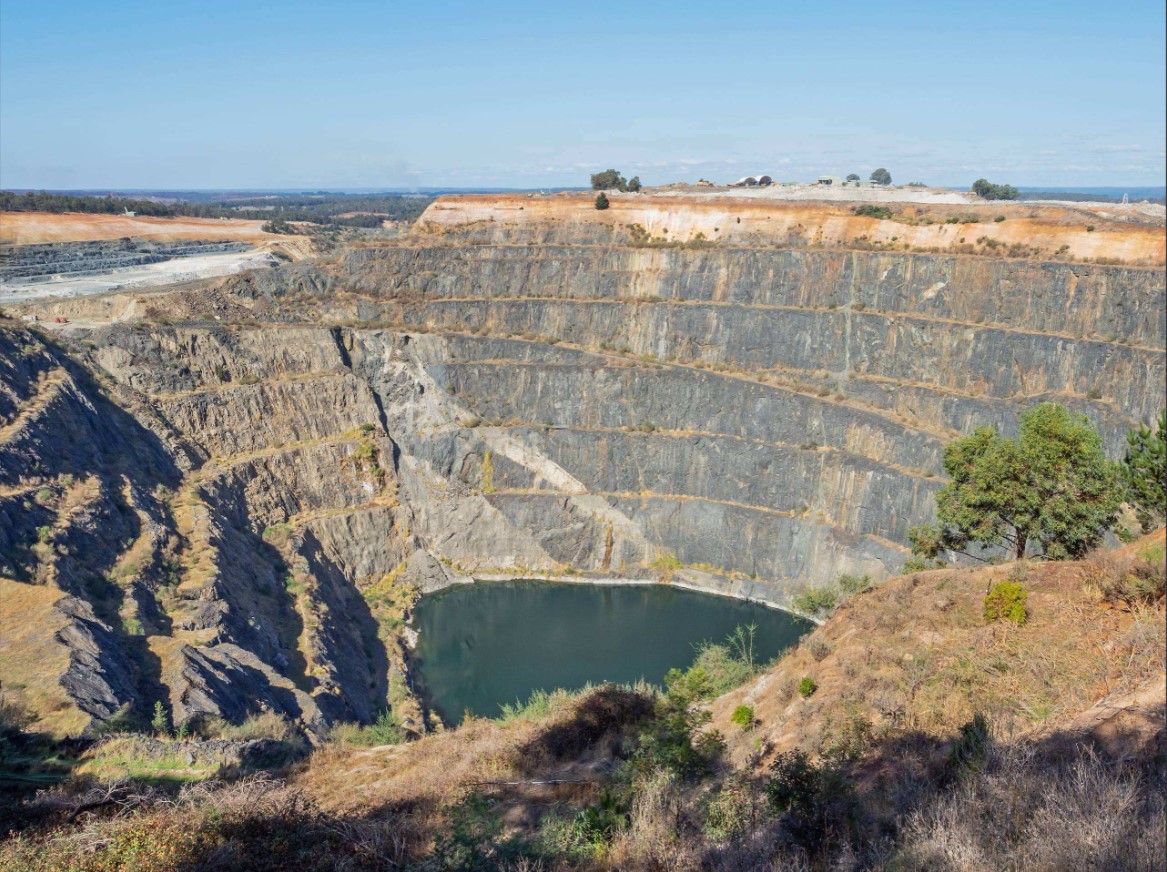
Located about 250km south of Perth, Greenbushes was initially mined for tin minerals from 1888 and later for tantalum. Talison and its predecessor companies have been producing lithium mineral concentrates from Greenbushes continuously since 1983, making it Australia’s longest operating lithium minerals producer, according to IGO.
The site comprises a large open pit mine, four processing plants — Chemical Grade Plant 1, Chemical Grade Plant 2, a tailings retreatment plant and a Technical Grade Plant which produces technical grade lithium concentrates and associated infrastructure. Combined, the plants have total nominal processing capacity of 6.5mtpa producing up to 1.5mtpa of lithium mineral concentrate.
Chemical Grade Plant 3 (CGP3) was commissioned during FY26, with first ore processed in December 2025. The plant has a processing capacity of 2.4mtpa producing up to 500,000tpa of lithium mineral concentrate.
In FY26, IGO reported annual spodumene concentrate production reached 1.4mt, 5% down from FY25 figures, at cash costs of $415/t for the year, with production at the upper end and cash costs within revised guidance.
During the period, IGO invested $355.7m in development, sustaining, improvement and deferred stripping activities, alongside the commissioning of CGP3 at the Greenbushes operation.
The CGP3 ramp-up was progressing ahead of plan until a fire occurred at the facility in June, taking the plant offline for about seven weeks. Production recommenced in early August. Despite the incident, Greenbushes production remained within revised guidance for FY26.
“Greenbushes is already a Tier 1 asset by any global measure; our responsibility is to make sure it consistently performs like one,” Mr Vella said.
“The opportunity lies both in preserving the value of the asset today and equally unlocking the next phase of value accretion tomorrow.
“Greenbushes continues to underpin IGO’s strategy by supplying battery minerals that are critical to the global energy transition.
“While operational challenges arose during the year, including the CGP3 plant fire incident, Greenbushes remains a Tier 1 asset with exceptional margins and long-term strategic importance.”
The Kwinana facility, part of IGO and Tianqi’s joint venture, is one of the largest fully automated battery-grade lithium hydroxide facilities globally and the first to be built in Australia.
Kwinana forms part of a vertically integrated lithium value chain with Greenbushes supplying the chemical-grade lithium spodumene concentrate feedstock required to produce battery-grade lithium.
Production at the refinery commenced in the Q2 FY23, and the plant has a nameplate capacity of 24,000tpa.
During FY26, Tianqi Lithium Kwinana (TLK) completed a number of significant equipment upgrades to improve process design, engineering and operating controls and lift lithium hydroxide production towards nameplate capacity. The refinery produced 8839t of lithium hydroxide monohydrate (LHM) during the year, a 30% year-on-year increase.
However, the Kwinana facility remained a challenge for IGO in FY26 as TLK continued to miss operational performance guidance, with optimisation programs ongoing.
“We continued to work with our partner, Tianqi Lithium Corporation, on the future of the asset; that conversation is ongoing and not yet resolved,” Mr Vella said.
Annual production at Kwinana was higher than FY25, though Q4 was affected by a planned shutdown, and the refinery continues to face real challenges with ramp-up, reliability and the broader competitiveness of lithium chemical production in Australia.
“These challenges are not unique to Kwinana and have become increasingly evident across the lithium conversion sector globally,” Mr Vella said.
“Encouragingly, lithium market conditions improved during FY26.
“However, our assessment remains that sustainable long-term success of downstream processing in Australia requires not only stronger lithium prices but also operating and capital structures capable of delivering acceptable returns through the cycle.”
IGO reported that 99.1% of Kwinana’s finished product met battery-grade standards and TLK continued to secure product qualification with new customers in FY26.
Looking ahead to FY27, Talison’s focus at Greenbushes is centred on further safety improvements, the safe ramp-up of CGP3 following its restart, and implementing the outcomes from the strategic review to unlock Greenbushes’ full value and maximise mine-to-market supply chain performance.
For the Kwinana Refinery, TLEA will continue to drive operational improvements to lift production towards nameplate capacity, with a stringent and disciplined approach to capital allocation. IGO says this approach will continue while it works proactively with Tianqi to find a sustainable path forward that is acceptable to both shareholders.