NSW Minerals Council chief executive Stephen Galilee says the mining sector’s contribution to the state for FY25 was one of the largest seen in the survey’s 14-year history.
“In the current climate of economic uncertainty, it is vital that governments support industries like mining that deliver such stability to the economy,” he said.
“Approving mining projects that secure jobs and economic growth for the future is good policy. New taxes and new red tape for an industry already drowning in compliance burdens is not good policy.”
more than half of the areas gross regional product (GRP).
The area has a rich mining history and is set to play an important part in the future of Australia’s strategic mineral development future. With an established network of gold and coal mines, the region is also emerging as a major critical minerals asset.
In November 2021, the NSW Government announced plans to develop a critical minerals hub throughout the region.
The Dubbo project
There are several emerging critical minerals projects currently in the region’s development pipeline, including Australian Strategic Materials’ (ASX: ASM) Dubbo project.
Located near the town of Toongi, 25km south of Dubbo, the project encompasses a polymetallic resource containing light and heavy rare earths, zirconium, niobium and hafnium.
Dubbo Regional Council strategic partnerships and investment manager Kim Hague says Dubbo is surrounded by gold and coal mines at Parkes, Orange and Mudgee.
“The council hopes the projects that are fuelled by changing market demands, will support sustainable job creation for regional communities,” she said.
“The development of new projects is set to deliver significant economic and social benefits for both the region and the state, creating long-term jobs and quality career opportunities.
“These projects will also drive investment in training and education programs that will be tailored to the skills people need for these jobs, while also supporting further opportunities for our young people who want to have a career in regional areas.”
ASM intends to develop the Dubbo project to produce a range of metal oxides and mixed chlorides with current reserves supporting an initial project life of 20 years, with potential for a significantly longer mine life.
These products will be available in a range of standard and customised specifications, based on market requirements.
ASM has completed significant successful test work to optimise oxide recovery in partnership with the Australian Nuclear Science and Technology Organisation (ANSTO).
Long-term, the materials produced from the project will be used for refining into critical metals and alloys at ASM’s metals plants, the first of which is established in South Korea.
“The Dubbo project has been approved by the NSW Government and, according to ASM, is projected to deliver up to 1000 local jobs during the construction phase, and about 270 jobs during operational phase,” Ms Hague said.
“Final investment decisions are planned for the first half of 2026.”
Tomingley gold operations
Located about 50km southwest of Dubbo, Alkane Resources’ (ASX: ALK) Tomingley gold operations commenced production in 2014. The project encompasses an area of about 440km2, with prospective belt extending from near the village of Tomingley in the north, through Peak Hill and almost to Parkes in the south.
The project initially centred around mining the Wyoming One, Wyoming Three, Caloma One and Caloma Two gold deposits which, combined, yielded more than 500,000oz of gold.
Alkane is currently undertaking a series of expansion projects to extend the mine life beyond 2030. This includes extending gold mining operations to include the San Antonio and Roswell resources immediately south of the existing mine. Underground mining commenced at Roswell in April 2024.
The extension project also permits development of a large open pit and a higher processing rate of 1.75mtpa. The Tomingley five-year plan, from FY24 to FY29, facilitates an increased potential production rate of 100,000ozpa from 2027.
Since underground mining commenced in 2018, extensive underground drilling has been employed to define ore reserves for extraction and maintain exploration to define additional resources.
In February, Alkane reported the discovery of a gold-bearing geological structure as part of its latest exploration drilling campaign at the site, highlighting results from both underground and near-mine targets.
Alkane managing director and chief executive Nic Earner says continued exploration reveals extensions to existing deposits, which remain open at depth and along strike, as well as new areas of mineralisation.
“This drilling demonstrates the significant resource expansion potential across the mine site, we look forward to revealing this potential, both near mine and regionally around Tomingley,” he said.
The recent significant gold results from the underground drilling of the Western Monzodiorite domain has initiated a second phase of drilling that will test the upper and lower portions of the Inferred domain. This program is underway and expected to be completed by Q3 CY26.
Coal
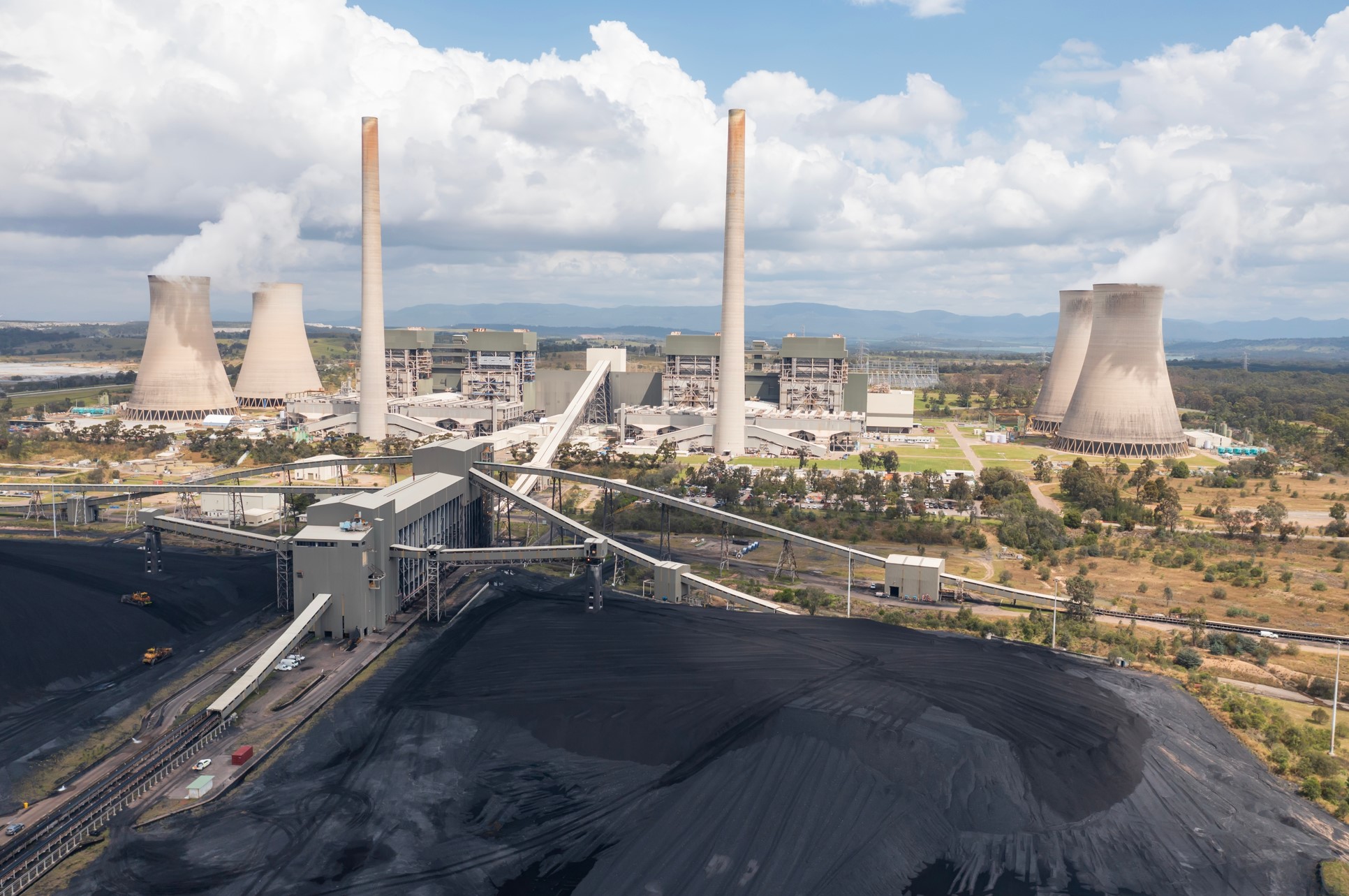
According to the NSW Minerals Council, the coal sector delivered the largest contribution to the NSW economy in FY25, delivering $19.3b in direct spending, directly provided more than 26,100 jobs and delivered $3.3b in royalties and other taxes to the NSW Government.
Glencore’s Ulan coal complex, located about 45km north-east of Mudgee, is one of NSW’s longest running coal mining operations.
In FY24, Ulan produced 10.33mt of saleable product with a total contribution of $856m, including $471m spent on goods and services.
Whitehaven operates multiple coal projects across the region, including its newest and largest coal mine, Maules Creek, which has been in operation since 2015.
With coal reserves to support 40 years of production, Whitehaven originally anticipated coal sales from the mine to deliver $2.4b in royalties in its first 21 years of production.
The NSW Government is currently assessing an extension of mining area and life proposal for the site, which is currently approved to operate until 2034.
Controversy at Cadia
Located near Orange in the central west, the Cadia site comprises comprises the Cadia East underground mine, which is one of the largest gold and copper deposits in the world according to Newmont (ASX: NEM), the Cadia Hill pit tailings storage facility and the Ridgeway underground mine, which is currently in care and maintenance.
In 2022, a molybdenum plant was commissioned to provide an additional revenue stream from a usually discarded byproduct.
Cadia is currently approved to continue operations until 2031, and Newmont is seeking to extend operations with the Cadia continued operations project (CCOP).
In February, lawyers filed an environmental class action in the Supreme Court of NSW against Cadia Holdings, a subsidiary of Newmont.
Following nearly two years of investigation by William Roberts Lawyers, working in conjunction with the Cadia Community Sustainability Network (CCSN), the Environmental Defenders Office (EDO) and expert scientists, alleges arsenic, heavy metals and PFAS have been detected on private properties.
The claim alleges that the pollution has been caused by the Cadia mine, through dust emissions and water contamination, and also alleges it has contaminated more than 2000 properties within a 17km radius.
A hearing has been scheduled for March.
This is not the first time the local community has flagged pollution concerns. In 2018, residents of the Cadia and Errowanbang valleys rose pollution concerns with the NSW Environment Protection Authority (EPA) following the collapse of a tailings dam wall at the mine.
Also in 2025, the NSW EPA conducted an independent review of Cadia’s water monitoring programs to determine whether they were fit-for-purpose for identifying and to identify potential impacts on groundwater and surface water associated with the operations.
The EPA review found no conclusive evidence linking Cadia Valley operations to significant degradation of waterways but identified frequent elevated heavy metal levels in some groundwater deposits. The NSW EPA did criticise the quality of the operations monitoring systems, noting gaps in the monitoring network, limited data integration and a lack of formal trend analysis.
Late last year, NSW Health investigated potential health impacts of exposure to heavy metals in the Cadia region in response to community concerns about dust emissions.
The investigation found no definitive evidence of health impacts from heavy metal exposure among volunteers who were assessed.
Orana renewable energy zone
The NSW Government is in the delivery phase for the state’s first renewable energy zone (REZ) in the central west Orana region.
The Orana REZ is about 20,000km2 centred by Dubbo and Dunedoo, on the land of the Wiradjuri, Wailwan and Kamilaroi people.
. The REZ is expected to provide at least 4.5GW of new network capacity to be increased to 6GW by 2038.
The project includes 90km of 500kV transmission lines and 150km of 330kV transmission lines to connect several renewable energy generation facilities to the grid. They will extend from Elong Elong in the west to Barigan Creek in the east via the Merotherie power centre, with eight substations.
The new transmission infrastructure will enable generators, such as solar and wind farms, participating in the REZ to export electricity to the rest of the network.
It is forecast to support an annual average of about 1850 direct jobs in the local area during construction and about 930 ongoing operational jobs from 2034 as well as up to $25b in private investment.
“Just as importantly we are also looking at opportunities for these projects to give back to the community, be that through the support of legacy infrastructure, community groups, sporting groups and volunteer organisations, similar to what is being done with development within the central west Orana REZ,” Ms Hague said.
“We are already seeing the training sector pivot towards construction programs with the central west Orana REZ to reach peak construction in 2028, and we expect to open the Renewable Energy and Career Training Centre (REACT Centre) the same year in Wellington to assist further education in this environment.”