At 2pm on July 31, 1902, Mount Kembla Colliery exploded. The blast killed 96 workers, shattering families across the Illawarra region of NSW.
The Mount Kembla explosion remains the worst recorded mining disaster in Australian history.
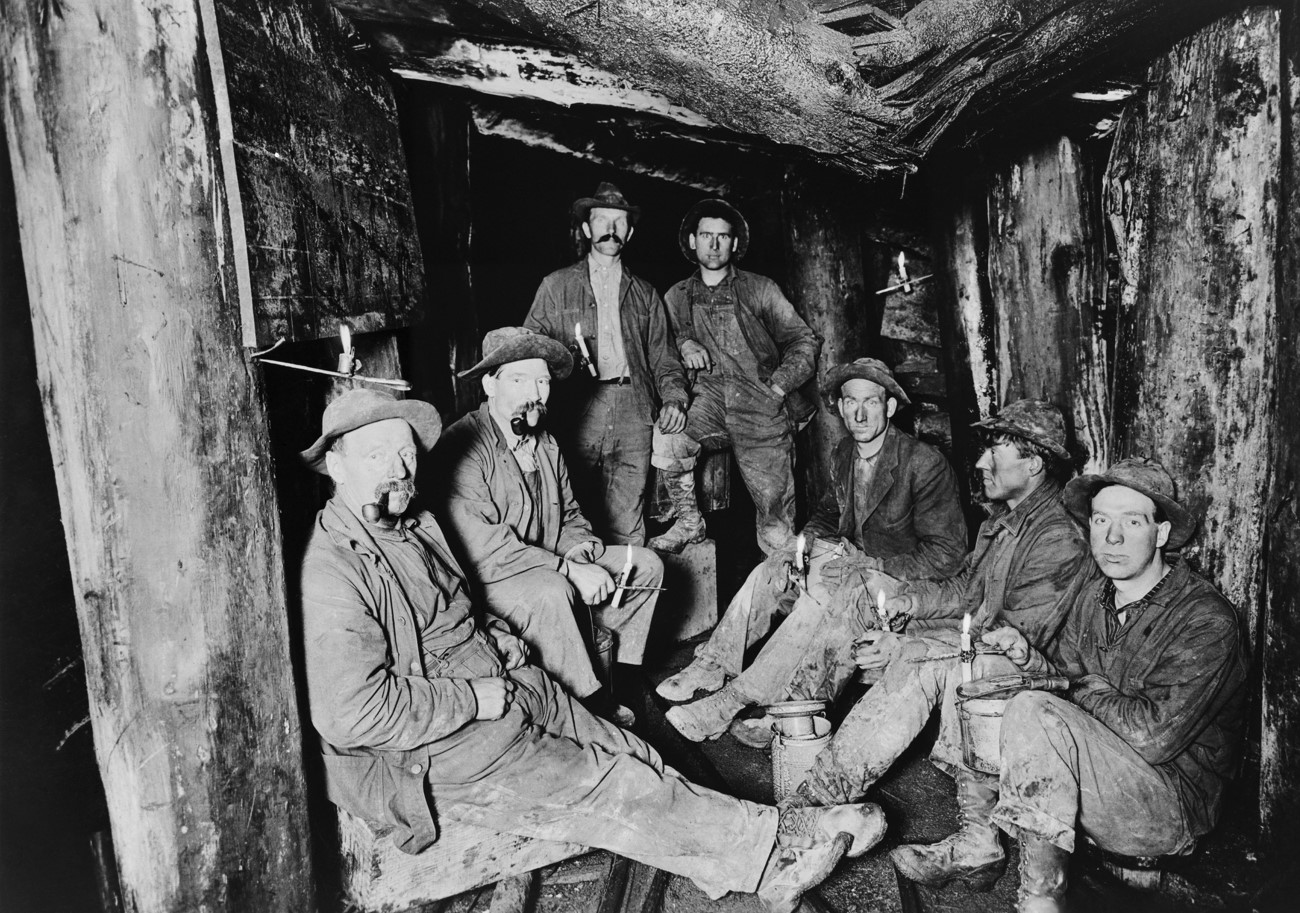
No one knew exactly what caused the explosion, but an inquiry into the tragedy determined that it was likely due to gas and coal dust. The Royal Commission concluded that the disaster could have been prevented if naked lights were substituted with safety lamps.
On September 19, 1921, a series of violent explosions ripped through the Mount Mulligan coal mine in central Queensland. The explosions killed 75 workers.
The investigation that followed revealed a shocking level of negligence. Despite operations commencing more than a decade after Mount Kembla tragedy, workers at the Mount Mulligan mine were told it was safe to use open flame lights instead of safety lamps in the coal dust heavy underground tunnels.
The Royal Commission uncovered even more damning evidence of negligence in the reckless handling of explosives and a failure to manage coal dust hazards.
Mount Mulligan was a disaster waiting to happen. It exposed a deep disregard for worker safety and a complacent attitude that dangerous working conditions were normal. The disaster was an impetus to the passing of the Queensland Government’s Coal Mining Act which would ban the use of open flames in underground coal mines.
Shortly after, in 1923, the Queensland Government purchased the Mount Mulligan mine, setting a precedent for government involvement and responsibility in enforcing safety standards in mining.
Though these tragedies triggered a cultural shift from reactive to proactive safety, the Australian resources sector still had a very long way to go.
Moura region tragedies
In the rural coal town of Moura, tragedy did not strike as a single event. Across less than two decades, three disasters claimed 36 lives in the central Queensland coalfields.
In 1975, at the Kianga coal mine, 13 men died in an underground explosion. The mine was sealed without their bodies being retrieved.
In 1986 a second disaster occurred at the Moura No. 4 mine as another underground explosion took the lives of 12 miners.
In Moura on August 7, 1994, a third major mining accident occurred with an explosion at Moura No. 2 mine killing 11 miners. A second explosion at the mine two days later saw rescue attempts abandoned, and the mine sealed with the bodies of the workers still inside.
The Moura tragedies were a grim reminder that, despite decades of progress, mining was still one of the most dangerous jobs in Australia.
The tragedies also exposed a catastrophic failure of organisational learning. Despite previous incidents, effective gas monitoring, fire detection and risk escalation were not effectively embedded into site safety systems. Beneath the incidents was a culture where hazards were normalised and the absence of immediate catastrophe was mistaken for control.
The modern safety landscape
Following its history shaped by tragedy, Australia has now grown into a global industry safety leader.
The industry has moved away from a prescriptive regulation safety approach to one of proactive, risk-based safety management.
In the decade from 2003, the fatality rate of mine site workers was reduced by 65% from 12.4 to 3.4 fatalities for every 100,000 workers, according to Safe Work Australia data.
In the past, most deaths were a consequence of principal hazards including fires and explosions, flooding and structural collapse. As a result, most safety work has historically centred around these hazards as they present the most immediate risk to workers and sites.
Now, most deaths and injuries are the result of “one-off” events across a diffuse range of scenarios, including falls from height, being struck by objects, being caught in machinery and vehicle collisions. These safety risks are far more complex than principal hazards and addressing them is far less straight forward.
Complacency: the silent killer
There is no finish line in workplace safety. With technological advancements and constantly evolving workplace settings, safety is not something that can be fixed once and for all.
Complacency poses a severe threat to worker safety by creating a false sense of security that often leads to hazard desensitisation. This can have devastating results as workers begin to lack awareness of their surroundings and possible negligence.
Complacency happens gradually when a sense of urgency or risk gradually fades away due to familiarity and repetition.
Comfort can lead to the adoption of an “it won’t happen here” attitude and is often strongest in organisations that have not had recent safety incidents, according to Orana Skills Centre.
This can lead to procedures becoming outdated, risk registers not being reviewed and unverified critical controls. As comfort dulls vigilance, controls begin to silently fail — leaving room for unprecedented tragedy.
Frequent safety checks and ongoing safety training are essential to reducing complacency and keeping workers as safe as possible.
The state of safety culture
Sentis’ State of Safety Culture in Mining 2022 report identified overall negative safety culture as one of the most prevalent trends in Australian mining safety.
The report found 88% of mine sites operate with an overall negative safety culture, slightly higher than the overall cross-industry benchmark of 86%.
According to AusIMM, a negative safety culture is driven by shared attitudes and beliefs where safety is seen as a burden, a waste of time or something that gets in the way of getting the job done. In these environments, safety is ultimately viewed as something that is imposed by leaders or the organisation, rather than coming from a place of internal motivation.
As a result, compliance with safety processes, rules and procedures is sporadic and often depends on monitoring and enforcement.
This manifests in a culture where workers take a “tick and flick” approach to safety, only complying with safety procedures when being watched and monitored, covering up incidents and cutting corners on safety procedures they don’t see value in, according to AusIMM.
In this type of culture, it’s not a question of if an incident will occur, but when and how serious.
According to the Sentis report, reviewing safety systems and procedures for clarity and accuracy and engaging workers in the process is the first step towards improving safety culture. Taking a consultative approach helps to ensure that new procedures are practical, simple and easy to follow in the field — helping to foster engagement and motivation.
Effective role modelling from a managerial level is also crucial to improving workplace safety attitudes. Without effective role modelling of helpful safety attitudes and behaviours by managers, a disconnect erupts and poor perceptions of the organisation’s commitment to safety run riot, according to Sentis.
Transforming safety culture, even in small steps, requires ongoing effort and the commitment of leadership.
FIFO and the quiet strain
Despite a huge increase in mine automation and remote operation technologies that reduce exposure to hazards, risks to workers extend beyond just the physical.
Mining has long been associated with resilience and endurance, but that culture can also discourage workers from speaking openly about mental health challenges. Admitting stress or emotional difficulty can still be perceived as weakness or a liability.
This culture has real consequences.
A 2018 Medical Journal of Australia study found 28% of remote mining and construction workers had high or very high psychological distress, compared with 10.8% of the Australian population.
Poor mental health can compromise decision making and reduce vigilance which can lead to safety problems, according to The University of Queensland.
In recent years, mining companies and regulators have begun to treat mental health as a core safety issue rather than a peripheral concern.
Major miners, such as BHP (ASX: BHP), Mineral Resources (ASX: MIN) and Rio Tinto (ASX: RIO), have publicly committed to improving mental health safety, integrating it into broader health and safety frameworks.
Safe Work Australia has also expanded its guidance to include psychosocial hazards, recognising factors like workload, remote work and organisational culture as legitimate workplace risks.
Safety is no longer defined solely by the absence of physical injury, but by overall worker wellbeing.
However, challenges persist.
Access to consistent mental health support can vary widely between sites and companies. Workers may hesitate to use employer-provided services if they fear confidentiality could be compromised or career prospects affected.
While awareness campaigns have increased visibility, translating that awareness into everyday cultural change where workers feel genuinely safe to speak up is an ongoing mission.
For the workers doing the hard yards on site, the goal is no longer just to return home safe — it is to return home whole.
Zero harm
The long-term goal of the mining industry is a zero harm future and, while this may once have seemed aspirational at best, technological advancements and evolving management systems are bringing it closer to reality.
Autonomous operations, predictive analytics and integrated safety platforms seem to be leading the industry towards a future where risks can be identified and mitigated before they result in harm.
However, in an industry that involves working deep underground, handling heavy machinery and interacting with unpredictable environments, can all risks truly be eliminated?
Whether you believe zero harm to be realistic or unattainable, there is one thing everyone agrees on: every worker deserves to return home safely at the end of the day.