
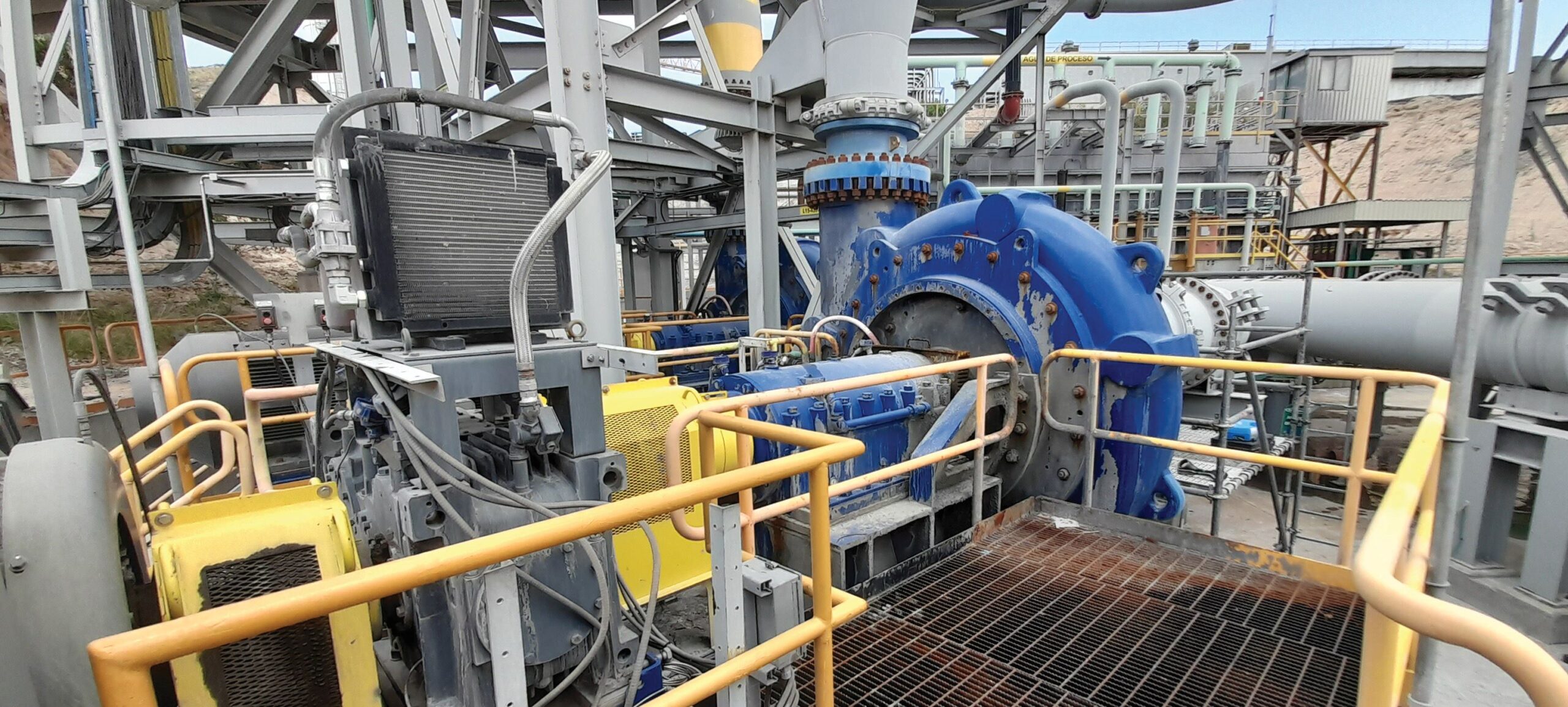
For much of the mining industry’s history, maintenance followed a reactive model. Equipment was repaired after failure, shutdowns were often unplanned, and reliability improvements were driven by experience rather than data.
That approach is rapidly changing.
Across Australian mining operations, operators are moving away from reactive maintenance and toward proactive and predictive strategies. Rising cost pressure, labour constraints, and heightened expectations around safety and uptime are forcing a rethink of how critical assets are managed.
Maintenance is no longer just about fixing what breaks. It is becoming a strategic tool for improving operational certainty.
Pumps sit at the centre of this shift. From slurry transport and tailings handling to dewatering and process water, pump performance has a direct impact on production continuity. In abrasive and corrosive mining environments, even small failures can escalate quickly, disrupting entire circuits and driving significant downtime costs.
This has led many sites to reassess not just how often pumps are maintained, but how intelligently that maintenance is planned.
Proactive maintenance focuses on addressing failure mechanisms before they result in unplanned stoppages. In pumping systems, this often starts with improving fundamentals such as installation practices, alignment, sealing consistency and access for inspection. Simplifying maintenance procedures reduces the likelihood of human error and shortens intervention times, delivering immediate reliability gains without major capital investment.
However, proactive maintenance alone is no longer enough.
As operations push for greater predictability, predictive maintenance is becoming the next evolution. Predictive strategies rely on condition awareness, enabling maintenance teams to identify wear trends and intervene before performance deteriorates to the point of failure.
This is where digital wear monitoring technologies are playing an increasingly important role.
Technologies such as KSB’s, GIW® SLYsight are helping mining operators move beyond time-based maintenance schedules and toward data-driven decision making. By providing ongoing insight into component wear, internal clearances and remaining wear life, these tools support a clearer understanding of asset condition throughout the pump lifecycle.
This visibility allows maintenance activity to be aligned more closely with actual asset condition, reducing unnecessary disassembly and helping avoid unplanned downtime. It also supports more accurate maintenance planning, enabling teams to schedule interventions based on wear progression rather than fixed intervals.
Importantly, predictive maintenance does not replace good fundamentals. Digital tools are most effective when paired with maintainable equipment design and simplified service procedures. If pumps are difficult to inspect, service or reinstall correctly, the value of condition data is significantly diminished.
As a result, mining operators are increasingly prioritising equipment and maintenance practices that support both physical serviceability and digital monitoring. The goal is not complexity, but clarity.
The broader shift from reactive to proactive and predictive maintenance reflects a change in mindset across the industry. Maintenance teams are being empowered to prevent failures rather than respond to them, while reliability is increasingly recognised as a driver of productivity, safety and cost control.
As Australian mining operations look toward 2026 and beyond, this transition is set to accelerate. The future of maintenance is not defined by more frequent intervention, but by smarter, earlier and better-informed decisions.
For pumping systems in particular, predictive maintenance supported by tools like GIW® SLYsight is becoming a key enabler of that future.