Rethinking lighting performance in remote mining
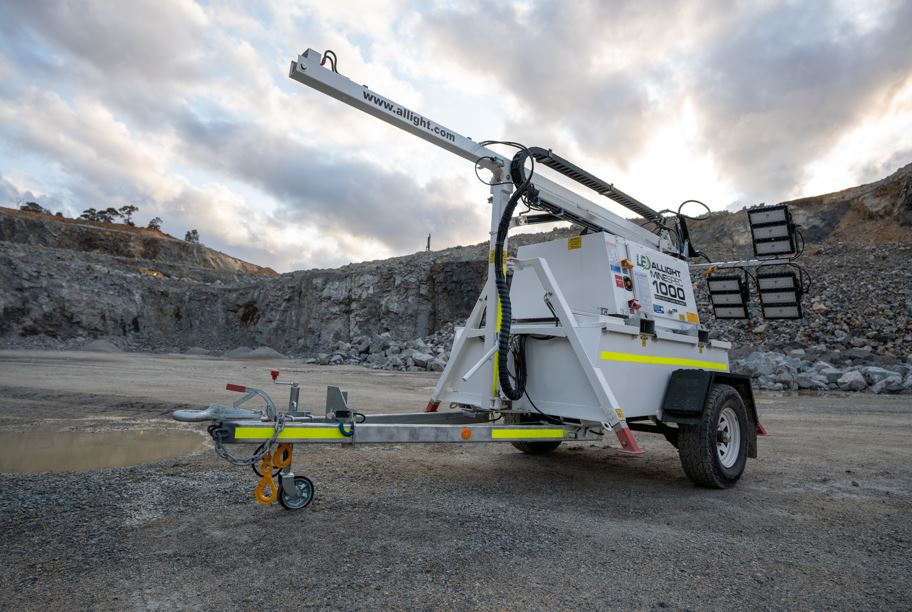
The Allight MineSpec 1000. Light that keeps on giving.
In remote mining operations, every unnecessary site intervention carries a cost. Whether it is a refuelling run, maintenance event or unplanned equipment downtime, each interaction impacts labour allocation, logistics, productivity and safety exposure.
Lighting infrastructure is no exception. While lighting towers are often viewed as supporting equipment, they play a critical role in maintaining operational continuity, enabling safe working conditions and supporting productivity across extended shifts and complex site layouts.
However, mining environments demand more than just light output. Equipment must operate reliably in isolated locations where access is limited, service costs are high and downtime can directly impact production.
As mining operations continue to focus on productivity, safety and operational efficiency, there is increasing demand for equipment capable of delivering longer runtime with less intervention. Long-runtime, fuel-efficient lighting towers are becoming an increasingly important part of that equation.
Engineered specifically for mining environments
Allights MineSpec range of lighting towers has been engineered specifically for mining, civil infrastructure and industrial worksites, where durability, reliability and operational efficiency are critical.
Purpose-built in WA, the MineSpec range has been designed to withstand harsh Australian operating conditions, including vibration, airborne dust, extreme temperatures and continuous operating demands.
The company’s class leading model, the MineSpec 1000, was developed in consultation with mining operators to address common challenges experienced across WA iron ore operations. The result is a lighting solution focused on reducing operational interruption, improving runtime performance and minimising refuelling intervention.
Reducing vehicle intervention and refuelling requirements
At the core of the MineSpec 1000’s operational proposition is the ability to operate for extended periods with minimal interaction.
With a runtime capability exceeding 1000 hours, the MineSpec 1000 significantly reduces refuelling frequency over the life of a project. This delivers several operational benefits, including fewer vehicle movements, lower labour requirements and reduced disruption to production activities.
In remote areas of mine sites — particularly exploration drill pads and isolated operational zones — the ability to deploy a true “set and forget” lighting solution can provide substantial logistical advantages.
Importantly, fewer refuelling events also contribute to improved site safety outcomes. Every refuelling trip introduces additional exposure to light vehicle and heavy vehicle interaction risk. By reducing the number of required refuelling events, the MineSpec 1000 helps minimise personnel exposure across active mining environments.
Fuel efficiency delivering operational benefits
Fuel efficiency remains a major consideration for mining operations, particularly where fuel logistics are challenging and transport costs are high.
The MineSpec 1000 incorporates a Perkins two-cylinder, water-cooled diesel engine engineered to deliver exceptional fuel efficiency while maintaining reliable performance in demanding environments.
Operating at about 1L/h, the MineSpec 1000 more than halves fuel consumption compared to traditional metal halide lighting towers. Combined with a large-capacity fuel tank, the unit can operate for up to 12 weeks without refuelling under typical production conditions, whereas many comparable LED lighting towers may require refuelling every two to four weeks.
This reduction in fuel consumption and refuelling frequency delivers several operational benefits, including lower operating costs, reduced fuel logistics, fewer labour hours and lower emissions.
Compared to traditional metal halide systems, LED lighting technology can contribute to about 53% lower fuel consumption and a corresponding reduction in carbon emissions.
Improving labour utilisation
In remote mining environments, the true cost of refuelling lighting towers extends well beyond fuel itself. Travel time, labour allocation, vehicle utilisation and production disruption all contribute to the operational burden associated with maintaining site lighting infrastructure.
Using the example of a lighting tower deployed 10km from a refuelling point on a WA iron ore mine, the reduced refuelling frequency of the MineSpec 1000 can significantly lower labour hours and operational costs compared to conventional lighting towers and many standard LED alternatives, particularly when factoring in travel time and a two-person refuelling crew.
In practical terms, this means less time spent performing routine support tasks and more time available for productive operational activities.
Lighting performance that supports safer worksites
While operational efficiency is important, lighting performance itself remains fundamental to maintaining safe work environments.
The MineSpec 1000 is available in configurations of up to six high-output LED light heads, delivering more than half a million lumens of illumination suited to large mining and industrial work areas.
Reliable visibility is essential for supporting safe work practices, improving situational awareness and enabling productivity during night operations and low-light conditions.
The use of LED technology also provides several practical advantages over traditional metal halide systems, including instant start capability and longer operating life.
Like all MineSpec lighting towers, the MineSpec 1000 is designed to provide up to 50,000 hours of bright light over the course of its operational life, supporting long-term reliability in demanding applications.
Built tough for Australian conditions
Mining environments present unique challenges for equipment, including constant vibration, dust ingress, harsh climates and extended operating cycles.
The MineSpec 1000 has been engineered with a heavy-duty construction approach specifically suited to Australian mining conditions, providing the durability required for continuous operation in demanding environments. The unit also incorporates extra-low voltage DC systems designed to support safer site operation.
For remote and distributed mine sites, the MineSpec 1000 additionally offers an optional telemetry-enabled Smart Control System featuring remote start and stop capability, location tracking and performance monitoring. This provides operators with improved visibility across lighting assets operating in isolated or hard-to-access areas.
A practical approach to lifecycle value
Across the mining sector, equipment purchasing decisions are increasingly being evaluated through the lens of total lifecycle value rather than upfront capital cost alone. Fuel consumption, maintenance requirements, labour allocation, downtime, logistics and operational reliability all contribute to the overall cost profile of equipment operating in the field.
By combining extended runtime, low fuel consumption, reduced maintenance requirements and durable construction, the MineSpec 1000 offers a practical pathway towards reducing ongoing operational costs.
For mining operations looking to improve uptime, reduce operational complexity and lower total lifecycle costs, the Allight team is available to review site-specific challenges and demonstrate the operational benefits the MineSpec 1000 can provide.