Author: Chloe Coutinho

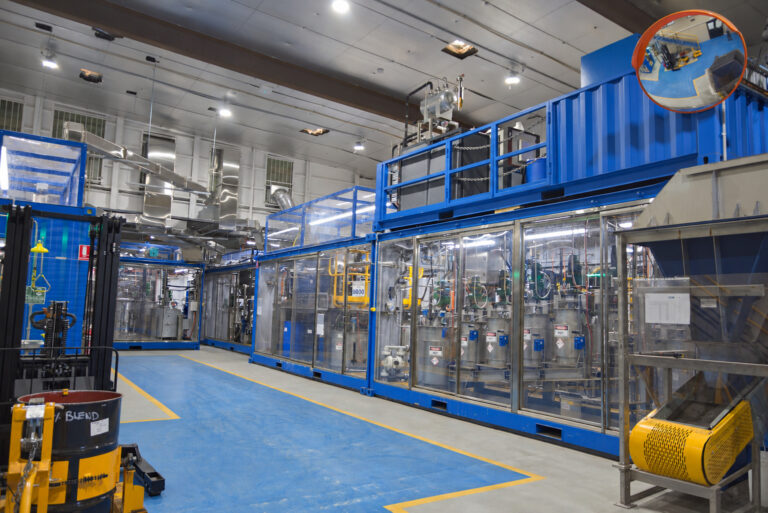
The refinery supplies more than 50% of Victoria’s and 10% of Australia’s fuel and can process up to 120,000bbls of oil per day, according to Viva Energy.
News
Fire breaks out at one of Australia’s two oil refineries
A major fire broke out at Viva Energy’s (ASX: VEA) Geelong oil refinery just after 11pm last night, with the blaze now contained to the area of origin.Fire Rescue Victoria says all emergency response personnel and Viva employees had been accounted for and there had been no reported injuries. The Country Fire Authority says the fire is still being fought by fire fighters but there is no threat to the public.Federal Energy Minister Chris Bowen says the incident will impact petrol production, with diesel and jet fuel production continuing at the refinery.Minister Bowen told the ABC that the incident appears to be an accident and there were no suspicious circumstances, although the cause remains under investigation.Viva Energy said there was no immediate impact to fuel supply and the company expects to replace any lost production through its fuel import program. The refinery is now running on reduced production rates.The incident comes as Prime Minister Anthony Albanese visits Brunei and Malaysia as part of the Federal Government’s efforts to secure more fuel amid a global fuel crisis.At normal rates of consumption, Australia had 38 days of gasoline, 28 days of kerosene and 31 days of diesel as of April 7.WA has also moved to secure its own fuel security, with the WA Government striking a deal with Cambridge Gulf to purchase and store 4 million litres of diesel. The stockpile will be owned and controlled by the WA Government.
(Image source: NASA)
News
Off the Record: Do space barons dream of electric fleets?
We are looking at the Moon, again. And running out of fuel, again.It’s hard to tell whether we are getting ahead of or behind ourselves as our oldest concerns creep out of the shadows.It’s not 1988. The US isn’t launching Operation Praying Mantis against targets in the Gulf, hastening the end of the Iran-Iraq War. But the Strait of Hormuz is once again under pressure.It’s not 1969. Neil Armstrong isn’t making his giant leap, delivering a psychological victory to the American people as the Cold War simmers on. But the Moon is seeing its first astronauts since the Apollo program.Across the decades and celestial bodies, it’s hard to tell where we’re at. Are we cobbling together some sort of post-modern dystopian future populated by Lovecraftian ethical abominations of our own making? Or perhaps stomping around in a primitive reality, hitting each other with clubs and betting on the cart to drag the horse along with it?Let’s be realistic and agree on somewhere in between.Either way, there is comfort in Artemis II’s historic mission, where four people carry our humanity quietly through space.Back on Earth, things are far less rosy, as the age-old issue of fuel keeps us grounded.Our traditional industries are scrambling to keep the lights on. Ordinary people are weighing the gamble of filling a tank. And even Elon Musk, long fixated on building a “self-growing city” on Mars, has pulled his gaze back to the Moon.Tech overlords, they’re just like us.And just like us, they are still constrained by some laws. SpaceX is now flaunting the Moon as a timelier and more practical destination than the red planet due in part to the pesky issue of orbital mechanics.Occam’s razor reminds us that the simplest solution is usually the best. It omits the bit about the blade coming back to bite if forgotten in a pocket. Before boarding Musk’s latest flight of capital, err, progress, it’s worth sitting with that sting.I’m not looking forward to returning my full attention to earthbound matters when Artemis II splashes down tomorrow. But beyond the ten-day mission, I hope we can still find a silver lining in space — just don’t tell the asteroid miners!Long before our latest lunar ambition there was Vanguard 1, still holding on as the oldest artificial object in orbit. Launched in 1958, it was the world’s first solar-powered satellite, fittingly free from the fuel constraints that are binding us on Earth.According to the Russians, that’s the one that counts.Off the Record is The Australian Mining Review's weekly column. 
Assay results from the program are expected no later than June.
News
Tivan mobilises for Molyhil drilling
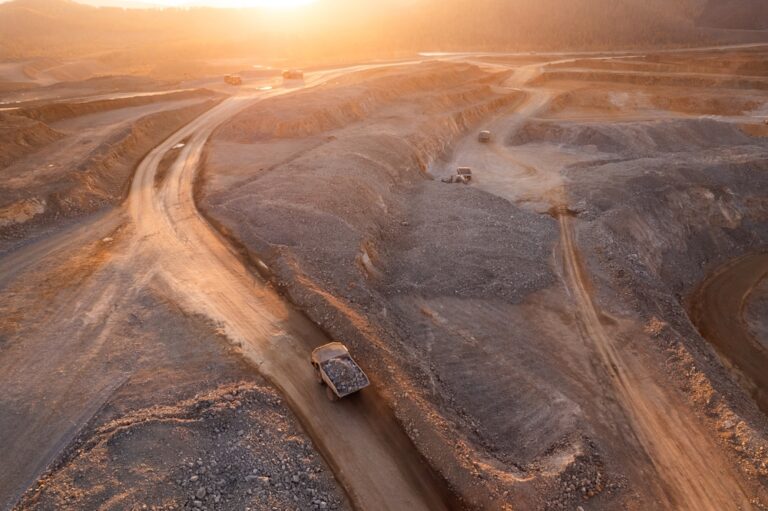
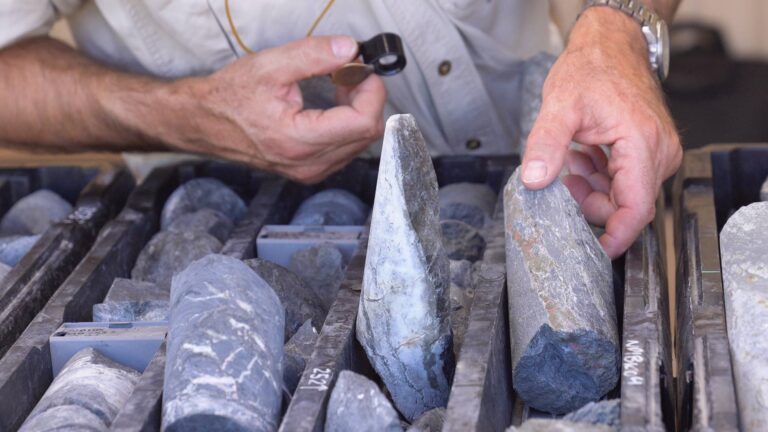
Tivan (ASX: TVN) has mobilised equipment and personnel to central Australia to commence 2026 fieldwork, prioritising its drilling program at the Molyhil tungsten project.The drilling program, commencing next week, will target high-priority tungsten targets outside the existing mineral resource to support a potential resource expansion.The program follows the grant of an Environmental (Mining) Licence by the Northern Territory Department of Lands, Planning and Environment, enabling Tivan to undertake ground-disturbing activities.Under the licence conditions, Tivan paid a security amount of $116,729 to the Northern Territory Department of Mining and Energy, reflecting historical site disturbance from previous operators.Tivan executive chairman Grant Wilson says this progress follows an extensive period of planning and a very wet season across central Australia.“The exploration drilling for new tungsten mineralisation at Molyhil is a standout in Phase One and will commence next week,” he said.“We are grateful to the Northern Territory Government and the Central Land Council for enabling Tivan to maintain strong project momentum and look forward to sharing the scoping study for Molyhil later this month.”Tivan’s geology team expects to complete Molyhil drilling program within April before shifting Phase One resources to additional drilling at the adjacent Sandover fluorite project.Tivan’s team is also preparing for Phase Two fieldworks at Molyhil and Sandover, scheduled for H2 CY26.
The proposed project comprises the construction of the Havieron underground mine within a development envelope encompassing both Telfer and Havieron operations.
News
EPA backs Havieron under strict conditions
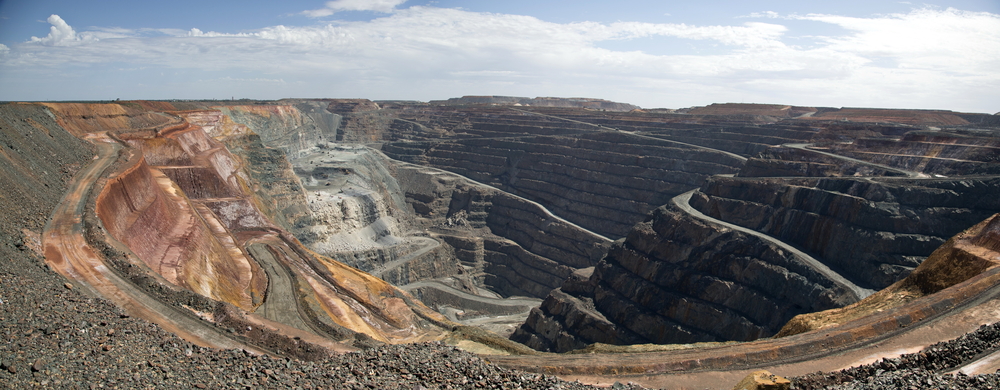
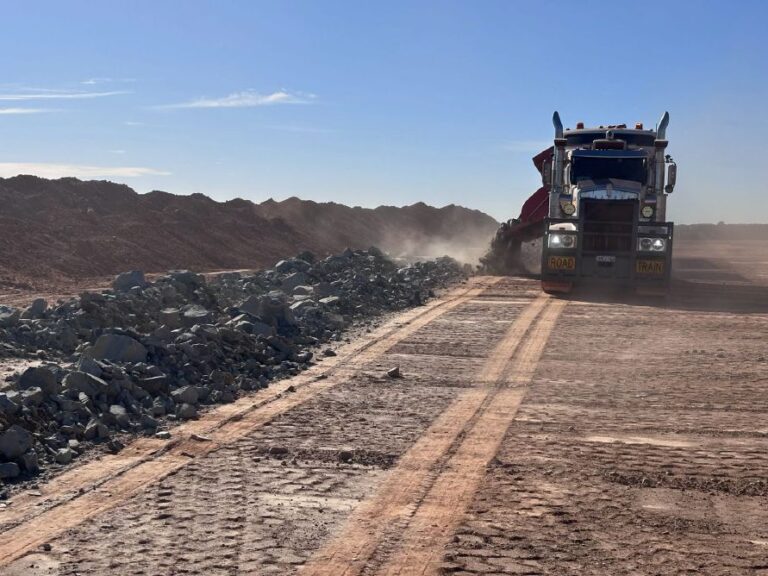
Greatland Resources’ (ASX: GGP) proposed Havieron underground mine has won backing from the WA EPA, under conditions that include a ban on night-time haulage to protect the critically endangered night parrot.The miner's proposal includes waste rock landforms, evaporation ponds, expanded groundwater abstraction and a 55km haul road for trucking ore from Havieron to Telfer for processing for a combined total of 32mt of ore production.WA EPA Chair Darren Walsh says the protection of conservation-significant fauna was front and centre of the environmental impact assessment.“The EPA’s recommended conditions would ensure that implementation of the proposal would result in no disturbance to critical habitat for the night parrot, and protections for the greater bilby population within and adjacent to the project area,” he said.“The EPA considers that impacts can be significantly reduced through speed limits during day-time haulage, prohibition of night?time haulage operations on the Telfer Havieron haul road, use of fauna spotters, buffers around active burrows and roosts and fauna crossings to maintain ecological connectivity.“Pre-clearance surveys and fauna exclusion areas have also been recommended to minimise any direct impact to terrestrial fauna such as the night parrot, greater bilby and great desert skink.”According to Greatland, Havieron represents Australia’s third largest underground gold ore reserve with an updated ore reserve of 38.5mt at 2.63g/t gold and .33% copper for 3.3moz gold and 128kt copper.The miner’s base-case ‘Havieron Standalone’ operating cost model assumes no extension of the current Telfer mine life, with the Telfer mill processing only Havieron ore.Greatland is targeting first gold about 2.5 years after final investment decision. Havieron has an initial mine life of 17 years, including an initial nine-year steady state period.The EPA’s report to the Minister for Environment is now open for a three-week public appeal period, closing on April 29.Greatland reported production of 82,723oz gold and 4128t copper in the March quarter. The miner currently expects FY26 full year production to be around, or slightly above, the upper end of its guidance range of 260,000–310,000oz gold.The miner says the Telfer operation is not currently impacted by diesel supply disruptions as fuel is supplied directly by a global oil major on a long-term contract via Port Hedland.
Resolution is one of only three ASX-listed companies to have a project included in the program.
News
Resolution wins US support for antimony project
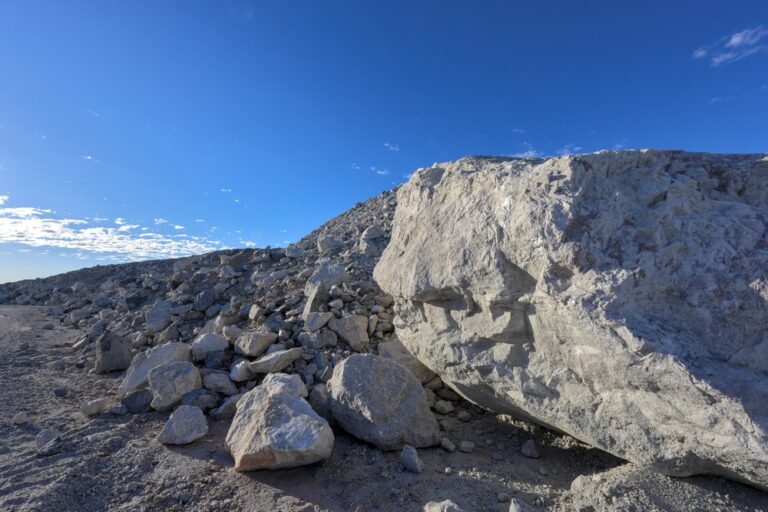
The Antimony Ridge project in Idaho will be included in the US Federal FAST-41 Permitting Transparency Program, as Resolution Minerals (ASX: RML) looks to advance proposed bulk sampling and drilling activities.FAST-41 designation is expected to accelerate permitting timelines through enhanced inter-agency coordination, transparent milestone tracking and dedicated federal oversight.Resolution said the program inclusion is expected to enhance investor visibility and support engagement with potential strategic partners and funding sources aligned with the US critical minerals policy.The designation comes in response to the Trump Administration’s move to reduce reliance on foreign adversaries for the supply of critical minerals with the White House calling for immediate measures to facilitate domestic mineral production.US Congressman Russ Fulcher says antimony is a key component in the production of defence weaponry and energy technology.“I am pleased to see the Antimony Ridge project receive FAST-41 transparency status,” he said.“Ensuring we have a strong domestic supply of this natural resource — sourced right here in Idaho in an environmentally friendly way — is vital to US national defence and economic security.”The US remains heavily reliant on imported antimony, with China dominating global production.Resolution Minerals says US antimony and tungsten supplies are critically low due to ongoing global conflicts and export restrictions.Resolution US operations chief executive Craig Lindsay says Antimony Ridge is a key part of the company’s broader strategy to develop a US-based critical minerals platform.“With exploration, processing infrastructure and multiple development pathways now coming together at Horse Heaven, we believe the company is uniquely positioned to capitalise on strong demand for antimony, tungsten and gold,” he said.Antimony Ridge is part of the Horse Heaven project, which includes a recently acquired processing mill and infrastructure, historical tungsten stockpiles and a fully funded Phase 2 drilling program at Golden Gate.Resolution will now work with the US Forest Service to advance the Antimony Ridge plan of operations through the FAST-41 process.Following approval, Resolution intends to commence a bulk sampling program of near-surface high-grade antimony mineralisation, alongside a drilling campaign designed to define the scale of the system.
Back to of the page