Category: International

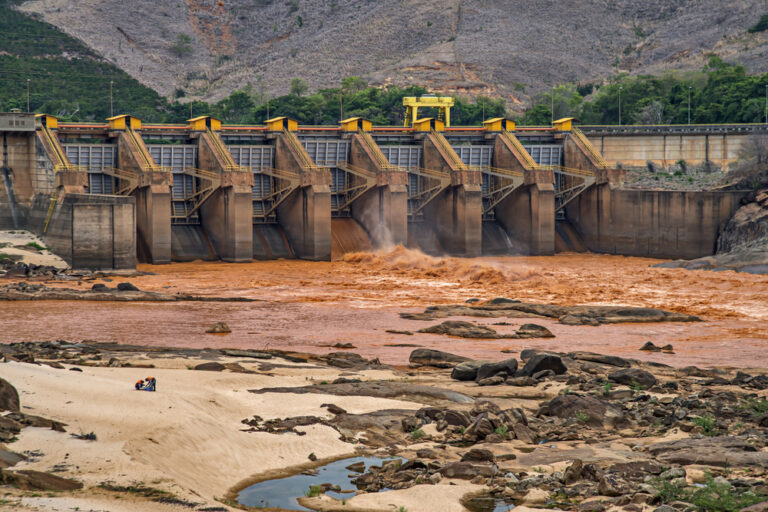
Richards Bay Minerals (RBM) is 74% owned by Rio Tinto and currently operates four mines in the Zulti North lease area, a mineral separation plant and smelting facility.
InternationalNews
Rio Tinto to restart South African mineral sands project
Rio Tinto (ASX: RIO) will invest $473m to extend the mine life of the Zulti South project to 2050 and lift the suspension that has been in place since January 2020.Construction is anticipated to commence in Q1 2026 and will take 30 months to be completed. Initial commercial production is expected in Q4 2028.The first phase of construction will support RBM’s supply of zircon and ilmenite, while the second phase will follow as part of the long-term development strategy.Rio Tinto says that as the orebody at Zulti North declines, Zulti South is important to RBM for maintaining a stable supply of zircon, rutile, and ilmenite and supporting titanium dioxide sales over the life of the mine.Rio Tinto iron & titanium Africa operations & RBM managing director Werner Duvenhage says lifting the suspension on Zulti South means securing the future of RBM.“This project is not about expansion; it represents our commitment to sustaining jobs and continuing to make a meaningful contribution to the province, the country and the host communities,” he said.“The decision to proceed also reflects improved security conditions and strengthened community partnerships.“The support of government, Amakhosi and host communities has been vital in getting us where we are today and establishing this stability. We are committed to working with all stakeholders to ensure the project’s continued success.”China Harbour Engineering Company (CHEC) has been appointed as the EPC contractor for the construction of Zulti South due to their performance and strong track record including a strategic partnership with Rio Tinto on the Simandou project in Guinea.
China’s renewable energy outpaces coal
InternationalNews
China’s renewable energy outpaces coal
China’s renewable energy outpaces coal For the first time since 2015, coal-fired power generation across China did not increase to help meet the country’s increasing power demand, according to Wood Mackenzie.In 2025, China's coal-fired power generation decreased 1.9% despite the country’s power demand rising 5%, according to Wood Mackenzie. The incremental demand was met by carbon-free generation, supported by China’s rapid growth in renewables and development of nuclear and hydro capacity.Wood Mackenzie senior research analyst Sharon Feng said unprecedented expansion in renewable energy capacity was at the heart of this transformation.“China’s wind and solar capacity had risen more than ten-fold to 1842GW over the past decade,” she said.Since 2015, the levelised costs of energy for utility solar and onshore wind in China have dropped by 77% and 73%, making renewable energy competitive with fossil fuels.“This economic shift has unleashed massive investment, with investors and developers racing to capture market share,” Ms Feng said.Beyond renewables, China has seen nuclear capacity expand from 27GW in 2015 to 62GW at present, which, combined with hydro now provides 445GW.Also notable is China's massive investment in power transmission infrastructure. The country has deployed 340GW of inter-regional power transmission corridors, connecting remote renewable resources in the west and north to population and industrial centres in the east and south, which Wood Mackenzie says is critical to unlocking renewable potential that would otherwise be stranded in sparsely populated western China and bringing it to central and coastal load centres.Coal’s changing roleAccording to Wood Mackenzie, coal-fired power capacity factors across China were as high as 60% in 2011, then declined to 52% in 2024 and 48.2% in 2025. Wood Mackenzie expects the utilisation to further decline to 32% by 2035 as portions of the fleet transition to reserve status.Coal plants are shifting from primary power suppliers to flexibility providers, with about 600GW completing flexibility retrofits to balance variable renewable generation.However, some uncertainty remains as to whether this trajectory will hold. Concerns include potential surges in power demand growth, extreme weather scenarios, renewable investment growth and systems resilience.“Coal-fired generation decline in 2025 suggests China's power sector carbon emissions may have peaked in 2024,” Ms Feng said.“If sustained, this would be a watershed moment for global clean energy and climate efforts. However, given uncertainties, coal generation may remain on an ‘undulating plateau’ rather than entering sustained decline in the next few years, with power sector emissions following a similar pattern.”One such uncertainty is the explosive growth of AI and data centres across China potentially driving unexpected spikes in electricity demand.The aggregate capacity of data centres will reach 78GW by 2030 — a 105% increase from 38GW in 2024, according to Wood Mackenzie.While China is investing heavily in renewable capacity, rapid demand growth in densely populated urban centres, coal-fired power may remain indispensable for maintaining grid reliability.“Time will tell, but this movement demonstrates the Chinese government’s commitment to reaching its peak carbon commitment by 2030, backed by concrete plans and massive investments,” Ms Feng said.
US pitches ‘critical minerals club’ to counter ‘predatory’ trade practices
InternationalNews
US pitches ‘critical minerals club’ to counter ‘predatory’ trade practices
US pitches ‘critical minerals club’ to counter ‘predatory’ trade practices The US signed eleven new bilateral critical minerals frameworks with allies as part of its efforts to shift China’s dominance over the global industry.The frameworks were signed this week at the US’ first critical minerals ministerial event, hosted by the US State Department in Washington, which was attended by 54 countries and the European Commission.Though speakers did not refer to China specifically, it was clear that discussions centered around access and availability within the mining and processing sectors of critical minerals, industries that are largely influenced by the political whims of China.In 2025, China’s introduction of export bans and restrictions on rare earths and critical minerals triggered a series of back-and-forth trade manoeuvres from the US, exposing the vulnerability of the global supply chain and the urgency at which nations need to diversify.At a Centre for Strategic and International Studies (CSIS) event held on February 3, US Interior Secretary Doug Burgum said the US is typically a free market country.“We don’t like messing with markets, but if you have someone who’s dominant who can flood a market with a particular material, they have the ability to essentially destroy the economic value of a company or a country’s production,” he said.“Within this club of nations there would be a price floor, so people would know that with those price floors we can attract long-term capital.“The private sector can get involved and make investments in mining and refining, knowing that there’s going to be a market and they don’t have to worry about the bottom falling out because of predatory trade practices.”During opening remarks at the ministerial, US Vice President JD Vance said foreign supply of critical minerals floods markets and causes prices to collapse.“The result is a global market where consistent investment is nearly impossible, and it will stay that way so long as prices are erratic and unpredictable,” he said.“We all face the same vulnerability — access to the things that protect our people and sustain our way of life… the fundamental supply chains that support these industries sometimes can vanish in the blink of an eye without any control or influence from many of the countries in this room.”According to the Office of the US Trade Representative, the European Union, Japan and Mexico have also agreed to consider new policies such as price floors, coordinated stockpiling and shared regulatory standards to solve critical minerals supply chain vulnerabilities with the US.In the past five month, the US has also signed ten other critical mineral frameworks or memorandum of understandings (MoU) — including the $13b deal signed with Australia — and reached completion of negotiations on such agreements with seventeen other countries.US Secretary of State Marco Rubio said diversity and choice will only come if it is broadly adopted across multiple countries.“This must be an international, global initiative with like-minded countries who all have one thing in common,” he said.“We want to see a diverse across the world, so all of our economies can prosper without ever having these things, at worst-case scenario, being used as leverage against us or any other disruption that could come to the market that would undermine our collective economic security.”Federal Resources Minister Madeleine King represented Australia at the US-led critical minerals dialogue of ministers.During the event, Minister King launched the new Australian Critical Minerals Prospectus, which highlights 49 mines and 29 midstream critical minerals processing projects ready for investment across Australia, supporting the Australia-US critical minerals and rare earths framework.
Project Vault will be an independently governed public?private partnership that will store essential raw materials in facilities across the US.
InternationalNews
Trump launches $17b critical minerals stockpile amid China risk
Trump launches $17b critical minerals stockpile amid China risk The US has unveiled a $17.2b (US$12b) strategic critical minerals stockpile, aiming to reduce industry reliance on China and protect manufacturers from supply disruptions.Dubbed “Project Vault”, the reserve will be backed by $2.8b (US$2b) in private sector financing and up to $14.3b (US$10b) from the US Export-Import Bank (EXIM).US President Donald Trump says the stockpile will ensure American businesses and workers are not harmed by shortage, as the US looks to avoid a repeat of last year’s Chinese export restrictions on rare earths."Project Vault is designed to support domestic manufacturers from supply shocks, support US production and processing of critical raw materials, and strength America’s critical minerals sector," EXIM chairman John Jovanovic said.EXIM says initial indications of participation from original equipment manufacturers include Clarios, GE Vernova, Western Digital and Boeing. Suppliers servicing Project Vault include Hartree Partners, Mercuria Americas, and Traxys.The announcement lands shortly after Australia confirmed its $1.2b Critical Minerals Strategic Reserve would initially focus on gallium, antimony and rare earths elements.Federal Resources Minister Madeleine King is now heading to Washington to hold talks with the Trump Administration, international partners and industry as Australia looks to strengthen cooperation on critical minerals and rare earths.Minister King will represent Australia at a US-led Critical Minerals Dialogue of ministers, hosted by US Secretary of State Marco Rubio, and will take part in an industry forum as part of efforts to secure critical minerals supply chains.Minister King says the meetings will be a chance to discuss Australia’s Critical Minerals Strategic Reserve and the Federal Government’s wider support for the critical minerals sector as both countries work to implement the Australia-US Critical Minerals and Rare Earths Framework signed last October.
US steps closer to leading global deep sea mining industry
InternationalNews
US steps closer to leading global deep sea mining industry
US steps closer to leading global deep sea mining industry The National Oceanic and Atmospheric Administration (NOAA) has consolidated its previously fragmented permitting process to streamline deep sea mining approvals in the US.Since the passage of Deep Seabed Hard Mineral Resources Act (DSHMRA) in 1980, US companies have been required to follow a two-step process in which applicants must first obtain an exploration license to undertake deep seabed mining exploration activities and separately apply for a recovery permit from NOAA before conducting commercial recovery activities in areas beyond national jurisdiction.The revisions merge exploration licenses and commercial recovery permit applications under the DSHMRA allowing eligible applicants to apply for and obtain both at the same time.NOAA administrator Dr Neil Jacobs says deep seabed mining is key to unlocking a domestic source of critical minerals for the US."This consolidation modernises the law… enabling US companies to access these resources more quickly, strengthening our nation’s economic resilience and advancing the discovery and use of critical seafloor minerals,” he said.Following the announcement, NOAA’s National Ocean Service announced a new hydrographic survey project to map and characterise more than 55,000km2 of federal waters — an area abundant in polymetallic nodules rich in nickel, cobalt, and rare earth elements — off American Samoa.“NOAA is proud to play a leading role in the plan access to critical minerals for domestic supply chains,” Mr Jacobs said.“This project highlights NOAA’s strong impact on economic resilience as we invest in research that supports sustainable deep sea mining practices and allows partners to better understand their marine environments.”The deep sea remains the largest and least studied habitat on earth and how deep sea mining will impact these ecosystems is not thoroughly understood, according to the NRDC.NOAA contractor NV5offsite link, a current hydrographic survey services vendor, will begin survey work in February. NOAA will use about $20m of FY26 funding to produce publicly accessible maps, images and samples of the marine environment off the coast of American Samoa.The region’s territorial waters are home to the Clarion-Clipperton Zone (CCZ), which is currently the most explored region with deep sea mining commercial development interest due to its abundant supply of nodule fields.Rising interest and investment has seen major technical and commercial developments across the CCZ over recent years and the industry will ultimately be shaped by ongoing regulatory framework developments.
Alta Copper is currently the 100% owner of the Cañariaco copper project.
InternationalNews
Fortescue targets copper
Fortescue targets copper Alta Copper shareholders have approved Fortescue’s (ASX: FMG) proposed acquisition of its portfolio of exploration assets, including the Cañariaco copper project in northern Peru.The Cañariaco copper project comprises multiple deposits and prospects across a large, highly prospective landholding within an emerging porphyry copper corridor and has the potential to support a long-life copper operation.Fortescue currently holds about 64% of Alta Copper’s issued share capital and the acquisition will be implemented by way of a Canadian Plan of Arrangement.Under the transaction, Alta Copper shareholders will receive cash consideration of $1.47 (C$1.40) per share, implying a total equity value for Alta Copper of $146m (C$139m).Fortescue growth and energy chief executive Gus Pichot comments on the transaction.“Copper is a core pillar of Fortescue’s long-term growth strategy and the transaction is aligned with our disciplined approach to capital allocation and reputation of responsibly developing high-quality assets,” he said.“The Cañariaco project is a compelling copper opportunity, and full ownership will provide Fortescue with greater control over project development, capital allocation and long-term value creation.“Subject to completion of the transaction, Fortescue’s initial focus will be on integration planning, technical review, community engagement and progressing the studies required to inform future development decisions.”Completion of the transaction remains subject to the approval by the British Columbia Supreme Court, Investment Canada Act and the satisfaction of other customary closing conditions.
In October, Prime Minister Anthony Albanese and US President Donald signed a landmark bilateral framework agreement to secure critical minerals and rare earths mining and processing outside of China.
InternationalNews
US-based critical minerals company to acquire Australian Strategic Materials
US-based critical minerals company to acquire Australian Strategic Materials Energy Fuels is set to acquire Australian Strategic Materials (ASX: ASM) for about $447m.The companies have entered into a binding scheme implementation deed with the goal of creating a near-term Western “mine to metal & alloy” supply chain delivering heavy and light rare earths.This closely follows new details emerging of the $1.2b Critical Minerals Strategic Reserve (CMSR), with the Federal Government confirming antimony, gallium and rare earth elements as early priorities.Under the scheme, each ASM shareholder will receive a total implied value of $1.60/share.The board of directors of ASM unanimously recommends that shareholders vote in favour of the schemeASM managing director and chief executive Rowena Smith comments on the proposal.“This proposed combination delivers a significant premium for ASM shareholders and ensures our shareholders retain the opportunity to participate in the substantial upside of a larger, better capitalised critical minerals business,” she said.“We are pleased to recommend this transaction not only for the value it delivers but it accelerates the execution of our mine to metals strategy in a way that unlocks greater scale, de-risks delivery and positions us to capture the full potential of our rare-earths opportunity.”Through the acquisition, ASM would gain exposure to Energy Fuels’ significant experience in solvent extraction at the White Mesa Mill in Utah, which has been in operation for 45 years.The company would also be positioned to capitalise on US Government funding and incentive options, with the combined business strongly aligning with the objectives of the recent US-Australian Critical Minerals Framework.
Japan’s world-first deep sea mining expedition
InternationalNews
Japan’s world-first deep sea mining expedition
Japan’s world-first deep sea mining expedition Last week, a drilling-equipped research vessel, Chikyu, departed Japan’s shores to conduct an experimental extraction of rare earth rich mud from the ocean floor.  The month-long deep sea mining expedition, led by the Japan Agency for Marin-Earth Science and Technology, will target the seabed near Minamitorishima Island and aims to continuously lift about 350t of material each day from 6km below the surface. The mission forms part of Japan’s move to reduce its reliance on Chinese supplies — Japan currently imports more than 70% of its rare earths from China, according to the Japan Organization for Metals and Energy Security — and commence domestically producing rare earth elements. The relationship between the Japan and China recently further deteriorated when China's commerce ministry-imposed export restriction on dual-use items, including rare earth elements, bound for Tokyo.  Japan began exploring supply chain alternatives and investing heavily into non-China rare earth projects following a dispute with China in 2010 that affected exports.  In 2013, Japanese researchers discovered deep-sea mud containing more than 5,000ppm total rare-earth elements and yttrium (REY) content was discovered in the western North Pacific Ocean within Japan’s exclusive economic zone.  The diverse applications of REY include electric and hybrid vehicles, rechargeable batteries, wind turbines and many medical and military technologies. In 2018, after further investigation, about 16mt of rare earth elements were discovered in the area around Minamitorishima Island — enough to potentially meet global demand for centuries.  The government-supported project has reportedly spent about $380m since its inception. Mining the resource was previously viewed as unviable. However, with geopolitical tensions and rare earth element prices at an all-time high, the project has recaptured global interest.  The Chikyu is expected to return to port on February 14. If successful, Japan plans to launch a full-scale demonstration by February 2027, to showcase its ability to maintain the daily extraction volume, with hopes to commercialise rare earths by 2030.
Hancock Prospecting re-enters Saudi Arabia
InternationalNews
Hancock Prospecting re-enters Saudi Arabia
Hancock Prospecting re-enters Saudi Arabia  Hancock Prospecting has become the first Australian company to enter a joint venture (JV) with Saudi Arabia’s largest miner, Maaden. The Gina Rinehart owned company made a successful bid for five exploration licenses in the Nabita Ad-Duwayhi Gold-Belt, where the Hancock Maaden joint venture will conduct its initial exploration activities. The joint venture will conduct exploration, development, mining, sales and marketing of minerals in licensed areas in the Kingdom of Saudi Arabia. Celebrating the agreement, member of the Hancock team attended the Future Mines Forum in Riyadh during a Round 9 licence award ceremony earlier this month. Hancock prospecting executive chairman Gina Rinehart says the company strives to be the best miner in Australia and will now be working with Saudi Arabia with great enthusiasm.  “Our company group brings substantial experience across exploration, project development and operations — including the rare distinction of building the $15b mega Roy project both on time and on budget, a project built successfully in record time and including some of the world’s largest mining equipment.” Maaden chief executive Bob Wilt says the company has been actively ramping up its exploration efforts across the Kingdom. “Working in partnership with Hancock, this program will speed up discovery,” he said. “It also ensures we can build, develop and operate at pace and scale, all while developing a talent pipeline and a global mineral hub.” In December, Saudi Arabia granted exploration licenses worth $100m to local and international companies, including Hancock Prospecting, for its first mineral belts at Jabal Sayid and Al-Hajjar. These two sites, covering a combined area of 4,788km2, are part of the Ministry of Industry and Mineral Resources’ efforts to accelerate the exploration and development of the Kingdom’s estimated $2.48t (SR9.3t) in mineral resources.  
Back to of the page