Category: Projects & Operations

Rio Tinto’s (ASX: RIO) Diavik diamond mine in the Northwest Territories of Canada has seen its final day of production after 23 years of operation.
NewsProjects & Operations
Rio Tinto diamond mine delivers final production
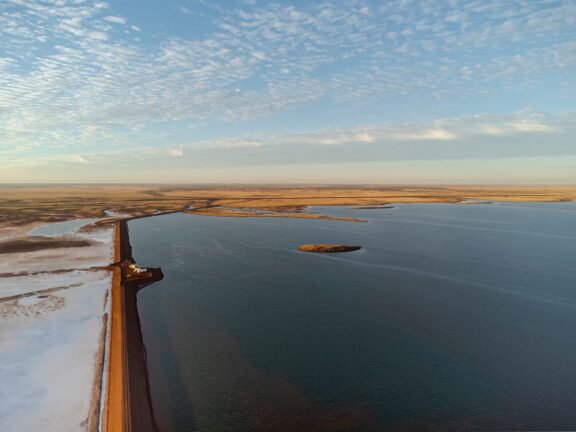
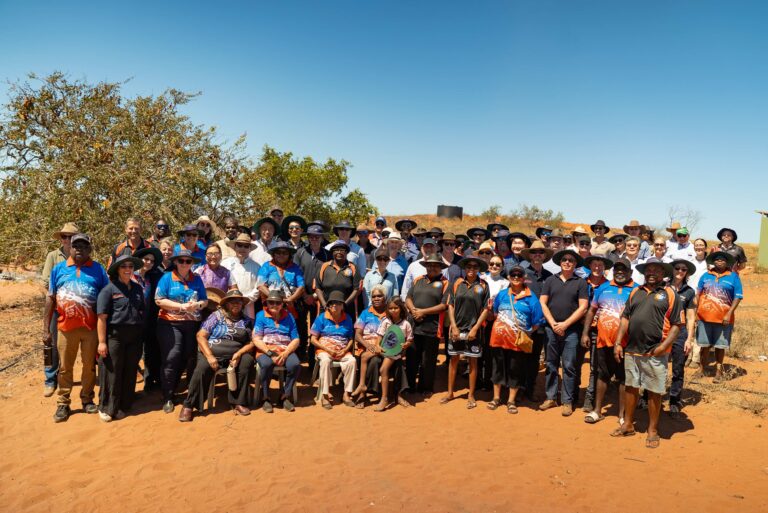
Rio Tinto’s (ASX: RIO) Diavik diamond mine in the Northwest Territories of Canada has seen its final day of production after 23 years of operation.The mine which has produced more than 150 million carats of rough diamonds was discovered in 1991 beneath Lac de Gras, 220km south of the Arctic Circle.Mining began in 2003, utilising both open pit and underground mining methods to produce predominantly white gem quality diamonds and a small proportion of rare yellow diamonds.A celebration at the mine was attended by Indigenous Government Organisations, government representatives and other stakeholders to signal the formal completion of production.Diavik chief operating officer Matthew Breen says this milestone reflects the significance of the operation in the region.“Diavik has been an inspired collaboration between a modern mining company and Indigenous partners with an enduring legacy of socioeconomic benefits for the North” he said.“We look forward to continuing to respectfully reclaim the land in line with our commitments to, and in partnership with, the Government of the Northwest Territories and Indigenous partners.”Planning for closure has been underway since before production began, with closure objectives covering safety, land use, landforms, water and biodiversity and community capacity.Closure activities will extend to 2029, followed by a period of post-closure monitoring.Rio Tinto says the rough diamonds from the final production phase will be polished and sold through 2026 and beyond via its global customer network.
The Boyne aluminium smelter, Australia’s second-largest aluminium smelter, is majority owned by Rio Tinto.
NewsProjects & Operations
Boyne smelter secured to 2040
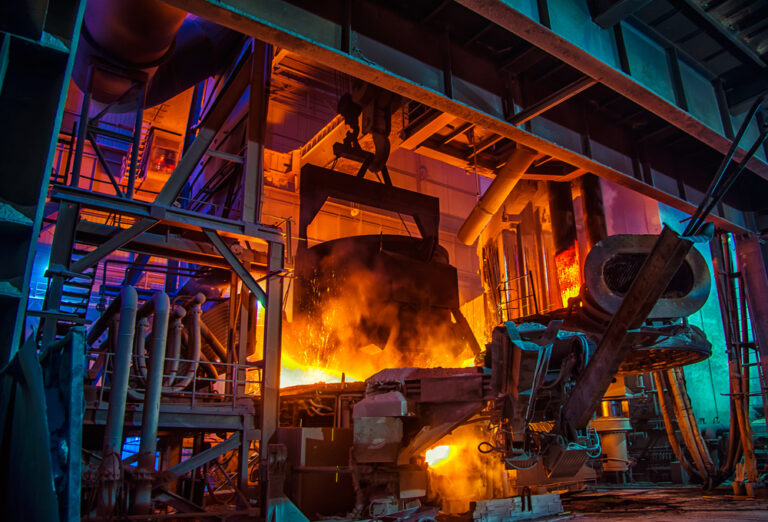
Rio Tinto (ASX: RIO) and the Federal and Queensland Governments will invest $2b to secure the future of the Boyne aluminium smelter in Gladstone.The agreement secures future aluminium production at the smelter until at least 2040, beyond the completion of Boyne Smelters Limited's current power contract ending in 2029.Under the deal, the Federal and Queensland Governments will invest a combined $2b across 10 years to 2040 and Rio Tinto will underwrite close to $7.5b in new renewable energy and storage in the state.The Boyne aluminium smelter supports 1000 jobs at the site and a further 2000 indirect jobs in Gladstone, according to the Queensland Government.Australia is unique in that it has the entire aluminium supply chain, from bauxite mining to finished products, onshore.Queensland Natural Resources and Mines Minister Dale Last comments on the agreement.“At a time when supply chain disruptions are being felt across the globe, this investment is needed now more than ever to safeguard Queensland’s sovereign manufacturing capabilities and to build national resilience and international competitiveness,” he said.“Only in Queensland can we mine, refine and smelt to produce one of the world’s most versatile and ubiquitous metals, being aluminium and we must protect that capability.”Rio Tinto aluminium & lithium chief executive Jérôme Pécresse says the partnership will ensure Boyne smelter remains internationally competitive, strengthens the Australian aluminium sector for the future and supports the transformation and decarbonisation of the Queensland energy system.“As fossil fuels become increasingly expensive, this investment, combined with the power purchase agreements we have already signed, positions Boyne to be among the world’s first aluminium smelters underpinned by solar and wind power,” he said.“It also ensures heavy manufacturing like aluminium smelting can continue in Gladstone for the long term and preserves one of the few fully integrated aluminium value chains in the world — from bauxite mining to alumina refining to aluminium smelting all in Queensland — as demand for aluminium continues to grow with the energy transition.”In addition to its previously announced power purchase agreements, Rio Tinto has agreed to offtake 40% of Lightsource bp’s Lower Wonga solar and battery hybrid project near Gympie, equivalent to 112MWac of solar capacity and about three hours duration of associated battery storage. This brings total Queensland renewable power contracted by Rio Tinto to more than 2.8GW.
Liberty Bell Bay smelter enters voluntary administration
NewsProjects & Operations
Liberty Bell Bay smelter enters voluntary administration
Liberty Bell Bay in Tasmania, one of billionaire Sanjeev Gupta’s last remaining Australian assets, has entered voluntary administration.The Tasmanian Government is actively engaging with the appointed administrators, receivers and key stakeholders to follow developments at the smelter and its implications to the state.In early March, the Australian Securities and Investments Commission (ASIC) lodged an application to the Supreme Court of NSW to wind up operations at Liberty Bell Bay following its failures to lodge annual financial reports for five consecutive years.The smelter has been operating at a limited capacity since May despite being granted a $20m loan from the Tasmanian Government in August to purchase 48,000t of ore to facilitate its restart.In late January, the Tasmanian Government confirmed that Liberty Bell Bay had repeatedly defaulted on repayments and breached the loan agreement terms.Tasmanian Business, Industry and Resources Minister Felix Ellis says the news will be difficult for workers, their families and the local community who have already endured prolonged uncertainty.“GFG has failed to deliver on its commitments to restart operations and provide certainty to Tasmanians,” he said.“We understand that administrators have been appointed with the intention of stabilising the business and testing the market for a potential sale or recapitalisation.“We will carefully consider all available options, with a clear focus on securing the best possible outcome for workers, the Bell Bay region and Tasmania’s industrial future.”Liberty Bell Bay is the latest in a trail of resource assets led by Mr Gupta across Australia that have fallen into administration.In February, Mr Gupta placed Tahmoor coal mine into voluntary administration in an effort to prevent creditors, led by Coal Mines Insurance (CMI), from forcing liquidation of the asset over unpaid insurance claims.In 2025, the South Australian Government forced Whyalla Steelworks’ operator OneSteel Manufacturing into administration to avoid it becoming “irredeemable” under Mr Gupta who was the previous owner.
Billion-dollar copper project to deliver local benefits
NewsProjects & Operations
Billion-dollar copper project to deliver local benefits
The Queensland Government has declared the proposed $2.3b Eva copper mine a large resource project under the Strong and Sustainable Resource Communities Act 2017.The declaration means, if approved, the project must employ a percentage of its workforce locally and prioritise local procurement, ensuring long-term social and economic benefits for the surrounding Mt Isa and Cloncurry communities.Located 75km north of Cloncurry and 95km northeast of Mount Isa, the Eva project is expected to produce an average of 60,000tpa of copper and 19,000ozpa of gold over a 15?year mine life.Copper concentrate extracted at the project will be processed locally at Glencore’s Mount Isa copper smelter, supporting existing industrial capability in the region.Queensland Deputy Premier and State Development, Infrastructure and Planning Minister Jarrod Bleijie has also extended Eva’s prescribed project declaration, providing additional certainty and streamlined approval pathways.The extension allows the coordinator general an additional two years, until March 25, 2028, to continue providing coordinated support and fast-tracking approvals to keep the project moving.Deputy Premier Bleijie says the Queensland Government is focused on delivering a better lifestyle through a stronger economy, by supporting projects that deliver jobs, investment and long-term regional benefits.“Eva copper has the potential to be Queensland’s biggest copper mine, and we want to ensure the communities closest to the project share directly in its success,” he said.“Declaring Eva copper a large resource project strengthens local employment opportunities, supports regional businesses and ensures long term benefits for Mount Isa and Cloncurry.”The project, owned by Harmony Gold, is anticipated to generate up to 1000 construction jobs and 450 ongoing operational roles, delivering a major boost to the region’s workforce and economy.Cloncurry Mayor Greg Campbell says Eva’s designation as a large resource project would assist local efforts to ensure benefits for the Cloncurry community.“We want to make sure the project not only generates long-term economic benefits throughout our local supply chains but also creates social and community benefits for our residents,” he said.Forecast to inject more than $17b into Queensland’s economy, first copper concentrate is expected to be delivered to the Mount Isa smelter in 2028.Harmony Gold chief development officer Johannes Van Heerden says the company welcomes the Queensland Government decisions.“As a Tier 1 Mining jurisdiction, Queensland offers coordination support and a stable regulatory framework that has helped Eva copper move forward through planning and into construction with certainty,” he said.
Meeka Metals begins ore sorting upgrade at Murchison
NewsProjects & Operations
Meeka Metals begins ore sorting upgrade at Murchison
Meeka Metals (ASX: MEK) has commenced installation of an ore sorting facility at its Murchison gold project in WA, targeting increased processing capacity and higher gold production. The upgrade is expected to lift mill capacity by 200ktpa to 800kpta, resulting in a corresponding boost in gold production.  Ore sorting will be applied initially to underground material from the Andy Well deposit, separating higher-grade ore for immediate processing while lower-grade material is stockpiled for later treatment. Test work at Steinert’s facility in Bibra Lake found about 85% of contained gold could be sorted into about 50% of the rock mass, effectively doubling the head grade of Andy Well ore entering the mill. Meeka Metals managing director Tim Davidson says the upgrade represents a low-cost solution to increase production. “We expect this high-return, quick-payback investment to be operational in the September 2026 quarter providing additional processing capacity for ore from our open pits and our second underground mine at Turnberry, commencing in 2026,” he said. Civil works for the $6m upgrade have commenced, with equipment delivery and installation due to begin in the June 2026 quarter. According to the company, the installation offers a faster and lower-cost alternative to expanding the existing processing plant, which would require significantly higher capital investment and longer development timelines. The upgrade is expected to reduce processing costs per ounce, lower tailings volumes and reduce wear on plant equipment by removing waste material before milling. Meeka Metals said further test work is underway to assess the application of ore sorting across other deposits within the Murchison project.  
MinRes ships first ore from Lamb Creek
NewsProjects & Operations
MinRes ships first ore from Lamb Creek
Mineral Resources (ASX: MIN) has delivered first ore on ship from its Lamb Creek iron ore project in WA’s Pilbara region. The milestone was reached three months after ground was broken at the site in December 2025. CSI Mining Services — a wholly owned subsidiary of MinRes has now commenced mining, processing and haulage at the site. Lamb Creek will be an open pit mine with a capacity of 7.5mtpa, strategically located just 50km from MinRes’ Iron Valley operation. Ore from both sites will be blended and hauled to Utah Point for export through the Port of Port Hedland. MinRes executive general manager iron ore and asset management group Joe Brown says the milestone highlights the company’s ability to rapidly develop and bring assets into production. “Safely achieving first ore on ship in such a short time since breaking ground is a remarkable feat and demonstrates MinRes’ significant in-house capability to bring projects to life quickly,” he said. Development of Lamb Creek also involves the planned wind-down of the current Wonmunna iron ore operation, with all Wonmunna-based staff set to transfer to Lamb Creek and no impact to jobs anticipated. MinRes acquired Wonmunna from the Australian Aboriginal Mining Corporation in FY21 as an undeveloped project and has since mined nine pits and exported more than 26mt of iron ore from the operation.  The Pilbara Hub has production guidance of 9-10mtpa for FY26. 
Fortescue removes high-risk rodenticides from operations
NewsProjects & Operations
Fortescue removes high-risk rodenticides from operations
Fortescue has removed second-generation anticoagulant rodenticides (SGARS) from its operations, in a move to reduce risks to native wildlife, including threatened species such as the Northern Quoll.  The change was implemented in August 2025 with Fortescue transitioning to alternative rodent control methods including first generation rodenticides, which break down more quickly in the environment. Rodent management remains a requirement at mining operations to protect infrastructure and the health and safety of personnel.  SGARs are known to persist in the environment and can accumulate in animals that consume poisoned rodents, increasing the risk of secondary poisoning in predators and scavengers.  Fortescue approvals, communities and services director Rosli Wheelock said the decision was made following internal assessment of environmental risks.  “We operate in some of Australia’s most important natural habitats, and we have a responsibility to look after them,” he said. “When we saw these products could put native wildlife at risk, we made the decision to stop using them and have moved to safer alternatives.” Recent studies have identified anticoagulant rodenticides in a range of Australian wildlife species, raising broader concerns about their environmental impact. Edith Cowan University Associate Professor Robert Davis says second-generation rodenticides are highly persistent and can accumulate through the food chain. “Reducing their use where practical can help lower the risk of secondary poisoning for native predators and scavengers,” he said. Fortescue says it will continue to monitor and review rodent management practices as part of its broader environmental management program. 
The board of directors has formally approved the final investment decision (FID) to restart operations.
NewsProjects & Operations
Mothballed NT lithium operation to restart
Core Lithium (ASX: CXO) will bring its Finniss lithium operation back into production after securing restart funding.The miner will move immediately into mobilisation, early works and development activities to position Finniss for first concentrate production in the September quarter of 2026.Core Lithium managing director Paul Brown says all major approvals are in place and there is a proven processing plant ready for restart.“Near-term ore feed will be sourced from the Grants open pit, providing a low-risk and rapid pathway to recommencement of concentrate production,” he said.“BP33 underground development will occur in parallel, supporting a transition to long-life, high-margin underground operations.“The company remains focused on safe, disciplined execution as it advances a staged restart program through 2026 and 2027 with first spodumene concentrate production targeted for the September quarter 2026.“First ore from Grants is targeted within one month of contractor mobilisation, with BP33 first ore expected in mid-CY27 and ramp-up to nameplate production of 1.2mtpa in mid-2028.“Employment levels at Finniss are expected to scale across construction and operations, supporting a material number of jobs over the project lifecycle.”The restart will be funded through a package comprising $99m (US$70m) in convertible notes from Glencore and InfraVia, a $71m (US$50m) senior secured loan from Nebari, and a fully committed $120m equity raising.Glencore lithium head Robin Francois comments on the development.“We share the government’s view that this operation is vital to the regions’ critical minerals strategy and is a key asset for achieving the Northern Territory Government’s ambition of a $40b economy by 2030,” he said.“This is another example of how Glencore’s unique marketing business can support Australian mining companies while we continue to expand as a leading supplier of critical minerals.”Together with existing cash and recent sale proceeds, the package is expected to fully fund construction and restart and provide liquidity during ramp-up as Finniss transitions toward steady-state operations.
Lynas makes $137m deal with US Department of War
NewsProjects & Operations
Lynas makes $137m deal with US Department of War
Lynas Rare Earths (ASX: LYC) has signed a binding letter of intent with the US Department of War to finalise a four-year rare earth oxide offtake agreement. Under the agreement, Lynas will allocate $137m worth of rare earth oxides to support US supply chain resilience objectives with an established floor price for supply of US$110/kg for neodymium and praseodymium. This offtake agreement follows the mutual decision to modify the original agreement between Lynas and the DoW based on significant uncertainty as to whether the construction of the heavy rare earth (HRE) processing facility at Seadrift, Texas would proceed. Lynas chief executive and managing director Amanda Lacaze says, through the agreement, the US Defense Industrial Base will continue to have access to rare earth oxides essential for modern manufacturing. “We thank the US Government for working with Lynas to reach this mutually beneficial arrangement and look forward to finalising the definitive agreement in due course and continuing our productive engagement," she said. Lynas and the DoW continue to discuss further supply arrangement for HRE oxides.  Last week, Lynas extended its rare earths supply deal with Japan Australia Rare Earths (JARE) through to 2038 and established a floor of US$110/kg for neodymium and praseodymium — identical to that set in the DoW agreement.  As the world’s only significant producer of separated rare earth materials outside of China, Lynas is strategically important to diversifying the global supply of rare earths. This significance has been bolstered by the company’s H1 FY26 results in which the company reported a 63% rise in revenue for $413.7m — Lynas’ best first-half profit in three years.  Lynas saw the average price of all its rare earth products rose to $96/kg during the half, a trend that continued in 2026 with neodymium and praseodymium reaching a domestic price of $157 /kg in China. 
Total gold sales for January and February were 220koz.
NewsProjects & Operations
Northern Star flags additional production downgrade
Northern Star Resources (ASX: NST) has flagged a further downgrade to its full-year gold guidance following weaker performance in the last two months and throughput issues at KCGM.The miner has warned that achieving even the bottom end of its 1.6–1.7moz guidance range is now “challenging”.Northern Star says its current best estimate is for FY26 production to exceed 1.5moz, after weaker-than-expected January and February performance caused by ongoing throughput constraints at the existing KCGM mill and lower mining productivity, especially at Jundee.The update marks a further deterioration from the cuts announced in January, when the company reduced group production guidance, raised AISC guidance and lowered KCGM’s expected output.In an investor call, Northern Star managing director and chief executive Stuart Tonkin said he recognised that, externally, it may appear the company had not been forthcoming with information.“That’s not the case,” he said.“In January, we absolutely thought 1.6moz was a very comfortable floor we would clear.“So to be sitting here as soon as now to say things aren’t going well, I get it, it’s as disappointing for us as it is our audience and we have to learn from that.”Until the expanded KCGM mill comes online, operations remain dependent on the existing mill, which has been struggling to maintain steady performance.Northern Star says the mill expansion remains on track for commissioning in early FY27.The miner will now undertake an operational review at Jundee, aimed at reducing costs and prioritising higher-margin ounces.“Front of mind for management and the board is that efforts to achieve the FY26 forecast do not compromise the transition to the new plant and have negative implications for Q1 next year,” Mr Tonkin said.“To deal with that concern, management’s focus over the next four months will be to set the company up to achieve its full potential from the start of FY27 and not on the achievement of short-term guidance above all else.“The production focus over this period will be on extracting ounces in the most effective way, from both a cost and mining efficiency perspective.”On the positive side, Northern Star said mining volumes at KCGM were tracking well, with ROM stockpiles continuing to build to about 100koz of high-grade ore at the end of February. The miner said this material would  be processed in FY27, displacing lower-grade ore.
Back to of the page