The current energy crisis has exposed the weaknesses of a global energy system reliant on fossil fuels.
Not only are fossil fuels limited in supply, but they are also controlled by a concentrated region — making supply susceptible to large scale disruption.
As a result, most of the world is dependent on imported energy sources and free-flowing international trade. During times of crisis, this majority is left at the mercy of unpredictable global leaders and escalating geopolitical disputes.
As the conflict in the Middle East unfolds, global fuel prices have seen a dramatic rise and, for the first time since the 2022 invasion of Ukraine, the Federal Government has tapped into Australia’s fuel reserves.
United Nations general secretary António Guterres says that for decades, dependence on fossil fuels has meant dependence on volatility.
“In past oil shocks, countries had little choice but to absorb the pain,” he said.
“Now they have an exit ramp.”
The renewables transition marks a new era for energy security, one where energy can no longer be blockaded or weaponised.
“There are no price spikes for sunlight and no embargoes on the wind,” Mr Guterres said.
“The fastest path to energy security, economic security and national security is clear — speed up a just transition away from fossil fuels and toward renewable energy.”
Ditching diesel
Australia’s exposure to global oil shocks has dramatically increased in the past 25 years due to a decline in domestic oil production — with domestic oil production only accounting for 5.6% of Australia’s demand today, according to the International Energy Agency (IEA).
The IEA says electrification is the most promising solution to increasing energy security as it is mature, cost-effective and can deliver reductions in oil imports at scale, offsetting them with domestically supplied clean energy.
The current oil shock is the first to occur at a time when renewables and electrification offer a credible alternative.
It is no surprise that ongoing fuel supply constraints are impacting Australia’s exploration and mining sector, which accounts for about 10% of Australia’s total energy use and with diesel accounting for 41% of the industry’s energy consumption, according to the Australian Renewable Energy Agency (ARENA).
Average benchmark diesel prices in mid-March reached US$157 ?a barrel, a massive increase from average pre-conflict prices, on February 20, of US$89 a barrel, according to ACCC data.
These tumultuous energy market conditions have cemented the need for companies to gain energy independence by reducing diesel exposure and, in turn, increasing their shock absorption capacity.
Industry-wide electrification is a complex and lengthy process, but the ramifications of diesel reliance in times of crisis may outweigh the risks of electrifying.
Fortescue’s (ASX: FMG) most recent results, now viewed in the context of an energy crisis, tell a unique story — one of a company that is actively shaping its resilience in an increasingly unpredictable market.
Fortescue’s efforts to actively shift away from diesel reliance and advance its Real Zero goals are bolstering its shock absorption capacity.
Fortescue chief executive Dino Otranto says by removing diesel from operations, Fortescue is taking structural costs out of the business.
“The less diesel we consume, the less exposure we have to price volatility, and that means stronger and more predictable margins.”
In 2025, Fortescue embarked on a decarbonisation journey of unprecedented scale as it placed an order for 360 autonomous electric haul trucks from Liebherr as part of a $4b fleet electrification initiative.
Mine haul trucks consume about 900,000L of diesel annually and account for 30%–50% of a mines’ total energy use, according to the Rocky Mountains Institute.
By moving to an electric fleet, Fortescue aims to cut costs and reduce its vulnerability to global market shocks and the rippling effects on cost bases.
Fortescue currently operates 12 electric excavators and one electric drill across its operations.
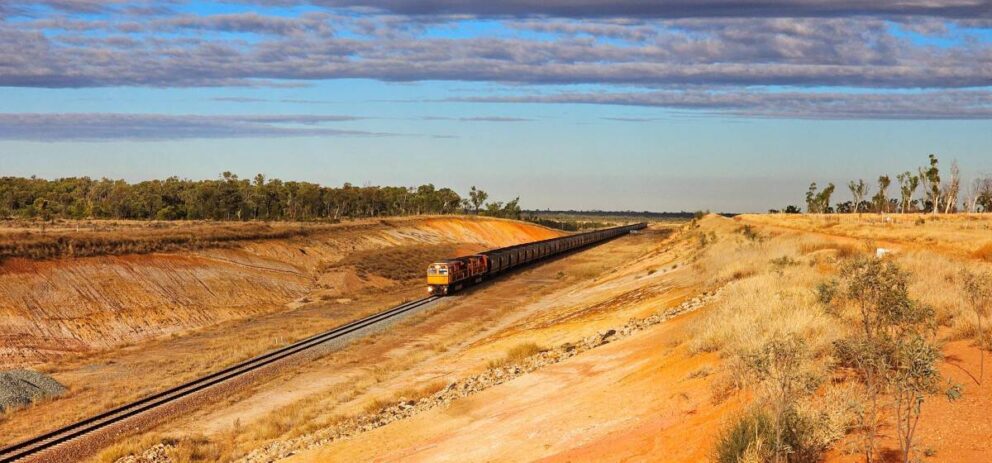
In February this year, the company commenced commissioning of two new battery electric locomotives on its rail network which are expected to eliminate a further one million litres of diesel each year. The locomotives will operate on renewable power delivered via Fortescue’s Pilbara Energy Connect program.
Beyond electrification, Fortescue is going green at the source with the advancement of multiple renewables projects across the Pilbara.
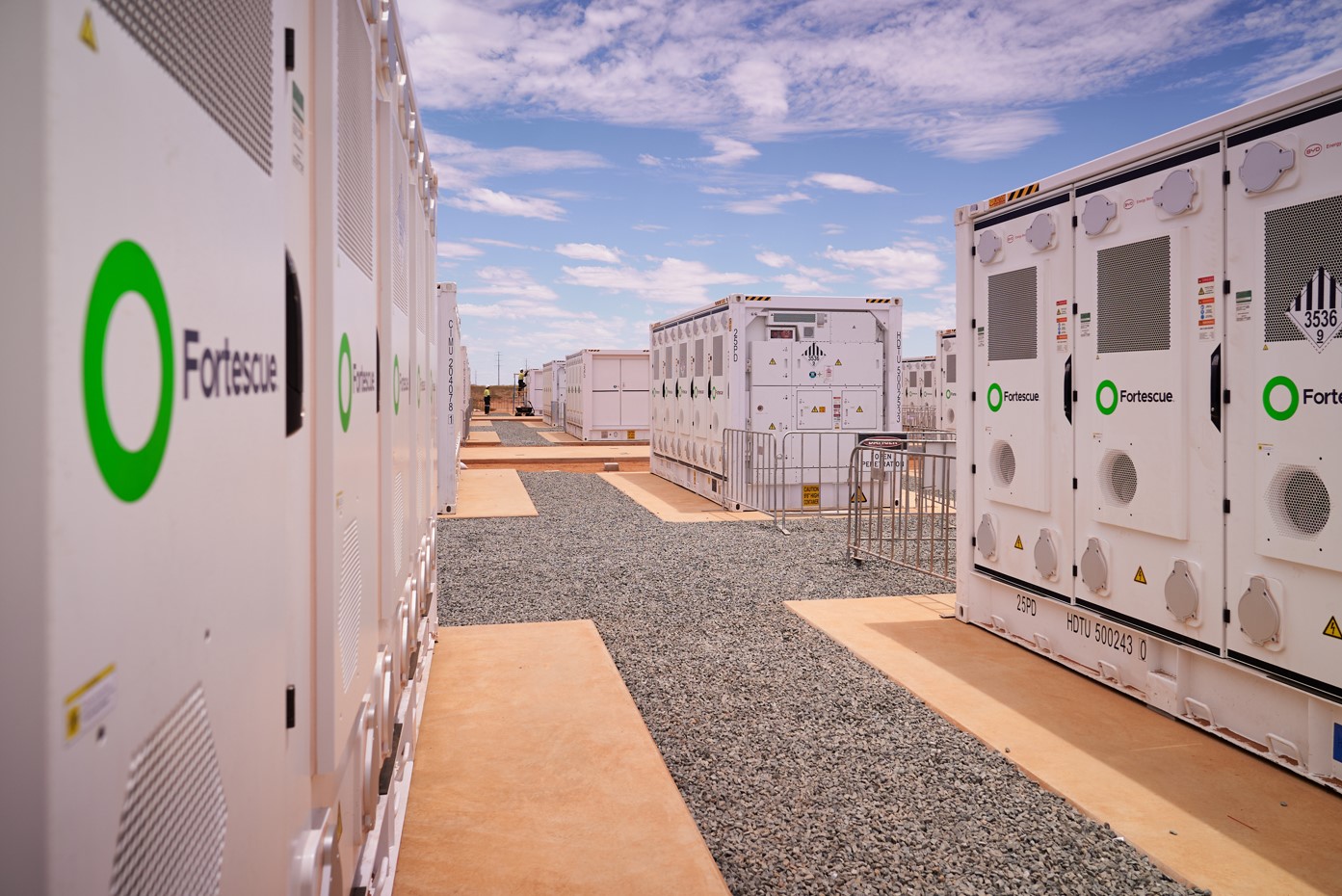
At North Star Junction, Fortescue already operates a 100MW solar farm, which will be supported by a recently installed 250MWh battery energy storage system (BESS) capable of delivering up to 50MW of power for five hours.
Construction is also progressing at Fortescue’s 190MW Cloudbreak solar farm, which is around two-thirds complete.
In March, the company commenced construction at its 440MW Solomon Airport solar farm, which is expected to become WA’s largest solar development. The project will deliver around one-third of the total solar capacity required for Fortescue to achieve its Real Zero goals and construction is expected to be completed in 2028.
Fortescue has also received all primary approvals for the up to 644MW Turner River solar farm, with construction anticipated to commence later this year.
Fortescue’s aggressive approach to the renewable energy transition now appears to be a calculated future facing cost reduction and solid risk management strategy. The company is targeting production cost savings of about US$2-4/t by 2030 through solar and wind energy integration and electric fleet deployment.
But investing in renewable energy projects still comes with risks.
Driven by financial uncertainty, integration challenges and land access competition, companies are often faced with unexpected capital expenditure and significant project delays.
In response, Fortescue is refining the art of re-scoping renewables projects during the approvals stage. By dialling things back when necessary, Fortescue is able to recalibrate projects to continue towards development rather than abandoning them completely.
Recently, Pilbara Energy, a subsidiary of Fortescue, overhauled its proposed development of the Bonny Downs 2.1GW wind project near its Christmas Creek iron ore mine.
The project originally proposed the installation of up to 200 wind turbines and six substations that would encroach on Gina Rinehart-owned Roy Hill pastoral leases.
In updated referral documents released by the WA Environment Protection Agency (EPA) in March, Pilbara Energy has more than halved its development footprint from about 2,044 ha to 944.07 ha.
“Australia needs to move to a home-grown energy system powered by wind, solar and battery storage,” a Fortescue spokesperson said.
“At Fortescue, we’re already leading that shift by electrifying our mining fleet and replacing diesel with renewable energy across our Pilbara operations.”
Evolving with the market
Diesel is not the only stressor iron ore majors are currently facing.
Iron ore is Australia’s most lucrative export industry and China, its largest customer, has long been trying to control market fluctuations.
In response to climbing iron ore prices, the Chinese Government established China Mineral Resource Group (CMRG) in 2022 to act as an intermediary and centralise iron ore purchasing to improve China’s pricing power in the global market.
Since reverting to these private contract negotiations, the relationship between some Australian producers and Chinese customers has become increasingly strained.
Australia’s largest iron ore producers are under rising pressure from CMRG to accept alternative pricing mechanisms, moving away from the S&P Global Platts Index and US dollar denominations.
In early March, CMRG reportedly widened restrictions on new seaborne iron ore purchases from BHP (ASX: BHP) and required traders to seek permission before buying BHP cargoes, according to Reuters.
While BHP has stated that these negotiations are part of normal business, the prolonged dispute seems to have hindered its realised price for hematite compared to peers.
In contrast, operating at a relatively low-cost curve — bolstered by electrification — gives Fortescue a greater buffer if realised prices are pressured by buyer-side negotiating power.
Fortescue has also mitigated its commercial risk by leveraging corporate diplomacy through yuan denomination acceptance and China-made procurement expansion.
Mr Otranto says Fortescue products are moving well to China and are expected to continue to do so.
“We have a strategy on how to diversify our overall relationship with China,” he said.
“It’s been a long-standing relationship.”
In August 2025, Fortescue took out a yuan-denominated syndicated loan, the first of its kind by an Australian corporate, with Chinese banks worth about $3b [US$2b].
Fortescue indicated it is settling some sales in Chinese yuan, rather than the US dollar, by confirming it will repay the loan using the yuan it receives as revenue from its Chinese iron ore sales.
Fortescue founder and executive chairman Dr Andrew Forrest says China continues to lead the world in industrial scale and innovation.
“Fortescue shares that ambition and drive,” he said.
“This landmark RMB financing strengthens our long-standing partnerships with Chinese institutions and opens new frontiers for collaboration.”
Fortescue also confirmed part of the proceeds would be used to purchase decarbonisation equipment to advance its Real Zero agenda, favouring China-based manufacturers of solar panels, wind turbines and electric truck components, as part of its efforts to ensure its iron ore exports remain uninterrupted by shifting market dynamics.
Fortescue growth and energy chief executive Gus Pichot says these global partnerships are key to the company’s future success.
“We’ve joined forces with BYD, LONGi, Envision Energy, Liebherr and XCMG accelerating our deployment of solar, wind, batteries and energy storage,” he said.
“Those partnerships also strengthen and add a new layer to our longstanding relationship in China.”
Resilient results
Miners operate within complex macroeconomic cycles, influenced heavily by geopolitics and market dynamics.
Despite these significant market stressors during H1 FY26, Fortescue delivered record shipments in its H1 FY26 results, after delivering 100.2mt of iron ore shipments. Hematite C1 costs were down to US$18.64/wmt for a realised price of up to US$90.87/dmt supporting margin expansion to 53%.
With C1 costs well-below industry averages, Fortescue has established itself as one of the most cost-efficient iron ore producers globally. During the half, free cash flow more than doubled year on year to US$1.5b — showcasing Fortescue’s ability to capitalise on favourable market conditions.
With decarbonisation capital expenditure accounting for US$426m of the company’s total US$1.7b capital expenditure for the half, Fortescue’s special blend of cost-discipline with a major push towards energy independence could be described as aggressive in the near term but transformative over the long term.
In a sector where uncertainty is the only constant, Fortescue is leveraging its cost leadership, strategic alignment and energy overhaul to secure its place as a mining major well into the future.