Mining is one of the most complex and high-risk industrial sectors in the world. From exploration and drilling through to mineral processing, refining, and transport, mining operations involve heavy mobile equipment, high-energy mechanical systems, hazardous chemicals, combustion processes, and vast materials-handling and rail networks.
In such conditions, even a small failure can escalate rapidly putting people at risk, causing environmental harm, damaging critical assets, and resulting in severe production losses.
Managing these risks is not optional. It is fundamental to responsible, sustainable mining.
Effective risk management requires a structured approach:
- Identifying hazards
- Analysing potential accident scenarios
- Assessing likelihood and consequence
- Implementing multiple, independent layers of protection
At the core of these protection layers lies one of the most critical safeguards available to mining operators: Safety Instrumented Systems (SIS).
Understanding the Role of SIS
A Safety Instrumented System is a dedicated, independent control system designed solely for risk reduction and therefore protection. Unlike basic process control systems (BPCS), SIS are engineered to prevent hazardous events or mitigate their consequences when abnormal conditions occur.
An SIS continuously monitors key parameters and when any parameters exceed safe operating limits, the system automatically and decisively acts to place the process in a safe state—without relying on human intervention.
Typical SIS actions include:
- Emergency stop
- Safe speed zones
- Entry control into crusher & dump areas
- Interface to collision avoidance systems
- Safe shutdown of burners, kilns, or boilers
- Isolation of hazardous or flammable materials
- Controlled depressurisation of vessels and pipelines
- Emergency stopping of machinery under unsafe conditions
Regulatory Expectations in Australia
Australian mining regulations are underpinned by the principle of “so far as is reasonably practicable” (SFAIRP)1. This places clear responsibility on facility owners and operators to demonstrate that risks to health and safety have been reduced to an acceptable level using appropriate controls.
These requirements apply across a wide range of mining applications, including but not limited to..,
- Safety case regimes for Major Hazard Facilities (MHF)
- Type-B gas and combustion equipment such as calciners, kilns, and furnaces
When a SIS is identified as a risk-reduction measure in a hazard study or safety case, it becomes a claimed safeguard & carries significant obligation. Operators must be able to demonstrate that the SIS:
- Is designed in accordance with recognised good engineering practice
- Complies with applicable Functional Safety standards (e.g. IEC-61511 / IEC-61508)
- Has been correctly installed, verified, and validated
- Is maintained, tested, and managed throughout its operational life
Failure to meet these expectations can compromise safety, threaten regulatory compliance, and expose organisations to reputational and legal risk.
Functional Safety Is a Lifecycle Commitment
Functional Safety is not a one-off engineering activity. It is a lifecycle discipline. International standards define a systematic process that spans every stage of an SIS, including:
- Hazard identification and risk assessment
- Safety Requirements Specification (SRS)
- System design and implementation
- Installation, commissioning, and validation
- Operation, maintenance, proof testing, and management of change
Why HIMA Is the Right Safety Partner for Mining
1. Proven Expertise in Safety and Security
HIMA brings decades of experience in safety-critical industries. As digitalisation accelerates across mining, we address not only Functional Safety but also Industrial Cybersecurity, protecting both physical processes and digital infrastructure.
2. End-to-End Lifecycle Support
From hazard studies and system design to validation, operation, and long-term support, HIMA provides complete lifecycle coverage, ensuring continuity, compliance, and confidence.
3. Certified, High-Reliability Solutions
All HIMA systems are independently certified and engineered for maximum availability and integrity—even in harsh, remote mining environments.
4. Deep Understanding of Mining Operations
HIMA’s solutions are shaped by real-world challenges, delivering practical, robust systems—not theoretical designs.
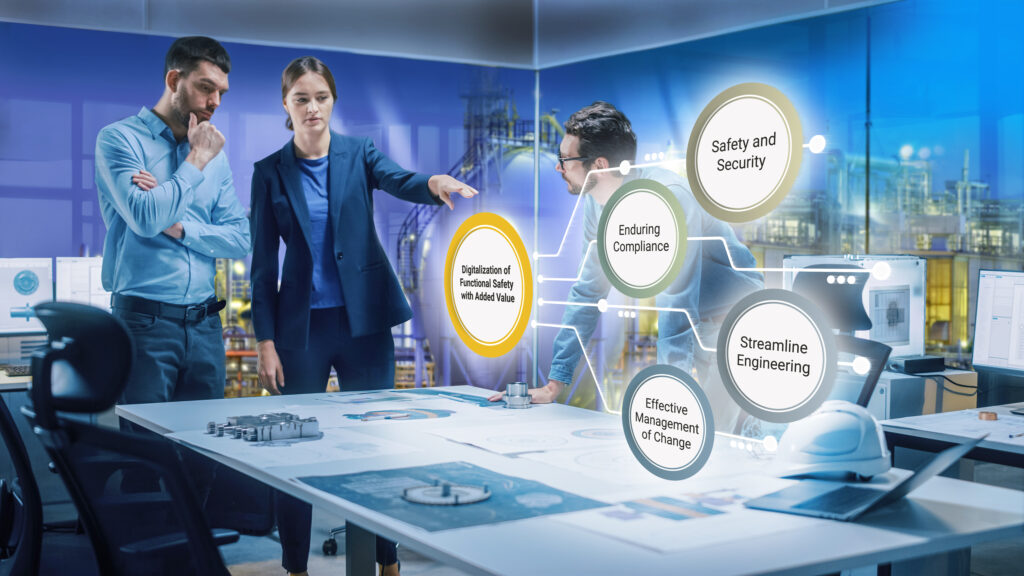
5. Digitalisation of Functional Safety – #safetygoesdigital
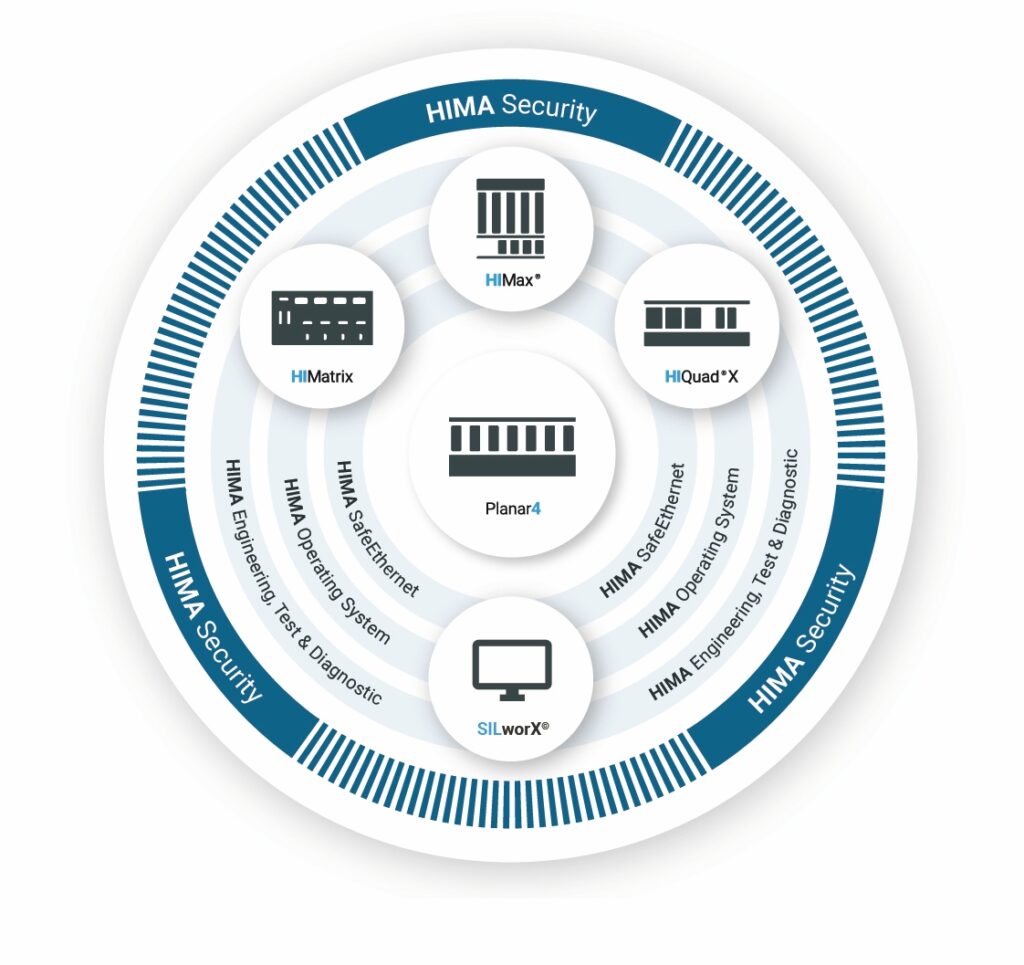
HIMA enables a modern, holistic approach to Functional Safety, built on four pillars:
Safety & Security, Enduring Compliance, Streamlined Engineering, and Effective Management of Change.
6. Local Australian support – last but not the least, HIMA Australia has been operating and serving local engineering services for past 20+ years.
_________________________________________________________________________________________________________________________
About Us
The HIMA Group is a global independent provider of safety-related automation solutions for the process and rail industries that protect people, assets, and the environment from harm.
The open and independent HIMA Safety Platform combines hardware and software on a single technology platform and offers a uniform security concept. With more than 50,000 installed safety systems (SIL 3 / SIL 4, PL e, CENELEC SIL 4), HIMA is considered a technology leader. HIMA also provides HMI and GUI solutions using its own SCADA+ software. In addition to proven safety technology, HIMA offers consulting, safety engineering, and services as well as training.
This results in solutions that ensure functional safety and OT security, compliance with standards, process efficiency and plant availability throughout the entire safety lifecycle. As a safety expert, HIMA is pioneering the digitalisation of functional safety and generates significant added value for customers with holistic safety solutions.
True to our engineering heritage, all core HIMA safety systems are designed and manufactured in Germany, ensuring uncompromising quality, reliability, and long-term support. At the same time, we deliver locally engineered solutions in Australia, tailored to the realities of Australian mining operations and fully compliant with all relevant International, European and Australian safety standards and regulations.