The gap between the grid and the generator
This is where we live
There’s a lighting problem that shows up on mine sites across Australia, and the two obvious solutions both fall short.
Fixed AC is the gold standard — until you price the trench. When your access road, accommodation camp, or haul corridor sits several hundred metres from the nearest connection point, the civil works alone can cost more than the lighting system itself.
Energisation lead times and electrical compliance requirements add weeks. On a remote site, connecting to the grid isn’t a decision — it’s a project in its own right.
So, the industry defaults to diesel. And diesel works, right up until the project runs longer than expected which it usually does. Fuel deliveries to remote access zones, weekly servicing requirements, generator noise on the camp boundary at 2am, exhaust fumes in low-airflow areas near stockpiles or in valley terrain. The mobilisation cost looks reasonable. The three-year cost of ownership tells a different story.
Diesel is a temporary answer to what is increasingly a permanent requirement.
EarthLight was built for the space between those two options. For 12 years, its engineers, sales specialists and field technicians have been working alongside Australian mining operations — not advising from a distance, but on site, in the dust, in the heat, learning exactly what this industry demands from a solar lighting system. That experience is the foundation of every product EarthLight builds. The company doesn’t import lighting and adapt it for Australian conditions, it engineers systems that are designed from the outset to exceed them — for sustained 45°C+ ambient temperatures, Region D cyclonic wind loadings, 12-hour nightly operating cycles and the kind of red dust accumulation that shuts down under-specified equipment inside a wet season.
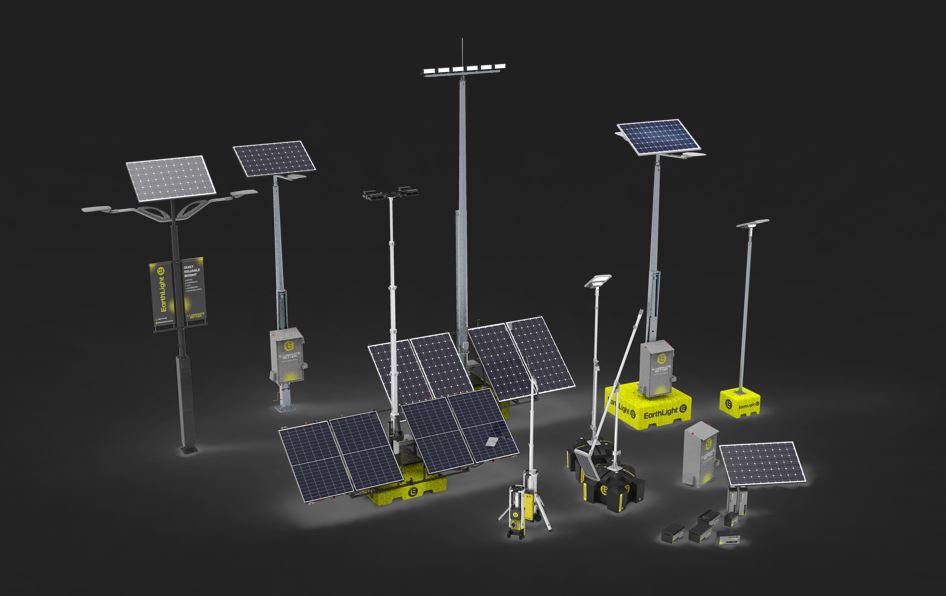
For semi-permanent applications, access roads, haul corridors, ROM pads, accommodation villages, the Mini G2 and Maxi G3 deliver 4,235 to 16,640 lumens of consistent, autonomous illumination, with LiFePO4 battery storage, Victron SmartSolar MPPT control, self-cleaning Solar Pro LED light heads, and Region D wind-rated options built to AS/NZS 1170.2.
The Mega G3 anchors the range at up to 52,350 lumens and 9.48m — the right specification for large area mine site lighting where performance is non-negotiable. Where the site is still moving, the Mega Telescopic and TetraStax deliver fast, relocatable solar lighting that’s operational within hours, without fixed infrastructure, fuel or noise.
No trenching. No fuel logistics. No generator noise.
No service callouts between annual inspections. Just reliable, compliant, solar-powered illumination — engineered for the most demanding mine sites on the continent.