China-Australia steel dilemma reaches boiling point
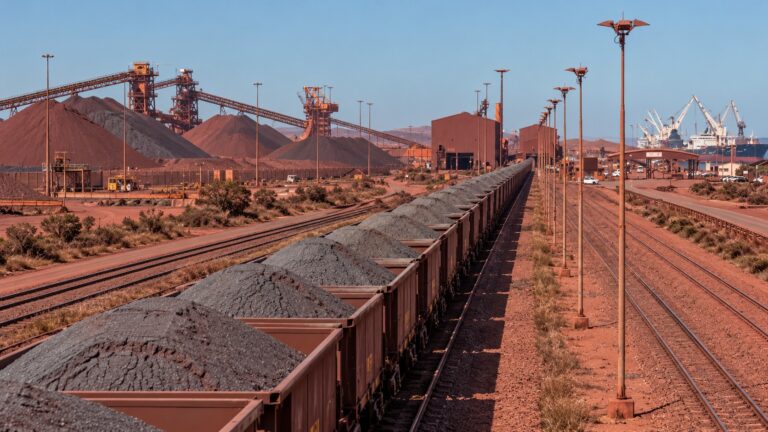
China has warned the Federal Government that imposing tariffs or quotas on steel imports could damage Australia’s iron ore industry.The warning came after the Anti-Dumping Commission found there were “reasonable grounds” to support claims by Australian suppliers that Chinese companies were undercutting local competitors by dumping millions of dollars’ worth of steel and aluminium products.Dumping occurs when a company exports a product at a price that is lower than the price charged in the country of manufacture — often due to state-backed subsidisation allowing the exporter to sell their goods at a lower price. Global overcapacity in steel production, an industry China dominates, and increasingly protectionist trade policies have led to an increase in this practice.Chinese companies are at the centre of most investigations by the Anti-Dumping Commission about unfair trade across the steel and aluminium sectors.In a letter to the Anti-Dumping Commission, Chinese Ministry of Commerce export division first secretary Fan Xi noted that Australia’s iron ore industry is “deeply interwoven” into China’s steel industry and supply chain cooperation is essential.“We urge the Committee to respect facts and rules, correct its improper approaches, refrain from negatively impacting the stable and healthy cooperation between the industries of both countries, and earnestly adhere to multilateral trade rules,” he said.“We call for avoiding the misuse of trade remedy measures and ensuring the legitimate rights and interests of Chinese exporting enterprises are safeguarded in a fair, just and non-discriminatory manner.”It is no secret China has the ability to disrupt Australia’s iron-ore industry.More than 80% of Australia’s iron ore exports are bound for China, with exports totalling $385b for FY25, according to the Australian National University.If the dispute between China and Australia escalates, it could place further downwards pressure on iron ore pricing.In its recent quarterly report, BHP (ASX: BHP) confirmed that it remains in a deadlock with China’s state-run buyer, China Mineral Resources Group (CMRG), over an annual buying contract — which has also negatively affected its realised prices.China has long been trying to control market fluctuations. In response to climbing iron ore prices, the Chinese Government established CMRG in 2022 to act as intermediary and centralise iron ore purchasing to improve China’s pricing power in the global market — reverting to private contract negotiations.The state-controlled entity now coordinates 600-700mtpa or about 55-64% of China's total iron ore imports, according to GMK Centre.The Federal Government and iron ore majors are treading lightly as any move that prompts China to further diversify suppliers or alter buying terms can have resounding affects across Australia’s industries.Australian manufacturers are urging the Federal Government to introduce tariffs of 50% as well as a 400,000t-450,000t quota on fabricated steel imports which, if unchecked, pose a threat to the stability of local markets.Federal Industry and Innovation Minister Tim Ayres says Australia has a robust anti-dumping regime that is built to ensure that domestic industry is protected from unfair trade practices overseas.“As Australians saw last year, the announcement of tariffs by the US administration was an unwelcome development,” he said.“We have acted to make sure that our anti-dumping regime is fit for purpose. We’re backing Australian manufacturing because it delivers good jobs in suburbs right around Australia.”For now, Australia continues to grapple with balancing its domestic industries with the need to keep its biggest export market willing to spend.