Author: Samantha Bawden

BHP hit with first Pilbara strike of the century
News
BHP hit with first Pilbara strike of the century
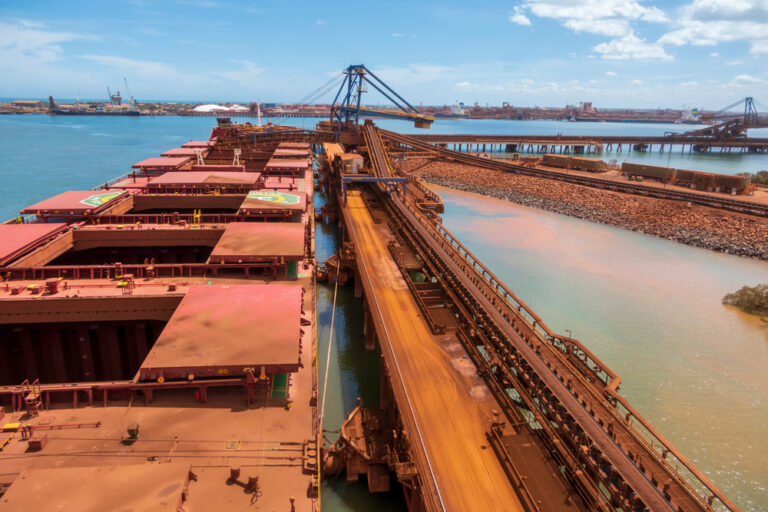
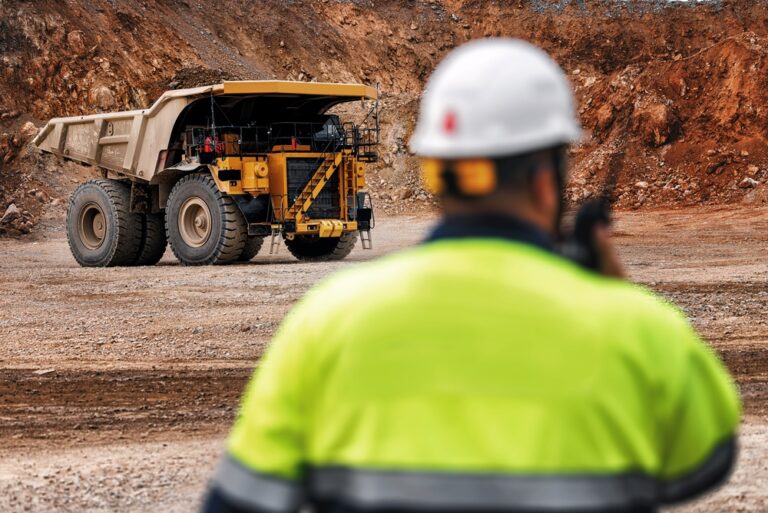
Electrical workers across BHP’s (ASX: BHP) Pilbara operations began protected industrial action this morning.The Electrical Trades Union (ETU) says the action covers 60 workers across BHP’s Pilbara high-voltage network and includes a ban on overtime, out-of-hours callouts between 6pm and 6am (except in situations which may pose a threat to safety), stepping into supervisor roles and mentoring and training of new high-voltage operators.Some measures will run for a two-week period while others are expected to continue indefinitely.ETA WA secretary Adam Woodage says workers had taken a considered and responsible approach to industrial action.“The safety of the community and other workers is non-negotiable and will always come first,” he said.“Our members don’t take this step lightly, but they are serious about getting the company back to the bargaining table, and BHP’s refusal to bargain in good faith has left them with no alternative.”A BHP spokesperson said the company does not expect any operational impacts.CME chief executive Aaron Morey says the unions only motivation is a short-term cash grab.“They are seeking to effectively double remuneration to $400,000 while also dictating rostering and workforce composition,” he said.“Pilbara iron ore workers are already among the best paid in the country, a result that has been achieved through decades of direct bargaining grounded in the understanding that pay rises are only sustainable when linked to productivity gains.”Mr Woodage says this is not an extraordinary ask.“It’s the standard across workplaces in this country,” he said.“This is targeted, proportionate action… our members want to send a clear message to BHP that they want a genuine say in their wages and conditions, and they want to be treated fairly.“Industrial action and the threat of further escalation will recede the moment BHP stops hiding behind its expensive lawyers and starts bargaining properly with the workers who keep the company running.“Under our order, we’ve built in clear escalation points for industrial action, but this can be resolved quickly if BHP comes back to the table in good faith.”
Countries ramp up coal use amidst energy crisis
News
Countries ramp up coal use amidst energy crisis
Thermal coal demand is rising globally as countries scramble to secure energy supplies despite constrained trade flows through the Middle East.While the Strait of Hormuz remains the world’s most critical chokepoint for oil and gas, relatively little thermal coal trade passes through it directly and major coal exporters, including Australia, are not directly exposed to the route, according to Wood Mackenzie.Wood Mackenzie bulk commodities principal analyst Sushmita Vazirani says in supply shocks of this scale, coal becomes a critical fallback for energy security.“Despite decarbonisation commitments across Asia, tightening LNG supply and elevated prices are accelerating fuel switching back to coal,” she said.However, the current energy crisis has exposed the geopolitical dependency risks associated with using gas as a transitional fuel as higher gas prices drive fuel switching toward coal in price-sensitive markets across Asia and Europe, Wood Mackenzie said.Wood Mackenzie has found that in Northeast Asia, Coal-fired generation remains firm despite seasonal demand weakness in the region, supported by rising LNG prices.Taiwan is preparing to restart the Hsinta coal-fired power plant, which could consume about 5.5mtpa of thermal coal. South Korea has increased guidance for Russian coal imports, while Japan is expected to rely more on nuclear generation, including restarts such as Kashiwazaki-Kariwa Unit 6.Gas accounts for less than 3% of power generation in China, according to Wood Mackenzie, and the country remains relatively insulated from the current energy markets shocks.In Europe, the Italian Government has delayed its coal phase-out by 13 years to 2038 as its energy transition is tested by geopolitical shocks.Germany is also reportedly reviewing its current coal phase out strategy and is considering reactivating standby coal-fired power plants to reduce energy prices.However, the coal industry is not completely insulated from the impacts of rising fuel prices.Wood Mackenzie predicts that, for every US$10/bbl increase in crude oil prices, coal mine site costs increase by US$1–3/t, placing additional pressure on already tight supply .“Rising diesel prices are creating a cost squeeze for coal producers, just as markets call for more supply,” Ms Vazirani said.“In Australia, heavy reliance on imported diesel adds an additional layer of risk, potentially constraining output and tightening global markets.”The market is already seeing rising prices with FOB Newcastle 6,000kcal/kg coal averaging US$126/t in March before prices rose to US$132/t in early April, up from US$114/t in February, according to Wood Mackenzie data.
San,Franciso,,California,,Usa,?,February,3,,2024:,Waymo,Self
News
Off the Record: A lack of curiosity killed the cat
When looking for an answer, is the universal response not “just Google it”?Well, you may have noticed a rewiring of our curiosity instincts, with some now ditching the well-loved search engine for AI.In a world that worships productivity, AI is hailed by many as our saviour — increasingly automating boring and monotonous daily tasks, while humans reap the productivity gains.The internet era, ushered in by the likes of Google, expanded the breadth of information we can access at any given time. Like its predecessor, AI has revealed similar concerns around complacency and cognitive decline. The Google effect, or digital amnesia, is a tendency to forget information that is easily accessible on the internet. A 2011 study highlighted how this altered the way people process information: when we no longer use our memory to its fullest extent our neural pathways atrophy, resulting in shortening memory, reduced concentration and declining analytical skills. It could be seen as an erosion of critical thinking.The growing preference for ChatGPT as a search engine is taking this a step further. Instead of using these tools to free up space for thinking, some are now using it as a substitute.If you find that after less than a minute of mental effort your subconscious is nagging you to “just ask ChatGPT”, you may be letting go of your cognitive wheel and becoming a passenger to the “thoughts” of your LLM of choice.A recent MIT study, Your brain on ChatGPT, reported that excessive reliance on AI-driven solutions may contribute to cognitive atrophy like that seen in the Google effect. But the way people use generative AI is fundamentally different to the way they consume the internet. They aren’t looking up the definition of a word to use in an essay and then immediately forgetting it. They are outsourcing their thinking completely.Sure, cognitive outsourcing has its place. I’m from the generation that pretty much can’t get anywhere without a GPS. And I definitely don’t remember anyone’s phone number.But deep thinking was never meant to be efficient; it is a messy and often tedious process. That is what makes it so effective. When we problem solve, our brains traipse through complex challenges, wrestle with opposing sides, sift through possible outcomes and deduce the best course of action.Thinking is part of what makes us human. By removing this human element and streamlining this process with AI, we risk turning into passive consumers rather than active creators.Think of how Waymo, a self-driving car service in the US, is wreaking havoc for commuters.The AI can’t navigate basic — I mean, complex — scenarios like construction zones or how to not hit a cat crossing the street. When faced with such difficult manoeuvres, the cars end up blocking traffic or causing severe emotional distress for pet owners.From Google Maps to inbuilt assisted parking, anyone who drives a car these days outsources some of their thinking. I’m all for the added safety assists in my car, but I am far more comfortable in the driver’s seat than in the backseat of a driverless car.Though I do love my GPS, if the internet imploded today, I like to think I have enough critical thinking skills to read a map and follow street signs. And if world leaders decided to abolish AI tomorrow, I’d maybe be a little annoyed that I had to actually think about how to spell bureaucrat, but I’d get over it.Maybe it’s time we take back control of the wheel and get our brains to do the driving.I’m not suggesting that you refuse to interact with any form of AI and go off the grid. All that will do is isolate you from the future of the modern world. I am suggesting that if you’re struggling to make a decision or come up with an idea, try to remember you don’t need to ask the omniscient being in your computer to do it for you.And watch out for cats when you’re driving.Off the Record is The Australian Mining Review’s weekly column. 
The trial occupied 51 days of hearing, and more than 4000 documents were tendered into evidence as exhibits.
News
Rinehart footed with royalty bill in billion-dollar dispute
Hancock Prospecting (HPPL) will have to pay royalties from Hope Downs to one of its biggest rivals after the WA Supreme Court upheld Wright Prospecting’s claim involving legacy deeds signed by Gina Rinehart's father. The decades-long legal battle has culminated in a ruling from Justice Jennifer Smith, who found HPPL is the beneficial owner of the Hope Downs share but upheld Wright Prospecting’s claim to royalties.The proceedings were concerned with formal agreements made decades ago between Lang Hancock, Peter Wright and Don Rhodes. A major consideration was who held the beneficial ownership of the Hope Downs and East Angelas exploration licenses when they were acquired in 1988 and 1989, and who now holds the beneficial interest in the 50% share of the Hope Downs mining lease. Following the ruling, Hancock Prospecting framed the central issue as ownership of the Hope Downs and East Angelas tenements, rather than “the far less significant issue of royalties”. “HPPL welcomes the WA Supreme Court decision which decisively confirms HPPL’s rightful ownership of these tenements firmly rejecting the baseless ownership claims of John, Bianca and Wright Prospecting Pty Ltd (WPPL) in their entirety,” executive director Jay Newby said in a statement. Hope Downs today generates hundreds of millions of dollars in taxes and royalties for the WA Government. “The remaining Rhodes royalty claim historically attributable to HPPL amounts to approximately $4m per annum for Rhodes and for WPPL approximately $14m per annum,” Mr Newby said. Hancock does not expect to shoulder that burden alone. Mr Newby said any amounts payable in royalties and interest are a shared responsibilities with Rio Tinto (ASX: RIO), its partner in Hope Downs.  “ a further royalty contribution in this regard, which will lessen contribution,” he said.  “We will consult with our partner and consider our position on these matters.” Counsel on both sides will have 21 days to lodge their appeals.
China eases BHP iron ore ban
News
China eases BHP iron ore ban
China Mineral Resources Group (CMRG) has reportedly told several Chinese steel mills they can purchase some BHP (ASX: BHP) cargoes, relaxing restrictions that have been in place since September 2025.The state-backed iron ore buyer is reportedly allowing domestic plants to resume bidding for some BHP shipments denominated in US dollars, according to Bloomberg.The move follows a recent trip to China by BHP chief executive Mike Henry and incoming chief executive Brandon Craig where they met with executives at China Baowu, the world’s largest steel maker.“We have strong relationships with copper producers and steelmakers in China,” Mr Craig said in a LinkedIn post.“ produce around 130mt of steel a year… the reliable supply of quality Pilbara iron ore has made a big contribution to this remarkable growth story, and it will continue to do so in the years ahead.”CMRG was established in 2022 to shift the power dynamics between China and iron ore majors, including BHP, with the Chinese Government arguing that iron ore unfairly favoured the dollar-denominated seaborne market.Commercial negotiations between BHP and CMRG have been ongoing since September as CMRG continues to place pressure on BHP to accept new price-setting mechanisms. After BHP reportedly rejected the term, CMRG banned the import of Jimblebar fines grade before enforcing broader restrictions on all dollar-denominated cargoes.
Fortescue pushes fossil fuel elimination target to 2028
News
Fortescue pushes fossil fuel elimination target to 2028
Fortescue (ASX: FMG) expects to save US$100m in fossil fuel costs next year as it fast-tracks its delivery of a fully integrated green energy grid. Unlike other large renewable hubs, which feed intermittently into national or other power systems, Fortescue’s off-grid system is expected to be the largest of its kind dedicated to decarbonising major industry. Fortescue anticipates the 290MW of installed renewable capacity to meet the fixed energy requirements of its ore processing facilities, enabling daytime “green processing” across its Pilbara operations, by early 2027. The system is expected to ramp up to power all of Fortescue’s operations for 24-hour periods completely without fossil fuels by the end of 2027 — well ahead of the companies previous Real Zero by 2030 target. Fortescue is expecting full completion of its Pilbara green grid by the end of 2028, which includes 1.2GW of solar capacity, more than 600MW of wind generation and 4-5GWh of battery energy storage. Fortescue says the deployment of its accelerated green grid infrastructure timeline has commenced within its approved decarbonisation budget.  At the completion of its decarbonisation program, Fortescue expects to demonstrate that eliminating fossil fuels is not only achievable but economically superior by achieving a further reduction in C1 unit costs of at least US$2 - 4/wmt. Fortescue sees a clear pathway to expand its green energy system by a further approximately 2GW of power generation capacity, firmed with 4GWh of advanced batteries. This would be enabled by Fortescue’s proprietary know-how, patented technologies and exclusively developed AI, and is expected to be delivered for less than US$2.5b.  The company anticipates this capacity could be progressively delivered over an 18- month timeframe — an unprecedented delivery of firmed energy generation in speed to market, capital costs and operating costs. The company has also marked another major operation milestone with the shipment of its 2.5 billionth tonne of iron ore. 
No quick fix for Australia’s energy crisis
News
No quick fix for Australia’s energy crisis
Several explorers, backed by the Queensland Government, are leveraging the current global fuel security crisis to push for development of the Taroom Trough, which the state says could become Australia's first new oil field since the 1970s. Though the Federal Government is making efforts to minimise the economic shock of a fuel crisis, it does not change the fact that Australia’s dependence on energy imports leaves the country vulnerable.   Australia imports more than 90% of its liquid fuels, according to the International Energy Agency (IEA). Since 2000, Australia’s importation of oil product has increased about tenfold, according to 2024 data from the International Energy Agency (IEA). The Taroom Trough is a major hydrocarbon-bearing structure of the Bowen Basin, in southern and central Queensland, and the Queensland Government says developing it would bolster Australia’s long-term fuel security. With the first barrels of oil now entering the domestic fuel supply chain, the Queensland Government is pushing for major project status by the Federal Government to fast-track environmental approvals under the National Interest Fast-Track Assessment Pathway.  Queensland Premier David Crisafulli says streamlining exploration and production of the Taroom Trough is needed to get it out of the ground sooner. “Never again should we be left without the ability to generate domestic fuel supply,” he said. The amount of oil that could be produced — and the environmental impacts of the large-scale, unconventional development — remains unclear. The operation is currently only producing 200 barrels of crude oil a day, barely making a dent in Australia’s demand, with a daily consumption of more than one million barrels of oil a day, according to the Institute for Energy Economics and Financial Analysis (IEEFA).  Even at its peak, an average of about 800,000 barrels a day in 2000 as estimated by BP, domestic production still fell short of demand.  Australia’s oil reserves are also limited. Geoscience Australia estimates Australia’s proven commercial reserves are about 229 million barrels of oil. Given the amount of fuel the country consumes each day, this would only be enough for about seven months, according to the IEEFA. Australia’s unconventional oil reserves have the potential to be much higher than commercial reserves, but accessing these sources comes with a plethora of issues — mainly surrounding the use of fracking. Prime Minister Anthony Albanese is making a more immediate effort to shore up Australia’s fuel supply in talks with Singapore, a crucial fuel refinery hub. Singapore has three refineries that have a combined crude oil refining capacity of 1.3m barrels a day, according to the EIA. Australia has a solid bilateral relationship with Singapore — the region is one of Australia’s largest refined fuel suppliers and Australia is one of Singapore’s largest LNG suppliers.  “Australia and Singapore share deep concern over the situation in the Middle East and its consequences for our region, such as the impact on energy supply chains and prices,” Prime Minister Albanese said. “ commitment to strengthen energy security, to support the flow of essential goods including petroleum oils, such as diesel and LNG between our two countries, and to notify and consult each other on any disruptions with ramifications on the trade of energy.” Prime Minister Albanese may be able to secure more immediate fuel supplies from Singapore, but that doesn’t change the fact Singapore relies heavily on crude oil imports from the Middle East to maintain its production capacity. Energy markets have remained on edge since the disruption introduced by the Covid-19 Pandemic and quickly followed by the global energy crisis sparked by Russia’s invasion of Ukraine in 2022.  Now, the ongoing conflict in Iran is rubbing salt in the still healing wound of Australia’s energy market.  On the upside, the US has agreed to a temporary ceasefire with Iran on the condition that ships be granted safe passage through the Strait of Hormuz, which has given some tentative relief to the market, although shipping in the waterway remains heavily restricted. Even if the ceasefire holds, restoring shipping flows, repairing damaged infrastructure and returning production to full capacity could still take months. 
Energy markets face months of disruption despite ceasefire
News
Energy markets face months of disruption despite ceasefire
Iran has agreed to allow conditional passage through the Strait of Hormuz under a two-week ceasefire with the US.The specifics of the agreement remain unclear and the extent of its influence on oil traffic through the region is yet to be determined.In a post to Truth Social, US President Donald Trump said Iran had agreed to a complete, immediate and safe reopening of the strait. However, Iran Foreign Affairs Minister Abbas Araghchi reiterated that the removal of the blockade would be conditional."For a period of two weeks, safe passage through the Strait of Hormuz will be possible via a coordination with Iran's armed forces and with due consideration of technical limitations,” he said.Shipping remained limited in the first 24 hours following the ceasefire, with only a small number of vessels transiting the Strait, according to shipping monitors.Shipping through the strait has been severely disrupted since the conflict began in late February.According to the International Maritime Organization (IMO), prior to the conflict, about 150 vessels passed through the waterway every day — that number has since dwindled to less than five a day.The IMO has estimated that there are about 2000 ships, including oil and gas tankers, currently stranded in the Persian Gulf due to the blockade.Though the reopening of the critical chokepoint will provide some much-needed relief to the global energy market, the disruption to global supply chains has already been severe. Wood Mackenzie says recovery is likely to be a months-long process even with the ceasefire in place.The 11 million barrels a day of upstream production currently shut-in across the Middle East can only be restored when export logistics normalise, which is extremely unlikely to happen overnight, according to Wood Mackenzie.Wood Mackenzie refining, chemicals and oil markets vice president Alan Gelder says a workable system of transit and shipowner confidence in the security of the transiting vessels is essential for traffic flows to resume.“There also needs to be confidence in viability of transit during and beyond the current two-week ceasefire,” he said.Wood Mackenzie says laden vessels have every incentive to transit the Strait of Hormuz as quickly as insurance and security assurances allow, but it is unclear what rate of transits can be achieved safely."Ballasting vessels are unlikely to enter via the Strait of Hormuz any sooner than a just in time logistics basis, at risk of becoming trapped if hostilities resume," Mr Gelder said."Onshore storage drawdown remains constrained by over-the-jetty load rates, onshore inventories cannot be instantaneously transferred to ballasting vessels."As export volumes ramp up, storage ullage will allow upstream production and refining operations to resume. However, the level of storage varies from less than two weeks for Iraq and Kuwait to about a month for Saudi Arabia and the UAE, according to Wood Mackenzie.Wood Mackenzie upstream analysis head Fraser McKay says the initial recovery from major fields will be more than sufficient to meet the ramp-up of export volumes, but shipping logistics will remain the constraint on upstream recovery for several weeks."Thereafter, as those constraints begin to ease, the constraints on supply will shift to the upstream production and this will expose the different challenges each country faces,” he said.“More than half of most field's previous supply levels could be restored before shipping constraints ease.”Even unconstrained, it will take countries like Iraq a long time to reach prior production levels — as long as six to nine months — given the complexities introduced by both reservoir management and resource limitations, according to Wood Mackenzie.Wood Mackenzie Europe gas and LNG analyst Tom Marzec-Manser says the ceasefire means it may be possible for the 14 trapped laden LNG cargoes in the Gulf to exit the Strait of Hormuz and provide some relief to the global gas market.“But for there to be a real structural change in supply the Ras Laffan site in Qatar would need to restart its 12 operable trains,” he said.“It is unclear if QatarEnergy would consider doing this during a ceasefire, however."Wood Mackenzie estimated that if QatarEnergy began restarting Ras Laffan at the start of May, it would take until the end of August for the 12 trains to return to full service.Though operational outlooks are uncertain, outcomes depend on whether the ceasefire holds. Representatives from the US and Iran are set to meet in Pakistan later this week to undergo peace talks.
Sandvik launches new development drill rig
News
Sandvik launches new development drill rig
Sandvik has launched its next-generation automated development drill rig, the DD423i, which offers 34.5% more drilling coverage than legacy models.Delivering 48% improved crosscut performance, the DD423i introduces new SB75i booms with double rollovers for superior reach in confined spaces, such as room and pillar applications. Automatic boom movements and integrated boom collision avoidance provide faster, safer and more precise drilling cycles.Sandvik development drills product manager Simon Morrissey says the introduction of the DD423i is an important milestone for Sandvik.“The DD422i set the benchmark for development drilling in 2015 and its success over the past decade has shaped the industry,” he said.“With the DD423i, we honour that legacy while delivering a future ready drill designed for even higher performance, automation and safety.”In field testing in Boliden, in the Skellefteå region of Sweden, the DD423i achieved over 95% machine availability, highlighting Sandvik’s commitment to robust and dependable equipment.“The Skellefteå region is known for its extremely hard and abrasive geological conditions,” Mr Morrissey said.“It is one of the toughest areas for rock drilling in Scandinavia and therefore provided the ideal testing conditions for the DD423i.”The redesigned cabin on the DD423i delivers a step forward in operator safety and comfort, offering 55% increased visibility, lower noise levels and improved dust control.Enhanced serviceability with easy access to key components supports quicker maintenance and reduces downtime while the advanced drilling control system provides fast and accurate performance with intuitive operation for all skill levels.The DD423i is fully compatible with Sandvik digital mining solutions, enabling a connected, data driven approach to development drilling.
Bellevue Gold posts record cash flow
News
Bellevue Gold posts record cash flow
Bellevue Gold (ASX: BGL) has delivered a record underlying free cash flow of $158m for Q3 FY26 after reporting increased mined and processed ore grades.The company mined 293kt of ore at 4.6g/t for 44koz gold and processed 283kt at 4.7g/t for 41koz of gold during the quarter, reporting that metallurgical recovery averaged 94.6% and continues to outperform recoveries set in its FY26 guidance.Bellevue has now established several production levels at its higher-grade Deacon Main mining area, which contributed consistently throughout the quarter, and has scheduled first development in ore at its higher-grade Deacon North mining area for Q4 FY26.With mined and processed tonnes forecast to increase for the next quarter, Bellevue remains on track to meet its FY26 production guidance of 130–150koz.Bellevue continued pre-delivering gold and reducing near-term hedge book commitments, which it expects to increase future spot gold price exposure, reporting that it is free of contractual hedge book deliveries until the end of December 2026.The company expects to continue accelerating pre-deliveries into forward gold sale commitments, further de-risking its balance sheet whilst maintaining flexibility to build cash, support investment in exploration and other opportunities as they arise.Bellevue said diesel purchases represented about 1.3% of total project costs during the financial year to February 28, 2026, with the company describing its direct diesel cost exposure as among the lowest in the sector.The company reports that it is not currently impacted by any diesel supply issues and continues to operate its power station with industry leading renewable energy rates of about 90% during March 2026.
Middle East conflict threatens global aluminium supply
News
Middle East conflict threatens global aluminium supply
The ongoing conflict in the Middle East is introducing new upside risks to the global aluminium market, extending the fallout beyond the existing impacts to oil and gas.Given the concentration of export-oriented smelting capacity in the Gulf and the reliance on shipping routes through the blockaded Strait of Hormuz, disruptions to regional trade flows could remove up to 3.5mt of aluminium output from the global market in 2026, according to Wood Mackenzie.Though Iran itself only produces about .6mtpa of aluminium, ING analysts say the greater market risk stems from potential disruptions to the Middle East Gulf region aluminium exports as well as alumina and bauxite imports passing through the Strait of Hormuz.Wood Mackenzie principal analyst Charvi Trivedi says the Strait of Hormuz is effectively a chokepoint for the global aluminium market.“Disruptions here could cut off up to 60% of alumina supply to Middle Eastern smelters, rapidly deepening the market deficit,” she said.“The longer the conflict persists, the more difficult it becomes for producers to sustain operations, with risks increasingly skewed toward further supply losses and higher prices.”ING analysts say aluminium smelters in the Gulf are heavily reliant on continuous imports of raw materials, such as alumina, leaving production vulnerable to shipping disruptions.In a direct response to alumina supply issues, Qatalum has reduced the operational capacity of its smelter in Qatar to 60% and Ma’aden, a Saudi Arabian producer, is supplying emergency alumina to neighbouring smelters, according to Wood Mackenzie.Direct attacks on aluminium sites have also forced producers into emergency responses across the region. On March 28, Iran struck major industrial infrastructure at two major aluminium production facilities, the Emirates Global Aluminium’s (EGA) Al Taweelah smelter in Abu Dhabi and Aluminium Bahrain’s (Alba) smelter in Bahrain.Following the attacks, EGA entered emergency shutdown at its 1.6mtpa facility and Alba expects to operate at an estimated utilisation of about 30% until damages are repaired, according to Wood MacKenzie.With the majority of Middle Eastern aluminium production exported to key markets —about 80 – 85% according to Wood Mackenzie — including Europe, the US, Japan, South Korea, Turkey and Mexico, the disruption poses significant risks to global manufacturing supply chains.Wood Mackenzie principal analyst Uday Patel says the disruption highlights how concentrated and fragile aluminium supply chains have become.“With so much production and export infrastructure tied to a single trade route, even short-term disruptions can have outsized and immediate global consequences,” he said.Prior to the escalation of the Middle East conflict, ING said the aluminium market was already under major pressure from China’s 45mt production cap, trade dislocation and the imminent shutdowns of South 32’s (ASX: S32) Mozal aluminium smelter in Mozambique.Wood Mackenzie expects aluminium prices to rise to about $5000/t in 2026, with outcomes highly sensitive to the duration and severity of the conflict. ING analysts predict that, in a sever disruption scenario, aluminium prices could briefly move above $4,000/t, but demand destruction would likely limit further upside.
Back to of the page