Author: Samantha Bawden

Albanese cuts fuel excise in half
News
Albanese cuts fuel excise in half
The Federal Government is halving fuel excise costs by more than $.26/L for three months to deliver immediate fuel relief to households and industry.The decision follows a meeting of the National Cabinet in Canberra yesterday as part of a coordinated response to as fuel prices surge and supply chains come under pressure due to the escalating conflict in the Middle East.Prime Minister Anthony Albanese says this is the biggest spike in petrol and diesel prices in history.“We're not immune from what has happened with a global price spike that is having a major impact on the global economy,” Prime Minister Albanese said.“There's no country that is immune from the impact of this and the longer the war goes on, the worse the impacts will be.”Alongside broader measures under the national fuel security plan, these measures will play a critical role in keeping exploration and mining operations moving, particularly in regional and remote areas where diesel supply is essential.Association of Mining and Exploration Companies (AMEC) chief executive Warren Pearce says the decision is a direct action that will deliver direct results.“At a time of global fuel shock, cutting the fuel excise in half provides some needed cost relief for industry and households right across Australia,” he said.“This is the kind of accelerating action industry needs and the country needs. It ensures operations can continue and supply chains remain intact for industry and regional economies.”The Federal Government will also reduce the Heavy Vehicle Road User Charge to zero for three months and will defer the next scheduled increase for the charge by six months.“We understand in particular that the heavy vehicle industry is under real pressure,” Prime Minister Albanese said.“For many trucking companies that are small, they rely upon a cash flow which is under pressure… this is about taking pressure off them.”Mr Pearce reports that the AMEC continues to hear that parts of the industry, particularly smaller and independent operators."Those in the service sector are doing it tougher when it comes to accessing fuel," he said.“It is critical that fuel wholesalers do the right thing and ensure supply is reaching all parts of the market, not just the major players.”It is not certain when exactly motorists will see prices changes at the bowser.According to the Australian Competition and Consumer Commission, cost savings were only largely passed onto motorists six-weeks after the previous excise cut was announced, in 2022, due to the way fuel is priced.
Sandvik awarded major order from Byrnecut
News
Sandvik awarded major order from Byrnecut
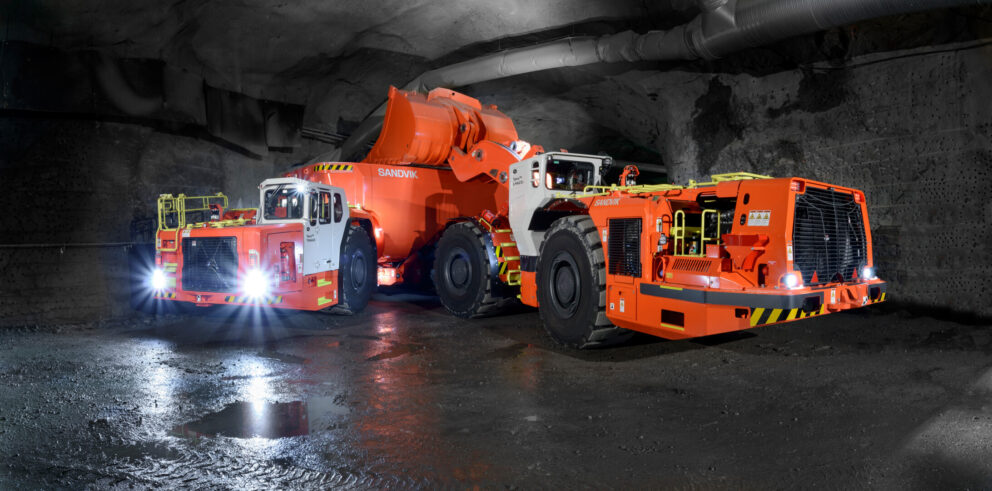
Sandvik has received five AutoMine orders from Byrnecut, the world’s largest underground mining contractor, for operations across Australia and Namibia.  Byrnecut has also acquired AutoMine for underground drilling across four of these sites and now, with these orders, the majority of Byrnecut’s global operations now run AutoMine for loading. AutoMine multi-lite is an advanced automation system that enables loaders to operate fully autonomously from the stope to the designated loading or dumping area, allowing a single operator to control up to three loaders simultaneously from a safe, climate-controlled control room on the surface. Byrnecut automation and electrification manager Luke Clements says safety is Byrnecut’s number one priority  “AutoMine helps ensure that our people get home safely, while also enabling high productivity through precise, consistent, repeatable operations,” he said. Shift changes are one of the largest contributors to downtime in underground operations. Byrnecut is using AutoMine to reduce the impacts by maintaining material movement and drilling progress during these periods — minimising downtime and enabling consistent production. Operators also benefit from the system, as they can remotely supervise and control multiple machines, reducing exposure to dust, noise, vibration and other onsite hazards. This approach enhances safety for operators and mine personnel, while also supporting workforce development as moving operators into technology-focused roles and providing real-time feedback helps build skills for an increasingly automated mining environment. Sandvik automation vice president David Hallett says the deal highlights the growing understanding across the mining sector that Sandvik’s advanced automation solutions help mines run safer, more efficiently and more sustainably. “Byrnecut and Sandvik have a long history of collaboration, and Byrnecut has been a key development partner in our suite of automation solutions,” he said.  “We are proud to continue supporting them as they expand the use of automation across their global operations.” 
WA resources sector spend hits record high
News
WA resources sector spend hits record high
The WA resources sector reported a record spend of $166b in 2025 —the equivalent of $454m every day — according to the Chamber of Minerals and Energy (CME) WA’s latest economic contribution survey.  The spend includes $26b in wages to direct employees, $101.4b in payments made to contractors, community groups and local governments as well as $38.6b paid in taxes and royalties to the State and Federal governments. The majority of the spend occurred in WA, accounting for $114b, where the resources sector now supports two in five jobs and provides just under a quarter of the WA Government’s general revenue, according to data from the CME. CME chief executive Aaron Morey says the rise of the WA resources sector had created hundreds of thousands of jobs, transformed national living standards and provided a funding base for the services Australians rely on every day.  “The WA resources paid $26.9b in  taxes last year, which is around $74m every day,” he said.  In addition to the wages paid to 144,784 direct employees, the survey found industry payments to suppliers and contractors had more than doubled in the space of three years to reach $100.6b to more than 26,000 local businesses in FY25.   “Behind every mine or energy project is a network of local businesses — accountants, caterers, engineers — supporting jobs in communities across Australia,” Mr Morey said.  “Each of those businesses plays a vital role for our sector — and our sector in turn is a vital source of income for those suppliers and contractors.  “It is a powerful demonstration of the multiplier effect of a strong resources sector that is supported to invest in the infrastructure, technology and people to remain competitive in an increasingly contested global landscape.”    
Rio pays $9.5b in Australian taxes for 2025
News
Rio pays $9.5b in Australian taxes for 2025
Rio Tinto (ASX: RIO) paid $14.3b globally in taxes and royalties during 2025 according to its most recent Taxes and Royalties Paid Report. Of the total taxes and royalties paid, $9.5b was paid in Australia — including corporate tax paid of $5.8b — and significant payments were also made in Chile, the US, in Mongolia and Canada. Higher tariffs on primary aluminium exports from Canada to the US, including the removal of the 10% tariff exemption from March 2025, resulted in about $1.45b  in additional tax payments in the US.  Higher profits at Escondida resulted in higher corporate tax payments in Chile and increased copper production and prices at Oyu Tolgoi resulted in higher royalty payments in Mongolia. Rio Tinto chief financial officer Peter Cunningham says the taxes and royalties Rio pays to governments are an important contributor to the economic health and development of the regions where it operates. “We seek to operate responsibly everywhere we work,” he said.  “Our payments to governments can be significant for national budgets and to support development priorities, while our voluntary social investment also allows communities to invest in their own social and economic development for years to come. “We continue to be a leader in transparent tax reporting, voluntarily publishing detailed information on our taxes and royalty payment to governments for over 15 years." Rio also spent a record $19.7b with more than 6,000 Australian suppliers in 2025 — a $2b increase on the previous year. $12.1b of that was spent with WA suppliers as Rio advances development of its replacement mines in the Pilbara. A record $1.1b was spent with Indigenous businesses, including A$820m with Traditional Owner businesses. Rio Tinto iron ore chief executive Matthew Holcz says Rio’s suppliers are fundamental to its operations.  “We are proud to acknowledge the vital role these Australian businesses play in creating jobs, strengthening local economies and supporting our business,” he said. "Stronger local supply chains build stronger communities, and in turn, a stronger nation.”
Australian explorers cash in on billion-dollar exploration boom
News
Australian explorers cash in on billion-dollar exploration boom
A report from BDO has found Australian resource exploration companies are holding a record $12.04b in cash following an exceptionally strong funding quarter.The December quarter has historically been the strongest fundraising period for explorers and this pattern continued in 2025.For Q2 FY26, Australian advisory firm BDO recorded financing inflows of $5.63b, a 61% rise on $3.49b from the previous quarter, to support the highest total cash balance recorded since its analysis began, surpassing the previous $10.15b peak set in Q4 FY22.According to BDO, this is a clear indication of the improving financial health of ASX explorers and positive sector outlook.These numbers show strong liquidity among mid?tier and larger explorers as exploration activity gains momentum, with total expenditure increasing to $915.65m during the quarter — up from year-on-year (YoY) figures of $792.15m for FY24.BDO also reported the share of companies with less than $2m in cash declined to 36%, signalling reduced funding stress and improved prospects for project development heading into CY26.BDO natural resources and energy global lead Sherif Andrawes says investor sentiment improved during the quarter, supported by tightening supply conditions across key commodities and an increased global focus on critical minerals.“While gold continued to attract substantial funding inflows, significant support was also directed to energy?transition and critical minerals including lithium, uranium, rare earths, and copper,” he said.According to Australian Bureau of Statistics (ABS) data, gold exploration saw the largest rise in exploration activities, up 8.8%, while iron ore exploration fell 18.7%.Rox Resources (ASX: RXL) led the podium for ASX-listed gold explorers with $218m in cash available at the quarters end.Energy transition commodities were prominent this quarter, with lithium overtaking gold as the largest source of financing inflows by commodity.Lithium explorer Vulcan Energy (ASX: VUL), backed by Gina Rinehart’s Hancock Prospecting, recorded the highest cash balance at the end of the period, with $957.29m available on the back of Q2 fundraising activities, accounting for 88% of lithium-sector inflows for the quarter.“Growth in lithium financing inflows during the quarter, largely driven by Vulcan Energy, reflects Europe’s lithium supply deficit and the rising demand from electric vehicles (EVs) and energy storage systems, alongside the global expansion of electrification systems and the need to diversify sources of supply,” Mr Andrawes said.Arafura Rare Earths (ASX: ARU), another company backed by Hancock Prospecting, held the second highest cash balance of $500.72m at the quarters end after Ms Rinehart committed $125m to a share placement — raising Hancock’s stake in the company to about 15.7%.BDO reported the quarter saw a 32% increase in fund finders, companies that recorded debt and equity raises of $10m or more, rising to 103 companies from 78 in the previous quarter.These companies raised about $4.74b, about 65% higher than the $2.88b raised by 78 companies in the previous quarter. On average, the fund finder cohort for Q2 raised $46.01m per company and contributed about 84% to total financing inflows.“Looking forward, this quarter signals that ASX explorers enter 2026 with substantial momentum,” Mr Andrawes said.“Record financing inflows, rising exploration expenditure, improved cash reserves and a recovery in IPO activity collectively point to a more resilient and optimistic environment for explorers.”While macroeconomic uncertainty and market volatility remain ongoing challenges, broader participation across gold and energy?transition minerals indicates renewed investor support in Australia’s exploration sector.The sector appears well?positioned to sustain these activity levels into 2026, reinforcing the foundations laid during the standout quarter.
Australia signs landmark free trade agreement with EU
News
Australia signs landmark free trade agreement with EU
After eight years of negotiations, Australia has signed a free trade agreement (FTA) with the European Union (EU) to lower trade and investment barriers between the regions.Yesterday, Prime Minister Anthony Albanese and European Commission President Ursula von der Leyen announced the conclusion of negotiations for a FTA alongside a new security and defence partnership.The FTA will boost trade and cooperation on critical minerals, reinforcing the Australia–EU strategic partnership on critical minerals by establishing a clear framework that underpins market access and long-term cooperation across the full minerals value chain.Under the FTA, almost all Australian exports of manufactured goods and mineral resources to the EU will face zero import tariffs.Federal Trade and Tourism Minister Don Farrell says the FTA is a strategically important and economically valuable agreement at a time when Australian exporters are navigating choppy trade waters.“This hard-fought deal delivers real commercial gains for Australian exporters, farmers and producers into a market that has been difficult to enter or effectively closed for decades,” he said.“The removal of EU tariffs on most of Australia’s exports gives Australian exporters the opportunity to diversify trade with 27 European countries and 450 million consumers.”Australian companies, including small and medium-sized enterprises, will have better access to bid for lucrative European government contracts, worth about $845b annually, including for rail and construction.Australian professionals will also be able to travel to the EU more easily and will benefit from streamlined recognition of their Australian qualifications.Minerals Council of Australia chief executive Tania Constable says Australia is positioned to be a reliable, long-term supplier of the minerals essential to energy systems, defence technologies, advanced manufacturing and broader industrial resilience.“Mutual recognition of qualifications, professional services and specialist expertise will strengthen industrial capability by improving workforce mobility so critical engineering, technical and professional skills can be deployed more efficiently across mining, processing, manufacturing and defence?adjacent sectors,” she said.“The agreement improves market access for Australian miners, enhances investment certainty and provides a strong platform for increased EU investment into Australian mining projects, downstream processing and critical minerals supply chains.”The FTA will enter into force when both Australia and the EU have completed their domestic processes.
Liberty Bell Bay smelter enters voluntary administration
News
Liberty Bell Bay smelter enters voluntary administration
Liberty Bell Bay in Tasmania, one of billionaire Sanjeev Gupta’s last remaining Australian assets, has entered voluntary administration.The Tasmanian Government is actively engaging with the appointed administrators, receivers and key stakeholders to follow developments at the smelter and its implications to the state.In early March, the Australian Securities and Investments Commission (ASIC) lodged an application to the Supreme Court of NSW to wind up operations at Liberty Bell Bay following its failures to lodge annual financial reports for five consecutive years.The smelter has been operating at a limited capacity since May despite being granted a $20m loan from the Tasmanian Government in August to purchase 48,000t of ore to facilitate its restart.In late January, the Tasmanian Government confirmed that Liberty Bell Bay had repeatedly defaulted on repayments and breached the loan agreement terms.Tasmanian Business, Industry and Resources Minister Felix Ellis says the news will be difficult for workers, their families and the local community who have already endured prolonged uncertainty.“GFG has failed to deliver on its commitments to restart operations and provide certainty to Tasmanians,” he said.“We understand that administrators have been appointed with the intention of stabilising the business and testing the market for a potential sale or recapitalisation.“We will carefully consider all available options, with a clear focus on securing the best possible outcome for workers, the Bell Bay region and Tasmania’s industrial future.”Liberty Bell Bay is the latest in a trail of resource assets led by Mr Gupta across Australia that have fallen into administration.In February, Mr Gupta placed Tahmoor coal mine into voluntary administration in an effort to prevent creditors, led by Coal Mines Insurance (CMI), from forcing liquidation of the asset over unpaid insurance claims.In 2025, the South Australian Government forced Whyalla Steelworks’ operator OneSteel Manufacturing into administration to avoid it becoming “irredeemable” under Mr Gupta who was the previous owner.
Billion-dollar copper project to deliver local benefits
News
Billion-dollar copper project to deliver local benefits
The Queensland Government has declared the proposed $2.3b Eva copper mine a large resource project under the Strong and Sustainable Resource Communities Act 2017.The declaration means, if approved, the project must employ a percentage of its workforce locally and prioritise local procurement, ensuring long-term social and economic benefits for the surrounding Mt Isa and Cloncurry communities.Located 75km north of Cloncurry and 95km northeast of Mount Isa, the Eva project is expected to produce an average of 60,000tpa of copper and 19,000ozpa of gold over a 15?year mine life.Copper concentrate extracted at the project will be processed locally at Glencore’s Mount Isa copper smelter, supporting existing industrial capability in the region.Queensland Deputy Premier and State Development, Infrastructure and Planning Minister Jarrod Bleijie has also extended Eva’s prescribed project declaration, providing additional certainty and streamlined approval pathways.The extension allows the coordinator general an additional two years, until March 25, 2028, to continue providing coordinated support and fast-tracking approvals to keep the project moving.Deputy Premier Bleijie says the Queensland Government is focused on delivering a better lifestyle through a stronger economy, by supporting projects that deliver jobs, investment and long-term regional benefits.“Eva copper has the potential to be Queensland’s biggest copper mine, and we want to ensure the communities closest to the project share directly in its success,” he said.“Declaring Eva copper a large resource project strengthens local employment opportunities, supports regional businesses and ensures long term benefits for Mount Isa and Cloncurry.”The project, owned by Harmony Gold, is anticipated to generate up to 1000 construction jobs and 450 ongoing operational roles, delivering a major boost to the region’s workforce and economy.Cloncurry Mayor Greg Campbell says Eva’s designation as a large resource project would assist local efforts to ensure benefits for the Cloncurry community.“We want to make sure the project not only generates long-term economic benefits throughout our local supply chains but also creates social and community benefits for our residents,” he said.Forecast to inject more than $17b into Queensland’s economy, first copper concentrate is expected to be delivered to the Mount Isa smelter in 2028.Harmony Gold chief development officer Johannes Van Heerden says the company welcomes the Queensland Government decisions.“As a Tier 1 Mining jurisdiction, Queensland offers coordination support and a stable regulatory framework that has helped Eva copper move forward through planning and into construction with certainty,” he said.
MCA pushes for $13m AI trial proposal
News
MCA pushes for $13m AI trial proposal
The Minerals Council of Australia (MCA) has asked the Federal Government to fund a three-year pilot program to embed AI into environmental regulatory decision-making.The pilot would trial AI support for human decision-making to improve the transparency and accuracy of assessment and approvals under the Environment Protection and Biodiversity (EPBC) Act.Approval delays remain a key concern for the mining industry and regulatory bodies.According to the MCA, an increase in average decision times for resources projects of 60% from 2.3 years in 2019 to 3.8 years in 2025 is creating uncertainty, costing the Australian economy billions and eroding investor confidence.The MCA says AI tools, such as an interactive submissions coach for project proponents, a pre-submission quality check, geospatial data integration and tracking and a risk comparison capability, would reduce proponent errors in applications, eliminate duplication and support faster, better-informed decisions.The proposed pilot would aim to reduce inefficient manual document reviews, inconsistent application of conditions and repeated lengthy requests for information with the aim of enabling regulators to focus effort on more complex and high-risk approvals.The first solution is estimated to take about 12-20 weeks, and the total program development across the four solutions is estimated to take 6-12 months.The MCA says a smaller amount of ongoing capital investment will enable continuous improvement and system evolution.MCA chief executive Tania Constable says embedding AI in approvals can position Australia as a global leader in sustainable development and in responsible innovation using the minerals sector’s extensive use of AI in current operations and understanding of EPBC processes.“We know that EPBC delays and uncertainty can result in millions of dollars in lost project value, duplication of costs and missed investment opportunities which negatively affects communities and the Australian economy as well as project proponents,” she said.“This approach would help government deliver modern, efficient environmental regulation while meeting environmental objectives.”The use of AI-enabled tools in the mining industry, from machine learning, predictive analysis, autonomous haulage systems to safety monitoring and decision making, is becoming increasingly commonplace.The NSW Government has an AI solution to review building permit applications as part of the State significant development process, automate compliance checks and accelerate assessmentsIn the mining-intensive Canadian province of British Columbia, Mining Digital Services built an AI-powered searchable library that extracts and verifies permit conditions from documents, reducing reliance on institutional knowledge and enabling faster compliance reportingDeveloped by Pacific Northwest National Laboratory in the US, PermitAI is being developed to support environmental reviews by searching prior assessment and assist document drafting.Though these ongoing advancements are creating new opportunities, implementing AI is not without risk. According to S&P Global, primary concerns include data security and overreliance on empirical and modelled data alongside a series of ethical dilemmas.The growth of AI infrastructure also raises questions about electricity demand and water use, particularly as data centre investment accelerates.In 2024, data centres accounted for about 1.5% of global electricity consumption, according to the IEA.The IEA projects that data centre electricity consumption may grow by about 15% per year until 2030, more than four times faster than the growth of total electricity consumption from all other sectors.Global investment in data centres is accelerating and, though the IEA projects the US, China and Europe will remain the largest data centre regions, Australia is well-placed to become a global leader.This week, the Federal Government released a series of expectations for data centres and AI infrastructure developers as part of its commitment under the national AI plan, stressing that data centre expansion must happen on terms that benefit the community and supports national interest.The expectations are designed to ensure data centre developments put the needs of the Australian people first, ensuring communities benefit directly through jobs, investment in skills and innovation while supporting the clean energy transition and safeguarding long-term water security.Federal Climate Change and Energy Minister Chris Bowen says it is no surprise Australia is an attractive investment destination for data centre technology.“Data centres have great potential to support our grid and expand new renewable investment, but it’s important we work together across jurisdictions and with industry to get the investment settings right so that we can continue to keep our system secure and energy prices low for all consumers,” he said.The Federal government’s five expectations are that the developments will:Prioritise national interest Support the energy transition Use water sustainably and responsibly Invest in local skills and jobs Strengthen research, innovation and local capabilityThe Federal Government will prioritise proposals most closely aligned with the overarching national expectations which will work alongside existing laws and help guide local decisions in each state and territory.
Deep sea mining talks deadlocked
News
Deep sea mining talks deadlocked
International Seabed Authority (ISA) Council negotiations have concluded without the adoption of an agreed upon deep sea mining code and without any mining approvals being granted.  The two-week negotiations exposed unresolved disagreements between participants on issues ranging from environmental safeguards and liability to inspection, compliance and benefit-sharing, with several governments raising major scientific, environmental and governance concerns.  ISA member states also supported the ISA’s legal and technical commission’s (LTC) inquiry and preliminary report into contractor non-compliance, which revealed that an ISA contractor may be in breach of its contract. The report also revealed the contractor may be in breach of its obligations to act in accordance with the multilateral framework under the United Nations Convention on the Law of Sea (UNCLOS). Deep Sea Conservation Coalition (DSCC) policy lead Emma Wilson says that if breaches are confirmed, contracts must be terminated. “Contractors cannot hold exploration contracts under the international system while simultaneously undermining it by seeking to mine unilaterally,” she said. “The ISA’s response to threats of unilateral mining is a critical test for the authority.” The inquiry also comes amid concerns surrounding attempts to pursue unilateral deep-sea mining, including questions about the involvement of Nauru Ocean Resources (NORI), a subsidiary of The Metals Company.  DSCC legal advisor Duncan Currie says the inquiry goes directly to the ISA’s core responsibility to the deep seabed as the common heritage of humankind. “If companies attempt to bypass the Authority by pursuing mining through a unilateral national process, it would constitute an unauthorised appropriation of the global commons under the UNCLOS.” A full LTC report is expected at the July meeting, when NORI’s contract is due for extension. The DSCC continues to call on governments to adopt a moratorium on deep sea mining. 
Back to of the page