War in the Middle East has pushed energy security back to the centre of the market, with disruptions to Qatar’s LNG sector raising fresh concerns about global fuel supply.
Across three days in early March, state-owned energy giant QatarEnergy said it had ceased LNG production, halted some downstream production lines and declared force majeure to affected buyers.
Supply concerns deepened in the weeks that followed, when missile attacks hit Ras Laffan Industrial City, home to the world’s largest LNG export complex, causing major damage to key facilities.
QatarEnergy said the attacks had cut the country’s LNG export capacity by 17%, a significant blow to a supplier that accounts for about one-fifth of global LNG supply.
With the Strait of Hormuz, a critical energy chokepoint for global oil and LNG trade, also under pressure, the disruptions have stoked fears of tighter gas markets and broader energy shortages.
As gas becomes scarcer and more expensive, coal has again come into focus as a fallback fuel in markets where renewables or alternative gas supply cannot be secured quickly.
That shift has supported coal producers, with stocks such as New Hope Group (ASX: NHC) rising as investors factor in the prospect of firmer demand and stronger energy prices.
Coal: the reliable fallback
Prior to the recent improvement in coal sentiment, New Hope’s first half of FY26 was defined by solid operational performance, despite a period of recovery at the Bengalla mine in NSW and a lower coal price environment.
The board declared a fully franked interim dividend of 10.0 cents per ordinary share, citing the group’s low-cost assets and disciplined approach.
At Bengalla, New Hope delivered increased prime waste volumes during the half, supporting the realignment of the pit sequence following weather disruption late in FY25.
Looking ahead, New Hope is working to return Bengalla to a 13.4mtpa ROM coal production rate during H2 FY26.
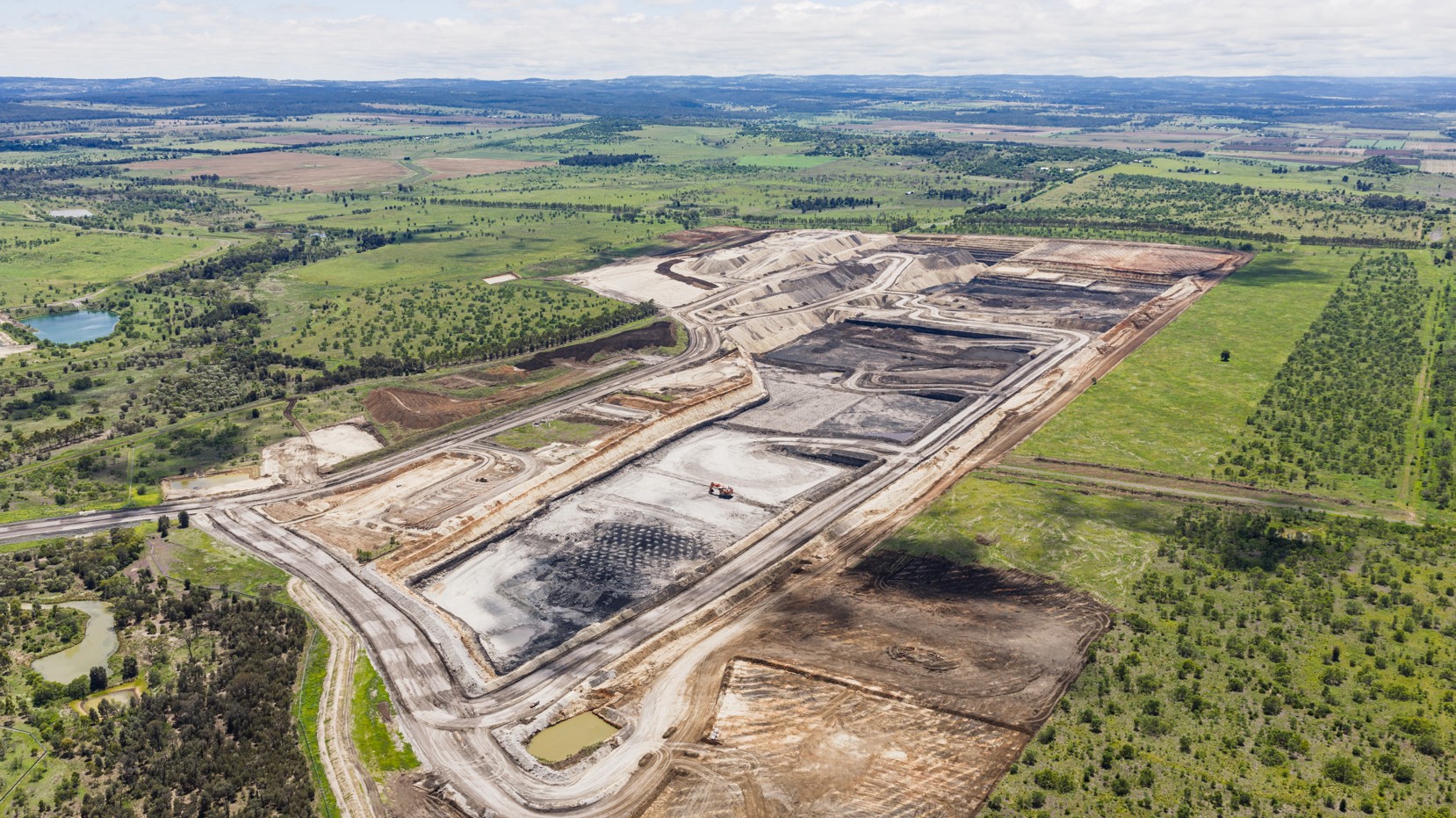
At New Acland in Queensland, New Hope increased coal production as the mine continued to ramp up toward 5mtpa. Access to Manning Vale West, slated for Q4 CY26, is expected to increase operational personnel and provide another step change in production.
New Hope Group chief executive Rob Bishop comments on the results.
“The group achieved 5.5mt of saleable coal production for the half year, which was supported by the continued ramp up of production at New Acland mine,” he said.
“In a lower coal price environment, our assets remain resilient and continue to generate solid margins.”
“We are focused on remaining a resilient, low-cost coal producer and continuing to execute our organic growth plans, which will enable us to continue delivering value to shareholders.”
During the half, New Hope also increased its equity interest in Malabar Resources by 3% to 25.97%, increasing exposure to metallurgical coal in line with its strategy to invest in low-cost coal assets with long-life approvals.
For H1, New Hope reported underlying EBITDA of $214.8m, 58.5% lower than the previous period driven by lower realised pricing. Net profit after tax was $54.3m, 84% lower than the previous period.
Second quarter performance
Despite a mixed coal pricing environment, New Hope Group posted higher quarterly coal production and sales volumes.
New Hope reported group ROM coal production of 4.1mt up 4.8% on Q1, saying this was supported by strong mining performance. Group coal sales increased 8.2% to 2.9mt which the company attributed to improved logistics across Bengalla and New Acland.
Coal benchmarks strengthened from Q1 but remained lower year on year.
The Newcastle thermal benchmark (gC NEWC 6000) averaged US$109.5/t for the quarter, up 2.7% quarter on quarter and down 14.3% year on year.
New Hope achieved an average realised sales price of $139/t for the quarter, up from $136.6/t in the previous quarter, and delivered underlying EBITDA of $106.9m.
The company ended the quarter with an available cash balance of $616.8m.
At Bengalla, ROM coal production increased 4.7% to 2.2mt, while coal sales lifted 3.3% to 2mt as product stocks were drawn down after logistics constraints eased.
Saleable production fell 5.4% to 1.9mt, reflecting lower washer input during the annual planned coal handling and preparation plant (CHPP) shutdown.
The company says Bengalla is expected to return to a 13.4mtpa ROM production rate (100% basis) in the second half of FY26 as the operation continues to realign its pit sequence after the earlier weather disruption.
At New Acland, ROM production rose 4.9% to 1.8mt.
Saleable coal production jumped 24.5% to .9mt, which the company attributed to processing of higher yielding coals, while coal sales increased 20.4% to .9mt, supported by improved rail availability.
The Australian Mining Review spoke with Mr Bishop about New Hope’s second quarter prior to the release of its half year results.
AMR: Q2 pointed to improved logistics and higher group coal sales. What did your teams do differently on the ground to deliver that improvement?
RB: We continued to control the controllables.
At New Acland Mine, saleable coal production was .9mt, a 24.5% increase on the previous quarter, driven by the processing of higher yielding coals. Coal sales, including a small portion of domestic sales, totalled .9mt for the quarter, a 20.4% increase on the previous quarter, reflecting higher coal production and improved rail availability to the Port of Brisbane.
At Bengalla Mine, saleable coal production was 1.9mt, 5.4% lower than the previous quarter due to the seven-day planned shutdown of the Coal Handling and Preparation Plant (CHPP) to allow for routine maintenance.
Coal sales were 2.0mt, 3.3% higher than the previous quarter due to a drawdown of product stocks following the easing of logistics constraints experienced in the previous quarter.
AMR: Safety metrics rose in Q2 — AIFR increased to 35.20 and there were 12 notifiable incidents. What’s the single most important change you’re making now to improve performance?
RB: The majority of our people work at our mining operations, a work environment that inherently exposes them to risks to their safety and health. New Hope Group is committed to providing a safe workplace and promoting a proactive safety culture. We continue to review and improve our processes in an effort to reduce work related injury and illness and provide a safe and healthy work environment.
It’s disappointing our safety metrics rose in the last quarter.
Focused action will be taken, specifically sessions that remind our workforce of the importance of hazard identification, risk assessment, and system review. This approach supports both management accountability and workforce engagement, recognising that effective health and safety performance depends on active involvement at every level of the organisation.
AMR: Bengalla is expected to return to the 13.4mtpa ROM production rate in the second half of FY26, with strip ratio moderating back to normalised levels. What are the main gates you need to clear to get there and what does success look like by year-end?
RB: Success means we return to the 13.4mtpa ROM coal production rate (100% basis) during the second half of the 2026 financial year, however, this will be dependent on Mother Nature.
Bengalla Mine delivered increased prime waste volumes for the first half of the 2026 financial year, which supported the re-alignment of the pit sequence following significant weather events late in the 2025 financial year.
Flooding in the Hunter Valley severely impacted vessel movements and resulted in elevated shipping queues at the Port of Newcastle. Rail cancellations caused by crewing shortages at Bengalla’s major rail haulage provider, and weather impacts to rail infrastructure resulted in the CHPP becoming stockbound throughout the last quarter of the year, impacting Bengalla Mine’s ability to produce saleable product.
AMR: You’ve reduced Bengalla’s FY26 sustaining capex guidance from $130–$160m to $100–$130m, citing timing and capital optimisation. What did the team do differently to achieve that? What was protected as non-negotiable spend?
RB: The reduction in Bengalla Mine’s FY26 sustaining capital guidance reflects timing and capital optimisation in response to market conditions. Specifically, we’ve looked at pricing and criticality, so we can make the correct decisions for the business.
Delays to certain approvals have also seen investment in capital expenditure pushed back to the 2027 financial year.
AMR: What does New Acland’s ramp-up look like from here? What are the major milestones over the next 12–18 months, and what are you most focused on getting right to deliver it?
RB: Stage 3 certainty, which was secured in early 2025 allowed New Acland Coal to fast-track its operational ramp up plan without the threat of ongoing legal action.
The conclusion of the legal challenge also provided certainty for the local community and enables continued production increases as New Acland mine grows to become a 5mtpa operation.
New Acland coal currently has more than 315 employees, with the next intake of mine workers likely to occur later in the year and align with access to Manning Vale West Pit.
New Acland coal has selected a preferred tenderer for the major road realignment works to enable mining access, namely Jondaryan-Muldu Road. Engagement with contractors and the local government authority will continue throughout the year to progress the design and realignment of the remaining public roads.