Australia’s lithium miners have wasted no time seizing the opportunities ushered in by a recovery in pricing.
After a year lying low while focusing on optimising its expanded Pilgan plant and improving operating metrics, PLS has shifted to growth, with the miner approving the restart of its Ngungaju processing plant, one of two processing plants at the Pilgangoora project.
The plant is expected to add about 200ktpa of spodumene concentrate capacity with production resuming in July 2026.
The move suggests confidence is returning among stronger lithium producers and their customers.
PLS had preserved the plant as an option through the weaker price environment, indicating that the restart was made possible by sustained improved market conditions and customer demand.
The restart decision came after a marked improvement in Pilgangoora’s quarterly sales and pricing metrics. By the December 2025 quarter, stronger realised prices, higher sales volumes and a near $1b cash balance improving the company’s financial flexibility.
In the December 2025 quarter, PLS reported production of 208.kt and sales of 232.kt, generating $373m in revenue and closing the period with a $954m cash balance, giving the company a stronger platform from which to bring additional capacity back online.
PLS managing director and chief executive Dale Henderson commented on the restart.
“The restart of the Ngungaju plant demonstrates the disciplined through-the-cycle strategy we have executed — preserving operational capability and balance sheet strength during the downturn so we could respond decisively as conditions improved,” he said.
“Supported by customer contracting and strengthening market fundamentals, restart capital remains within our FY26 guidance, enabling us to bring approximately 200ktpa of additional production capacity back online with limited execution risk and enhanced volume leverage.
“Beyond Ngungaju, our growth options are sequenced and returns-driven. P2000 represents a material brownfield expansion opportunity progressing through feasibility, while at Colina we are investing in resource growth and expanding the feasibility study to optimise long-term scale and economics.
“Both projects remain 100% owned and controlled by PLS, with production volumes currently unallocated, providing strategic flexibility as we progress toward investment decisions.
“PLS enters this phase from a position of strength, and our capital allocation framework remains unchanged — any growth will be advanced selectively, preserving financial flexibility and ensuring a clear pathway to attractive long-term returns for shareholders.”
Pilgangoora
Before PLS could reactivate Ngungaju, it first needed to prove the Pilgan circuit could deliver stable, efficient performance after expansion.
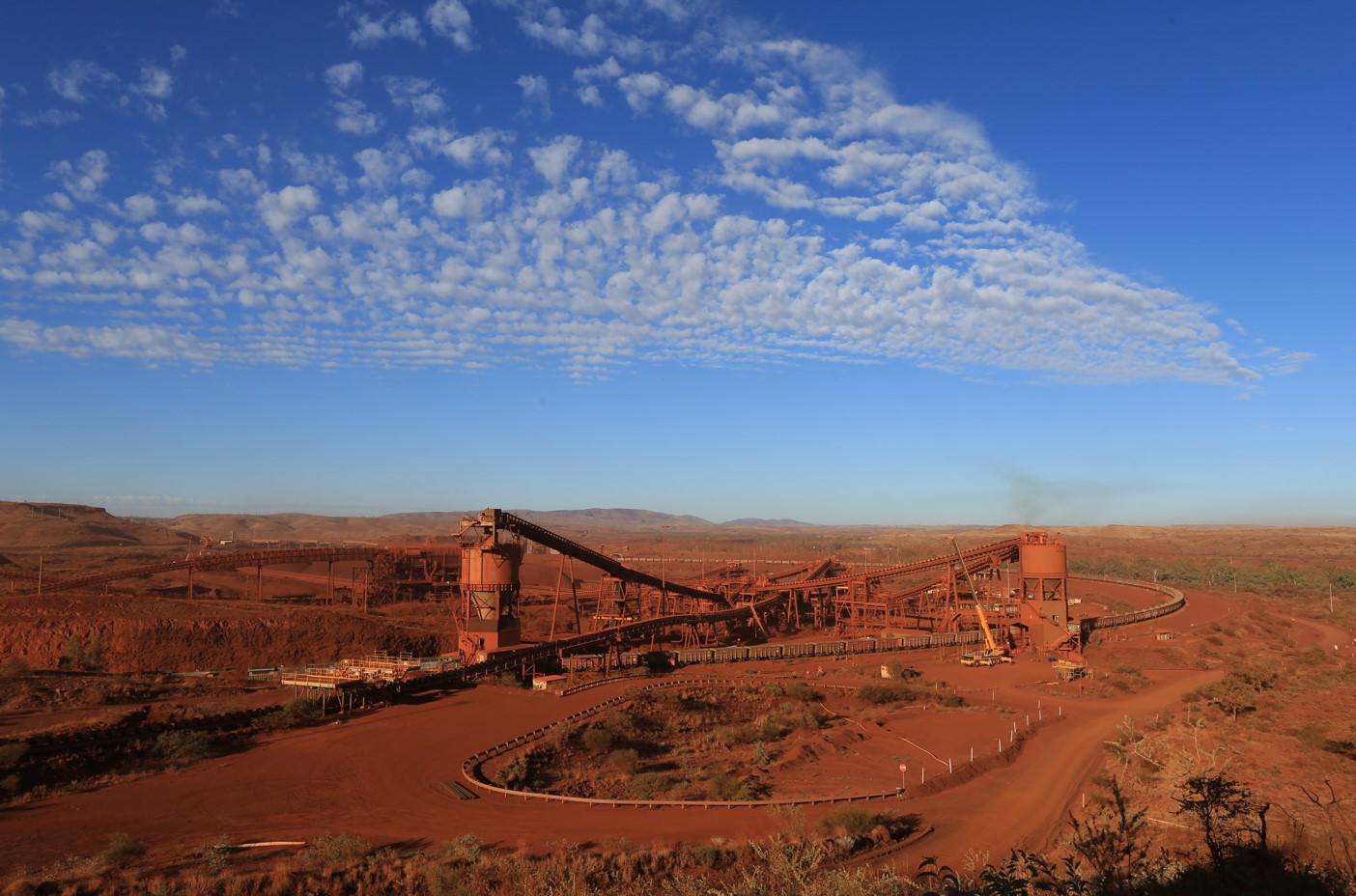
PLS says its 100%-owned flagship Pilgangoora operation is the world’s largest independently owned hard rock lithium operation, supplying about 8% of global lithium demand.
With the completion of the P1000 expansion project, it now features the world’s largest lithium ore sorter and has the capacity to produce up to 1mtpa of spodumene concentrate.
The P1000 expansion project comprised a major upgrade to the Pilgan plant’s concentrator and supporting infrastructure, lifting total production capacity at the Pilgangoora operation.
PLS said its September quarter output reflected stable performance from the Pilgan plant following completion of the P1000 expansion in FY25. The same period also showed measurable optimisation gains, including a 9% improvement in lithium recoveries to 78%.
Unit operating cost (FOB) in the September quarter fell 13% to $540/t, helping demonstrate that the site was becoming more efficient even before Ngungaju was restarted.
The restart builds on work already done at Pilgan, with P1000 establishing a stronger operating base and Ngungaju now providing the next layer of growth.
P2000 project
The P2000 project represents a potential expansion of the Pilgangoora operation’s concentrate production capacity to about 2mtpa.
The new facility will be designed to enhance operational flexibility and enable coordinated optimisation of aggregate performance across Pilgan, Ngungaju and the proposed P2000 plant over the life of mine. PLS says this integrated approach supports scale efficiency and recovery optimisation across the broader Pilgangoora operation.
P2000 production volumes remain unallocated, providing strategic flexibility in future offtake alignment, partnership structuring and potential funding pathways.
The proposed expansion would include construction of a new concentrator adjacent to the existing Pilgan and Ngungaju processing facilities. The June 2024 pre-feasibility study (PFS) confirmed that increased mining and processing rates could be supported within the current ore reserve base, positioning P2000 as a material brownfield scale option within the existing Pilgangoora footprint.
Since release of the PFS, PLS says it has progressed detailed engineering, mine planning, regulatory preparation, water supply assessment, metallurgical refinement and infrastructure definition as part of the feasibility study.
Study outcomes are targeted for release in the December quarter 2026.
Price floors
In February, PLS also secured an offtake deal with Canmax through mid-CY28 that included a price floor of $1400/t (US$1000/t) for spodumene from the Pilgangoora operation.
Subject to receipt of a $140m (US$100m) prepayment, the supply of 150ktpa of spodumene concentrate will commence in CY26.
Under the agreement, PLS has the option to extend for an additional 12 months beyond the initial two-year term and supply a further 150kt.
PLS can meet the commitment from its Pilgangoora operation, including either the Pilgan plant or Ngungaju plant or a combination of both.
The miner said the floor price mechanism provides downside protection against market volatility while preserving full exposure to price upside.
“This agreement builds on our established relationship with Canmax and reflects both the quality and consistency of Pilgangoora’s spodumene and PLS’ proven capability as a reliable, large-scale operator,” Mr Henderson said.
“The US$100m interest-free prepayment and floor price structure demonstrate strong commercial confidence in our product and performance, while preserving full exposure to price upside.
“The agreement strengthens our near-term liquidity and preserves operational flexibility through optional volumes, supporting disciplined production and sales decisions as lithium market fundamentals continue to improve.”
The price floor is a good sign for lithium markets and has been recognised by government and private enterprise alike, especially as more details of Australia’s Critical Minerals Strategic Reserve have come to light.
Federal Resources Minister Madeleine King previously flagged the government’s consideration of a price floor as the reserve has been taking shape. As recently as early February, Minister King confirmed that Australia would build a pricing mechanism within the Critical Minerals Strategic Reserve.
Resource depth
In June 2025, PLS updated the Pilgangoora mineral resource to 446mt at 1.28% lithium oxide, containing 5.7mt of lithium oxide. This represented a 23% increase in contained lithium and a 10% increase in total mineral resource tonnage.
The update followed a major drill program and reinforced Pilgangoora’s position as a large, long-life asset with the scale to support multiple phases of development.
PLS says this upgrade further consolidates its position as a leading global lithium supplier and is aligned to its strategy to achieve the full potential of its assets.