Latest News

WA introduces exploration spending exemptions amid fuel pinch
Politics & Regulation
WA introduces exploration spending exemptions amid fuel pinch
WA miners and explorers affected by fuel security issues are now able to apply for exemptions on minimum expenditure requirements for their tenures.The new policy, enacted by the WA Government, aims to ease the cost burden on local companies amid an ongoing period of elevated fuel prices.Minimum expenditure requirements are a central feature of WA's mining tenure system, intended to promote active exploration and development and deter land banking or tenement warehousing.However, the WA Government recognises that given prevailing fuel security issues, strict compliance with expenditure requirements may be contrary to the interests of the state.WA Mines and Petroleum Minister David Michael says the WA Government is committed to easing the burden on its mining sector."I'm acutely aware that the high cost of fuel and in some cases supply issues are creating significant challenges for our exploration and mining sector,” he said.The new policy will be reviewed at the end of 2026.
Newmont Corporation (ASX: NEM) has reported record quarterly free cash flow of US$3.1b and net income of US$3.3b for Q1 2026.
NewsProjects & Operations
Newmont generates record earnings
Newmont Corporation (ASX: NEM) has reported record quarterly free cash flow of US$3.1b and net income of US$3.3b for Q1 2026.  Attributable gold production decreased 10% from the prior quarter, driven by lower production at Boddington and Tanami.  The company produced 1.3moz of attributable gold, as well as 9moz of silver and 30,000t of copper during the quarter. Newmont says it is on track to meet full-year production guidance of 5.3moz gold.  Gold by-product all-in sustaining costs were US$1029/oz with Newmont citing favourable silver and copper by-product credits, ongoing cost and productivity initiatives and lower sustaining capital spend. Operating cash flow reached US$3.8b, while the company ended the quarter with $US8.8b in cash and US$12.8b in total liquidity. Newmont also expanded shareholder returns, declaring a quarterly dividend of US$.26/share and announcing an additional US$6b to double its share repurchase authorisation, following full execution of the previous program.  Newmont President and chief executive office Natascha Vilijoen said the result kept the company well positioned to deliver 2026 guidance while continuing to return capital and invest in long-life assets.  During the quarter, Newmont reported increased production at Cadia in New South Wales, with improved grades and throughput also supporting higher copper output. The company also flagged ongoing investment in Cadia and Boddington to support long-term production capacity.  Newmont said earnings from divestments further strengthened earnings, with the program generating over $4.6b in total after-tax proceeds to date.  
Fortescue forks out $1b for green energy
NewsProjects & Operations
Fortescue forks out $1b for green energy
Fortescue (ASX: FMG) has significantly boosted its green energy spend to fast-track the delivery of its Pilbara green energy grid as the company finishes Q3 with a cash balance of $5.89b .During Q3, Fortescue shipped 48.4mt of iron ore, a 5% year-on-year increase, bringing the total volume for FY26 so far to a record high of 148.7mt, despite major weather disruptions impacting production at its Iron Bridge operations and lower realised hematite prices.Hematite C1 unit costs were 4% lower than the previous quarter, contributing to an average unit cost of US$18.52/wmt for the first three quarters of FY26.The company finished the quarter with a net debt of $2.24b after recording a capital expenditure of about $1.28b and a payout of $1.82b in interim dividends.Fortescue also confirmed its board had approved an additional $954m spend on top of the already approved $8.7b , to develop new green energy infrastructure to meet growing industry power demands, largely driven by data centres.Fortescue metals and operations chief executive Dino Otranto says the company is already seeing the benefits of decarbonising its operations.“Given volatility in global energy markets, there’s never been a clearer reason why this matters,” he said.Unlike other large renewable hubs, which feed intermittently into national or other power systems, Fortescue’s off-grid system is expected to be the largest of its kind dedicated to decarbonising major industry.Fortescue anticipates the 290MW of installed renewable capacity to meet the fixed energy requirements of its ore processing facilities, enabling daytime “green processing” across its Pilbara operations, by early 2027.The system is expected to ramp up to power all of Fortescue’s operations for 24-hour periods completely without fossil fuels by the end of 2027, well ahead of the companies previous Real Zero by 2030 target.Fortescue executive chairman Andrew Forrest says the company is already demonstrating in the Pilbara that heavy industry can operate on a fully integrated renewable grid.“We are now extending this model to new customers, particularly data centres, helping meet one of the fastest growing sources of demand in the world,” he said.Fortescue is expecting full completion of its Pilbara green grid by the end of 2028, which includes 1.2GW of solar capacity, more than 600MW of wind generation and 4-5GWh of battery energy storage.During the quarter, Fortescue also completed its acquisition of Alta Copper, making its official move into the copper industry as it took over ownership of the Cañariaco copper project in Northern Peru.
South32 (ASX: S32) has reported solid operating and financial performance for Q3 FY26, maintaining production guidance across all operations except Australia Manganese.
NewsProjects & Operations
South32: strong quarter offsets weather impacts
South32 (ASX: S32) has reported solid operating and financial performance for Q3 FY26, maintaining production guidance across all operations except Australia Manganese.   The company delivered net cash generation of US$121m despite weather disruptions and continued investment in growth. South32 chief executive Graham Kerr said several operations delivered strong results during the quarter, supported by higher aluminium prices, record year-to-date production at Brazil Alumina, and a record US$135 million distribution from Sierra Gorda. Group alumina production increased by 1% year to date, while aluminium production was broadly unchanged, with Hillside Aluminium continuing to test maximum technical capacity. At Australia Manganese, however, FY26 production guidance was revised down 6% to 3,000kwmt, reflecting elevated site water levels, wet season rainfall and impacts from Tropical Cyclone Narelle. South32 said strong operating performance and commodity price support helped offset US$158m in growth capital expenditure at the Hermosa project during the quarter, with the company’s balance sheet supporting ongoing investment in copper, zinc and silver growth. At Hermosa, South32 reported progress in federal permitting under the FAST-41 process, alongside continued advancement of underground and surface infrastructure at the Taylor zinc-lead-silver project. Cannington remained on track to meet production guidance despite significant flooding in northwest Queensland, while Sierra Gorda maintained guidance despite wet weather impacts in Chile.  South32 also highlighted potential costs pressures linked to higher freight rates, raw material prices and stronger producer currencies, while noting measures have been implemented to mitigate supply chain risks associated with conflict in the Middle East. Following the quarter, the company paid a fully franked interim dividend of US$175m, while continuing its capital management program 
Mineral Resources (ASX: MIN) and Curtin University have advanced research into environmental DNA (eDNA) monitoring, building on their three-year collaboration to demonstrate the technology’s potential to support biodiversity surveying in remote and sensitive environments.
NewsTechnology & Innovation
MinRes and Curtin advance eDNA research for biodiversity monitoring
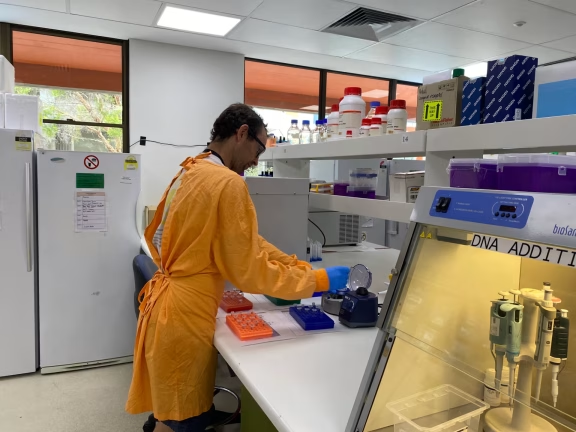
Mineral Resources (ASX: MIN) and Curtin University have advanced research into environmental DNA (eDNA) monitoring, building on their three-year collaboration to demonstrate the technology’s potential to support biodiversity surveying in remote and sensitive environments. The program explored how eDNA could complement traditional survey methods by providing a faster, scalable and potentially less intrusive way to monitor ecosystems, particularly for species that are difficult to identify or detect. MinRes biodiversity principal Adam Cross says the research offers an opportunity to improve how environmental data is collected across challenging landscapes. “Every organism leaves behind traces of its presence in shed DNA in the form of faeces, hair, scales, pollen and other materials” he said. “Collecting samples from different parts of an ecosystem such as soil, water, leaves, animal scats and cobwebs, eDNA analysis can give a rapid and powerful snapshot of which species are present in an area.” The collaboration comprised five research projects, including development of monitoring guidelines, testing spiderwebs as natural DNA traps, comparing different sample types and conducting an airborne eDNA transect spanning more than 1000km from Perth to Cocklebiddy in WA.  Curtin Research associate Joshua Newton said the work scaled from novel sample methods through to the largest terrestrial eDNA survey to date.  “This collaboration with MinRes has allowed us to rigorously test environmental DNA-based biodiversity assessment in terrestrial environments” he said.  “The hope is that this type of research helps bring biodiversity monitoring into a space where it is faster, more scalable and genuinely useful for both science and industry decision-making.” The research found eDNA has practical applications for real-world monitoring while also underscoring the importance of careful sampling and processing methods to ensure robust and repeatable results. According to MinRes, the work represents a step toward more adaptable biodiversity monitoring, while supporting environmental management and compliance across operations.   
Perseus Mining (ASX: PRU) has reported a 21% increase in gold production in Q3 FY26 r, producing 107,144oz across its three West African operations as the company maintains full-year guidance.
InternationalNews
Perseus lifts quarterly gold production 21%
Perseus Mining (ASX: PRU) has reported a 21% increase in gold production in Q3 FY26, producing 107,144oz across its three West African operations as the company maintains full-year guidance. Production increased from 88,888oz in the previous quarter, with higher output recorded at Yaouré and Sissingué in Côte d’Ivoire, and Edikan in Ghana. Gold sales also rose to 96,260oz, supported by stronger production and a higher realised gold price of US$4143/oz, up from US$3437/oz in the December quarter.  Perseus reported all-in site costs of US$1748/oz, down from US$1800/oz in the prior quarter, while average cash margin increased to US$2395/oz, generating US$252m in notional operating cash flow. Cash and bullion at the quarter’s end stood at US$817m alongside US$254m in liquid listed securities.  Operationally, the quarter also marked first gold from the CMA Underground at Yaouré, while the Nyanzaga gold project in Tanzania remained on track for first production in January 2027 after a 73% increase in ore reserves to 4.0moz. Perseus said it continues to monitor fuel supply availability amid the Iran war, though no operational disruptions were reported during the quarter. The company left its FY26 guidance unchanged at 400,000-440,000oz at all in site costs of US$1600-US$1760/oz, with management citing continued strong operating performance across the portfolio. 
A new report commissioned by the Mineral Councils of Australia (MCA) Victoria has found that lifting Victoria’s gold production to 1mozpa by 2035 could support more than 10,000 jobs across mining and related services.
NewsPolitics & Regulation
Victoria’s gold output could triple by 2035, MCA says
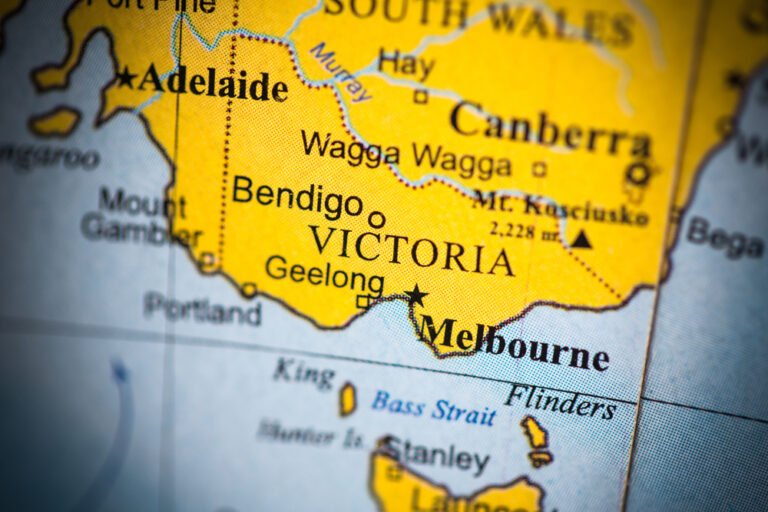
A new report commissioned by the Mineral Councils of Australia (MCA) Victoria has found that lifting Victoria’s gold production to 1mozpa by 2035 could support more than 10,000 jobs across mining and related services.  The industry body is now calling for policy settings to support a new wave of mine development and exploration.  “Despite the increased price of gold in recent years, production has fallen from its 2021 peak, reinforcing the need for better policies to encourage mining investment and exploration – converting advanced gold projects into new mines,” the MCA Victoria said. “Tripling gold production would also quadruple gold royalties to $188mpa to fund vital services and infrastructure across the state.  “In this context, the Victorian Government should support new mines and increased production, because royalties on increased production will deliver significantly more for all Victorians – especially if a share of royalties is allocated to regions where mines are located. “All parties contesting this year’s Victorian state election should commit to more efficient permitting processes, bringing more royalties back to local communities, investing in geoscience education and incentivising exploration and processing to make the most of Victoria’s mineral endowment and ensure workers share the benefits.” Regional Victoria is identified as a key beneficiary, with existing gold operations in Bendigo, Ballarat and Stawell, alongside prospective developments in Maldon, Kilmore and the Loddon Shire. The report notes Victoria’s historic status as a major gold province and says modern mining practices present an opportunity to expand gold production, provided exploration access, investment setting and permitting processes support development. 
Severe Tropical Cyclone Narelle travelled along the Pilbara coast and crossed between Coral Bay and Cape Cuvier as a category 3 system on March 27.
NewsPeople & Workforce
Rio Tinto donates $1.5m for Cyclone Narelle recovery
Rio Tinto (ASX: RIO) will donate $1.5m to the WA Department of Fire and Emergency Services (DFES) to support communities impacted by Severe Tropical Cyclone Narelle.The donation will help establish a recovery and resilience fund that will be administered by the DFES. The fund will support clean-up and rebuilding, restoration of essential services, assistance for households and small businesses and initiatives that strengthen preparedness ahead of future cyclones.WA Emergency Services Minister Paul Papalia comments on the initiative.“WA is no stranger to severe weather, and Severe Tropical Cyclone Narelle is a reminder of how important it is that we are prepared and able to respond quickly when communities are impacted,” he said.“This contribution will help strengthen the state’s ability to prepare for future events. I thank Rio Tinto for stepping up and backing Western Australians and our emergency services.”Rio Tinto iron ore chief executive Matthew Holcz says the company’s focus is on helping affected communities access support and strengthening their ability to recover from future events.“The Department of Fire and Emergency Services and other frontline organisations play a critical role in keeping Western Australians safe, and we are proud to support their work alongside the many volunteers and agencies helping people through this recovery,” he said.“We extend our thoughts to everyone impacted, and we thank the emergency services personnel and community groups who have worked tirelessly to respond. We hope this support helps communities rebuild and move forward.”In addition, Rio Tinto employees can support recovery efforts through the company’s employee giving program, RioGivers, where matched giving helps amplify the impact of individual donations to communities affected by Severe Tropical Cyclone Narelle.
Last week, CMRG reportedly told several Chinese steel mills they can purchase some BHP cargoes, relaxing restrictions that had been in place since September 2025.
Economics & Commodity PricesNews
BHP-China trade talks come to an end
BHP (ASX: BHP) has concluded price talks for its iron ore sales contract with the China Mineral Resources Group (CMRG) after more than seven months of negotiations.This closely follows a recent trip to China by BHP chief executive Mike Henry and incoming chief executive Brandon Craig.Despite the prolonged negotiations, BHP posted solid metrics for both iron ore production and price in the March quarter. WAIO achieved record production with an average realised price of US$84.91/wmt, up 2% from the year prior.“BHP has delivered strong performance over the past nine months, including record material mined and concentrator throughput at Escondida and record production at WAIO,” Mr Henry said.“These results reflect the consistency of our operations and the strength of our high margin diversified portfolio in an evolving operating environment.”BHP now expects its FY26 group copper production to fall in the upper half of the guidance range, with Escondida and Antamina offsetting Spence, which had its guidance lowered due to ongoing ore characteristic challenges. Samarco is now expected to achieve the top end of its FY26 production guidance range.“In copper, strong performance at Escondida and Antamina supports our expectation of delivering production in the upper half of FY26 group copper guidance,” Mr Henry said.“We continue to make steady progress across our copper growth program, consistent with our focus on long-life, high-quality copper supply and disciplined capital allocation.“During the quarter we submitted a permit application for Escondida’s new concentrator and Resolution Copper achieved a key milestone, allowing the project to progress drilling required to complete its mine design and feasibility study.“Our balance sheet remains strong, and in the last month we have realised ~US$4.8 bn by completing the Antamina silver streaming transaction and finalising the divestment of Carajás, as well as cash received in relation to the earlier divestment of Blackwater and Daunia.“Our centralised procurement capability and our low-cost operations have positioned us advantageously in the face of industry wide pressure on the cost of energy and consumables as a result of the conflict in the Middle East.”Looking ahead, Brandon Craig will assume the role of chief executive from July 1.
Off the Record: Prediction markets, plastic straws and the new panopticon
NewsOpinion
Off the Record: Prediction markets, plastic straws and the new panopticon
We could have been sitting on the banks of the Euphrates eating figs. That is, until someone got the bright idea to maximise shareholder returns. Now, we sit in web browsers making wagers as to when exactly the current round of bloodshed in nearby waters will come to an end.The stock market has long drawn criticism from those on the outside who view it as an economic machine ruled by investor sentiment and untethered to everyday life. Guy Debord offers us a critique of this estrangement in his The Society of the Spectacle. Debord posits that “the society which rests on modern industry is not accidentally or superficially spectacular, but fundamentally spectaclist. In the spectacle, the goal is nothing, development everything. The spectacle aims at nothing other than itself.”Yet one could still argue that the stock market is not pure spectacle. However distorted it becomes, it still retains a material tether. Well-functioning secondary markets help capital flow toward productive uses and are only made possible by real people spending real dollars. However imperfect, the market is still connected to its people.Enter, prediction markets. While the stock market still attempts, or appears, to serve production, prediction markets don’t even bother, instead monetising anticipation itself.If you have managed to remain blissfully unaware, prediction markets allow users to trade on the likelihood of future events. Bets on the platform range from issues like Strait of Hormuz traffic returns to normal by end of April? What will Trump say in April? Will the US confirm that aliens exist by…?The object of exchange is the event itself as a probability. It’s a market solely concerned with hype, or as Polymarket would call it, wisdom.Polymarket Note on Middle East Markets: The promise of prediction markets is to harness the wisdom of the crowd to create accurate, unbiased forecasts for the most important events to society. That ability is particularly invaluable in gut-wrenching times like today.I first heard of prediction markets when US Rep. Ilhan Omar was attacked during a town hall meeting. Online, people were betting on the substance that was sprayed on her. Now, traders bet on missile strikes in Iran and insults flying out of Trump’s mouth.Proponents of prediction markets argue that they aggregate dispersed information into forecasts about uncertain future events. Even where they are reasonably accurate, what they trade is not an enterprise producing goods or services, but an anticipated outcome.Unsurprisingly, prediction markets have begun to elicit bouts of paranoia. For the market, insider trading and corruption are major concerns. For me, the concern is the grotesque estrangement of real people from tragedy as we load currency onto spectacle with little concern for impact. On Polymarket, crises are no longer lived realities; they are odds to watch and positions to take.Proponents of prediction markets argue that a major benefit could be derived in the form of an aggregated universal truth. By engaging individuals across the world from different stations, beliefs and backgrounds, diverse and dispersed information is synthesised, and users are delivered a supposedly more accurate probability for any given situation. Rather than relying on news sources, investors, politicians or other figureheads, a broader swath of public opinion is accounted for, adding more data and insight to the probability equation.Polymarket Note on Middle East Markets continued: After discussing with those directly affected by the attacks, who had dozens of questions, we realised that prediction markets could give them the answers they needed in ways TV news and X could not.This, however, relies on incentivised truth-telling. Prediction markets hope that because individuals are financially motivated, they will place bets that align with their true beliefs. But conflating belief with truth does not produce accuracy. According to Polymarket, there is a 4% chance Jesus Christ will return before 2027.But it looks like prediction markets will miss their chance to disperse those fears, as they have already been undermined by corruption.US-based trading app Robinhood has reportedly begun excluding some prediction market contracts, with Robinhood UK president Jordan Sinclair saying the company is “very focused on market abuse, insider trading”.Remember when Trump issued his warning on Truth Social that “a whole civilisation will die tonight”? If I had taken a temperature check of public opinion at that moment, I would say the majority thought we were inching towards a point of no return rather than a ceasefire. There was even a countdown.And yet, just before the ceasefire was announced, newly created Polymarket accounts made highly specific bets on the outcome, resulting in hundreds of thousands of dollars in profits. The Associated Press reported that at least 50 wallets placed substantial bets before Trump announced the ceasefire, and that these were the first bets made by those wallets.This isn’t confined to Washington, either. In February, two Israelis were charged over alleged bets placed using classified military information, and later that month, Kalshi accused a MrBeast video editor of insider trading on markets tied to the YouTuber.The impacts aren’t only reactive, either. In March, a Times of Israel reporter said Polymarket users sent him death threats and pressured him to amend his report on a missile strike near Jerusalem which became central to a wager on the site.Beyond investor corruption, the real scandal of prediction markets is not just that they let people bet on the future, but that they sit within a culture that monetises crisis while moralising individual behaviour. A culture that turns public life into persona, sentiment and price. Governments increasingly redirect attention from corporate and structural responsibility to everyday conduct. Individuals are named and shamed for using plastic straws, eating meat, driving to work or consuming too much, while billion-dollar industries burn through fuel at scales beyond personal comparison.Last week, the Federal Government was in the hot seat over its ‘Every little bit helps’ campaign, a fuel-saving advertising push costing up to $20m and encouraging Australians to use less fuel where possible. Some cried out that it was like plastic straws all over again. But the idea was still valid: individual consumption of our resources is a beast worth taming or at least keeping an eye on.But the question remains: what about the industries using billions of litres of fuel each year? What about inadequate public transport systems that make commuting to low-paid office jobs inseparable from car dependence? What about the fact that the government, which wants us to believe its hands are tied, is one of the few actors with any meaningful power over the fuel crisis, and at least some responsibility for it?The problem is not that individual restraint is meaningless. It is that personal consumption is positioned as the moral centre of crisis management, while the larger systems shaping the crisis remains immune to scrutiny. Disjointed public transport, corporate fuel dependence and state policy failures do not disappear just because individuals are told to tighten their belts.At the pump or on Polymarket, we grasp at paper straws, hoping to grab a bit of control over our circumstances. The ugliness of this system is not only that tragedy can be watched and traded at a distance, but that responsibility for fixing the social breakdown behind conflict is then handed back to individuals as a series of choices. All the while, we are left completely disconnected from any real locus of control.Debord calls this the alienation of the spectator: the more you contemplate, the less you live. The estrangement is a surrender of our own lives. And when the stakes are high enough, it’s a surrender of our own humanity for the chance to make, or save, a quick buck.Luckily for those of us in Australia, prediction market platforms, much like single use plastic, are functionally banned.Off the Record is The Australian Mining Review’s weekly column. 

Back to of the page