Latest News

300 jobs on the line at Australia’s largest power station
NewsPeople & Workforce
300 jobs on the line at Australia’s largest power station
300 jobs on the line at Australia’s largest power station Negotiations between Origin Energy and Centennial Coal over a coal supply contract for the Myuna mine in NSW have stalled after Origin put forward a short-term proposal that fails to secure the future of the mine or its workforce.The dispute comes after Origin announced it would extend the life of Eraring power station until at least 2029 to support the electricity grid as the station moves towards retirement.Origin Energy proposed a new 12 month extension of the mines operations, maintaining their current agreements, which Centennial rejected on the grounds of being commercially unviable.The mine employs about 300 direct staff, along with hundreds more across the supply chain in Lake Macquarie and the Hunter region.Myuna Colliery was built solely to supply coal to Origin’s Eraring power station and without a viable contract, faces an uncertain future.Federal Member for Hunter Dan Repacholi says Myuna was built to supply Eraring and there is no alternative market.“Origin’s offer yesterday was disgraceful,” he said.“It was spin, not a solution.  A short-term, take-it-or-leave-it proposal that provides no certainty for workers, their families or the local community is not good enough.“If Origin walks away, this mine closes and that is a deliberate commercial choice, not an unavoidable part of the energy transition.”Community anger and concern continue to grow, with strong local campaigns backed by unions pushing for Origin to take responsibility for the future of the mine and its workers.Origin energy supply and operations head Greg Jarvis says the offer provides Centennial time to implement employee support initiatives as part of the Energy Industry Jobs Plan that the Net Zero Economy Authority is currently finalising, along with other state and federal government support.“Eraring plays an important role in keeping the lights on for NSW households and businesses, and we are committed to operating it reliably through to its scheduled closure in April 2029,” he said.“However, it is extremely disappointing to see workforce related issues being brought into our commercial negotiations with Centennial. We remain of the view that Centennial’s focus should be on helping its workers prepare for their futures through the energy transition.“We’ve stepped up and demonstrated how we’re supporting our people as we approach Eraring’s retirement, and we now need Centennial to come to the table and confirm its support for its workforce through this transition period.“We believe workers and the community deserve greater transparency from Centennial Coal on how it will support them through the full implementation of the Energy Industry Jobs Plan, if the Net Zero Economy Authority recommends it be required.”
WA vanadium miners get royalty relief
Economics & Commodity PricesNews
WA vanadium miners get royalty relief
WA vanadium miners get royalty relief Vanadium miners will be afforded significant royalty relief with the WA Government capping royalties for vanadium products at 2.5%.The new rate will support vanadium developers in WA, which has some of the world's best vanadium deposits, as well as the current royalty rate of zero for the midstream production of vanadium electrolyte for the manufacturing of vanadium batteries.The policy is consistent with the government's plans to install Australia's first locally built utility-scale vanadium battery in Kalgoorlie.Vanadium battery technology will assist long-duration energy storage in WA as coal-fired power stations are retired and the share of renewables significantly increases in the State's main energy grid.The 50-megawatt, 10-hour WA-made vanadium flow battery in Kalgoorlie will create 150 jobs during construction and be operational by 2029.CME chief executive Aaron Morey says reduced vanadium royalty rates — a 2025 election commitment — would support the production of a commodity that offered domestic value-adding potential.“Vanadium is an increasingly important input into battery technology and WA has some of the world’s largest known reserves,” he said.“Competitive royalty settings are vital to develop what is an emerging industry that offers an exciting opportunity for both upstream mining and the midstream processing of vanadium electrolyte.”The government will also work with the private sector to develop a local vanadium electrolyte production and battery assembly industry in Kalgoorlie to stimulate opportunities for downstream processing and exports.WA Mines and Petroleum Minister David Michael says this move will give industry players the financial confidence and certainty to make the significant investments required to see their projects come to fruition."I am pleased to provide clarity around State Government royalties for Western Australia's emerging vanadium miners and nascent vanadium battery industry,” he said."This certainty is something the industry has requested and the Cook Government has agreed and delivered."The WA Government has also doubled funding for the Exploration Incentive Scheme (EIS) to $18m.“The long-running EIS — now into its 33rd round — plays a critical role funding the discovery of new mineral deposits,” Mr Morey said.“Most exploration is undertaken by junior and mid-tier companies who have limited capital at their disposal but play an essential role maintaining WA’s pipeline of resources projects and the jobs they support.“The expansion of the EIS will allow more projects to access funding and help accelerate efforts to identify the mines of the future.”
WA Government supports renewables growth
Industry FocusNews
WA Government supports renewables growth
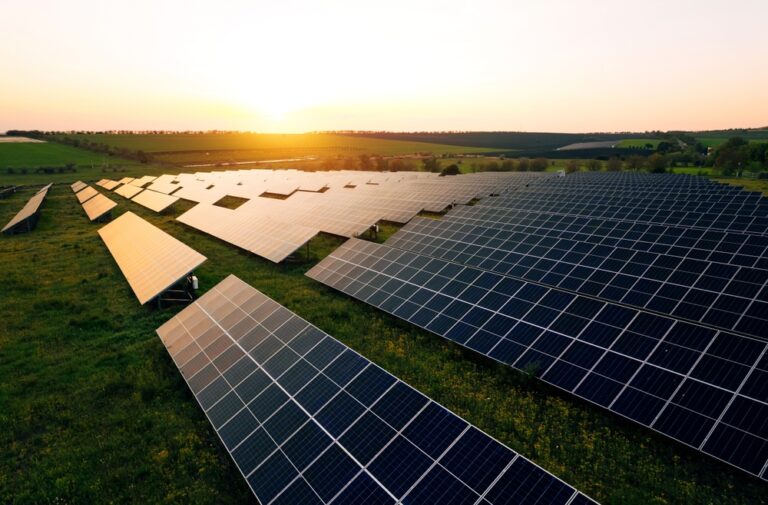
WA Government supports renewables growth Ngarluma Aboriginal Corporation (NAC) are collaborating with Perdaman and the WA Government to establish a 50MW solar farm at the Ngarluma green energy park on NAC's native title determination south of Karratha.The WA Government will provide $2.7m in initial support to NAC to undertake surveys, approvals works and technical activities over the next 12 months that will lead to the activation of the first park.The Burrup (Murujuga) corridor is one of four priority corridors under the WA Government's Pilbara energy transition plan to accelerate the decarbonisation of heavy industry in the region by connecting industry with renewable energy generation.Ngarluma Country includes the coastal towns Karratha, Roebourne, Wickham, Point Samson and out to Whim Creek and is home of much of the Pilbara's industry including Rio Tinto (ASX: RIO), Dampier Salt, Woodside, Yara and Perdaman.NAC is targeting 5GW of development in its green energy parks while also creating employment, training and long-term income for the Ngarluma people.WA Energy and Decarbonisation Minister Amber-Jade Sanderson says creating jobs through the Pilbara energy transition plan is a key part to making WA a renewable energy powerhouse."Supporting NAC and Perdaman in this landmark partnership is another step in decarbonising the Pilbara and realising the considerable benefits of the region's renewable energy resources,” she said.The solar farm will feed into the common-use Maitland-Karratha-Burrup transmission corridor and aid the activation of the Maitland strategic industrial area.NAC and Ngarluma green energy director Belinda Churnside says the Ngarluma people are proud to be leaders in the development of the energy transition.“Ngarluma green energy parks will be a game changer for the fast and straight forward development of large-scale renewable projects,” she said.The green energy park is expected to be activated through the connection of the solar farm to Perdaman's project Ceres urea plant by mid-end of 2027.Drive to make WA renewable energy powerhouse continues with Warradarge wind farm expansion, with four of 30 additional turbines being erected at the site.Once completed, the expanded Warradarge wind farm will provide up to 283MW of clean energy — enough to power approximately about households — making it WA's largest wind farm both by capacity and energy generated.The expansion is part of the WA Government’s goal to exit from state-owned coal-fired power by 2030."Wind turbines going up as part of the expansion is our renewable energy transformation taking shape, delivering jobs, economic diversification and clean energy,” Minister Sanderson said." will deliver more renewable energy for households and businesses, while work to expand the South West Interconnected System (SWIS) transmission grid will unlock more renewable energy from the mid-west."
Australia vies for global critical minerals investment
NewsPolitics & Regulation
Australia vies for global critical minerals investment
Australia vies for global critical minerals investment Federal Resources Minister Madeleine King has launched the new Australian Critical Minerals Prospectus as she gears up to hold talks with the US in Washington this week.The prospectus highlights 49 mines and 29 midstream critical minerals processing projects ready for investment across Australia to draw international interest — creating jobs and new supply chains of critical minerals with partner nations.Minister King will represent Australia at the US-led critical minerals dialogue of ministers — hosted by US Secretary of State Marco Rubio — and will take part in an industry forum as part of efforts to secure critical minerals supply chains.The meetings support implementation of the Australia-US critical minerals and rare earths framework signed by Prime Minister Anthony Albanese and US President Donald Trump in Washington last year.Minister King says the meetings will be a chance to discuss Australia’s $1.2b critical minerals strategic reserve and the Federal Government’s wider support for the critical minerals and rare earths sector.“Australia has a responsibility to lead on the supply of critical minerals and rare earths globally,” she said.“Australia has the deposits and the know-how to develop critical minerals projects reliably, sustainably and at scale.”Critical minerals and rare earths projects are located in every corner of Australia and are vital for the production of clean energy, as well as for the defence industry.Last month, the Federal Government announced the critical minerals strategic reserve would initially focus on gallium, antimony and rare earths elements, which are crucial for clean-energy and high-technology manufacturing as well as advanced military equipment.Federal Trade and Tourism Minister Don Farrel says the new prospectus showcases midstream processing opportunities to international investors, attracting the investment needed to build a future made in Australia and create more high paying, secure jobs for Australians“Australia’s abundant deposits of critical minerals, alongside the expertise to extract and process those minerals, presents an invaluable economic opportunity that the Government stands ready to seize,” he said.Earlier this week, the US also unveiled a $17.2b strategic critical minerals stockpile, dubbed “Project Vault”, with aims of reducing industry reliance on China and protect manufacturers from supply disruptions.Given its dominant role in global manufacturing and processing, China is positioned to influence global industries regardless of where the raw minerals or metals were originally mined.Against a backdrop of shifting domestic policy and rising geopolitical tensions, the US-led critical minerals dialogue of ministers — which is expected to commence today — could foster international framework partnerships that have the potential to reshape both regional and global economies.
The class action is being funded by Aristata Impact Litigation Fund. Senior representatives of Aristata have travelled to the Cadia region to meet with impacted locals and hear their stories.
NewsPolitics & Regulation
Newmont hit with class action over ‘toxic trifecta’ claims at Cadia
Newmont hit with class action over ‘toxic trifecta’ claims at Cadia Landowners in NSW have filed an environmental class action against Cadia Holdings, a subsidiary of Newmont, alleging they have been exposed to pollution from the Cadia mine.Filed by William Roberts Lawyers, the claim alleges pollutants detected on private properties include arsenic, heavy metals and the “forever chemical” PFAS.The lawyers say residents have reported visible contamination in waterways around the mine since around 2024, including the Belubula River, with laboratory testing allegedly showing heavy metals, PFAS and hydrocarbons accumulating in “highly toxic foam”.The claim alleges the chemicals are linked to Cadia’s ore processing and tailings deposited in an open cut pit after the 2018 tailings dam wall collapse.The plaintiffs are seeking compensation, including damages for alleged reductions in property values, and an injunction to restrain further pollution.This isn’t the first time environmental concerns at Cadia have been raised.Community members have previously reported clouds of white dust blowing from tailings facilities, while mining dust from crushing operations at the Cadia East underground mine has also been raised as a concern.Cadia Holdings was ordered to pay more than $400,000 after being prosecuted by the NSW Environment Protection Authority (EPA) for three dust emission offences that occurred between November 2021 and May 2023.William Roberts principal lawyer Oliver Gayner, who previously worked on the $212.5m Federal Court settlement of PFAS-contaminated communities including Williamtown, is acting for the plaintiffs.“For several years the Cadia residents have repeatedly raised their concerns about the detrimental environmental impact caused by this mine,” Mr Gayner said.“They have provided scientific evidence to Newmont and the EPA, but their concerns have not been addressed.“That is why the community are now taking this class action as a last resort. They do not want to close the mine – instead they seek what they were promised, which is a safe and sustainable mine which acts as a good neighbour.”Newmont Cadia confirmed that it had been served with proceedings in the Supreme Court of NSW.“Cadia will respond through the appropriate legal processes. As the matter is before Court, it is not appropriate to comment further at this time,” Newmont said in a statement.“Newmont takes its legal and regulatory obligations seriously and is committed to environmental stewardship.”While Cadia is currently approved to continue operations until 2031, Newmont is seeking approval from the NSW and Federal governments to extend its mining operations for about 25 years.Extending mining beyond 2031 will provide ongoing employment for more than 1500 people, 80% who live locally in Orange, Blayney and Cabonne, according to Newmont.
Metso acquires MRA Automation
Industry FocusNews
Metso acquires MRA Automation
Metso acquires MRA Automation Metso has acquired MRA Automation, a leading provider of automation and digitalisation technology solutions for ports and terminals worldwide.The privately owned engineering company based in NSW specialises in providing engineering, automation and software solutions for bulk material handling operators. Its offerings combine proprietary smart automation services with Axo33 Smart Software products.Metso stands at the forefront of the bulk material handling industry, backed by more than a century of expertise and more than 8000 bulk handling installations and, as a result of this acquisition, customers will benefit from integrated end-to-end solutions and advanced technologies designed to enhance efficiency, safety and support throughout every stage of bulk material handling operations.Metso grinding, bulk, pyro and smelting services senior vice president Jonathan Allen says MRA complements Metso’s electrical and control system capabilities, acquired in 2023, extremely well.“We are excited to welcome our new colleagues to Metso. Their expertise and innovative approach to stockyard equipment align seamlessly with our ambition for growth in bulk and port solutions,” he said.“With MRA’s advanced software platform and services, we are expanding our offering to serve bulk and port customers, strengthening our presence in important Australian markets and accelerating our global reach.”MRA Automation managing director Rodney Devetak says the company is excited to join Metso.“This acquisition not only strengthens the value for customers worldwide but also creates opportunities for our team to grow and contribute within a world-class organisation," he said.
BHP backs next wave of exploration and technology talent
Industry FocusNews
BHP backs next wave of exploration and technology talent
BHP backs next wave of exploration and technology talent BHP (ASX: BHP) has selected 10 junior exploration and technology companies for its 2026 Xplor program, marking the largest cohort since the program began.Now in its fourth year of operation, the Xplor program reflects a more connected approach to early-stage exploration, where geological insight, data and emerging technologies increasingly intersect — with collaboration across disciplines central to how discovery evolves.As exploration moves into more remote and geologically complex environments, this intersection of expertise is opening up new possibilities for how mineral systems are understood, tested, and advanced at the earliest stages.BHP Group exploration officer Tim O’Connor says exploration is evolving quickly.“New tools, better data and different ways of working are changing how early-stage ideas are tested and refined,” he said.“This cohort reflects that shift, bringing together explorers and technology developers who are approaching discovery in thoughtful and practical ways. Xplor gives us a valuable opportunity to learn alongside them and explore what discovery could look like in the future.”The cohort was selected based on the strength of their ideas, technical capability and potential to contribute to the long-term supply of future-facing commodities.Each company will receive an equity-free grant of about $717,000 , along with structured learning, mentoring and access to BHP specialists across exploration, technology and commercial functions.BHP Xplor head Marley Palin says the 2026 cohort reflects how broad and dynamic early-stage discovery has become.“We’re seeing exciting ideas emerge across exploration, data and technology, often at the same time and in the same places,” she said.“Bringing these teams together through Xplor creates a unique environment for collaboration, learning and experimentation — we’re looking forward to what this group will explore over the coming months.”Xplor 2026’s successful applicants FrontierX FrontierX is an early-stage uranium exploration company in Canada, formed by two BHP Xplor Year One alumni, Fabian Baker and Andrew Tunningley. Through Xplor, the company is undertaking a preliminary uranium project, focused on testing early geological concepts and building an initial understanding of exploration potential.    Litchfield MineralsLitchfield Minerals (ASX: LMS) is an Australian exploration company advancing copper, zinc, lead, silver and gold opportunities in the Northern Territory. Through Xplor, the company is focusing on its Oonagalabi project in the Arunta region, applying modern geophysics and targeted fieldwork to build a clearer picture of a large, underexplored mineral system.Orion MineralsOrion Minerals (ASX: ORN) is an exploration and development company advancing a portfolio of copper and zinc assets in South Africa’s Northern Cape. Through Xplor, Orion is applying modern data analytics and mineral systems thinking across its large tenement package to identify new discovery opportunities beyond known deposits.Otrera ResourcesOtrera Resources is an early-stage exploration company focused on sediment-hosted copper systems. Its Xplor project is centred on advancing new copper targets drawing on the team’s deep regional experience and modern geochemical and geological approaches.PT GeoFixPT GeoFix Indonesia is a multidisciplinary geoscience consultancy supporting mineral exploration across Southeast Asia. Through Xplor, GeoFix is applying its proprietary prospectivity tools and regional expertise to test new porphyry copper-gold exploration concepts in underexplored parts of the Sunda-Banda Arc.Utah Geological SurveyBased in the US, Utah Geological Survey (UGS) is Utah’s primary geoscience organisation, providing authoritative geological data and scientific insight to support resource management and exploration. Through Xplor, UGS is leading a regional mineral systems analysis across the eastern Great Basin, integrating new datasets and targeted fieldwork to improve understanding of mineral potential and make high-quality geoscience data publicly available.RadiXploreRadiXplore is an Australian technology company using artificial intelligence to analyse historical exploration records alongside modern geological and corporate data. Through Xplor, RadiXplore is applying its AI platform to copper exploration, testing how legacy data can be re-interpreted to surface overlooked opportunities and support earlier, more informed discovery decisions.MineuralMineural is a Canadian deep-tech company using artificial intelligence to help exploration teams identify and prioritise mineral targets more efficiently. Through Xplor, Mineural is applying its AI platform, IRIS, to copper exploration, combining machine learning with BHP’s geological expertise to test how AI can support earlier, more responsible discovery decisions.VectOres ScienceVectOres Science is a US-based mining technology company developing non-invasive hydrogeochemical and isotopic tools to support mineral exploration. Through Xplor, the company is applying its water and isotope chemistry platform to test how real-time primary data can help identify and prioritise mineral systems earlier, without reliance on initial drilling.Discovery GenomicsDiscovery Genomics is a Canadian technology company developing DNA sequencing as a new tool for mineral exploration. Through Xplor, the company is advancing its genomics platform for copper exploration, testing how microbial DNA signatures can help identify buried mineral systems in covered and complex terrains.
Project Vault will be an independently governed public?private partnership that will store essential raw materials in facilities across the US.
InternationalNews
Trump launches $17b critical minerals stockpile amid China risk
Trump launches $17b critical minerals stockpile amid China risk The US has unveiled a $17.2b (US$12b) strategic critical minerals stockpile, aiming to reduce industry reliance on China and protect manufacturers from supply disruptions.Dubbed “Project Vault”, the reserve will be backed by $2.8b (US$2b) in private sector financing and up to $14.3b (US$10b) from the US Export-Import Bank (EXIM).US President Donald Trump says the stockpile will ensure American businesses and workers are not harmed by shortage, as the US looks to avoid a repeat of last year’s Chinese export restrictions on rare earths."Project Vault is designed to support domestic manufacturers from supply shocks, support US production and processing of critical raw materials, and strength America’s critical minerals sector," EXIM chairman John Jovanovic said.EXIM says initial indications of participation from original equipment manufacturers include Clarios, GE Vernova, Western Digital and Boeing. Suppliers servicing Project Vault include Hartree Partners, Mercuria Americas, and Traxys.The announcement lands shortly after Australia confirmed its $1.2b Critical Minerals Strategic Reserve would initially focus on gallium, antimony and rare earths elements.Federal Resources Minister Madeleine King is now heading to Washington to hold talks with the Trump Administration, international partners and industry as Australia looks to strengthen cooperation on critical minerals and rare earths.Minister King will represent Australia at a US-led Critical Minerals Dialogue of ministers, hosted by US Secretary of State Marco Rubio, and will take part in an industry forum as part of efforts to secure critical minerals supply chains.Minister King says the meetings will be a chance to discuss Australia’s Critical Minerals Strategic Reserve and the Federal Government’s wider support for the critical minerals sector as both countries work to implement the Australia-US Critical Minerals and Rare Earths Framework signed last October.
Regis reassesses ‘unviable’ $1b gold mine
NewsProjects & Operations
Regis reassesses ‘unviable’ $1b gold mine
Regis reassesses ‘unviable’ $1b gold mine Regis Resources (ASX: RRL) is proposing a new development approach for its McPhillamys mine in NSW, which was derailed in 2024 by an Indigenous heritage ruling.The ruling made in August 2024 — more than a year after the project was approved — denied the construction of a tailings dam near the Belubula River in an attempt to protect culturally significant land.The company took the decision to the Federal Court and the matter was heard by the court in December 2025.Regis has argued that the view held by the Federal Department of Climate Change, Energy, the Environment and Water (DCCEEW) changed after additional evidence was produced by an independent Aboriginal elder more than a year after approval was granted — believing that further investigation into the Dreaming story used as evidence should have taken place before the ruling was handed out.If Regis’ application is successful, the company will seek a declaration from a Federal Court judge that the 2024 ruling handed down by then Federal Environment Minister Tanya Plibersek is legally invalid and that the application be redetermined by a different minister.Following Regis’ challenge to the Federal Court, Minister Plibersek remained adamant in her ruling.“The truth is we are living in a country where we’ve got thousands of years of continuous culture and heritage. We’ve done a pretty bad job of protecting it in the past,” Minister Plibersek said.“Protecting cultural heritage and development are not mutually exclusive. We can have both.“Crucially, my decision is not to stop the mine. The company has indicated to me that it has assessed around four sites and 30 potential options for the tailings dam.”Following the ruling, contrary to Minister Plibersek’s declaration, Regis deemed the project as non-viable, stating it would take up to 10 years to identify and gain approval for an alternative tailings site, before taking out a non-cash impairment of $192m.With the Federal Court’s ruling pending, Regis continues to progress a dual-track strategy to return McPhillamys to an approvable status.In parallel with the ongoing court process, Regis has advanced work assessing the suitability of an integrated waste landform incorporating a form of co-disposal within the planned waste dump.Initial study outcomes indicate that the concept is technically feasible and further detailed engineering, environmental and commercial assessments are underway to progress facility design, approvals pathway and potential development timeframes.
Rehabilitation at Ranger uranium mine continues
Industry FocusNews
Rehabilitation at Ranger uranium mine continues
Rehabilitation at Ranger uranium mine continues The Federal Government has issued a new rehabilitation authority to Energy Resources Australia (ERA) to continue rehabilitation activities at Ranger uranium mine in the Northern Territory. The authority will allow ERA, a subsidiary of Rio Tinto (ASX: RIO), to progress a staged rehabilitation strategy that focuses upon adherence to objectives as stated in the authorisation to operate to allow the site to be returned to the Mirarr Traditional Owners. This strategy will be achieved through the application of best practice and the use of technology within a risk-based framework. ERA’s long-term vision is to return the disturbed area to a viable ecosystem in line with its obligations to its stakeholders and regulators and the expectations of the community. Federal Resources Minister Madeleine King comments on the authority. “This new authority means that ERA will be able to continue with its obligation to restore Ranger uranium mine to a condition similar to the surrounding Kakadu National Park,” she said. Mirrar Traditional Owners have worked closely with the Northern Land Council and ERA on a new land access agreement. Indigenous Australians Minister Malarndirri McCarthy approved the agreement under the Aboriginal Land Rights Act (Northern Territory). “I thank the Mirarr Traditional Owners, Gundjeihmi Aboriginal Corporation, Northern Land Council, ERA and Rio Tinto for their collaborative efforts in establishing this new authority and land access agreement,” she said. “We want to see rehabilitation completed and for the land to be returned to the Mirarr Traditional Owners.” Rehabilitation and closure planning began soon after the Ranger mine began producing uranium oxide in 1981.  Operations at Ranger ceased after ERA failed to secure permission from the Mirarr Traditional Owners and the Gundjeihmi Aboriginal Corporation to continue mining the sire.  ERA increased its estimated rehabilitation provision to $830m in 2019, a major increase from the $526m estimate recorded in 2017. 
Back to of the page