Latest News

In the half, Fortescue entered into a binding agreement to acquire the remaining 64% of Alta Copper’s issued and outstanding common shares not already owned.
NewsProjects & Operations
Fortescue lifts profit on record first-half shipments
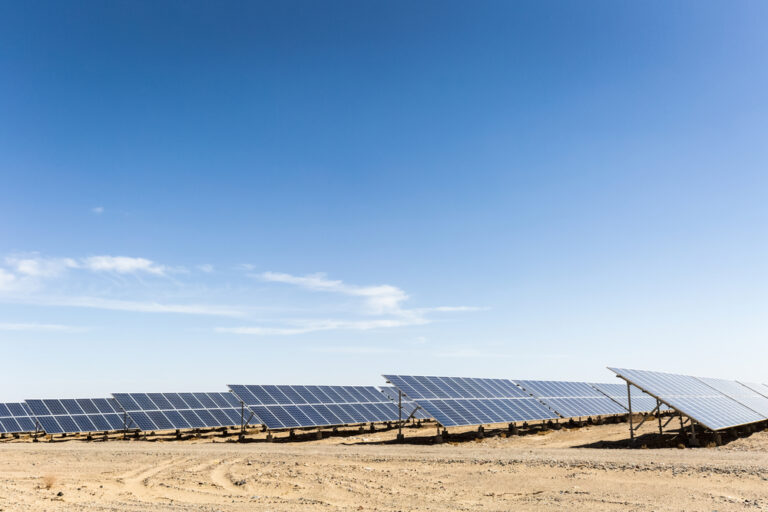
Fortescue (ASX: FMG) has lifted its fully franked interim dividend to $.62/share after posting a strong first-half result, with record iron ore shipments, improved price realisations and lower unit costs driving higher earnings.The miner reported H1 FY26 revenue of about $11.86b (US$8.4b), up 10% on H1 FY25, while underlying EBITDA rose 23% to about $6.35b (US$4.5b) and attributable net profit after tax increased 23% to about $2.68b (US$1.9b).Fortescue said earnings were supported by higher sales volumes and a stronger Hematite realised price. Hematite realised price was US$90.87/dmt and Hematite C1 unit cost fell to US$18.64/wmt, down 3% from H1 FY25.Iron ore shipments reached a record 100.2mt for the half, up 3% year-on-year.Fortescue metals and operations chief executive Dino Otranto says this has been a standout first half.“We delivered record shipments of 100.2mt while keeping our people safe and costs low,” he said.“We have the lowest operating cost in the industry, and decarbonisation is pushing that even lower.“By removing diesel across our operations, we’re structurally improving our cost position. The more diesel we eliminate, the less exposure we have to price volatility, and the stronger and more predictable our margins become.“We’re now delivering decarbonisation at scale across the Pilbara. Around 3600 solar panels are being installed every day at our Cloudbreak mine, with another one gigawatt of solar in the immediate pipeline.“Construction is underway on our first wind farm, we’ve delivered two large battery energy storage systems at our sites, and we’re working with leading global manufacturers to roll out electric mining equipment, battery systems and large-scale renewable infrastructure.“A few years ago, this would have seemed ambitious. Today, it’s part of how we operate – and it’s lowering our cost base as we build it.”Fortescue’s board declared a fully franked interim dividend of $.62/share, up 24% on the FY25 interim dividend and representing a 65% payout of first-half NPAT.The company also saw strong cash generation, reporting net cash flow from operating activities of about $4.5b (US$3.2b) and free cash flow of about $2.1b (US$1.5b) for the half.Fortescue growth and energy chief executive Gus Pichot says the company continues to build a pipeline of projects to deliver the low-cost solutions the world needs.“Commercial discipline has underpinned solid progress across our global growth portfolio this half, including for our critical minerals and exploration strategy,” he said.“We expect to finalise shortly the acquisition of Alta Copper, strengthening our copper portfolio in Latin America. Subject to completion, our immediate focus will be on technical reviews, community engagement and advancing the studies required to inform future development decisions.“In Gabon, our teams have also further advanced studies at the Belinga iron ore project, and are progressing plans for an integrated mine, rail and port development.”FY26 guidance remains unchanged, including iron ore shipments of 195–205mt and Hematite C1 costs of US$17.50–US$18.50/wmt.
Copper overtakes iron ore as BHP’s breadwinner as China talks stall
Economics & Commodity PricesNews
Copper overtakes iron ore as BHP’s breadwinner as China talks stall
BHP (ASX: BHP) is cashing in on the global clean energy transition with copper overtaking iron ore as the company’s biggest earner for the first time ever.Copper delivered 51% of BHP’s earnings for H1 FY26, bolstering the company’s returns to $7.9b for the six-month period.As the self-proclaimed largest copper producer in the world, BHP has grown its production by about 30% in the last four years, backed by production from its Escondida copper mine in Chile and Olympic Dam in South Australia.Copper price increased 32% over the previous 12 months, group revenue rose about 11% and attributable profit increased 28%, supported by higher prices and operational performance.During the half, BHP’s copper operations generated about 10% higher revenue and 6% higher underlying EBITDA than BHP’s iron ore division.This follows reports that BHP diverted shipments of its Jimblebar iron ore to alternative buyers in Malaysia and Vietnam after China’s state-run buyer China Mineral Resource Group (CMRG) banned local steel mills and traders from purchasing the product.This placed pressure on BHP to accept new price-setting mechanisms as contract negotiations stalled.A resolution is yet to be met between BHP and CMRG and the redirected shipments may incline that BHP is seeking to diversify its buyers.BHP chief executive Mike Henry says the company is optimistic that the economic backdrop is supportive for its key commodities, including iron ore.Iron ore prices have dipped since the start of 2026, with prices falling 6.5% over the previous month according to Trading Economics, and this is likely to solidify copper’s position as BHP’s breadwinner.BHP chief executive Mike Henry says the company has clear plans to increase copper production.“In copper, we are already the world’s largest producer… Our lower-risk pathway represents production growth of around 40% by 2035,” he said.BHP currently has multiple greenfield copper projects in its growth pipeline, including Resolution in the US and Vicuña in Argentina, as well as several expansion plans for its existing copper operations.“This is capital efficient, predominantly brownfield growth that will further increase the proportion of our earnings from copper,” Mr Henry said.BHP expects global demand for copper to grow by about 70% by 2050, and it is not the only company to jump on the copper bandwagon.Earlier this year Rio Tinto (ASX: RIO) entered merger talks with global copper major Glencore. The discussions however were fruitless, with neither party willing to cede on leadership nor price.In December, Anglo American and Teck Resources shareholders approved a $53b merger of equals between the copper-powerhouses to form Anglo Teck.Anglo Teck is expected to be a top five global copper producer with combined production from its mines in Chile, Peru and Canada of about 1.2mt and predicted to reach 1.35mt by 2027.Prior to the Anglo Teck announcement, Anglo American rejected BHP’s formal $75b takeover offer due to its complex structure and value risks.BHP is also leaning into diversification beyond copper.On Wednesday, amid soaring silver prices, the miner announced it had entered an agreement to deliver silver to Wheaton Precious Metals International for an upfront payment of $6.1b . The silver would be supplied by Antamina mine, located in Peru, which BHP owns a 33.75% stake in.The agreement forms part of BHP’s goal to free up $14.2b with the sale of non-core assets.
The expertise of geoscience professionals is a key enabler for governments, industry and community as they seek to capture new value across the minerals value chain.
News
AusIMM brings International Mining Geology Conference 2026 to Brisbane
AusIMM will host the International Mining Geology Conference 2026 on April 21–22, 2026 at the Brisbane Convention and Exhibition Centre, bringing together mining geology professionals, researchers and decision-makers from across the globe.Presenting at the International Mining Geology Conference are keynote speakers including Derisk Geomining Consultants director and principal geologist Mark Berry, Gold Fields mine and exploration geology senior manager Andrew Engelbrecht, Lihir Gold Mine principal ore deposit knowledge geologist Lauren Elliot and Mining3 chief executive Neville Plint.The event will also feature a Young Professionals Day on April 20, 2026, and include a dedicated program designed for early career professionals looking to build capability, expand their networks and help foster their next steps into a mining career.Northern Star Resources (ASX: NST) chief geological officer and International Mining Geology Conference 2026 Advisory Committee chair Daniel Howe comments on the conference.“The focus of the International Mining Geology Conference 2026 is to demonstrate how mining geologists create real-world value, through innovation, reconciliation, and practical case studies that show how new tools and technologies are helping set our profession up for the future,” he said.Whether looking to move from production to processing, or even into manufacturing, it all begins with exploration, resource definition and a careful assessment of mining-related opportunities based on what we know about the minerals beneath our feet.For more information visit: https://www.ausimm.com/conferences-and-events/mining-geology.
Alcoa modernises approvals with Federal Government
NewsPolitics & Regulation
Alcoa modernises approvals with Federal Government
Alcoa (ASX: AAI) will further modernise approvals frameworks for its WA mining activities as the Federal Government reforms its Environment Protection and Biodiversity Conservation (EPBC) Act.Alcoa will undertake a strategic assessment of current and potential future mining areas through to 2045, to provide a holistic view of potential impacts to significant flora and fauna over a broad geographic area and provide stakeholders with greater clarity around the long-term future of mining operations.Operations at the Huntly and Willowdale bauxite mines, both located in WA, will continue while the assessment takes place under a national interest exemption (NIE) granted by the Federal Government.The assessment does not impact the ongoing accredited environmental assessment of the future Myara North and Holyoake mine regions of the Huntly mine under both WA and Federal Government environmental legislation.Alcoa will continue to limit annual clearing to 800ha, increase annual rates of new rehabilitation to 1000ha by 2027 and deliver environmental offsets in accordance with the EPBC Act.Late last year, the Federal Government passed the Environment Protection Reform Bill 2025 to streamline decision making and overhaul existing environmental policy.While Alcoa maintains it has operated in accordance with the EPBC Act as it currently stands, it has agreed to pay $55m (US$36) through enforceable undertakings that acknowledge historical clearing. The funding supports the health of the Northern Jarrah Forest, including programs and research that improve habitat for threatened species and control invasive flora and fauna.Alcoa president and chief executive William F Oplinger says Alcoa appreciates the Federal Government’s recognition of the important contributions of its operations to the Australian economy.“We are committed to responsible operations and welcome this important step in transitioning our approvals to a contemporary assessment process that provides increased certainty for our operations and our people into the future,” he said.“We’re proud of our more than 60 years as a leading Australian aluminium producer and the role we are now playing in support of critical minerals production.”Ministerial decisions are expected by the end of 2026 and Alcoa anticipates that mining in these new major regions will commence no earlier than 2029.The Minerals Council of Australia (MCA) has called for rapid finalisation of workable national environmental standards and bilateral assessment and approval accreditation agreements.According to the MCA, finalisation of national environmental standards, accreditation of all states for both assessments and approvals would be a major step forward for Australian mining companies.MCA chief executive Tania Constable says Alcoa’s decision is a strong example of government working together with industry to arrive at an outcome that is pragmatic and economically sensible while still being focused on improving environmental performance.“This outcome will allow Alcoa to undergo a more rigorous method of assessment while guaranteeing operations and thousands of jobs in the local WA community,” she said.“The recent changes to Australia’s environmental laws will have a significant impact on our sector, and many are still working to understand the impact on their operations.“Faster approvals for mines mean we can deliver the critical minerals and other commodities the world needs quicker, responsibly and more efficiently.”
China’s renewable energy outpaces coal
InternationalNews
China’s renewable energy outpaces coal
China’s renewable energy outpaces coal For the first time since 2015, coal-fired power generation across China did not increase to help meet the country’s increasing power demand, according to Wood Mackenzie.In 2025, China's coal-fired power generation decreased 1.9% despite the country’s power demand rising 5%, according to Wood Mackenzie. The incremental demand was met by carbon-free generation, supported by China’s rapid growth in renewables and development of nuclear and hydro capacity.Wood Mackenzie senior research analyst Sharon Feng said unprecedented expansion in renewable energy capacity was at the heart of this transformation.“China’s wind and solar capacity had risen more than ten-fold to 1842GW over the past decade,” she said.Since 2015, the levelised costs of energy for utility solar and onshore wind in China have dropped by 77% and 73%, making renewable energy competitive with fossil fuels.“This economic shift has unleashed massive investment, with investors and developers racing to capture market share,” Ms Feng said.Beyond renewables, China has seen nuclear capacity expand from 27GW in 2015 to 62GW at present, which, combined with hydro now provides 445GW.Also notable is China's massive investment in power transmission infrastructure. The country has deployed 340GW of inter-regional power transmission corridors, connecting remote renewable resources in the west and north to population and industrial centres in the east and south, which Wood Mackenzie says is critical to unlocking renewable potential that would otherwise be stranded in sparsely populated western China and bringing it to central and coastal load centres.Coal’s changing roleAccording to Wood Mackenzie, coal-fired power capacity factors across China were as high as 60% in 2011, then declined to 52% in 2024 and 48.2% in 2025. Wood Mackenzie expects the utilisation to further decline to 32% by 2035 as portions of the fleet transition to reserve status.Coal plants are shifting from primary power suppliers to flexibility providers, with about 600GW completing flexibility retrofits to balance variable renewable generation.However, some uncertainty remains as to whether this trajectory will hold. Concerns include potential surges in power demand growth, extreme weather scenarios, renewable investment growth and systems resilience.“Coal-fired generation decline in 2025 suggests China's power sector carbon emissions may have peaked in 2024,” Ms Feng said.“If sustained, this would be a watershed moment for global clean energy and climate efforts. However, given uncertainties, coal generation may remain on an ‘undulating plateau’ rather than entering sustained decline in the next few years, with power sector emissions following a similar pattern.”One such uncertainty is the explosive growth of AI and data centres across China potentially driving unexpected spikes in electricity demand.The aggregate capacity of data centres will reach 78GW by 2030 — a 105% increase from 38GW in 2024, according to Wood Mackenzie.While China is investing heavily in renewable capacity, rapid demand growth in densely populated urban centres, coal-fired power may remain indispensable for maintaining grid reliability.“Time will tell, but this movement demonstrates the Chinese government’s commitment to reaching its peak carbon commitment by 2030, backed by concrete plans and massive investments,” Ms Feng said.
Subsidy introduced for Mount Isa rail users
NewsProjects & Operations
Subsidy introduced for Mount Isa rail users
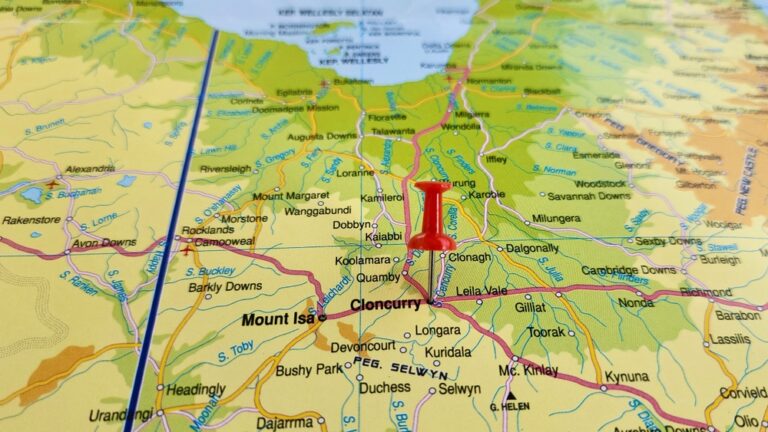
The Queensland Government has launched a 10% subsidy on below-rail access charges for the next four years for users of the Mount Isa line in an effort to support industry and strengthen freight corridors.The Mount Isa line is a strategic freight corridor connecting the north-west minerals province (NWMP) to the Port of Townsville, playing a critical role in keeping exports moving.According to the Queensland Government, lowering rail transport costs will enable significant cost savings for operators within the region. For example, a rail user moving .5mtpa of minerals concentrates in a bulk operation between Cloncurry and Townsville would save about $1.4m annually and $5.6m over the four years, says the Queensland Government.Queensland Transport and Main Roads Minister Brent Mickelberg says the four-year subsidy is about backing the industries that keep the state moving by delivering practical support they can rely on.“By lowering rail transport costs, we’re making rail a more competitive option for industry, improving freight corridors and supporting growth across the NWMP,” he said.“We know transport costs can be a real pressure on industry in the north and this subsidy will encourage a shift from road to rail, improving safety on our roads and strengthening long-term freight resilience.”Minerals concentrate, fertiliser, acid, mining inputs, refined metals and cattle are all moved along the Mount Isa line.Queensland Natural Resources and Mines Minister Dale Last says the Queensland Government is serious about unlocking the full potential of Queensland’s north-west.“Queensland’s resources are world-class, and demand is strong, with the elevating phosphate to  list of critical minerals late last year,” he said.“But to meet that demand, we need to get our resources to the coast, and that’s where the Government’s Mount Isa rail subsidy kicks in.“The Mount Isa line is the backbone of the north-west economy, moving mineral concentrates, processed metals, fertilisers, phosphate rock and acid to export markets.”
Tahmoor falls into administration
NewsProjects & Operations
Tahmoor falls into administration
On Tuesday, billionaire Sanjeev Gupta placed his Tahmoor coal mine into voluntary administration after a year of uncertainty.Mr Gupta’s latest grapple to retain control came just hours after creditors, led by Coal Mines Insurance (CMI), appeared in the Supreme Court in Sydney to push Tahmoor into liquidation over unpaid insurance claims.The hearing was adjourned until February 18, but Mr Gupta took things into his own hands when Tahmoor Coal’s board, which includes Mr Gupta, placed the company into voluntary administration.This last-ditch effort prevents creditors from forcing liquidation over the unpaid debts and allows Mr Gupta more time to find an alternate pathway for Tahmoor.During the hearing, workers’ compensation provider CMI sought $4.7m in unpaid insurance premiums. Financial statements for FY24 were also bought forth, reporting unpaid creditor claims that exceeded $18.9m.Mining and Energy Union south-west district president Bob Timbs says Mr Gupta’s record is one of disaster and broken promises for regional communities.“If this mine is not sold to a serious and reputable operator soon, it will become harder and harder to restart it safely,” he said.Last week, Tahmoor parent company GFG Alliance rejected a $350m purchase offer from a consortium led by the site’s main contractor RStar — the employer of 250 of the 500 Tahmoor workers who are currently stood down without pay while the mine is idle — according to the Mining and Energy Union.“We are very concerned that Mr Gupta is playing for time to try and hold on to Tahmoor, which he has already milked for profits to fund his failed ventures elsewhere,” Mr Timbs said.“This could put the mine out of action permanently.”The Tahmoor coal mine is the latest victim in an extensive trail of resource businesses led by Mr Gupta that have fallen into administration across Australia.In February last year, the South Australian Government forced Whyalla Steelworks’ operator OneSteel Manufacturing into administration to avoid it becoming ‘irredeemable’ under Mr Gupta who was the previous owner.Legislation was pushed through state parliament to allow the South Australia Government to act on the significant outstanding debts, including unpaid royalties of $18.5m and a $15m bill to SA Water, owed by Whyalla Steelworks' owner GFG Alliance — which is headed by Mr Gupta.In November, Mr Gupta appointed William Buck as the voluntary administrator for his company Liberty Primary Metals Australia (LPMA). The decision came prior to a Federal Court hearing scheduled to discuss its liquidation for unpaid debts to NRW Holdings (ASX: NWH) subsidiary Golding.LPMA held majority of shares in Tahmoor coal mine and was also a previous owner of the Tahmoor colliery, Whyalla steelworks and Liberty Bell Bay manganese smelter.Mr Gupta has been under scrutiny since 2021, following the collapse of GFG’s largest creditor, Greensill Capital. Administrators for the company were unable to verify financing and sales invoices, totalling about $400m, related to loans to GFG as companies listed on the invoices denied ever working with Mr Gupta or his companies.In 2021, the UK Serious Fraud Office launched a criminal investigation to investigate suspected fraud, fraudulent trading and money laundering in relation to the financing and conduct of the business of companies within the GFG Alliance, including suspected fraud links to the collapse of Greensill Capital.In 2024, Greensill Capital’s appointed administrator released a report claiming the company was owed about $1b (£472m) form GFG Alliance.The SFO investigation is ongoing.
(Image source: Fortescue) Fortescue has also been expanding its electric mining equipment, with one electric drill and 12 electric excavators now operational across multiple sites in the Pilbara.
NewsTechnology & Innovation
Fortescue moves to ditch diesel on Pilbara rail
Fortescue (ASX: FMG) has commenced commissioning of two new battery electric locomotives on its rail network as it moves to decarbonise its Pilbara iron ore operations.Delivered by Progress Rail, the battery electric locomotives will eliminate about one million litres of diesel each year all together, according to Fortescue.They house the world’s largest land-mobile batteries, with a capacity of 14.5MWh each and can recover 40–60% of energy through regenerative braking.The locomotives will operate on renewable power delivered via Fortescue’s Pilbara Energy Connect program.Fortescue metals and operations chief executive Dino Otranto comments on the milestone.“Real Zero is about transforming the way we power our assets, move our materials and run our operations, not offsetting emissions but eliminating them,” he said.“Decarbonising our rail network is a critical part of that task and the commissioning of these battery electric locomotives demonstrates that heavy-haul rail can operate reliably without fossil fuels.“For a mining operation of this scale, decarbonisation only works if renewable energy is firm, reliable and available 24/7. That’s why we’re building an integrated system combining large-scale solar and wind generation, battery storage and transmission infrastructure.“Through Pilbara Energy Connect, we’ve already constructed more than 480km of high-voltage transmission lines, physically linking our energy assets to our operations and rail network. This infrastructure enables renewable power to replace diesel and gas, in real time, across the Pilbara.”At North Star Junction, Fortescue already operates a 100MW solar farm, which will be supported by a recently installed 250MWh battery energy storage system (BESS) capable of delivering up to 50MW of power for five hours.The system plays a critical role in stabilising renewable supply for Fortescue’s operations.Construction is also progressing at Fortescue’s 190MW Cloudbreak solar farm, which is around two thirds complete.Fortescue has also received all primary approvals for the up to 644MW Turner River solar farm, with construction anticipated to commence later this year, while a 440MW solar farm at Solomon remains in the near-term pipeline.Fortescue growth and energy chief executive Gus Pichot says battery storage is the backbone of a renewable-powered mining system.“By integrating Fortescue Zero’s Elysia battery intelligence and management software, we’re able to optimise performance, extend battery life and intelligently balance energy across the network in real time,” he said.“This technology ensures the right power is available at the right time – whether that’s supporting rail operations, smoothing solar output or maximising the value of stored energy.”Fortescue is aiming to eliminate Scope 1 and 2 emissions from its Australian terrestrial iron ore operations by the end of 2030.
Transforming Mount Isa’s future
NewsPolitics & Regulation
Transforming Mount Isa’s future
The Queensland Government has opened expressions of interest (EOI) for its Mount Isa transformation study to assess future pathways for Queensland’s north-west region.The study will examine long-term industrial capability, market conditions and broader opportunities for workers, communities and regional economies across the full copper value chain throughout the north-west minerals province (NWMP) and the associated smelter and refinery.Completion of the study is a key milestone under the joint government support package for the Mount Isa copper smelter and Townsville copper refinery which provides capital investment into Glencore’s copper processing facilities.Importantly, local working families, businesses, councils and community members will have opportunities to provide input during the process.Federal Industry, Innovation and Science Minister Tim Ayres says the study is about securing a strong, long-term future for the Mount Isa region by taking a clear, end-to-end look at the region’s copper value chain and industrial capability.“My simple message to Mount Isa is — we’ve got your back,” he said.“By assessing the full copper value chain across the region, from the smelter and refinery through to supply chains and emerging opportunities, this work will help inform sound government and industry decisions beyond the current support period.“The Government will always stand up for Australian workers and manufacturing, and will ensure Mount Isa workers, businesses, councils and community members have a genuine say.”The region’s copper industry outlook has been uncertain after Glencore closed the doors at its Mount Isa mines last year.However, the region is ushering in a new generation of developments — including the $2.4b Eva copper project located 95km northeast of Mount Isa — and the Queensland and Federal Governments, alongside Glencore, continue to and the state’s north-west.Queensland Natural Resources and Mines Minister Dale Last says this study is about standing with North and North-West Queensland for the long haul, delivering certainty to the hard-working Queenslanders who keep the copper industry moving.“We’re securing a future for thousands of jobs that rely on the smelter, refinery and Phosphate Hill,” he said.“We’re charting a long-term path that protects jobs and keeps Queensland at the forefront of copper and critical minerals processing."At the heart of this work are the boiler makers, diesel fitters, technicians and small businesses who rely on a strong copper processing sector.“This is an injection of confidence in the region, part of delivering a better lifestyle through a stronger economy, from the copper smelter in Mount Isa, the fertiliser plant at Phosphate Hill, to the emerging projects across the NWMP and the port workers in Townsville."
Back to of the page