Latest News

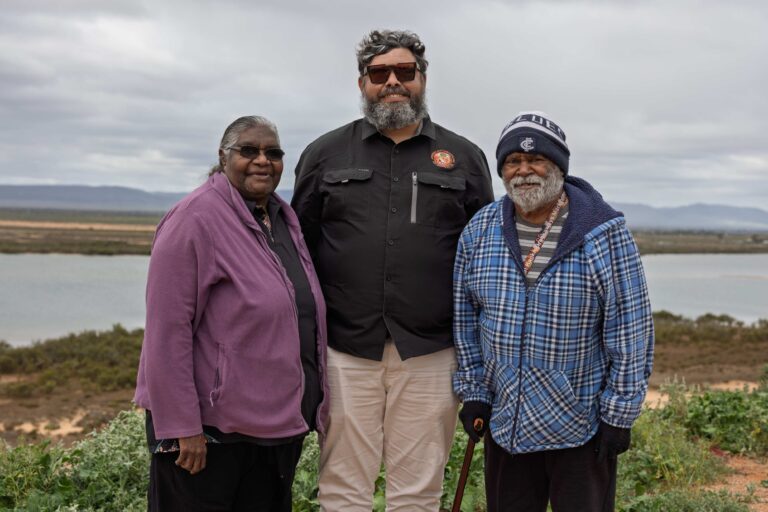
Funding will be directed at community development initiatives benefiting Traditional Owners and Native Title Holders in the areas of Tivan’s Central Australian projects, specifically the Molyhil tungsten project and the Sandover fluorite project.
NewsPeople & Workforce
Tivan to provide $1m in grant funding
Tivan (ASX: TVN) has established a community development initiative with the Central Land Council (CLC) to provide grant funding to support Traditional Owners and Native Title Holders in Central Australia.Tivan will provide up to $1m to fund regional community development initiatives, structured as $250,000 in initial funding, and three further annual funding stages of up to $250,000 over the next three years.Existing projects under the Community Development Program are targeted at delivering positive outcomes across health, cultural strengthening, education, infrastructure, employment and enterprise development.Tivan executive chairman Grant Wilson comments on the initiative.“The board of Tivan is proud to support this landmark initiative, that will provide much needed development funding to some of the most remote communities in Australia,” he said.“For too long resources companies in the Territory have adopted an adversarial and transactional approach to land access and have focused on bare minimum outcomes in respect of Aboriginal Australians. Tivan is different. The early and genuine inclusion of Traditional Owners and Native Title Holders is a foundational principle at our company, and we are committed to furthering a durable alignment of interests throughout the project development lifecycle.“Tivan will fundamentally reshape how resources projects are developed in the Territory in the years ahead.”Tivan says that wherever possible, initiatives are delivered in partnership with Aboriginal-controlled organisations and companies, strengthening local capability and economic participation.
Mining gender gaps persisting despite equality efforts
NewsPeople & Workforce
Mining gender gaps persisting despite equality efforts
In the Australian resources sector, women now represent a larger portion of roles as companies make progress to lower representation and wage disparities.Though significant progress has been made in recent years, there is still major room for growth with the percentage of women holding roles in the mining sector fluctuating between 22 - 23% since 2024, according to the Federal Government’s Workplace Gender Equality Agency (WGEA).Though progress across the board leaves a lot to be desired, there are a few companies that stand out as leaders in creating gender equality.In April 2025, BHP (ASX: BHP) reported 40% female representation in its global employee workforce — a world-first for a global listed mining company.Recent figures from Fortescue (ASX: FMG) show that 39% of senior leadership roles are held by women and an overall 25.1% female employment rate.At IGO (ASX: IGO), women hold the majority of board seats, accounting for 57% of members — well above the industry average of 24%.Lynas (ASX: LYC) chief executive Amanda Lacaze remains the only women to lead an Australian-based ASX-listed mining company, though she has announced plans to step down by the end of FY26.Natascha Viljoen was recently promoted to chief executive of US-based gold giant Newmont Corporation (ASX: NEM).Safety extends beyond physical protectionAustralia’s mining sector has made progress towards creating safer, more respectful and inclusive cultures.However, according to the Australian Human Right’s Commission’s 2022 survey, the mining industry holds the fifth highest incidence rate of workplace sexual harassment and one in three workers having experienced sexual harassment in the last five years.This is a safety issue.The extent of sexual harassment and bullying directed toward female FIFO workers in the mining sector was exposed in 2022 when the?WA Parliament published its landmark Enough is Enough report.The inquiry focused on the extent, nature and reporting of sexual harassment in FIFO workplaces and the workplace culture across the mining industry.The inquiry found that sexual harassment and assault were not being appropriately managed through failure of companies to report known incidents, fear of repercussions on those reporting incidents, limited or ineffective training across industry and a significant gender imbalance across the mining sector workforce.Responding to the 2022 inquiry, Federal Resources Minister Madeleine King called for the sector to step up and take action.“Female workers need to know they are safe at work, and that they have the right to have rewarding careers in the mining industry without being subjected to sexual harassment and assault,” she said.“Any case of sexual harassment is one too many. Sadly, the inquiry has found that sexual harassment and assaults are much too common for women who choose to work in the FIFO workforce.”As a result, a spotlight was placed on the adequacy of existing workplace practices and policies in protecting workers against harassment, assault and other psychosocial risks.In the same year, Rio Tinto (ASX: RIO) conducted an independent internal review of its operations and found 28% of its female workforce had experience workplace sexual harassment.As part of the independent review, several anonymous workers shared their lived experience.“I do believe Rio Tinto has made much progress, however there is still more to be done,” said one female operational manager.“There are some key areas. belief that women in senior roles are only there due to positive discrimination,” she said.“ perceived (perhaps) actual discrimination against mothers and expectant mothers…Despite my credentials, I have been called a token woman and treated that way as well.“I have had my opinions negated and I have many experiences challenged.”Building a respectful, supportive and high-performance culture remains integral to addressing the issues highlighted by this inquiry.Rio Tinto says it is making active efforts to drive this shift, including implementing respectful behaviour training modules and driving company-wide initiatives to create change.In response to the independent review finding, Rio created the Everyday Respect taskforce to implement the 26 recommendations to create a safe, respectful and inclusive workplace.Two years after releasing the initial report, Rio conducted a progress review which reported change is happening and progress is being made.Closing the gender wage gapAccording to the WGEA, the gender pay gap across the Australian mining sector is the third largest in the country.Gender pay gaps are the result of imbalances in gender composition and remuneration across the organisation.The gender pay gap is not the same as equal pay which has been the legal requirement in Australia since 1969 which ensure both men and women are paid the same for performing the same role.While progress has been made, work is still ongoing. Across most Australian operations, the average and median earnings of women remain lower than those of men.Figures vary significantly across companies. In 2025, Rio Tinto’s equal pay gap was less than 1.5% in favour of men while IGO, in FY24, reported a 10.7% gap in favour of men.PLS, recognising the need to drive further progress, reported a 14.1% gap in average total remuneration in favour of men as part of its Gender pay equality statement 2026.The company’s recent gender pay gap results are primarily influenced by structural factors and gender representation patterns across the workforce, rather than unexplained differences in pay for equivalent work.PLS reports that it is actively addressing these structural representation factors as part of its efforts to increase female participation and drive an absolute improvement in its gender pay gap.According to WGEA’s 2026 figures, 54.8% of employers across Australia reduced their average total remuneration gender pay gap year-on-year and 52.3% of employers reduced their median total remuneration gender pay gap year-on year.Encouraging future generationsThere are many initiatives across Australia, from both the private and public sectors, encouraging young women to take up careers in the mining sector.One such program is the Queensland Resource Council’s (QRC) girls in resources leadership skills (GIRLS) mentoring program. The program’s 2026 rendition saw twenty Year 12 students and their resources industry mentors gathering in Brisbane from across broader Queensland.Students travelled from 16 schools for the launch of the mentoring program and to meet their experienced industry mentors including geologists, engineers and experienced tradespeople.The popular program, now in its eighth year, has helped connect more than 120 students with the minerals and energy sector, with many alumni going on to carve out successful careers in the sector.QRC chief executive Janette Hewson says the mentors and their mentees will take part in a scaffolded and mentoring partnership over the next six months, supported by organisational psychologists."These young women will get expert guidance and advice from their mentors, who work in the fields they are aspiring to enter,” she said.GIRLS is a joint initiative between the Queensland Minerals and Energy Academy (QMEA) and Women in Mining and Resources Queensland (WMARQ).WIMARQ co-chair Catherine Cook says GIRLS was designed to assist young women keen to follow a STEM or trades career in the resources industry.“By the end of this six-month program the students will be filled with knowledge and confidence about potential careers in mining and energy,” she said.Today, QRC is also hosting the 2026 Resource Awards for Women to celebrate the exceptional achievements of women across the state’s resources sector.There are 20 finalists, including include field and trade supervisors, safety leaders, value analysts, diversity champions and executives, competing for seven prestigious awards.
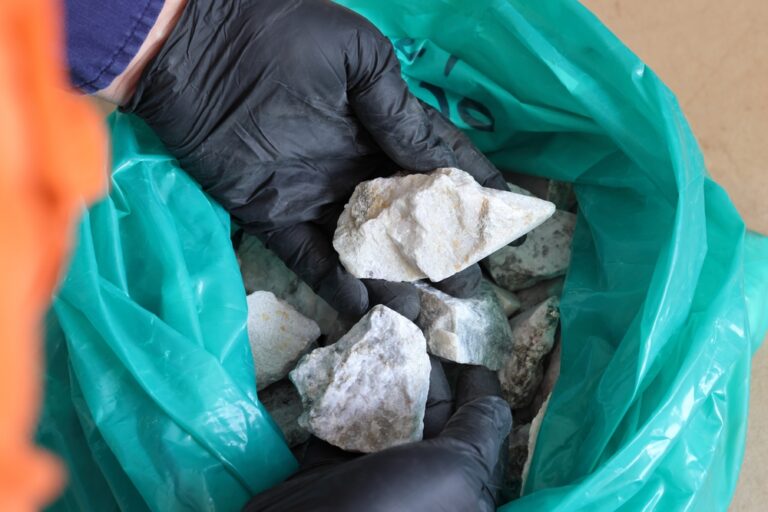
The Aerosmith project is adjacent to the Albany-Fraser Orogen, which Catalina says is a setting recognised as favourable for large-scale mineral systems.
Exploration & DiscoveryNews
Catalina expands WA copper-gold exposure
Catalina Resources (ASX: CTN) has entered into a binding option agreement to acquire 100% of BGM Metals, including its exploration licenses in the Eastern Goldfields.The agreement covers the Aerosmith project, located on the south-eastern margin of the Yilgarn Craton.The package includes multiple prospects spanning volcanogenic massive sulphide (VMS) copper, structural gold and magmatic copper-nickel sulphide targets.Catalina executive director Ross Cotton comments on the acquisition.“The combination of mapped electromagnetic conductors, interpreted base-metal fertile stratigraphy and documented copper anomalism provides a compelling technical foundation for systematic exploration,” he said.“Importantly, the option structure allows Catalina to secure exposure to this opportunity in a disciplined manner while we undertake detailed technical assessment.“The acquisition expands our copper–gold exploration pipeline and positions the company to evaluate a prospective mineralised corridor within one of WA’s established mineral provinces."Importantly, this acquisition comes as Catalina continues to advance exploration across its broader project portfolio, with further results expected from ongoing programs, including the Central Yilgarn and Breakaway Dam.”Under the deal terms, Catalina will pay a $10,000 option fee for a 12-month option to acquire BGM. If exercised, the consideration will be $200,000 in Catalina shares based on a 20-day VWAP or a cash equivalent.
US action in Iran exposes critical minerals weakness
InternationalNews
US action in Iran exposes critical minerals weakness
Weapons stock depletion may not ultimately decide the outcome of the Iran-US conflict, but it could certainly play a major role.An integral part of the current offensive in Iran is the US’s Patriot and terminal high altitude area defence (THAAD) missile defence systems. The supply of these interceptors has been severely depleted in recent years due to US intervention in the Middle East and the ongoing conflict in Ukraine.During the 12-day conflict between US, Israel and Iran in June 2025, the US used more than 150 THAAD missiles, according to the Centre for Strategic and International Studies (CSIS). Though exact US defence stock levels are classified, this represents more than a quarter of stockpiles based on estimates reported by the CSIS.These attacks came after the US had already expended a significant amount of missile interceptors during the previous year as it defended against Houthi attacks on shipping in the Red Sea.Between 2020 and 2025, the US has supplied Ukraine with about $45.1b worth of military aid that included an extensive number of Patriot systems and munitions, further exhausting its stockpiles, according to the Council of Foreign Relations.By launching its most recent offensive in Iran, the US is expected to further deplete its military reserves.US Secretary of State Marco Rubio says Iran is producing more than 100 missiles each month.“Compare that to the six or seven interceptors that can be built a month,” he said.“The objective of this mission is the destruction of ballistic missile capabilities and naval capabilities.”This may forecast a major issue for the US, as supply chains of minerals and metals critical to the production of these military assets — including rare earth elements (REEs) and gallium — remain dominated by China.The International Energy Agency (IEA) estimates that China accounts for about 61% of rare earth production, as well as 92% of processing, and more than 98% of global gallium production.On February 27, the day before the US offensive on Iran commenced, the US Government put out a request to domestic miners asking how fast they could develop mines to produce tungsten and 12 additional elements, Reuters reported.During last year’s US-China trade war, Beijing nearly crippled global industry supply chains when it cut off the export of gallium and other rare earths. China’s introduction of tighter export controls on minerals with dual civil-military uses further exacerbated global trade pressures.As the latest strategic push to reduce reliance on battery materials from China, the US Department of Commerce announced anti-dumping and countervailing duties on selected Chinese anode producers, an element integral to military equipment, pushing the total tariff minimum to about 103%, according to the US Federal Register.With US and Chinese trade negotiators slated to meet mid-March, China may once again be able to leverage its monopoly on these critical industries and capitalise on the urgency the US is facing to bolster its military systems.Given that China has openly condemned the US’ actions in Iran, trade negotiations may be tense.Chinese Foreign Ministry Mao Ning says the US-Israeli strikes on Iran violate international law.“China is deeply concerned over the regional spillover believes that the sovereignty, security and territorial integrity of the Gulf states should likewise be fully respected,” she said.“China firmly opposes the use of force in international relations or infringement on other countries’ sovereignty and security.”US President Donald Trump is set to visit China between March 31 and April 2 to meet with Chinese President Xi Jinping. It will be the first trip by an US president since President Trump’s visit in 2017.Though there has been a global effort to diversify supply chains outside of China, including the framework signed between the Australia and the US last October, change does not happen overnight.The US is not the only country feeling the rising critical minerals pressure.In response to escalating global instability, North Atlantic Treaty Organisation (NATO) defence member countries have set a goal to increase defence spending to 5% of their GDP by 2035, a substantial increase on the 2% benchmark established at the 2014 Wales Summit.A new report from S&P Global, Critical minerals briefing December quarter 2025, found that even under a conservative scenario, NATO defence spending could rise substantially through 2035, intensifying supply risks for NATO’s defence-critical minerals.Since 2015, NATO defence expenditure has increased 40%, according to S&P Global.Global defence spending in FY25 alone rising 2.5% from the previous year to $3.73t , according to the International Institute for Strategic Studies (IISS).Even under a conservative 3% GDP cap, NATO’s 2026–35 defence expenditures could increase 40%, driving a substantial rise in demand for these critical minerals, according to S&P Global, and the minerals most at risk of supply disruptions include gallium and REEs.Australia has also seen significant increases to its defence expenditure with the Federal Government estimating Australia’s defence budget for FY26 to be $59b, representing a 4.2% nominal increase on the previous year.Though not a NATO member, Australia is considered an ally for its strong ties with member nations — and its pipeline of critical minerals projects are positioned to be crucial for developing resilient and self-sufficient critical minerals supply chains.
WA tradie claims global podium finish
Industry FocusNews
WA tradie claims global podium finish
WesTrac field service technician Leon Archibald was crowned runner-up in the Caterpillar Global Dealership Technician Challenge in the US.The global competition was first introduced in 2024 to recognise the critical role technicians play in keeping major industries operating, while also showcasing the world-class technical skills across Caterpillar’s global dealer network.Held over three days in Illinois, the challenge tested finalists through a series of high-pressure, real-world scenarios — requiring them to diagnose and repair complex mechanical faults under strict time limits.Mr Archibald, from WA, says the experience was both challenging and rewarding.“It’s been a long process, nearly two years, so to go through all that and get that result is amazing,” he said.“I didn’t think there’d be anything like this , you meet a lot more people and become more widely known.“It’s hard to explain the exact feeling of a podium finish, but it was great.”The result follows Mr Archibald’s standout performance at the semi-finals held in Spain last year, where he placed first against elite technicians from across Europe, Asia, the Americas and the Middle East, securing his spot in the final.Mr Archibald was supported by mentor Peter Bardwell, who helped prepare him for the intensity of the international competition.Mr Bardwell says Mr Archibald’s calm approach on the global stage was the key to his success.“Leon is extremely determined and his technical knowledge is by far the best I’ve seen,” he said.“He was able to shake off some minor things that didn’t quite go our way.“It was such a privilege for me to join him in his journey to success. He is truly deserving of this accomplishment.”WesTrac WA chief executive Jarvas Croome says the result was a proud moment for not only the company, but the state.“Leon’s achievement is an incredible proud moment for WesTrac,” he said.“Standing among the world’s best technicians is no small feat and Leon’s success is a testament to his skill and a powerful example of what investment in our people looks like.”
(Image source: MOVUS) Founded in 2015, MOVUS partners with decision-makers in complex industrial environments to transform asset and operational data into clear, practical actions.
NewsTechnology & Innovation
MOVUS appoints new CEO to drive industrial AI growth
Brisbane-based industrial technology company MOVUS has appointed Sanjeev Kumar as chief executive officer to lead the company’s next phase of growth in asset reliability and industrial AI innovation.Mr Kumar succeeds Malcolm Schulstad, who will transition back to his role as chief operating officer.The appointment follows Infinite Uptime’s acquisition of MOVUS in August 2025. Mr Kumar joins MOVUS from parent company Infinite Uptime, where he most recently served as vice president and business head for ANZ, leading regional expansion across heavy industry sectors.MOVUS says Kumar’s experience scaling industrial AI across mining, energy, manufacturing and ports would support the company’s continued expansion into asset-intensive industries across the region.“MOVUS has built a strong reputation for turning industrial data into practical operational decisions,” Mr Kumar said.“Through PlantOS, we enable heavy industries to move closer to near-continuous operational uptime by combining advanced sensing technology, AI-driven analytics and human expertise.“Prescriptive AI represents the next evolution of maintenance strategy. By aligning maintenance activity with production priorities, organisations can move beyond reactive or scheduled maintenance toward real-time, outcome-driven decision-making.”Mr Kumar is slated to attend Total Plant Maintenance in Melbourne from March 16–18, where he will present a session titled Prescriptive AI for Plant Operations: Maximising Throughput and Efficiency.His session will examine why predictive maintenance can fall short in day-to-day operations and how prescriptive approaches can improve throughput, reduce risk and support sustainability outcomes.
Canada and Australia deepen critical minerals ties
NewsPolitics & Regulation
Canada and Australia deepen critical minerals ties
Australia and Canada have signed a series of agreements regarding critical minerals, one of which grants Australia membership to the G7 minerals alliance.This week, Canadian Prime Minister Mark Carney met with Prime Minister Anthony Albanese, marking the first bilateral visit of a Canadian Prime Minister to Australia in nearly two decades, and outlined a series of partnerships between the nations in investment, defence and security, critical minerals, energy and artificial intelligence.Noting Australia and Canada’s combined strengths as major global critical minerals producers, both leaders committed to working more purposefully in partnership to advance mutual interests and build dynamic global critical minerals supply chains.The countries also committed to pursuing common positions on key critical minerals issues and to collaborate on shaping emerging markets in ways that reflect shared commitment to fair and open trade as well as high environmental and labour standards.This builds on the joint declaration of intent on critical minerals cooperation, signed by both countries in November last year, designed to strengthen supply chain resilience.During the visit, Canada welcomed Australia into the Critical Minerals Production Alliance — an initiative launched under Canada’s G7 presidency in 2025 to expand critical minerals production and processing capacity and diversify supply chains from mine to market.“We're looking forward to learning from … cooperating in strategic areas, such as critical minerals and financial services, where we are quiet powerhouses in and of ourselves,” Prime Minister Carney said.As part of the agreements, both nations will develop a Canada-Australia mining skills exchange pilot, in collaboration with industry stakeholders, academic institutions and government partners to address skills and labour shortages and ensure allied ability to expand critical minerals production.Minerals Council Australia chief executive Tania Constable says the agreements mark a new era in Australia and Canada’s enduring partnership.“We have a long history of prosperity for our people and communities being generated by a range of minerals, including traditional resources and most recently the addition of critical minerals that power the world and make modern life possible including telecommunications, health and defence,” she said.Recognising the significant security challenges associated with increasing geopolitical issues, Canada and Australia also agreed to enhance defence and security cooperation, including through the establishment of a biennial defence ministers’ meeting.“Our two nations share values. We share common interests as well,” Prime Minister Albanese said.“ shared ambition for Australia and Canada to do more together, at a deeper level. To build on our shared strengths, from our resources and critical minerals to defence technology.”
US and Israeli strikes began on February 28, with retaliatory attacks from Iran soon following.
NewsPolitics & Regulation
Hormuz disruption risks putting Australia in dire straits as fuel costs surge
Not a single oil tanker passed through the Strait of Hormuz on March 3, maritime monitors said, as the key oil and LNG chokepoint remained effectively closed amid escalating conflict between the US, Israel and Iran.In 2024, the Strait of Hormuz normally saw about 20 million barrels per day, the equivalent of about 20% of global petroleum liquids consumption. The historical daily average for all vessels through the strait is about 138 ships, according to the Joint Maritime Information Centre (JMIC).At least four vessels in or near the strait have been struck since the conflict began with continued threats reportedly coming from Iran adding to the fear and uncertainty effectively keeping the strait shuttered for the foreseeable future.Asia is likely to see the biggest hit from supply disruptions at Hormuz, with Australia following as a result of its reliance.According to the EIA, 84% of the crude oil and condensate and 83% of the liquefied natural gas that moved through the Strait of Hormuz went to Asian markets in 2024.Although a significant bulk commodity exporter to Asia, Australia is a price-taker when it comes to refined oil products.Australia only has two refineries remaining which only supply around 20% of Australia’s liquid fuel demand, leaving the country heavily exposed to import availability from Asia.Federal Climate Change and Energy Minister Chris Bowen has moved to reassure the public not to panic, saying the country is “currently in excess of the minimum stock obligations” for petrol, diesel and jet fuel.But those minimum stock obligations, instituted in 2023, are measured in days.Minister Bowen says Australia has 36 days’ worth of petrol, 34 days’ worth of diesel and 32 days’ worth of jet fuel on hand at present.“That's in addition to the petrol and diesel that's in service stations sitting in tanks around the country as we speak and, of course, the petrol that's already in cars,” he said.“That is just the reserve that is kept for these circumstances.”The International Energy Agency (IEA) requires member countries to hold emergency oil stocks equivalent to at least 90 days of net imports.Although Australia is well-below this threshold, the government argues its domestic Minimum Stockholding Obligation is designed around domestic fuel security rather than securing stock to sell or release to the global market in case of supply disruptions.Minister Bowen says Australia’s major refining companies have informed the government that they have confidence in the oil supplies through to May with contracts in place which they expect to be honoured and delivered.Although there is clarity around how long Australia’s access to oil is secured for, the very real issue of price remains.“Look, there will be pressures,” Minister Bowen said.“The biggest impact on petrol prices in Australia will always be oil prices, and oil price will come under pressure. But for those Australians who are concerned about our supply of oil and petrol, I'm pleased to say that we are in good shape.”Beyond the consumer’s shock at the pump — or even before, with queues potentially extending for kilometres — the mining industry’s financials could also take a hit.The mining industry is largely exposed to diesel prices for haulage and mobile equipment, which continues to be one of the hardest-to-abate inputs across the sector.According to the Institute for Energy Economics and Financial Analysis (IEEFA) one ultra class haul truck can use about 1 million litres of diesel in a year.Nationally, fuel combustion emissions in mining have doubled since FY11 to 21.8mt in FY23, growing at a steady rate of 6.8% per year, according to the IEEFA.If the prices of such a significant input rise due to shortages or uncertainty, operating costs at mining operations across the country could take a hit.Industry and government are well aware of the risks of this exposure. The Fuel Tax Credit (FTC) Scheme rebates the full federal fuel tax (51.6 cents/litre as of August 2025) on imported diesel used off-road in industry.According to Climate Energy Finance (CEF), mining accounts for the majority of the credits with $57.5b to August 2025, projected to exceed $84b by 2030.Based on CEF analysis, the top 15 consumers of diesel in Australia consumed almost 6 billion litres of diesel with the weighted-average fuel excise rate of 49 cents per litre providing over $2.9bn in forgone taxation over FY24.The largest beneficiaries included BHP (ASX: BHP) ($627m rebate), Rio Tinto (ASX: RIO) ($416m rebate) and Glencore ($364m rebate).Looking back at the haul truck example, the IEEFA calculates that the value of the diesel rebate over the truck’s 15-year lifespan is equal to the total purchase of the truck, meaning that the rebate effectively could pay for a truck’s worth of diesel over its life and, at scale, materially offset fleet operating costs across a mine.The strategic dilemma already facing the mining industry becomes even more prickly with the added geopolitical uncertainty.The largely touted, long-term solution is to reduce diesel dependence through electrification or alternative fuels. But in the short term, tax credits remain a more readily available pressure release for miners.Although the FTC has proven successful in softening fuel costs for industry, we have yet to see if it can prevent larger forces such as a war-linked price spike from hitting the industry’s costs.Beyond diesel, Federal Resources Minister Madeleine King has warned of impacts to Australia’s supply of urea, a type of nitrogen fertiliser.Minister King says Australia is quite dependent on imports from around the world of urea, with much of that coming through the Strait of Hormuz. “Using liquid natural gas from offshore WA, it goes into the production of urea at the Perdaman project,” she said.“This is a $6b project in north WA. It is one of the largest manufacturing projects this country has ever undertaken.“The investment that our government has put into it is also of historic proportions. And that is to make sure we have that resilience for the production of urea which goes into fertiliser.”The project is supported by the Northern Australia Infrastructure Fund, with Minister King saying the package totals more than $300m, including $220m directed to Perdaman.Minister King says it is expected that about half of the urea produced by the project would remain in Australia, with the rest set for export.
AREEA celebrates female leaders in the resources sector
NewsPeople & Workforce
AREEA celebrates female leaders in the resources sector
As the world marks International Women’s Day on March 8, the Australian Resources and Energy Employer Association (AREEA) is celebrating women who have shaped and those who continue to make their mark in Australia’s resources and energy sector.As part of its national TRAILBLAZERS campaign, AREEA is showcasing female pioneers and contemporary leaders contributing at every level of Australia’s resources sector — on site and offshore, in engineering and operations, in corporate and commercial roles and in executive leadership and boardrooms.In the Australian resources sector women hold only 25% of senior management roles, 32% of professional roles, 33% of apprentice roles and only 10% of technical and trades roles.Comparatively, 26% of chief executive role across all industries are held by women, yet only 8% of chief executive roles in the resources sector are held by women, according to AREEA.AREEA’s deputy chief executive Tara Diamond says these numbers highlight both the progress and the persistent gaps.“That’s why it’s critical that our industry actively recruits, retains and supports women so the next generation sees themselves reflected in the workforce, from site roles to the C-suite.”Some female industry TRAILBLAZER names are instantly recognisable, such as Hancock Prospecting executive chairman Gina Rinehart and Lynas Rare Earths (ASX: LYC) chief executive and managing director Amanda Lacaze.AREEA notes several other remarkable women whose achievements deserve recognition:Former Woodside executive vice president Eve Howell, who in 2006 assumed responsibility for the North West Shelf project, Australia’s largest and most complex resource development Marine Pilot shipmaster Carol Dooley, who in 2004 became the first woman in Australia to captain an LNG carrier and one of few female LNG captains in the world at that time“These Trailblazers demonstrate that incredible and groundbreaking role women have played and continue to play across technical excellence, leadership and innovation in the resources and energy industry,” Ms Diamond said.“International Women’s Day is a powerful reminder that while progress has been made, there is more to be done.“These women paved the way for future generations and helped build one of the most advanced, innovative and responsibly operated industries in the world.”Today, women continue to shape the future of Australia’s resources and energy sector, driving innovation, championing safety and sustainability and leading complex organisations through a rapidly changing energy and resources landscape.
Back to of the page