Latest News

Liontown’s FY26 guidance remains unchanged.
NewsProjects & Operations
Liontown loss masks lift in Kathleen Valley sales
Liontown (ASX: LTR) lifted H1 revenue to $207.5m as the underground ramp-up at Kathleen Valley drove a 106% surge in sales volumes.Kathleen Valley’s 1mtpa run rate was delivered on schedule, with Liontown targeting 1.5mtpa by the end of March.Liontown managing director and chief executive Tony Ottaviano says Kathleen Valley is now a 100% underground operation.“We have delivered a 1mtpa underground run-rate on schedule, sold 190,000t of concentrate across ten shipments and more than doubled revenue period to period,” he said.“The underground ramp-up is on track and we expect the second half to be materially stronger as volumes, recoveries and pricing all continue to improve.”Kathleen Valley was still ramping up in H1 with AISC of $1,179/dmt weighing on margins, although Liontown expects unit costs and cash generation to improve in H2.The miner reported an average realised spodumene price of US$888/dmt, with an encouraging price signal for Liontown coming out of its November 2025 Metalshub spot auction, which cleared at US$1,254/dmt for shipment in January 2026.Liontown says spodumene prices were strengthening into CY26 and expects cash generation to improve in H2.“The balance sheet has been reset. Pro forma gearing (excluding leases) has dropped from 48% to 22% and we had $390m in cash at 31 December 2025,” Mr Ottaviano said.“This provides us with a strong financial foundation to complete the ramp-up, progress the 4mtpa expansion study and continue to grow the company to its full potential.“We are one of a small number of producers globally that can bring additional lithium tonnes to market quickly through brownfield expansion of an operating asset. The expansion study is underway and we are advancing critical path procurement now."Liontown posted a statutory net loss of $184m, including $104.4m loss on the LGES convertible note primarily driven by the company’s share price increasing from $.70 to $1.575 over the period.Liontown said the note converted to equity in February, with an estimated $58m gain expected to be recognised on conversion.
Queensland supports women in technical mining roles
Industry FocusNews
Queensland supports women in technical mining roles
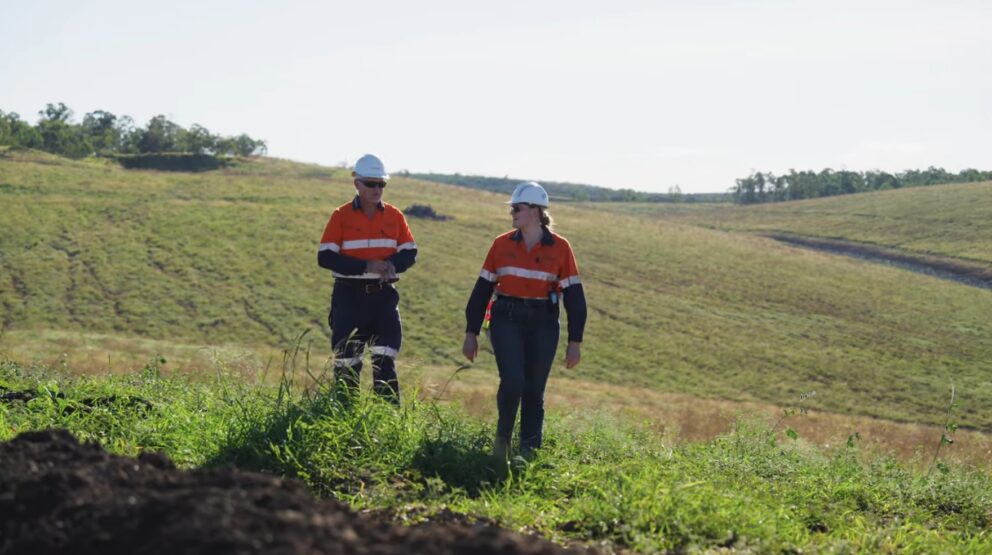
The Queensland Government is investing $500,000 to support the women in resources: empowering development (WIRED) pilot program.The program, delivered by the Queensland Resources Council (QRC), focuses on upskilling and reskilling women into advanced site-based roles to strengthen Queensland’s resources workforce and support more women into higher-skilled operator and technician roles across the state.The WIRED program will deliver targeted training for roles including machinery operators, plant technicians and site supervisors while supporting women transitioning into higher-level operator and technician roles.Early engagement across the sector has commenced, with the program expected to launch in mid-2026.Queensland Finance, Trade, Employment and Training Minister Ros Bates says the investment is about backing a sector that drives jobs and regional growth.“We are backing one of Queensland’s economic powerhouses by delivering the skilled workforce it needs to keep growing,” she said.“We are making sure women have clear, practical pathways into higher-skilled, higher-paid roles on site.“When you expand opportunities in a $44b industry, you strengthen the entire economy.”In the Australian resources sector, women now represent a larger portion of roles but there is still major room for growth with the percentage of women holding roles in the mining sector fluctuating between 22 – 23% since 2024, according to the Federal Government’s Workplace Gender Equality Agency (WGEA).QRC chief executive Janette Hewson says WIRED is about enabling and retaining women in technician and operator roles to move into site-based leadership roles.“Our vision is an industry where women with technical skills have a clear pathway to more senior roles and can thrive in these roles long-term,” she said.“By supporting women who are working onsite, we create a workplace culture where everyone can thrive.”
Glencore Townsville workers to strike for better pay
NewsPeople & Workforce
Glencore Townsville workers to strike for better pay
Workers at Glencore’s refinery in Townsville have threatened to walk off the job this Friday if wage negotiations remain unresolved.Negotiations for a new enterprise agreement (EA) started March 25 last year before stalling amid uncertainty around the July 2025 closure of Mount Isa’s underground copper operations. Talks later resumed after the Federal and Queensland Government committed $600m to continue operations at the smelter and support its workers.This week, the Australian Workers Union (AWU) gave notice that members will be partaking in protected industrial action if the issues are not settled at a bargaining meeting scheduled for tomorrow.AWU northern district secretary Jim Wilson says Glencore is paying workers almost 15% less than neighbouring sites for the same work.“It’s simply unacceptable,” he said.“The Townsville community is sick of billionaires profiting from our town and leaving nothing but the crumbs for workers and their families.”The Queensland Electrical Trades Union (ETU) says across three EA meetings held since the bailout announcement, Glencore failed to make any meaningful movement.A Glencore spokesperson says the company has been engaging with copper refinery workers about the new EA for more than 12 months.“Glencore has tabled a competitive package which includes a salary increase over four years and we will continue to negotiate in good faith to get an agreement,” they said.“Despite securing a government funding package last year, the refinery is expected to continue losing money.“This political grandstanding from the unions is not helpful and undermines the constructive engagement to date with local EA bargaining representatives.”According to ETU, Glencore was offering wage increases of 6.9-10.4% across four years based on individual performance at the discretion of the company, saying this fell behind rising living costs and citing Australia’s consumer price index (CPI) of 3.8% per annum.Glencore publicly rejected these comments, reporting it tabled a 13% salary increase across four years.AWU Queensland secretary Stacey Schinnerl says the wage offer that Glencore has put on the table doesn’t meet the rising cost of living pressures faced by workers and their families.“We have a bargaining meeting on Thursday where we hope Glencore will finally come to the table to sort this out. The message to Glencore is clear, we won’t accept you short-changing our members.”
This follows Lynas’ successful first production of separated heavy rare earth (HRE) oxides in 2025.
Economics & Commodity PricesNews
Lynas locks in price floor for Japan
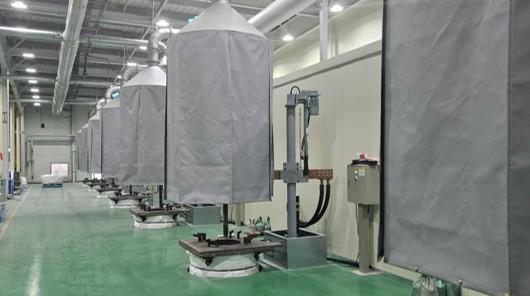
Lynas Rare Earths (ASX: LYC) and Japan Australia Rare Earths (JARE) have extended their rare earths supply deal through 2038, locking in a market-linked floor price of US$110/kg for neodymium and praseodymium. Under the revised agreement, Lynas will continue to provide up to 7200tpa of neodymium and praseodymium to Japanese industry, while JARE has committed to purchase 5000tpa under the new pricing structure.If Lynas’ achieved price is above US$150/kg, 30% of the upside above that level, capped at US$10m each calendar year, will be paid to JARE. Lynas chief executive and managing director Amanda Lacaze comments on the agreement. “Lynas’ partnership with JARE has served both organisations well over the past 15 years. It has created a strong foundation for the development of Lynas’ business, supported investments in new processing capacity and new products, and delivered reliable supply of quality product to support Japanese industry growth,” she said. “This new agreement will ensure continued reliable supply of rare earth products that are strategically important to Japanese industry and its global market, and at the same time, the implementation of fair market pricing will reduce price volatility for Lynas and enable continued growth and investment in our operations.” Additionally, 75% of all HRE oxides produced by Lynas will be made available to Japanese industry, with JARE committed to purchasing the equivalent of 50% of all those HRE oxides. 
The expansion flowsheet includes a new primary crusher, a 5.8MW semi-autogenous (SAG) mill, pebble crusher and additional leaching/adsorption tanks.
NewsProjects & Operations
Westgold approves $145m expansion to lift output and cut costs
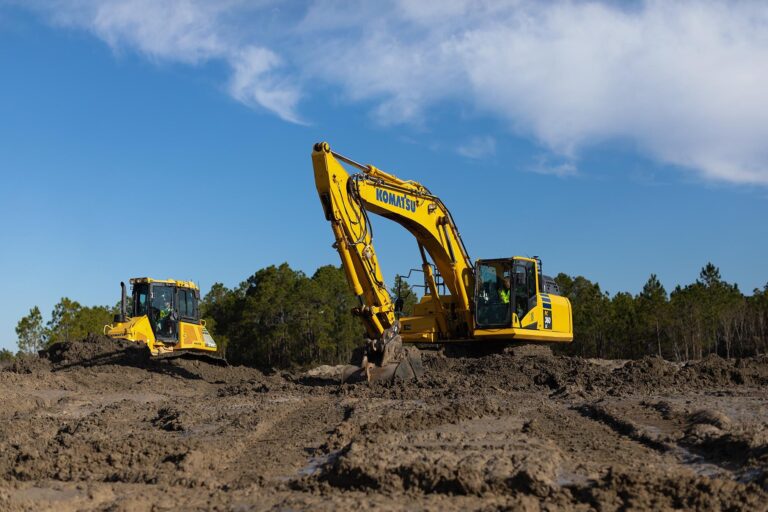
Westgold Resources (ASX: WGX) has approved the final investment decision to expand its Higginsville processing hub from 1.6mtpa to 2.6mtpa.This follows the completion of a definitive feasibility study (DFS) confirming the expansion which would increase Westgold’s southern goldfields gold production by about 60kozpa and reduce processing costs by 24% to $34/t.Many of the upgrades within the flowsheet are designed to support further expansion to 4mtpa.Westgold managing director and chief executive Wayne Bramwell comments on the expansion plan.“The Higginsville expansion plan (HXP) is the next step to drive down unit costs and increase group free cash flow from the Southern Goldfields,” he said.“By expanding the Higginsville mill capacity to a nominal 2.6mtpa we are creating a more productive, lower-cost processing hub to match the growing outputs from our Beta Hunt mine. This will see us deliver higher group gold production at a lower cost, in line with our three-year outlook.“The DFS highlights the strength of the business case. It is underpinned by increasing annual gold production and a step-change reduction in processing unit costs – all within a short payback period.“The timing of the HXP aligns strategically with the anticipated growth in mining rates from the Southern Goldfields, ensuring that expanded processing capacity is ready to accommodate increased ore delivery from Beta Hunt.”The final capital cost for the processing plant upgrade, as determined by the DFS, is $145m.
Located in the Patagonia Mountains, about 80km south-east of Tucson, Arizona, Hermosa comprises the zinc-lead-silver Taylor sulphide deposit and the zinc-manganese-silver Clark oxide deposit.
InternationalNews
Hermosa moves closer to federal land expansion
South32 (ASX: S32) says the US Forest Service (USFS) has indicated it would approve Hermosa’s development onto National Forest Service land.If granted, this approval would allow South32 to construct ancillary infrastructure on US Forest Service land, including a primary access road and a secondary dry-stack tailings facility, while also enabling a third party to build part of a 138kV power line to supply the project.South32 Hermosa president Pat Risner says the decision reflected years of listening, collaboration and real changes shaped by community input.“This draft decision affirms our design and development approach including mitigation measures as described in the final environmental impact statement, that were informed through agency and public consultation,” he said.South32 Hermosa environment and permitting director Brent Musslewhite says he was proud of the team for their efforts to get the FEIS over the line.“This is a significant milestone for Hermosa,” he said.“Getting a major mining project through an EIS process in less than two years is almost unheard of and testament to the quality of our people, plans and work. I couldn’t be prouder to work with such amazing teams.”As part of the federal FAST-41 permitting program, the USFS conducted a thorough, independent analysis of Hermosa’s possible environmental impacts, with the Draft ROD determining that the proposal would result in the least surface disturbance on National Forest Service lands, compared to alternatives.The release of the Draft ROD now kicks off a review period for feedback provided during previous public comment periods. The Final ROD is expected to be published in July with a Notice to Proceed expected in September.
Phosphate Hill sells for just $1
NewsProjects & Operations
Phosphate Hill sells for just $1
Dyno Nobel (ASX: DNL) has sold it Phosphate Hill site in north west Queensland to Mayfair Corporation for an initial purchase price of $1 and a deferred consideration of up to $100m.Dyno Nobel had previously said that if a sale was not completed by March 31, it would progress cease operations at Phosphate Hill by 30 September 2026.This announcement came after the company reported a $149.1m after-tax impairment on the asset last year.Located 140km south east of Mount Isa, Phosphate Hill’s acid plant is critical to operations at Glencore’s Mount Isa copper smelter and its closure would significantly affect smelter operations.Sulphur dioxide produced as a byproduct at Mount Isa is processed into sulphuric acid, which is then sent to Phosphate Hill for fertiliser production.Queensland Natural resources and Mines Minister Dale Last says recent geopolitical events have reinforced the importance of protecting Queensland’s sovereign fertiliser manufacturing capability.“These assets are too important to our agricultural sector, our supply chains and our economic security to take for granted,” he said.The symbiotic relationship between Phosphate Hill and the Mount Isa smelter supports more than 1000 jobs across the region, according to the Queensland Government.Dyno Nobel chief executive and managing director Mauro Neves says the sale is an important milestone that concludes the company’s separation from the fertiliser business.“I am very pleased that our talented teams in Phosphate Hill, Mount Isa and Townsville will continue to provide Australian farmers with a secure domestic source of fertilisers supply,” he said.Mayfair will assume ownership of the Phosphate Hill operations from April 1. The privately held Australian energy and resources company currently operates the Top Camp gold project in Cloncurry, about 150km north of the Phosphate Hill site.
Youanmi has a production target of 817koz of gold doré over the life-of-mine, averaging 117kozpa over an estimated initial seven-year processing period.
Exploration & DiscoveryNews
Rox fully funds WA gold project to production
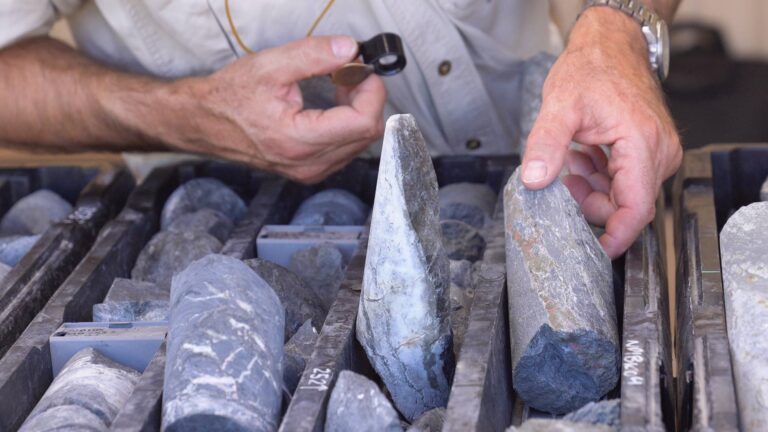
Rox Resources (ASX: RXL) has received commitments for $350m in debt facilities to fund the development of its 100%-owned Youanmi gold project in WA.The company has entered into a binding credit-approved commitment letter and term sheet with Societe Generale, Sydney Branch, Sumitomo Mitsui Banking Corporation, The Hongkong and Shanghai Banking and Westpac Banking Corporation to provide the $300m senior secured project term loan facility, $20m cost overrun facility and $30m bank guarantee facility.Rox Resources managing director and chief executive Phill Wilding comments on the funding.“The commitment of debt funding from an impressive selection of Australian and International banks is yet another major milestone for Rox as we accelerate our pathway to production for the Youanmi gold project,” he said.“The debt funding process included a thorough due diligence process by the banks’ independent technical expert, which provides further validation of the robustness of Youanmi and our expectation that it will be a high-margin operation.“The project is now fully funded through to production, and we look forward to making a final investment decision later in this quarter, before commencing construction activities.”Rox and the syndicate banks are now working towards satisfying conditions precedent. Financial close and first debt draw down is expected in the September quarter of 2026.
Agricultural waste emerges as a viable coal substitute in steelmaking
NewsTechnology & Innovation
Agricultural waste emerges as a viable coal substitute in steelmaking
Researchers from CSIRO and the Indian Institute of Science (IISc) have successfully demonstrated a viable approach to reduce emissions from steelmaking by partially replacing coal with agricultural waste.The breakthrough offers a scalable pathway to commercial use and cutting emissions in one of the world’s fastest growing industrial economies, marking a major advance in efforts to decarbonise iron and steelmaking.Using locally sourced rice husk pellets, the CSIRO team validated sustained production of biomass-derived synthesis gas for iron ore reduction at a large-scale commercial steelworks in India.The trial was completed in partnership with commercial steel innovator RESCONS Solutions.India’s steel sector is the fastest-growing globally, projected to double its capacity to 300mt by 2030 and reach 500mt by 2047. This rapid expansion poses a major challenge for global emissions, with India’s steel production emitting an average of 2.55t of carbon dioxide per tonne of steel — well above the global average of 1.85-1.92t, according to World Steel.The sector is responsible for about 12% of India’s total emissions.To address these challenges, the Indian Ministry of Steel has outlined a roadmap to achieve net zero emissions by 2070, including strategies such as transitioning to electric arc furnaces, increasing scrap use, carbon capture and storage, green hydrogen and using biomass as a replacement for coal.Leveraging India’s abundant agricultural waste, the CSIRO-led team, with funding from the Federal Government’s India-Australia green steel research partnership, conducted a full-scale trial at Jindal Steel in Odisha. The team successfully blended 5% and 10% rice husk pellets into Jindal Steel gasifiers, achieving sustained syngas production with no loss of performance.CSIRO senior experimental scientist Warren Flentje says the trial is a world-first demonstration of how agricultural waste can be harnessed to decarbonise steelmaking at scale.“By blending rice husk pellets into commercial gasifiers, we’ve shown that biomass can replace coal without compromising performance,” he said.“This is a major step forward for sustainable steel production in India and globally.”If adopted across India, the process could reduce steel sector emissions by up to 50% totalling about 357mtpa of carbon dioxide.Building on this success, the team will expand their work to include smaller-scale regional steelmaking facilities and a wider range of biomass sources, including integrated systems that produce both food and steel feed.Jindal Steel executive director Damodar Mittal says the collaboration marks a pivotal moment in India’s journey towards decarbonisation.“By integrating green energy and biomass into our production processes, we are not only reducing our carbon footprint but also setting a new benchmark for the Indian steel industry,” he said.Air quality is a major health issue in India, with more than 30,000 deaths annually linked to poor air quality, with much of it caused by in-field burning of crop residues.This pioneering work by CSIRO and its Indian partners could fast-track the adoption of biomass for steelmaking, delivering major emissions reductions, improving air quality and supporting regional economic development in India.CSIRO green metals production research group leader Keith Vining says the trial has demonstrated that biomass can be a viable alternative to coal, especially in regional areas where surplus agri-waste and coal DRI facilities co-exist.“The next phase will focus on increasing biomass replacement rates and assessing impacts on the direct reduction process,” he said.
Fortescue advances WA’s largest solar farm
Industry FocusNews
Fortescue advances WA’s largest solar farm
Fortescue (ASX: FMG) has commenced construction at its largest solar development at the 440MW Solomon Airport solar farm in the Pilbara. Anticipated to be completed during 2028, the project is set to become the largest solar development in WA, with about 671,000 solar panels to be installed during the build and will supply about a third of Fortescue’s solar capacity required to achieve its net zero goals.  Fortescue metals and operations chief executive Dino Otranto says across the Pilbara, Fortescue is using the region’s sun and wind to generate green power for our sites. “We’re building the solar and wind farms, connecting them through our high-voltage transmission network and backing them with battery storage to provide 24/7 firm power,” he said. “Importantly, each successive solar project is being delivered more efficiently than the last. As technology improves and we gain scale, our installed capital intensity continues to come down — strengthening the economics of replacing diesel and gas with renewable energy.” A proposed 644MW solar farm at Turner River is also anticipated to commence construction later this year.  Together with the existing 100MW North Star Junction solar farm, the Solomon, Cloudbreak and Turner River projects will deliver about 1.3GW of solar capacity — equivalent to powering about half a million Australian homes each year. Construction is also underway at Fortescue’s 133MW Nullagine wind farm. Through Pilbara Energy Connect, Fortescue has already constructed more than 480km of high-voltage transmission lines across the Pilbara. Once complete, the network will extend to more than 620km, physically linking Fortescue’s energy assets to its operations and rail network.   
Back to of the page