Latest News

Global lithium supply deficits expected as early as 2028
Economics & Commodity PricesNews
Global lithium supply deficits expected as early as 2028
Global lithium demand could exceed 13mt by 2050 under an accelerated energy transition, according to Wood Mackenzie’s latest Energy Transition Outlook for Lithium.The report found that without significant new investment, supply deficits could emerge as early as 2028 as existing supply projects are unlikely to meet demand beyond the mid-2030s.Highlighting the need for sustained investment across the value chain, Wood Mackenzie predicts the global lithium industry requires up to $393b in new investment to prevent the looming supply deficit.In the report, Wood Mackenzie models four energy transition pathways, with lithium demand in 2050 ranging from 5.6mt LCE under a delayed transition to 13.2mt LCE in a net zero scenario.Under the delayed transition scenario, the market will remain adequately supplied until 2037 before entering deficit.Under the country pledges scenario, deficits emerge around 2029, requiring an additional 6.7mt LCE of supply by 2050 to meet projected demand, and under the net zero scenario, deficits are expected to begin in 2028 and persist through mid-century.Wood Mackenzie research director Allan Pedersen says the lithium market is heading into a supply crunch sooner than many industry players may suspect.“Under ambitious climate scenarios, we see deficits emerging from 2028,” he said.“The industry needs to act now should governments progress policies towards Net Zero. Projects approved today will determine market balance in the critical 2030s.”Electric vehicles (EVs) remain the primary driver of demand growth, accounting for 72–80% of lithium consumption across scenarios, according to Wood Mackenzie.The report also noted that rechargeable batteries across all applications account for 96–98% of lithium consumption by mid-century.Wood Mackenzie senior research analyst Rebecca Grant says energy storage systems (ESS) are the sleeper story.“ESS demand grows at 6-7% annually in our forward scenarios as renewables dominate new power capacity and grids require flexibility at scale,” she said.According to Wood Mackenzie, total investment requirements range from about $148b under a delayed transition scenario to $393b under a net zero scenario.Investment is expected to peak between 2030 and 2034, driven by the need for new mining capacity, refining infrastructure and regional supply chains.“The winners will be those who can deploy capital efficiently while navigating trade fragmentation and securing regional market access,” Ms Grant said.Across all scenarios, one conclusion is consistent — lithium is irreplaceable for the energy transition and the industry faces structural supply challenges that require immediate action.“Whether we're on a 1.5°C pathway or something less ambitious, lithium demand will outstrip current supply plans,” Mr Pedersen said.“The question isn't whether we need more lithium. It's whether the industry can mobilise capital fast enough to meet demand while navigating an increasingly fragmented global trade environment.”
The WPWSS is operated by Water Corporation and supplies the towns of Karratha, Wickham, Dampier, Roebourne, Point Samson and the industrial areas of Cape Lambert and the Burrup Peninsula.
NewsProjects & Operations
Rio Tinto to expand $1.1b Dampier desalination plant
Rio Tinto (ASX: RIO) and the WA Government have entered into a 50:50 joint venture to complete both Stage 1 and Stage 2 of the Dampier seawater desalination plant.Stages 1 and 2 are intended to reduce pressure on regional aquifers after below-average rainfall over the past five years reduced groundwater recharge and put West Pilbara Water Supply Scheme (WPWSS) sources under increased strain.Rio Tinto says abstraction from these groundwater sources is of significant concern to Traditional Owner groups.Once fully operational, the plant will deliver 8GL of desalinated water per year to the WPWSS.WA Premier Roger Cook comments on the initiative.“WA has the strongest economy in the nation thanks largely to the Pilbara and our world-leading resources industry. That’s why we want to ensure the Western Australians who live in such an important part of our state have access to the quality infrastructure and services they deserve,” he said.“We are already working with Yindjibarndi Aboriginal Corporation to improve the Millstream aquifer’s sustainability. Now, we are investing hundreds of millions of dollars in a project that will deliver billions of litres of water to local households and businesses.”Rio Tinto iron ore chief executive Matthew Holcz says the company understands water is a scarce resource, especially in the Pilbara.“Bringing on the Dampier seawater desalination plant is an important step as we work to reduce our reliance on groundwater abstraction,” he said.“Stage 1 of the Dampier seawater desalination plant will reduce our draw on the Bungaroo aquifer, which we recognise is deeply important to the Robe River Kuruma People.”Construction of Stage 1 of the desalination plant is underway and is expected to begin delivering 4GL of annual desalination capacity later this year.Stage 2 construction, which will add a further 4GL of annual capacity, has commenced, with first water expected in 2027.
Queensland to reform ‘weak’ safety frameworks
NewsPeople & Workforce
Queensland to reform ‘weak’ safety frameworks
The Queensland Government is reforming its resources safety framework after an independent review found Resources Safety and Health Queensland’s (RSHQ) governance to be lacking.The Resources Safety and Health Queensland and Other Legislation Amendment Bill 2026 would implement the Queensland Government’s response to the 2025 review, which was conducted by The University of Queensland.The review, prepared by Professor Susan Johnston, found serious weaknesses in RSHQ’s governance, confusion around roles and a lack of clear accountability.The legislation proposes to address these deficiencies by establishing an independent skills-based Governing Board to strengthen oversight and accountability, streamline advisory structures and remove duplication.It will also transfer the statutory functions of the Commissioner for RSHQ to the new board to provide clearer lines of responsibility and stronger accountability.Increasing the coal mining safety and health advisory committee and the mining safety and health advisory committee functions to provide independent advice and enhance resources safety and health policy is also a target.Queensland Natural Resources and Mines Minister Dale Last says the review’s findings were sobering.“Every worker deserves to make it home safe to their family,” he said.According to SafeWork Australia, Queensland had the highest number of workplace deaths in 2024 out of all Australian states, accounting for 53 deaths out of 188.In the first week of January this year, two mine workers were killed in separate incidents at Mammoth underground coal mine and a gold operation near Nebo, southwest of Mackay.“The legislation we’ve introduced is making Queensland safer for every mine worker and will restore confidence in the resources safety framework,” Minister Last said.The bill also reforms the funding model for the land access ombudsman (LAO). The LAO will continue to be funded by the Queensland Government, with revised arrangements linking the LAO advisory council to Coexistence Queensland and repealing the industry levy and cost recovery funding model.“The Queensland Government wants to see more investment in Queensland’s resources sector which is why we will repeal legislation that would put the onus on mining companies to fund the LAO, removing unnecessary red tape and financial burden,” Minister Last said.“We are delivering a better lifestyle through a stronger economy by reducing industry costs so mining companies can get on with delivering jobs for Queenslanders.”
The Wheatstone Marine Terminal (WMT) services the Wheatstone LNG Plant and is part of the Port of Ashburton.
NewsPolitics & Regulation
MinRes claims Pilbara Ports fee designed to reimburse Chevron
The WA Supreme Court has ordered Pilbara Ports to hand over further internal and contract documents in its ongoing dispute with Mineral Resources (ASX: MIN) over a Port of Ashburton “Channel Charge”.The port authority admits it levied the Channel Charge as a pass-through of the amount it is required to pay Chevron for access to the Port of Ashburton LNG shipping channel under arrangements linked to Chevron’s Wheatstone project.Pilbara Ports says it invoiced MinRes for the Channel Charge and MinRes refused to pay, prompting the court action.In the discovery ruling, the court ordered Pilbara Ports to produce additional board and executive materials concerning proposals and decisions to levy the Channel Charge, as well as specified agreements linked to the port arrangements and Port of Ashburton financial documents.Pilbara Ports says the Channel Charge is a “port charge”, characterising it as a charge for port services, an access charge or a port due. The matter is listed for a three-day trial commencing April 28, with the heart of the dispute being whether the charge is a valid port charge, which MinRes denies along with any liability for the invoices.MinRes has challenged the charge on multiple grounds, including that Pilbara Ports did not have the power to impose it, that it is not a port charge, that it was not made in accordance with prudent commercial principles and that it exceeds channel or port-services costs.MinRes also alleges the charge was imposed for an improper purpose, to reimburse Chevron and recover those amounts from MinRes.
Richards Bay Minerals (RBM) is 74% owned by Rio Tinto and currently operates four mines in the Zulti North lease area, a mineral separation plant and smelting facility.
InternationalNews
Rio Tinto to restart South African mineral sands project
Rio Tinto (ASX: RIO) will invest $473m to extend the mine life of the Zulti South project to 2050 and lift the suspension that has been in place since January 2020.Construction is anticipated to commence in Q1 2026 and will take 30 months to be completed. Initial commercial production is expected in Q4 2028.The first phase of construction will support RBM’s supply of zircon and ilmenite, while the second phase will follow as part of the long-term development strategy.Rio Tinto says that as the orebody at Zulti North declines, Zulti South is important to RBM for maintaining a stable supply of zircon, rutile, and ilmenite and supporting titanium dioxide sales over the life of the mine.Rio Tinto iron & titanium Africa operations & RBM managing director Werner Duvenhage says lifting the suspension on Zulti South means securing the future of RBM.“This project is not about expansion; it represents our commitment to sustaining jobs and continuing to make a meaningful contribution to the province, the country and the host communities,” he said.“The decision to proceed also reflects improved security conditions and strengthened community partnerships.“The support of government, Amakhosi and host communities has been vital in getting us where we are today and establishing this stability. We are committed to working with all stakeholders to ensure the project’s continued success.”China Harbour Engineering Company (CHEC) has been appointed as the EPC contractor for the construction of Zulti South due to their performance and strong track record including a strategic partnership with Rio Tinto on the Simandou project in Guinea.
AREEA calls for workplace law modernisation
NewsPolitics & Regulation
AREEA calls for workplace law modernisation
The Australian Resources and Energy Employer Association (AREEA) is lobbying for the revision of structural flaws as part of the Federal Government’s national employment standards (NES) review.As part of a submission to the House of Representatives Inquiry, AREEA calls on the Federal Government to use the NES review to fix Australia’s workplace laws, not expand entitlements or add more complexity and business costs, arguing that the central issue is the growing incoherence between the law and modern work practices.AREEA says the most urgent reform area is the application of public holiday provisions in 24/7 and remote workplaces, especially those in Australia’s mining sector.A 2023 Federal Court decision created confusion for employers operating continuous rosters, requiring them to request employees to work public holidays even where long-term roster arrangements already incorporate those days.AREEA chief executive Steve Knott says the NES review must fix what’s broken.“Nearly 17 years after the Fair Work Act was introduced, the system no longer reflects how work is actually performed, particularly in continuous, shift-based and FIFO operations that underpin Australia’s resources and energy sector,” he said.“In remote and offshore environments, employees cannot simply walk off site or down tools on a public holiday.“The law currently assumes a traditional Monday-to-Friday workplace. That is not how Australia’s resources industry and many others operate.”AREEA is calling for clear statutory rules that allow roster-based public holiday notifications for continuous operations, clarify how refusals are assessed in FIFO contexts and prevent double payment where public holidays are already priced into annualised salaries.“This is about restoring common sense and coherence to the safety net, not reducing employee protections,” Mr Knott said.“Our workplace laws must recognise that many employees are already compensated for working an assumed number of public holidays each year.AREEA also warned that prescriptive award-based record-keeping obligations attached to annualised salaries have become a major source of technical non-compliance, even where employees are paid well above award rates.“In many remote operations, highly skilled employees are paid guaranteed annual earnings significantly above minimum standards. Award rates become largely irrelevant,” Mr Knott said.“Yet employers are required to operate parallel time-recording systems solely to satisfy award technicalities that have no impact on pay outcomes.“The system has shifted from protecting employees against underpayment to penalising employers for paperwork defects.”AREEA’s submission also calls for moderation of annualised salary record-keeping rules, safe harbour compliance mechanisms and simplification of reconciliation requirements in 24/7 and roster-based environments.More than 15 years have passed since the Fair Work Act was implemented and over that period, significant changes in industry structure, technology and social expectations have occurred.Modern awards were intended by the Federal Government to supplement the NES, by providing a limited number of additional minimum standards tailored to particular industries and occupations, rather than requiring the NES itself to accommodate all forms of work.In AREEA’s view, this framework has been progressively undermined by judicial interpretation that seeks to shoehorn modern, flexible and salaried work arrangements into rigid NES concepts that were never designed for that purpose“The NES was designed to be clear, simple and enforceable,” Mr Knott said.“Instead, years of court rulings and piecemeal changes to the law have turned it into a source of duplication, uncertainty and litigation risk.“This review is an opportunity to modernise the safety net for modern work. It should not be used to expand regulation without evidence of need.”
Extension approved for Dartbrook mine
NewsProjects & Operations
Extension approved for Dartbrook mine
The NSW Government has approved a six-year extension to the Dartbrook coal mine in the Hunter Valley, allowing operations to continue until December 2033.The mine’s current license allows for extraction of up to 6mtpa of coal and is valid until the end of 2027.The site has a history of financial challenges. The Dartbrook coal mine was placed into care and maintenance in late 2025, less than a year after new owners relaunched operations, after entering voluntary administration and receivership in July. This decision came after operators defaulted on a $202m loan.Later that month, as its financial standing deteriorated mass redundancies occurred across the site that saw a workforce reduction of about two-thirds.According to an economic analysis conducted by the NSW Government, the extension, known as MOD8, has a projected net benefit to the economy of $471m, including $73m in gross wages, 240 direct jobs and 613 indirect jobs.If the maximum extraction rates were realised, the total revenue would extend to $1.28b, according to the NSW Government.Muswellbrook Shire Council has been supportive of the extension but has conveyed concerns if any further extensions were to be considered.In a letter to the NSW Department of Planning, Housing and Infrastructure, Muswellbrook Shire Council environmental planning director Sharon Pope said the original mine approvals were given in 2001 and were supported by an environmental impact statement (EIS) dated 2000.“Staff remain concerned that the original EIS no longer reflects current standards,” she said.“The age of the baseline data raises doubts about its reliability. Given these uncertainties, staff recommend no further time extensions after MOD8 unless comprehensive, up-to-date assessments are completed.”Underground mining has been approved at Dartbrook since 1991, however mining only occurred between 1996 to 2006.The previous operator, Anglo American, mothballed the site in 2006 following a series of safety challenges and operational concerns and three worker fatalities. The site had been idle for 19 years prior to the initial restart in 2024.
Pacific Islands may receive ‘less than a CEO’s annual income’ if deep sea mining goes ahead
NewsPolitics & Regulation
Pacific Islands may receive ‘less than a CEO’s annual income’ if deep sea mining goes ahead
For the US, controlling key resources is now almost indistinguishable from power projection.This has become increasingly noticeable with deep sea mining.Seabed minerals have gained geopolitical importance in recent years as the energy transition drives up critical mineral demand and supply chain concentration raises security concerns around choke points.Countries are seeking to diversify supply chains in numerous ways, from forming progressive bilateral trade frameworks, increasing domestic production investment and now exploring non-terrestrial resources.Rich in polymetallic nodules containing nickel, cobalt, copper and manganese — metals crucial to green energy infrastructure and advanced technologies — the sea floor of the Pacific Ocean is of particular interest to deep sea miners.The Clarion-Clipperton zone (CCZ), an abyssal plain stretching between Hawaii and Mexico, is a hotspot for deep sea mining exploration. The International Seabed Authority (ISA) regulates mineral-related activities in ‘the Area’ — the seabed beyond national jurisdiction — which covers about 54% of the world’s ocean area.Deep sea mining has been controversial from the get-go due to complex and often unclear authority associated with international waters.ISA secretary general Leticia Carvalho says current policy settings allow countries to pursue deep sea mining within their own territorial waters or “exclusive economic zones”.“But, under international law, the deep seabed belongs to no single country or corporation,” she said.“It is our common heritage.”Early last year, US President Donald Trump issued an executive order to advance deep-sea mining that would bypass the ISA in a move that reflects growing unilateralism within the US.Independent choices such as these places tension on already strained relationships that rely on collaboration and multilateral treaties for stability — especially when it comes to complex oceanic issues.The US’ move to fast-track deep-sea mining exacerbates existing tensions, such as those seen in the South China Sea where China and Japan have long disputed claims over territorial waters.Following the US’ move, the National Oceanic and Atmospheric Administration (NOAA) consolidated previously fragmented permitting process to streamline deep sea mining approvals in the US.NOAA’s National Ocean Service also launched a new hydrographic survey project to map and characterise more than 55,000km2 of federal waters — an area abundant in polymetallic nodules rich in nickel, cobalt and rare earth elements — off American Samoa.Under international law, companies cannot mine in international waters without being officially sponsored by the relevant national government. This becomes particularly contentious within Pacific nations as they lie close together but are separately governed, like Samoa which is about only 80km from American Samoa.As a result, deep-sea mining companies see Pacific states as crucial partners to allow access reserved areas of the international seabed. This is potentially problematic as many of these states are considered developing countries and may lack the governance and authority to regulate the use of their territorial waters.New independent research commissioned by Greenpeace International shows that under a scenario where six deep sea mining sites begin operating in the early 2030s, the revenues that states would receive are extraordinarily small. This is in contrast to the mandate of the UN Convention on the Law of the Sea (UNCLOS), which requires mining to be carried out for the benefit of humankind as a whole.The research by legal professor Dr Harvey Mpoto Bombaka and development economist Dr Ben Tippet reveals that, under mechanisms proposed by the ISA profit sharing from deep sea mining, Pacific Island nations would receive about $65,000 per year in the short term, then about $350,000 per year in the medium term, averaging out to about $540,000 per year for 28 years.In contrast, according to the research, mining companies are projected to earn more than $19b per year."What’s described as global benefit-sharing based on equity and intergenerational justice increasingly looks like a framework for managing scarcity that would deliver almost no real benefits to anyone other than the deep sea mining industry,” Dr Mpoto Bombaka said.“The structural limitations of the proposed mechanism would offer little more than symbolic returns to the rest of the world, particularly developing countries lacking technological and financial capacity."Currently, 40 ISA member countries back a moratorium or precautionary pause on deep sea mining. The ISA will meet in March for its first session of the year.
Lynas makes rare earths comeback
Economics & Commodity PricesNews
Lynas makes rare earths comeback
Lynas Rare Earths (ASX: LYC) has reported its best first-half profit in three years as global demand for critical minerals surged and commodity prices remained elevated.Lynas, the world’s largest rare-earth producer outside China, reported a 63% rise in revenue for $413.7m in the for the first half of FY26, following the average price of of all its rare earth products rose to $96/kg during the half.This trend has continued in 2026 with neodymium-praseodymium reaching a domestic price of $157 /kg in China.Lynas Rare Earths chief executive Amanda Lacaze says the market is moving quickly.“Following the completion of the Lynas 2025 capital investment program, we have the assets and capabilities to immediately benefit from the improved market conditions,” she said.“Lynas is the only company able to capture the full value of this market upside.“This is due to our position as the only commercial producer of separated light and heavy rare earth oxides outside China today.”The company also saw a 32% increase in cost of sales due to a 14% increase in neodymium-praseodymium sales volume and a full 6 months of operating costs from Lynas Kalgoorlie. Significant power outages in Kalgoorlie and maintenance activities in Kuantan during the December quarter further contributed to these costs.“All of this occurred in a global context where the focus on rare earth supply chain security is reshaping the market through government actions to address dysfunction and supply challenges,” Ms Lacaze said.At Mt weld, completion of commissioning the expansion project saw the flotation circuit ramped up to 70% of the nameplate and the new hybrid renewable power station achieved 92% renewable energy production in December.“This has been a very exciting period for Lynas,” Ms Lacaze said.“We completed commissioning for the Mt Weld expansion project, delivered the first half year of heavy rare earth production at Lynas Malaysia, launched the Towards 20230 growth strategy and successfully completed an equity raising to support our growth agenda.
WA growing critical minerals connections
NewsPolitics & Regulation
WA growing critical minerals connections
A delegation of 16 critical minerals companies and WA Government representatives will make their way to Canada and the US in March to strengthen strategic partnerships.Mines and Petroleum Minister David Michael will lead the delegation to highlight WA’s battery, critical minerals and energy sectors and reaffirm WA’s long-standing relationships with Canada and the US.In 2024, Canada was Australia's fourth-largest source of foreign direct investment (FDI), with the stock of Canadian FDI in Australia valued at $84b.The US also remains a major economic partner, ranking as Australia's largest source market for FDI in 2024, valued at $235.3b.Engagement with the US will build on the bilateral framework on critical minerals and rare earths, signed between Australia and the US in October last year, that aims to accelerate priority projects and diversify supply chains.Mines and Petroleum Minister David Michael will lead the delegation to highlight WA’s battery, critical minerals and energy sectors and reaffirm WA’s long-standing relationships with Canada and the US.Across Toronto, New York and Washington DC, Minister Michael will meet with industry, investors and stakeholders, reinforcing WA’s position as a trusted, ethical and reliable supplier of critical minerals, which are essential to the global energy transition, defence and advanced manufacturing capabilities."This visit will strengthen our long-standing relationships with allied partners Canada and the US and support WA companies seeking investment and offtake partners for major critical minerals projects,” Minister Michael said."With both Canada and the US working to diversify supply chains, WA is exceptionally well placed to help meet their needs and to deepen collaboration across our shared economic and strategic priorities."
King backs historic Mount Lyell restart
NewsProjects & Operations
King backs historic Mount Lyell restart
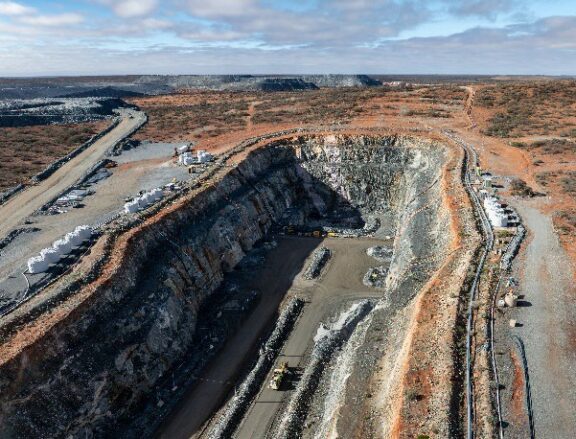
Federal Resources Minister Madeleine King has backed the potential reopening of Tasmania’s Mount Lyell copper mine which has been under care and maintenance since 2014.Mount Lyell, situated near Queenstown on Tasmania’s west coast, began production in 1894 as a copper mine with gold by-products. It is frequently cited as Australia’s oldest continuous mining field with more than $4b worth of metal estimated to be mined from the area.Following two deaths in December 2013, and a third fatality a month later, production was stopped and previous owner Copper Mines of Tasmania (CMT) placed the mine into care and maintenance in 2014.Sibanye-Stillwater acquired the mine in 2021 and recently advised Minister King that the company has completed its feasibility study into best options for re-establishment, with a board decision expected later this year.“The thing about this mine and what is very clear from speaking to Sibanye-Stillwater, is there is a lot in its favour on the reopening: the underground is now in very good shape, a lot of work has been carried out; very, very positive copper and gold prices, a great market, and it's an excellent deposit.” Minister King said in an interview to ABC Hobart Radio.CMT, a wholly owned subsidiary of Sibanye-Stillwater, holds the mining lease for the site including the established infrastructure and underground development.With both gold and copper, reaching record price highs in February 2026, and increased need for copper in establishing Australia’s clean energy future, Minister King has indicated the Federal Government is supportive and willing to assist in restart efforts.“I'll make sure I follow up my department on how we can assist if we need to assist” she said.“They've got plans for the site, but they do have to make sure they get that board approval.“And I'll be getting my department and myself and my office to put our shoulder to the wheel to make sure we can do whatever we can to make sure that happens.”
Back to of the page