Category: Technology & Innovation

Mineral Resources (ASX: MIN) and Curtin University have advanced research into environmental DNA (eDNA) monitoring, building on their three-year collaboration to demonstrate the technology’s potential to support biodiversity surveying in remote and sensitive environments.
NewsTechnology & Innovation
MinRes and Curtin advance eDNA research for biodiversity monitoring
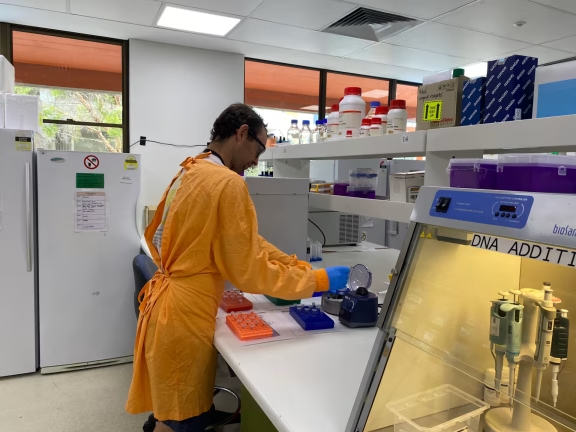
Mineral Resources (ASX: MIN) and Curtin University have advanced research into environmental DNA (eDNA) monitoring, building on their three-year collaboration to demonstrate the technology’s potential to support biodiversity surveying in remote and sensitive environments. The program explored how eDNA could complement traditional survey methods by providing a faster, scalable and potentially less intrusive way to monitor ecosystems, particularly for species that are difficult to identify or detect. MinRes biodiversity principal Adam Cross says the research offers an opportunity to improve how environmental data is collected across challenging landscapes. “Every organism leaves behind traces of its presence in shed DNA in the form of faeces, hair, scales, pollen and other materials” he said. “Collecting samples from different parts of an ecosystem such as soil, water, leaves, animal scats and cobwebs, eDNA analysis can give a rapid and powerful snapshot of which species are present in an area.” The collaboration comprised five research projects, including development of monitoring guidelines, testing spiderwebs as natural DNA traps, comparing different sample types and conducting an airborne eDNA transect spanning more than 1000km from Perth to Cocklebiddy in WA.  Curtin Research associate Joshua Newton said the work scaled from novel sample methods through to the largest terrestrial eDNA survey to date.  “This collaboration with MinRes has allowed us to rigorously test environmental DNA-based biodiversity assessment in terrestrial environments” he said.  “The hope is that this type of research helps bring biodiversity monitoring into a space where it is faster, more scalable and genuinely useful for both science and industry decision-making.” The research found eDNA has practical applications for real-world monitoring while also underscoring the importance of careful sampling and processing methods to ensure robust and repeatable results. According to MinRes, the work represents a step toward more adaptable biodiversity monitoring, while supporting environmental management and compliance across operations.   
MCA pushes for $13m AI trial proposal
NewsTechnology & Innovation
MCA pushes for $13m AI trial proposal
The Minerals Council of Australia (MCA) has asked the Federal Government to fund a three-year pilot program to embed AI into environmental regulatory decision-making.The pilot would trial AI support for human decision-making to improve the transparency and accuracy of assessment and approvals under the Environment Protection and Biodiversity (EPBC) Act.Approval delays remain a key concern for the mining industry and regulatory bodies.According to the MCA, an increase in average decision times for resources projects of 60% from 2.3 years in 2019 to 3.8 years in 2025 is creating uncertainty, costing the Australian economy billions and eroding investor confidence.The MCA says AI tools, such as an interactive submissions coach for project proponents, a pre-submission quality check, geospatial data integration and tracking and a risk comparison capability, would reduce proponent errors in applications, eliminate duplication and support faster, better-informed decisions.The proposed pilot would aim to reduce inefficient manual document reviews, inconsistent application of conditions and repeated lengthy requests for information with the aim of enabling regulators to focus effort on more complex and high-risk approvals.The first solution is estimated to take about 12-20 weeks, and the total program development across the four solutions is estimated to take 6-12 months.The MCA says a smaller amount of ongoing capital investment will enable continuous improvement and system evolution.MCA chief executive Tania Constable says embedding AI in approvals can position Australia as a global leader in sustainable development and in responsible innovation using the minerals sector’s extensive use of AI in current operations and understanding of EPBC processes.“We know that EPBC delays and uncertainty can result in millions of dollars in lost project value, duplication of costs and missed investment opportunities which negatively affects communities and the Australian economy as well as project proponents,” she said.“This approach would help government deliver modern, efficient environmental regulation while meeting environmental objectives.”The use of AI-enabled tools in the mining industry, from machine learning, predictive analysis, autonomous haulage systems to safety monitoring and decision making, is becoming increasingly commonplace.The NSW Government has an AI solution to review building permit applications as part of the State significant development process, automate compliance checks and accelerate assessmentsIn the mining-intensive Canadian province of British Columbia, Mining Digital Services built an AI-powered searchable library that extracts and verifies permit conditions from documents, reducing reliance on institutional knowledge and enabling faster compliance reportingDeveloped by Pacific Northwest National Laboratory in the US, PermitAI is being developed to support environmental reviews by searching prior assessment and assist document drafting.Though these ongoing advancements are creating new opportunities, implementing AI is not without risk. According to S&P Global, primary concerns include data security and overreliance on empirical and modelled data alongside a series of ethical dilemmas.The growth of AI infrastructure also raises questions about electricity demand and water use, particularly as data centre investment accelerates.In 2024, data centres accounted for about 1.5% of global electricity consumption, according to the IEA.The IEA projects that data centre electricity consumption may grow by about 15% per year until 2030, more than four times faster than the growth of total electricity consumption from all other sectors.Global investment in data centres is accelerating and, though the IEA projects the US, China and Europe will remain the largest data centre regions, Australia is well-placed to become a global leader.This week, the Federal Government released a series of expectations for data centres and AI infrastructure developers as part of its commitment under the national AI plan, stressing that data centre expansion must happen on terms that benefit the community and supports national interest.The expectations are designed to ensure data centre developments put the needs of the Australian people first, ensuring communities benefit directly through jobs, investment in skills and innovation while supporting the clean energy transition and safeguarding long-term water security.Federal Climate Change and Energy Minister Chris Bowen says it is no surprise Australia is an attractive investment destination for data centre technology.“Data centres have great potential to support our grid and expand new renewable investment, but it’s important we work together across jurisdictions and with industry to get the investment settings right so that we can continue to keep our system secure and energy prices low for all consumers,” he said.The Federal government’s five expectations are that the developments will:Prioritise national interest Support the energy transition Use water sustainably and responsibly Invest in local skills and jobs Strengthen research, innovation and local capabilityThe Federal Government will prioritise proposals most closely aligned with the overarching national expectations which will work alongside existing laws and help guide local decisions in each state and territory.

Metso expands lifecycle services model
NewsTechnology & Innovation
Metso expands lifecycle services model
Metso has reported increased demand in its Life Cycle Services (LCS) offering for pumps as mining operators shift towards long-term service-based equipment models. Following the model’s introduction in 2025, the company has secured several small- and mid-sized multiyear contracts across Europe, Asia Pacific and the Americas.  In February, Metso also signed two five-year agreements covering the servicing of more than 100 slurry pumps for mining customers.  The aggregate value of the combined orders has not been?disclosed. LCS for pumps is Metso’s performance-based service model designed to improve equipment availability, extend component wear life and reduce total cost of ownership through long-term service agreements. Metso pump services vice president Roshan Kadanthode says the model reflects a broader shift in the mining sector away from transactional equipment purchases and towards lifecycle-focused service partnerships.   “Our customers want a partner who supports them throughout?the full lifecycle of their pumps,” he said.  “With LCS, we bring a?performance-based approach aligned with their operational and financial?targets, helping customers reduce downtime, improve efficiency, enhance safety, and secure reliable pumping performance?year-round.”? The company reports that the service model has measurable operational improvements include a 5-10% increase in pump availability and 15-25% extension in component wear life. Standardised maintenance practices and improved planning have also been associated with a 20-30% reduction in unplanned pump-related downtime.  Furthermore, improvements in energy and water efficiency were reported between 5-10%, alongside enhanced safety outcomes linked to a reduction in maintenance interventions and standardised servicing procedures.  Metso says its global service network — covering equipment delivery, repair, testing and recycling — underpins the rollout of the lifecycle service model across key mining regions. 
Australian scientists lead quantum battery breakthrough
NewsTechnology & Innovation
Australian scientists lead quantum battery breakthrough
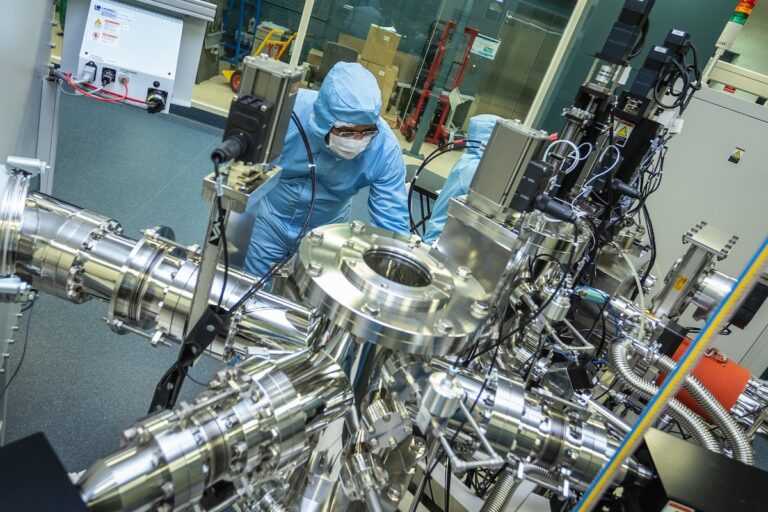
Australian scientists have made a significant leap forward in energy storage technology with the world’s first proof-of-concept quantum battery.Led by CSIRO and collaborators from RMIT University and the University of Melbourne, researchers developed a new quantum battery architecture that enables, for the first time, a complete quantum battery charge-discharge cycle.The results provide the first experimental demonstration of superextensive light-to-charge conversion in steady-state, highlighting the feasibility of leveraging strong light–matter coupling for enhanced energy harvesting under low-light conditions.Though fully functioning quantum batteries don’t yet exist, researchers are confident they could transform how society uses and stores energy in the future.Quantum batteries leverage the unique properties of quantum mechanics, such as superposition and entanglement, whereas today’s batteries largely rely on chemical reactions, CSIRO says.CSIRO quantum science and technologies science leader Dr James Quach says the team’s findings confirm a fundamental quantum effect that's completely counterintuitive — quantum batteries charge faster as they get larger."The research validates the exciting potential of quantum batteries for unprecedented efficient and rapid energy storage,” he said.“My ultimate ambition is a future where we can charge electric cars much faster than fuel petrol cars, or charge devices over long distances wirelessly.”Until now, the study of quantum batteries has been predominantly a theoretical endeavour with scarce experimental verification.As the first experimental demonstration of a full operational cycle of a quantum battery, the CSIRO researchers’ device represents a decisive step forward in the development of quantum battery technologies.The battery the researchers engineered has a multi-layered organic microcavity and is wirelessly charged with a laser. The protypes charging behaviour was confirmed by using advanced spectroscopy techniques which showed it retained stored energy for six orders of magnitude longer than it took to charge.This research proves key predictions about these revolutionary devices and offers a glimpse into a possible future powered by quantum energy storage."Our proof-of-concept device showcases rapid, scalable charging and energy storage at room temperature, laying the groundwork for next-gen energy solutions," Dr Quach said."While there's still much work to be done in quantum battery research, we've made an important move towards realising the possibilities.“The next step for quantum batteries right now is extending their energy storage time. If we can overcome that hurdle, we’d be that bit closer to commercially viable quantum batteries."
Monash research flags overlooked step in battery recycling
NewsTechnology & Innovation
Monash research flags overlooked step in battery recycling
New research from Monash University has identified the pre-treatment stage of lithium-ion battery recycling as a significant contributor to both environmental impact and material recovery efficiency.  The study published in Nature Sustainability found that pre-treatment can account for 16-38% of the environmental impact of lithium-ion battery recycling, accounting for significant material losses, with outcomes varying by battery type and processing route.  Pre-treatment is the first processing step that producing “black mass” from which valuable materials such as lithium, nickel and cobalt can be extracted. The study suggests that this step is often overlooked in recycling strategies.  The study by the Department of Civil and Environmental Engineering compared three main industrial approaches — mechanical, thermal and chemical pre-treatments — for environmental performance, recovery efficiency and operational complexity.  Department of Civil and Environmental Engineering deputy head and Professor Victor Chang says the findings indicate that decisions made during the early stages of recycling can influence both system efficiency and long-term resource recovery.  “Our work highlights an important aspect of the process — the pre-treatment stage. This step is often overlooked, but it can be critical in determining the efficiency, safety, and overall effectiveness of downstream recycling processes” he said.  According to Monash University, the findings could act as critical guidance for policymakers and industry as countries build new battery systems.  Professor Chang says lithium-ion battery recycling is not just a technical challenge but a system design challenge.  “While many countries are planning to invest in and scale up battery recycling industries, our work highlights an important aspect of the process” he said.  “Pre-treatment shapes both recovery efficiency and environmental outcomes. Decisions made at this stage will affect system performance for decades, so it’s vital that they are guided by robust evidence.” 
Agricultural waste emerges as a viable coal substitute in steelmaking
NewsTechnology & Innovation
Agricultural waste emerges as a viable coal substitute in steelmaking
Researchers from CSIRO and the Indian Institute of Science (IISc) have successfully demonstrated a viable approach to reduce emissions from steelmaking by partially replacing coal with agricultural waste.The breakthrough offers a scalable pathway to commercial use and cutting emissions in one of the world’s fastest growing industrial economies, marking a major advance in efforts to decarbonise iron and steelmaking.Using locally sourced rice husk pellets, the CSIRO team validated sustained production of biomass-derived synthesis gas for iron ore reduction at a large-scale commercial steelworks in India.The trial was completed in partnership with commercial steel innovator RESCONS Solutions.India’s steel sector is the fastest-growing globally, projected to double its capacity to 300mt by 2030 and reach 500mt by 2047. This rapid expansion poses a major challenge for global emissions, with India’s steel production emitting an average of 2.55t of carbon dioxide per tonne of steel — well above the global average of 1.85-1.92t, according to World Steel.The sector is responsible for about 12% of India’s total emissions.To address these challenges, the Indian Ministry of Steel has outlined a roadmap to achieve net zero emissions by 2070, including strategies such as transitioning to electric arc furnaces, increasing scrap use, carbon capture and storage, green hydrogen and using biomass as a replacement for coal.Leveraging India’s abundant agricultural waste, the CSIRO-led team, with funding from the Federal Government’s India-Australia green steel research partnership, conducted a full-scale trial at Jindal Steel in Odisha. The team successfully blended 5% and 10% rice husk pellets into Jindal Steel gasifiers, achieving sustained syngas production with no loss of performance.CSIRO senior experimental scientist Warren Flentje says the trial is a world-first demonstration of how agricultural waste can be harnessed to decarbonise steelmaking at scale.“By blending rice husk pellets into commercial gasifiers, we’ve shown that biomass can replace coal without compromising performance,” he said.“This is a major step forward for sustainable steel production in India and globally.”If adopted across India, the process could reduce steel sector emissions by up to 50% totalling about 357mtpa of carbon dioxide.Building on this success, the team will expand their work to include smaller-scale regional steelmaking facilities and a wider range of biomass sources, including integrated systems that produce both food and steel feed.Jindal Steel executive director Damodar Mittal says the collaboration marks a pivotal moment in India’s journey towards decarbonisation.“By integrating green energy and biomass into our production processes, we are not only reducing our carbon footprint but also setting a new benchmark for the Indian steel industry,” he said.Air quality is a major health issue in India, with more than 30,000 deaths annually linked to poor air quality, with much of it caused by in-field burning of crop residues.This pioneering work by CSIRO and its Indian partners could fast-track the adoption of biomass for steelmaking, delivering major emissions reductions, improving air quality and supporting regional economic development in India.CSIRO green metals production research group leader Keith Vining says the trial has demonstrated that biomass can be a viable alternative to coal, especially in regional areas where surplus agri-waste and coal DRI facilities co-exist.“The next phase will focus on increasing biomass replacement rates and assessing impacts on the direct reduction process,” he said.
(Image source: MOVUS) Founded in 2015, MOVUS partners with decision-makers in complex industrial environments to transform asset and operational data into clear, practical actions.
NewsTechnology & Innovation
MOVUS appoints new CEO to drive industrial AI growth
Brisbane-based industrial technology company MOVUS has appointed Sanjeev Kumar as chief executive officer to lead the company’s next phase of growth in asset reliability and industrial AI innovation.Mr Kumar succeeds Malcolm Schulstad, who will transition back to his role as chief operating officer.The appointment follows Infinite Uptime’s acquisition of MOVUS in August 2025. Mr Kumar joins MOVUS from parent company Infinite Uptime, where he most recently served as vice president and business head for ANZ, leading regional expansion across heavy industry sectors.MOVUS says Kumar’s experience scaling industrial AI across mining, energy, manufacturing and ports would support the company’s continued expansion into asset-intensive industries across the region.“MOVUS has built a strong reputation for turning industrial data into practical operational decisions,” Mr Kumar said.“Through PlantOS, we enable heavy industries to move closer to near-continuous operational uptime by combining advanced sensing technology, AI-driven analytics and human expertise.“Prescriptive AI represents the next evolution of maintenance strategy. By aligning maintenance activity with production priorities, organisations can move beyond reactive or scheduled maintenance toward real-time, outcome-driven decision-making.”Mr Kumar is slated to attend Total Plant Maintenance in Melbourne from March 16–18, where he will present a session titled Prescriptive AI for Plant Operations: Maximising Throughput and Efficiency.His session will examine why predictive maintenance can fall short in day-to-day operations and how prescriptive approaches can improve throughput, reduce risk and support sustainability outcomes.
(Image source: Fortescue) Fortescue has also been expanding its electric mining equipment, with one electric drill and 12 electric excavators now operational across multiple sites in the Pilbara.
NewsTechnology & Innovation
Fortescue moves to ditch diesel on Pilbara rail
Fortescue (ASX: FMG) has commenced commissioning of two new battery electric locomotives on its rail network as it moves to decarbonise its Pilbara iron ore operations.Delivered by Progress Rail, the battery electric locomotives will eliminate about one million litres of diesel each year all together, according to Fortescue.They house the world’s largest land-mobile batteries, with a capacity of 14.5MWh each and can recover 40–60% of energy through regenerative braking.The locomotives will operate on renewable power delivered via Fortescue’s Pilbara Energy Connect program.Fortescue metals and operations chief executive Dino Otranto comments on the milestone.“Real Zero is about transforming the way we power our assets, move our materials and run our operations, not offsetting emissions but eliminating them,” he said.“Decarbonising our rail network is a critical part of that task and the commissioning of these battery electric locomotives demonstrates that heavy-haul rail can operate reliably without fossil fuels.“For a mining operation of this scale, decarbonisation only works if renewable energy is firm, reliable and available 24/7. That’s why we’re building an integrated system combining large-scale solar and wind generation, battery storage and transmission infrastructure.“Through Pilbara Energy Connect, we’ve already constructed more than 480km of high-voltage transmission lines, physically linking our energy assets to our operations and rail network. This infrastructure enables renewable power to replace diesel and gas, in real time, across the Pilbara.”At North Star Junction, Fortescue already operates a 100MW solar farm, which will be supported by a recently installed 250MWh battery energy storage system (BESS) capable of delivering up to 50MW of power for five hours.The system plays a critical role in stabilising renewable supply for Fortescue’s operations.Construction is also progressing at Fortescue’s 190MW Cloudbreak solar farm, which is around two thirds complete.Fortescue has also received all primary approvals for the up to 644MW Turner River solar farm, with construction anticipated to commence later this year, while a 440MW solar farm at Solomon remains in the near-term pipeline.Fortescue growth and energy chief executive Gus Pichot says battery storage is the backbone of a renewable-powered mining system.“By integrating Fortescue Zero’s Elysia battery intelligence and management software, we’re able to optimise performance, extend battery life and intelligently balance energy across the network in real time,” he said.“This technology ensures the right power is available at the right time – whether that’s supporting rail operations, smoothing solar output or maximising the value of stored energy.”Fortescue is aiming to eliminate Scope 1 and 2 emissions from its Australian terrestrial iron ore operations by the end of 2030.
onslow
NewsProjects & OperationsTechnology & Innovation
Onslow Iron transitions to gas
Onslow Iron transitions to gasOperations at the Port of Ashburton, a critical link in Mineral Resources’ (ASX: MIN) Onslow Iron supply chain, are now running entirely on natural gas.The complete transition from diesel to natural gas for port operations will reduce greenhouse gas emissions whilst streamlining operations through the removal of extensive diesel logistics and handling, according to the miner.The change will result in displacing about 60 million litres of diesel every year for power generation at the port.Site infrastructure includes a 14MW gas-fired power station which is now connected to the Wheatstone Ashburton West Gas Pipeline.MinRes power station operations manager Gary Stevens comments on the milestone.“The introduction of a gas-fired power station at the port represents a major step towards delivering cleaner and more sustainable mining and export infrastructure,” he said.“Bringing something of this scale together and operational is a huge piece of work and couldn’t be done without the team’s dedication, diligence and expertise.”The Port of Ashburton, located about 150km from Ken’s Bore mine site in West Pilbara, plays a critical role at Onslow as it is where iron ore is loaded onto purpose-built 20,000t transhippers for transfer to bulk carriers offshore.MinRes general operations and development manager Rowan Hill commented on the company’s commitment to investing into greener technologies.“We consider clean energy critical to the sustainability of our industry and the communities where we operate,” he said.“We’re continually exploring ways to reduce emissions across our operations and by connecting the port to the gas lateral, we’re reducing our diesel consumption and taking another positive step towards more cost-effective and cleaner operations.”
Back to of the page