Category: Politics & Regulation

Global energy crisis now ‘largest in history’
NewsPolitics & Regulation
Global energy crisis now ‘largest in history’
Long gone are the days of sub dollar prices at the bowser.The global oil market is experiencing unprecedented turmoil as the war in the Middle East creates the largest supply disruption in the history of the global oil market, according to the International Energy Agency (IEA).The crisis has led to a near halt in tanker movements through the Strait of Hormuz, a critical oil transit chokepoint between Oman and Iran. As crude and oil product flows plunge from about 20mb/d before the war to a trickle at present, Gulf countries have cut total oil production by at least 10mb/d, according to IEA data.With limited options to bypass the chokepoint, the strain is being felt by producers and consumers worldwide.Benchmark crude oil prices have surged about 40% since the start of the conflict, according to Trading Economics.Damage to Gulf state energy infrastructure is also having a major effect on prices.On March 19, Israel targeted Iranian facilities linked to South Pars, the world’s largest natural gas field.In response, Iran struck a major LNG site in Qatar, causing crude prices to surge 8% overnight with prices nearly hitting US$120 a barrel.In the absence of a rapid resumption of shipping flows and unrestricted refining capacity, the IEA anticipates increasing supply losses.CommBank commodities and sustainable economics head Vivek Dhar says while rising crude prices have captured global attention, refined fuel is the bigger concern for economies.“The product everyone is worried about is diesel, and for good reason,” Mr Dhar said.Diesel is used extensively in trucking, farming and mining in Australia.“The concern is that we roughly have 30 days of stockpiles,” Mr Dhar said.As petrol and diesel prices skyrocket, governments globally are scrambling to stave off panic buying and price gouging as they address fuel shortages.According to the Australian Consumer and Competition Commission (ACCC), petrol and diesel prices varied significantly across Australia but, on average, have increased by about 50 cents since the beginning of March.Yesterday, Prime Minister Anthony Albanese convened a meeting of the national cabinet and established a national fuel supply taskforce to lead the country’s response to the ongoing crisis.“I want to assure Australians at this time that Australia is well prepared… I want us to be overprepared,” Prime Minister Albanese said.Leaders agreed that while Australia is well prepared, the longer the conflict in the Middle East goes on, the more significant the impact will be for global supply chains, fuel prices and the wider economy.The Federal Government has appointed former Australian Energy Regulator chief executive Anthea Harris as the taskforce coordinator to drive collaboration across governments and sectors.As part of Ms Harris’ role, she will provide regular updates on fuel supply outlook and distribution.The Federal Government confirmed there are some shortages in specific areas due to panic buying.“There is not less fuel in Australia today than there was three weeks ago,” prime Minister Albanese said.“There is not less supply. This is an issue… of increased demand.”Since the conflict commenced two weeks ago the Federal Government has released up to 20% of its diesel and fuel reserves to help address regional shortages and temporarily amended national fuel standards to keep more Australian-made fuels onshore.IEA member countries have also agreed to release an unprecedented 400m barrels of oil from their emergency reserves to the market to mitigate the negative impact on economies from the supply disruptions.Though the emergency stock release provides a welcomed buffer for the global energy market, it remains a stop-gap measure if the conflict in the Middle East is not resolved.
The issue comes as fuel prices have become more economically sensitive, with the Reserve Bank of Australia raising the cash rate to 4.10% on March 17.
NewsPolitics & Regulation
Fuel shortages force WA miner to halt operations
Continuing fuel supply constraints tied to the war in Iran are impacting Australia’s exploration and mining sector, with smaller operators now halting operations.Blue Cap Mining has halted gold mining operations and sent workers home in WA due to a lack of guaranteed fuel supply, according to the Association of Mining and Exploration Companies (AMEC).According to Australian Bureau of Statistics (ABS) data, mining accounted for 35% of diesel used in Australia during FY24.AMEC says that although reports from across the country indicate that fuel continues to enter Australia, disruptions within the domestic supply chain are preventing it from reaching the customers who need it most.“We keep being told there is enough fuel supplies to meet demand, it just needs to get to the right places,” AMEC chief executive Warren Pearce said.“Well, right now, that simply isn’t happening.“Case in point is Blue Cap Mining, who this week chose to halt gold mining operations and send workers home in WA, due to the lack of guaranteed fuel supply.“It’s the small mining operations and mining services companies, that like farmers, rely on fuel provision from independent fuel companies, that are bearing the brunt of fuel shortages.”The Australian Mining Review has reached out to Blue Cap Mining for comment.On March 3, Federal Climate Change and Energy Minister Chris Bowen moved to reassure the public, saying Australia was “currently in excess of the minimum stock obligations” for petrol, diesel and jet fuel.At the time, Minister Bowen said Australia had 36 days’ worth of petrol, 34 days’ worth of diesel and 32 days’ worth of jet fuel on hand at present.The latest weekly figures — for stocks held on March 10 and released in the first weekly update on March 14 — showed 37 days of petrol, 30 days of diesel and 29 days of jet fuel at a normal rate of consumption.Following this, the Federal Government temporarily relaxed Australia’s fuel quality standards, allowing higher-sulfur petrol to be supplied for 60 days to ease regional shortages.Minister Bowen said the move would add about 100 million litres a month of new domestic petrol supply that would otherwise have been exported to be blended.There have been reports that major fuel wholesalers have been rationing supply to independent operators servicing regional and remote areas.AMEC says it is the major fuel wholesalers, such as BP, Chevron, Mobil and Viva Energy, who control the flow of fuel to independent distributors and ensure established supply chains remain functional.“From what our members are telling us, there is a serious disconnect between these wholesalers and the independent distributors,” Mr Pearce said.“Independent operators know where the fuel needs to go, but they’ve been rationed down by the wholesalers.“We need to see the fuel wholesalers re-engage with independent operators and make sure the system that has worked flawlessly year on year for us, continues to work.”The Federal Government temporarily released up to 20% of the baseline Minimum Stockholding Obligation, making up to 762 million litres of petrol and diesel available to help ease fuel shortages in regional Australia.Fuel companies will only be allowed to relax their storage obligations if they are taking steps to prioritise supply to regional customers, allocate reasonable additional supply to bulk customers and are providing volumes needed to help meet usual demand — not to customers seeking to profiteer from price spikes, panic purchasing or stockpiling.
Canada and Australia deepen critical minerals ties
NewsPolitics & Regulation
Canada and Australia deepen critical minerals ties
Australia and Canada have signed a series of agreements regarding critical minerals, one of which grants Australia membership to the G7 minerals alliance.This week, Canadian Prime Minister Mark Carney met with Prime Minister Anthony Albanese, marking the first bilateral visit of a Canadian Prime Minister to Australia in nearly two decades, and outlined a series of partnerships between the nations in investment, defence and security, critical minerals, energy and artificial intelligence.Noting Australia and Canada’s combined strengths as major global critical minerals producers, both leaders committed to working more purposefully in partnership to advance mutual interests and build dynamic global critical minerals supply chains.The countries also committed to pursuing common positions on key critical minerals issues and to collaborate on shaping emerging markets in ways that reflect shared commitment to fair and open trade as well as high environmental and labour standards.This builds on the joint declaration of intent on critical minerals cooperation, signed by both countries in November last year, designed to strengthen supply chain resilience.During the visit, Canada welcomed Australia into the Critical Minerals Production Alliance — an initiative launched under Canada’s G7 presidency in 2025 to expand critical minerals production and processing capacity and diversify supply chains from mine to market.“We're looking forward to learning from … cooperating in strategic areas, such as critical minerals and financial services, where we are quiet powerhouses in and of ourselves,” Prime Minister Carney said.As part of the agreements, both nations will develop a Canada-Australia mining skills exchange pilot, in collaboration with industry stakeholders, academic institutions and government partners to address skills and labour shortages and ensure allied ability to expand critical minerals production.Minerals Council Australia chief executive Tania Constable says the agreements mark a new era in Australia and Canada’s enduring partnership.“We have a long history of prosperity for our people and communities being generated by a range of minerals, including traditional resources and most recently the addition of critical minerals that power the world and make modern life possible including telecommunications, health and defence,” she said.Recognising the significant security challenges associated with increasing geopolitical issues, Canada and Australia also agreed to enhance defence and security cooperation, including through the establishment of a biennial defence ministers’ meeting.“Our two nations share values. We share common interests as well,” Prime Minister Albanese said.“ shared ambition for Australia and Canada to do more together, at a deeper level. To build on our shared strengths, from our resources and critical minerals to defence technology.”
US and Israeli strikes began on February 28, with retaliatory attacks from Iran soon following.
NewsPolitics & Regulation
Hormuz disruption risks putting Australia in dire straits as fuel costs surge
Not a single oil tanker passed through the Strait of Hormuz on March 3, maritime monitors said, as the key oil and LNG chokepoint remained effectively closed amid escalating conflict between the US, Israel and Iran.In 2024, the Strait of Hormuz normally saw about 20 million barrels per day, the equivalent of about 20% of global petroleum liquids consumption. The historical daily average for all vessels through the strait is about 138 ships, according to the Joint Maritime Information Centre (JMIC).At least four vessels in or near the strait have been struck since the conflict began with continued threats reportedly coming from Iran adding to the fear and uncertainty effectively keeping the strait shuttered for the foreseeable future.Asia is likely to see the biggest hit from supply disruptions at Hormuz, with Australia following as a result of its reliance.According to the EIA, 84% of the crude oil and condensate and 83% of the liquefied natural gas that moved through the Strait of Hormuz went to Asian markets in 2024.Although a significant bulk commodity exporter to Asia, Australia is a price-taker when it comes to refined oil products.Australia only has two refineries remaining which only supply around 20% of Australia’s liquid fuel demand, leaving the country heavily exposed to import availability from Asia.Federal Climate Change and Energy Minister Chris Bowen has moved to reassure the public not to panic, saying the country is “currently in excess of the minimum stock obligations” for petrol, diesel and jet fuel.But those minimum stock obligations, instituted in 2023, are measured in days.Minister Bowen says Australia has 36 days’ worth of petrol, 34 days’ worth of diesel and 32 days’ worth of jet fuel on hand at present.“That's in addition to the petrol and diesel that's in service stations sitting in tanks around the country as we speak and, of course, the petrol that's already in cars,” he said.“That is just the reserve that is kept for these circumstances.”The International Energy Agency (IEA) requires member countries to hold emergency oil stocks equivalent to at least 90 days of net imports.Although Australia is well-below this threshold, the government argues its domestic Minimum Stockholding Obligation is designed around domestic fuel security rather than securing stock to sell or release to the global market in case of supply disruptions.Minister Bowen says Australia’s major refining companies have informed the government that they have confidence in the oil supplies through to May with contracts in place which they expect to be honoured and delivered.Although there is clarity around how long Australia’s access to oil is secured for, the very real issue of price remains.“Look, there will be pressures,” Minister Bowen said.“The biggest impact on petrol prices in Australia will always be oil prices, and oil price will come under pressure. But for those Australians who are concerned about our supply of oil and petrol, I'm pleased to say that we are in good shape.”Beyond the consumer’s shock at the pump — or even before, with queues potentially extending for kilometres — the mining industry’s financials could also take a hit.The mining industry is largely exposed to diesel prices for haulage and mobile equipment, which continues to be one of the hardest-to-abate inputs across the sector.According to the Institute for Energy Economics and Financial Analysis (IEEFA) one ultra class haul truck can use about 1 million litres of diesel in a year.Nationally, fuel combustion emissions in mining have doubled since FY11 to 21.8mt in FY23, growing at a steady rate of 6.8% per year, according to the IEEFA.If the prices of such a significant input rise due to shortages or uncertainty, operating costs at mining operations across the country could take a hit.Industry and government are well aware of the risks of this exposure. The Fuel Tax Credit (FTC) Scheme rebates the full federal fuel tax (51.6 cents/litre as of August 2025) on imported diesel used off-road in industry.According to Climate Energy Finance (CEF), mining accounts for the majority of the credits with $57.5b to August 2025, projected to exceed $84b by 2030.Based on CEF analysis, the top 15 consumers of diesel in Australia consumed almost 6 billion litres of diesel with the weighted-average fuel excise rate of 49 cents per litre providing over $2.9bn in forgone taxation over FY24.The largest beneficiaries included BHP (ASX: BHP) ($627m rebate), Rio Tinto (ASX: RIO) ($416m rebate) and Glencore ($364m rebate).Looking back at the haul truck example, the IEEFA calculates that the value of the diesel rebate over the truck’s 15-year lifespan is equal to the total purchase of the truck, meaning that the rebate effectively could pay for a truck’s worth of diesel over its life and, at scale, materially offset fleet operating costs across a mine.The strategic dilemma already facing the mining industry becomes even more prickly with the added geopolitical uncertainty.The largely touted, long-term solution is to reduce diesel dependence through electrification or alternative fuels. But in the short term, tax credits remain a more readily available pressure release for miners.Although the FTC has proven successful in softening fuel costs for industry, we have yet to see if it can prevent larger forces such as a war-linked price spike from hitting the industry’s costs.Beyond diesel, Federal Resources Minister Madeleine King has warned of impacts to Australia’s supply of urea, a type of nitrogen fertiliser.Minister King says Australia is quite dependent on imports from around the world of urea, with much of that coming through the Strait of Hormuz. “Using liquid natural gas from offshore WA, it goes into the production of urea at the Perdaman project,” she said.“This is a $6b project in north WA. It is one of the largest manufacturing projects this country has ever undertaken.“The investment that our government has put into it is also of historic proportions. And that is to make sure we have that resilience for the production of urea which goes into fertiliser.”The project is supported by the Northern Australia Infrastructure Fund, with Minister King saying the package totals more than $300m, including $220m directed to Perdaman.Minister King says it is expected that about half of the urea produced by the project would remain in Australia, with the rest set for export.
The Wheatstone Marine Terminal (WMT) services the Wheatstone LNG Plant and is part of the Port of Ashburton.
NewsPolitics & Regulation
MinRes claims Pilbara Ports fee designed to reimburse Chevron
The WA Supreme Court has ordered Pilbara Ports to hand over further internal and contract documents in its ongoing dispute with Mineral Resources (ASX: MIN) over a Port of Ashburton “Channel Charge”.The port authority admits it levied the Channel Charge as a pass-through of the amount it is required to pay Chevron for access to the Port of Ashburton LNG shipping channel under arrangements linked to Chevron’s Wheatstone project.Pilbara Ports says it invoiced MinRes for the Channel Charge and MinRes refused to pay, prompting the court action.In the discovery ruling, the court ordered Pilbara Ports to produce additional board and executive materials concerning proposals and decisions to levy the Channel Charge, as well as specified agreements linked to the port arrangements and Port of Ashburton financial documents.Pilbara Ports says the Channel Charge is a “port charge”, characterising it as a charge for port services, an access charge or a port due. The matter is listed for a three-day trial commencing April 28, with the heart of the dispute being whether the charge is a valid port charge, which MinRes denies along with any liability for the invoices.MinRes has challenged the charge on multiple grounds, including that Pilbara Ports did not have the power to impose it, that it is not a port charge, that it was not made in accordance with prudent commercial principles and that it exceeds channel or port-services costs.MinRes also alleges the charge was imposed for an improper purpose, to reimburse Chevron and recover those amounts from MinRes.
AREEA calls for workplace law modernisation
NewsPolitics & Regulation
AREEA calls for workplace law modernisation
The Australian Resources and Energy Employer Association (AREEA) is lobbying for the revision of structural flaws as part of the Federal Government’s national employment standards (NES) review.As part of a submission to the House of Representatives Inquiry, AREEA calls on the Federal Government to use the NES review to fix Australia’s workplace laws, not expand entitlements or add more complexity and business costs, arguing that the central issue is the growing incoherence between the law and modern work practices.AREEA says the most urgent reform area is the application of public holiday provisions in 24/7 and remote workplaces, especially those in Australia’s mining sector.A 2023 Federal Court decision created confusion for employers operating continuous rosters, requiring them to request employees to work public holidays even where long-term roster arrangements already incorporate those days.AREEA chief executive Steve Knott says the NES review must fix what’s broken.“Nearly 17 years after the Fair Work Act was introduced, the system no longer reflects how work is actually performed, particularly in continuous, shift-based and FIFO operations that underpin Australia’s resources and energy sector,” he said.“In remote and offshore environments, employees cannot simply walk off site or down tools on a public holiday.“The law currently assumes a traditional Monday-to-Friday workplace. That is not how Australia’s resources industry and many others operate.”AREEA is calling for clear statutory rules that allow roster-based public holiday notifications for continuous operations, clarify how refusals are assessed in FIFO contexts and prevent double payment where public holidays are already priced into annualised salaries.“This is about restoring common sense and coherence to the safety net, not reducing employee protections,” Mr Knott said.“Our workplace laws must recognise that many employees are already compensated for working an assumed number of public holidays each year.AREEA also warned that prescriptive award-based record-keeping obligations attached to annualised salaries have become a major source of technical non-compliance, even where employees are paid well above award rates.“In many remote operations, highly skilled employees are paid guaranteed annual earnings significantly above minimum standards. Award rates become largely irrelevant,” Mr Knott said.“Yet employers are required to operate parallel time-recording systems solely to satisfy award technicalities that have no impact on pay outcomes.“The system has shifted from protecting employees against underpayment to penalising employers for paperwork defects.”AREEA’s submission also calls for moderation of annualised salary record-keeping rules, safe harbour compliance mechanisms and simplification of reconciliation requirements in 24/7 and roster-based environments.More than 15 years have passed since the Fair Work Act was implemented and over that period, significant changes in industry structure, technology and social expectations have occurred.Modern awards were intended by the Federal Government to supplement the NES, by providing a limited number of additional minimum standards tailored to particular industries and occupations, rather than requiring the NES itself to accommodate all forms of work.In AREEA’s view, this framework has been progressively undermined by judicial interpretation that seeks to shoehorn modern, flexible and salaried work arrangements into rigid NES concepts that were never designed for that purpose“The NES was designed to be clear, simple and enforceable,” Mr Knott said.“Instead, years of court rulings and piecemeal changes to the law have turned it into a source of duplication, uncertainty and litigation risk.“This review is an opportunity to modernise the safety net for modern work. It should not be used to expand regulation without evidence of need.”
Pacific Islands may receive ‘less than a CEO’s annual income’ if deep sea mining goes ahead
NewsPolitics & Regulation
Pacific Islands may receive ‘less than a CEO’s annual income’ if deep sea mining goes ahead
For the US, controlling key resources is now almost indistinguishable from power projection.This has become increasingly noticeable with deep sea mining.Seabed minerals have gained geopolitical importance in recent years as the energy transition drives up critical mineral demand and supply chain concentration raises security concerns around choke points.Countries are seeking to diversify supply chains in numerous ways, from forming progressive bilateral trade frameworks, increasing domestic production investment and now exploring non-terrestrial resources.Rich in polymetallic nodules containing nickel, cobalt, copper and manganese — metals crucial to green energy infrastructure and advanced technologies — the sea floor of the Pacific Ocean is of particular interest to deep sea miners.The Clarion-Clipperton zone (CCZ), an abyssal plain stretching between Hawaii and Mexico, is a hotspot for deep sea mining exploration. The International Seabed Authority (ISA) regulates mineral-related activities in ‘the Area’ — the seabed beyond national jurisdiction — which covers about 54% of the world’s ocean area.Deep sea mining has been controversial from the get-go due to complex and often unclear authority associated with international waters.ISA secretary general Leticia Carvalho says current policy settings allow countries to pursue deep sea mining within their own territorial waters or “exclusive economic zones”.“But, under international law, the deep seabed belongs to no single country or corporation,” she said.“It is our common heritage.”Early last year, US President Donald Trump issued an executive order to advance deep-sea mining that would bypass the ISA in a move that reflects growing unilateralism within the US.Independent choices such as these places tension on already strained relationships that rely on collaboration and multilateral treaties for stability — especially when it comes to complex oceanic issues.The US’ move to fast-track deep-sea mining exacerbates existing tensions, such as those seen in the South China Sea where China and Japan have long disputed claims over territorial waters.Following the US’ move, the National Oceanic and Atmospheric Administration (NOAA) consolidated previously fragmented permitting process to streamline deep sea mining approvals in the US.NOAA’s National Ocean Service also launched a new hydrographic survey project to map and characterise more than 55,000km2 of federal waters — an area abundant in polymetallic nodules rich in nickel, cobalt and rare earth elements — off American Samoa.Under international law, companies cannot mine in international waters without being officially sponsored by the relevant national government. This becomes particularly contentious within Pacific nations as they lie close together but are separately governed, like Samoa which is about only 80km from American Samoa.As a result, deep-sea mining companies see Pacific states as crucial partners to allow access reserved areas of the international seabed. This is potentially problematic as many of these states are considered developing countries and may lack the governance and authority to regulate the use of their territorial waters.New independent research commissioned by Greenpeace International shows that under a scenario where six deep sea mining sites begin operating in the early 2030s, the revenues that states would receive are extraordinarily small. This is in contrast to the mandate of the UN Convention on the Law of the Sea (UNCLOS), which requires mining to be carried out for the benefit of humankind as a whole.The research by legal professor Dr Harvey Mpoto Bombaka and development economist Dr Ben Tippet reveals that, under mechanisms proposed by the ISA profit sharing from deep sea mining, Pacific Island nations would receive about $65,000 per year in the short term, then about $350,000 per year in the medium term, averaging out to about $540,000 per year for 28 years.In contrast, according to the research, mining companies are projected to earn more than $19b per year."What’s described as global benefit-sharing based on equity and intergenerational justice increasingly looks like a framework for managing scarcity that would deliver almost no real benefits to anyone other than the deep sea mining industry,” Dr Mpoto Bombaka said.“The structural limitations of the proposed mechanism would offer little more than symbolic returns to the rest of the world, particularly developing countries lacking technological and financial capacity."Currently, 40 ISA member countries back a moratorium or precautionary pause on deep sea mining. The ISA will meet in March for its first session of the year.
WA growing critical minerals connections
NewsPolitics & Regulation
WA growing critical minerals connections
A delegation of 16 critical minerals companies and WA Government representatives will make their way to Canada and the US in March to strengthen strategic partnerships.Mines and Petroleum Minister David Michael will lead the delegation to highlight WA’s battery, critical minerals and energy sectors and reaffirm WA’s long-standing relationships with Canada and the US.In 2024, Canada was Australia's fourth-largest source of foreign direct investment (FDI), with the stock of Canadian FDI in Australia valued at $84b.The US also remains a major economic partner, ranking as Australia's largest source market for FDI in 2024, valued at $235.3b.Engagement with the US will build on the bilateral framework on critical minerals and rare earths, signed between Australia and the US in October last year, that aims to accelerate priority projects and diversify supply chains.Mines and Petroleum Minister David Michael will lead the delegation to highlight WA’s battery, critical minerals and energy sectors and reaffirm WA’s long-standing relationships with Canada and the US.Across Toronto, New York and Washington DC, Minister Michael will meet with industry, investors and stakeholders, reinforcing WA’s position as a trusted, ethical and reliable supplier of critical minerals, which are essential to the global energy transition, defence and advanced manufacturing capabilities."This visit will strengthen our long-standing relationships with allied partners Canada and the US and support WA companies seeking investment and offtake partners for major critical minerals projects,” Minister Michael said."With both Canada and the US working to diversify supply chains, WA is exceptionally well placed to help meet their needs and to deepen collaboration across our shared economic and strategic priorities."
Alcoa modernises approvals with Federal Government
NewsPolitics & Regulation
Alcoa modernises approvals with Federal Government
Alcoa (ASX: AAI) will further modernise approvals frameworks for its WA mining activities as the Federal Government reforms its Environment Protection and Biodiversity Conservation (EPBC) Act.Alcoa will undertake a strategic assessment of current and potential future mining areas through to 2045, to provide a holistic view of potential impacts to significant flora and fauna over a broad geographic area and provide stakeholders with greater clarity around the long-term future of mining operations.Operations at the Huntly and Willowdale bauxite mines, both located in WA, will continue while the assessment takes place under a national interest exemption (NIE) granted by the Federal Government.The assessment does not impact the ongoing accredited environmental assessment of the future Myara North and Holyoake mine regions of the Huntly mine under both WA and Federal Government environmental legislation.Alcoa will continue to limit annual clearing to 800ha, increase annual rates of new rehabilitation to 1000ha by 2027 and deliver environmental offsets in accordance with the EPBC Act.Late last year, the Federal Government passed the Environment Protection Reform Bill 2025 to streamline decision making and overhaul existing environmental policy.While Alcoa maintains it has operated in accordance with the EPBC Act as it currently stands, it has agreed to pay $55m (US$36) through enforceable undertakings that acknowledge historical clearing. The funding supports the health of the Northern Jarrah Forest, including programs and research that improve habitat for threatened species and control invasive flora and fauna.Alcoa president and chief executive William F Oplinger says Alcoa appreciates the Federal Government’s recognition of the important contributions of its operations to the Australian economy.“We are committed to responsible operations and welcome this important step in transitioning our approvals to a contemporary assessment process that provides increased certainty for our operations and our people into the future,” he said.“We’re proud of our more than 60 years as a leading Australian aluminium producer and the role we are now playing in support of critical minerals production.”Ministerial decisions are expected by the end of 2026 and Alcoa anticipates that mining in these new major regions will commence no earlier than 2029.The Minerals Council of Australia (MCA) has called for rapid finalisation of workable national environmental standards and bilateral assessment and approval accreditation agreements.According to the MCA, finalisation of national environmental standards, accreditation of all states for both assessments and approvals would be a major step forward for Australian mining companies.MCA chief executive Tania Constable says Alcoa’s decision is a strong example of government working together with industry to arrive at an outcome that is pragmatic and economically sensible while still being focused on improving environmental performance.“This outcome will allow Alcoa to undergo a more rigorous method of assessment while guaranteeing operations and thousands of jobs in the local WA community,” she said.“The recent changes to Australia’s environmental laws will have a significant impact on our sector, and many are still working to understand the impact on their operations.“Faster approvals for mines mean we can deliver the critical minerals and other commodities the world needs quicker, responsibly and more efficiently.”
Transforming Mount Isa’s future
NewsPolitics & Regulation
Transforming Mount Isa’s future
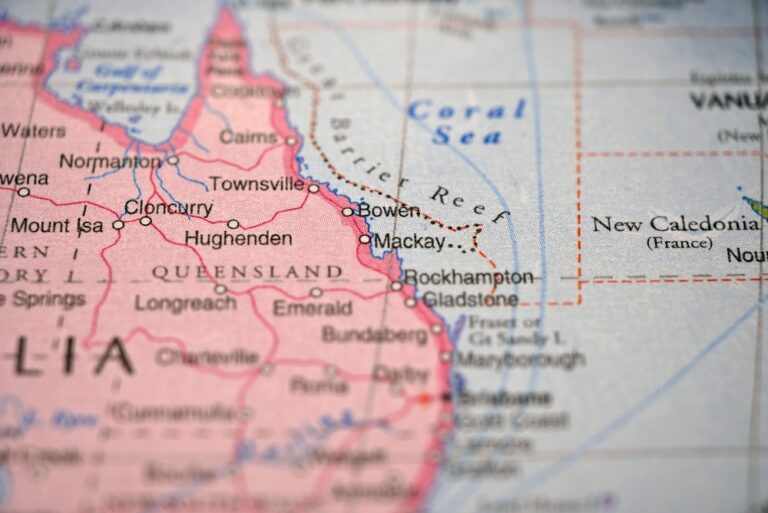
The Queensland Government has opened expressions of interest (EOI) for its Mount Isa transformation study to assess future pathways for Queensland’s north-west region.The study will examine long-term industrial capability, market conditions and broader opportunities for workers, communities and regional economies across the full copper value chain throughout the north-west minerals province (NWMP) and the associated smelter and refinery.Completion of the study is a key milestone under the joint government support package for the Mount Isa copper smelter and Townsville copper refinery which provides capital investment into Glencore’s copper processing facilities.Importantly, local working families, businesses, councils and community members will have opportunities to provide input during the process.Federal Industry, Innovation and Science Minister Tim Ayres says the study is about securing a strong, long-term future for the Mount Isa region by taking a clear, end-to-end look at the region’s copper value chain and industrial capability.“My simple message to Mount Isa is — we’ve got your back,” he said.“By assessing the full copper value chain across the region, from the smelter and refinery through to supply chains and emerging opportunities, this work will help inform sound government and industry decisions beyond the current support period.“The Government will always stand up for Australian workers and manufacturing, and will ensure Mount Isa workers, businesses, councils and community members have a genuine say.”The region’s copper industry outlook has been uncertain after Glencore closed the doors at its Mount Isa mines last year.However, the region is ushering in a new generation of developments — including the $2.4b Eva copper project located 95km northeast of Mount Isa — and the Queensland and Federal Governments, alongside Glencore, continue to and the state’s north-west.Queensland Natural Resources and Mines Minister Dale Last says this study is about standing with North and North-West Queensland for the long haul, delivering certainty to the hard-working Queenslanders who keep the copper industry moving.“We’re securing a future for thousands of jobs that rely on the smelter, refinery and Phosphate Hill,” he said.“We’re charting a long-term path that protects jobs and keeps Queensland at the forefront of copper and critical minerals processing."At the heart of this work are the boiler makers, diesel fitters, technicians and small businesses who rely on a strong copper processing sector.“This is an injection of confidence in the region, part of delivering a better lifestyle through a stronger economy, from the copper smelter in Mount Isa, the fertiliser plant at Phosphate Hill, to the emerging projects across the NWMP and the port workers in Townsville."
Australia vies for global critical minerals investment
NewsPolitics & Regulation
Australia vies for global critical minerals investment
Australia vies for global critical minerals investment Federal Resources Minister Madeleine King has launched the new Australian Critical Minerals Prospectus as she gears up to hold talks with the US in Washington this week.The prospectus highlights 49 mines and 29 midstream critical minerals processing projects ready for investment across Australia to draw international interest — creating jobs and new supply chains of critical minerals with partner nations.Minister King will represent Australia at the US-led critical minerals dialogue of ministers — hosted by US Secretary of State Marco Rubio — and will take part in an industry forum as part of efforts to secure critical minerals supply chains.The meetings support implementation of the Australia-US critical minerals and rare earths framework signed by Prime Minister Anthony Albanese and US President Donald Trump in Washington last year.Minister King says the meetings will be a chance to discuss Australia’s $1.2b critical minerals strategic reserve and the Federal Government’s wider support for the critical minerals and rare earths sector.“Australia has a responsibility to lead on the supply of critical minerals and rare earths globally,” she said.“Australia has the deposits and the know-how to develop critical minerals projects reliably, sustainably and at scale.”Critical minerals and rare earths projects are located in every corner of Australia and are vital for the production of clean energy, as well as for the defence industry.Last month, the Federal Government announced the critical minerals strategic reserve would initially focus on gallium, antimony and rare earths elements, which are crucial for clean-energy and high-technology manufacturing as well as advanced military equipment.Federal Trade and Tourism Minister Don Farrel says the new prospectus showcases midstream processing opportunities to international investors, attracting the investment needed to build a future made in Australia and create more high paying, secure jobs for Australians“Australia’s abundant deposits of critical minerals, alongside the expertise to extract and process those minerals, presents an invaluable economic opportunity that the Government stands ready to seize,” he said.Earlier this week, the US also unveiled a $17.2b strategic critical minerals stockpile, dubbed “Project Vault”, with aims of reducing industry reliance on China and protect manufacturers from supply disruptions.Given its dominant role in global manufacturing and processing, China is positioned to influence global industries regardless of where the raw minerals or metals were originally mined.Against a backdrop of shifting domestic policy and rising geopolitical tensions, the US-led critical minerals dialogue of ministers — which is expected to commence today — could foster international framework partnerships that have the potential to reshape both regional and global economies.
Back to of the page