Better solutions begin with better design
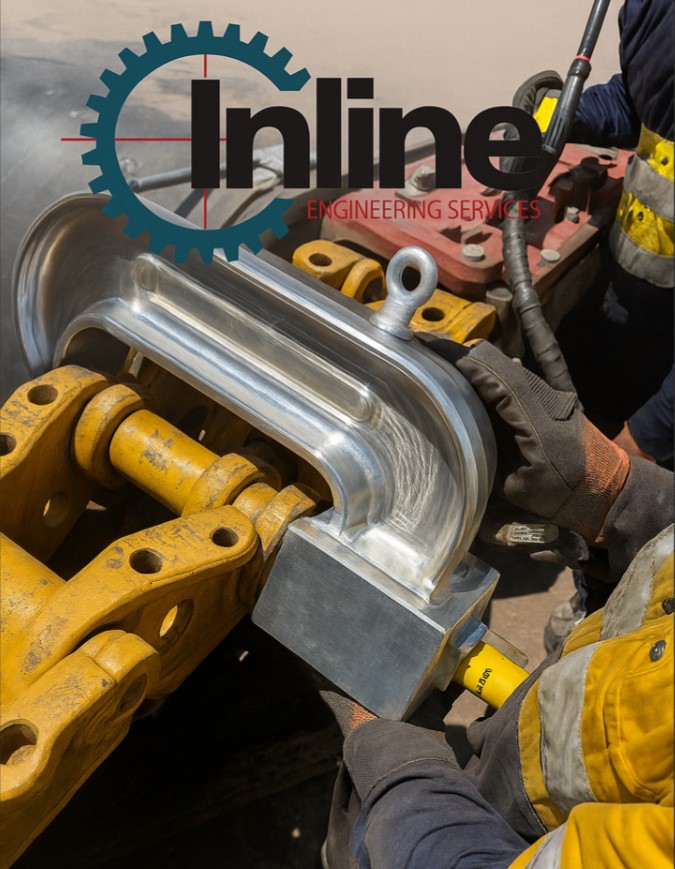 In heavy industry, innovation is often associated with the next generation of machinery, automation or digital technology. But some of the most meaningful advances occur on a smaller scale. They are found in the engineered tools, lifting devices and installation systems that quietly eliminate hazards, reduce manual handling and make complex maintenance tasks safer for the people performing them.
Every maintenance shutdown, rebuild or equipment installation presents an opportunity to ask a simple but important question — is there a safer way to do this?
The answer often lies not in changing the task itself, but in redesigning the equipment used to complete it.
Engineered solutions driving safer outcomes
Engineering solutions specifically around such challenges has become one of the most effective ways to improve safety outcomes across the resources sector. Rather than relying solely on administrative controls or revised work procedures, purpose-built tools can eliminate hazards before work even begins, embodying the fundamental principles of the hierarchy of controls by engineering risk out of the task.
Bucket pins
Take the installation of bucket pins on large bucket wheel reclaimers. Traditionally, these heavy components were frozen before being inserted into machine bores, with the entire process relying on precise alignment during installation. Any misalignment could complicate the operation, while the movement of a substantial steel pin demanded significant manual intervention.
By rethinking the design, Inline Engineering incorporated an upgraded material capable of achieving the required yield strength while introducing a central bore that allows the pin to be drawn into position in a controlled manner.
The improvement may appear modest on paper, but the safety benefits are significant. Controlled installation reduces manual handling, minimises uncontrolled movement and provides maintenance personnel with greater confidence throughout the installation process.
C clamps for track seal pressing
Track seal installation traditionally involves loose strongbacks and threaded rod to line up and press a track seal into a D9 track pin assembly. Workers were exposed to line-of-fire hazards, pinch points and crush risks while applying up to 10t of force to seat sealing rings correctly.
Inline Engineering designed a 15t rated, ergonomic, press that incorporates a spring-loaded die and screw-mounted hydraulic cylinder to significantly simplify the operation.
The redesigned tool removes many manual handling challenges while eliminating the need for personnel to place themselves in hazardous positions during the pressing process. The result is not only a safer procedure, but one that is also more consistent and repeatable.
These are the kinds of improvements that often receive little public attention but have an enormous impact on everyday operations.
Pipe lifting clamp
Manual handling remains one of the leading causes of workplace injuries throughout the resources sector, particularly during maintenance activities where awkward lifting, repetitive movements and confined workspaces are common.
Even relatively simple lifting tasks can present unnecessary risks if equipment has not evolved alongside modern safety expectations.
Consider pipe installation activities, where heavy manual steel clamps have traditionally been used to position and lift pipe sections during fit-out operations. By redesigning the clamp using lighter materials while maintaining engineered lifting certification, Inline Engineering has created a tool that substantially reduces the physical demands placed on workers.
Again, the objective is not simply to make a tool lighter, but to engineer out unnecessary physical strain while improving overall control of the load.
Cable reeler
The installation of heavy-duty cables has traditionally involved significant manual handling, requiring workers to repeatedly lift, pull and position cumbersome cable lengths. This exposes workers to ergonomic strain, fatigue, line-of-fire hazards and potential entanglement risks.
To overcome these challenges, the InLine Engineering team designed and fabricated a custom adjustable cable reeler roller table. The engineered roller system elevates cables off the ground and provides a smooth, controlled feeding path, significantly reducing manual handling and improving workplace safety.
The result is a safer, more ergonomic installation method that reduces physical demands on workers, minimises exposure to workplace hazards, protects cables from unnecessary wear and delivers a faster, more efficient cable installation process.
Safety and productivity are not competing priorities
InLine Engineering extended this redesign philosophy into countless other routine maintenance activities where purpose-designed engineering can replace improvised methods that have persisted simply because “that’s how it’s always been done”.
Every kilogram removed from a lifting device reduces fatigue. Every engineered guide captured component or controlled movement reduces the opportunity for human error. Every hazard eliminated through design is one less risk requiring workers to compensate through experience, vigilance or procedural compliance alone.
When engineering is focused on solving practical workplace problems, improvements in one almost invariably support the other. Purpose-built equipment often shortens maintenance durations, improves installation accuracy and reduces the likelihood of equipment damage or rework. In an industry where shutdown schedules are measured in hours rather than days, safer processes frequently become faster processes as well.
As mining operations become increasingly sophisticated, there will always be excitement surrounding automation, electrification and digital transformation. Yet equally important are the quieter innovations that make every day work safer through thoughtful engineering.
A redesigned bucket pin. A purpose-built track seal press. A lighter lifting clamp. An improved cable reeler. Individually, they may seem like incremental improvements. Collectively, they represent a broader commitment to designing risk out of work wherever possible.
Ultimately, the safest workplace is not one that simply asks workers to be more careful. It is one where engineering has already removed as many hazards as possible before the job begins.