Unlocking hidden revenue with robotic dredging
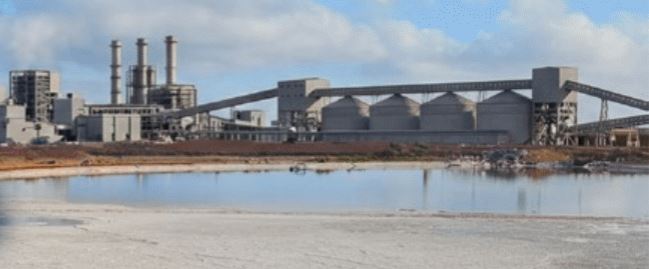
For mining operators, cleaning a lined pond or process tank has traditionally meant either accepting disruption to production or putting people and equipment in an environment where safety and asset protection are significant concerns.
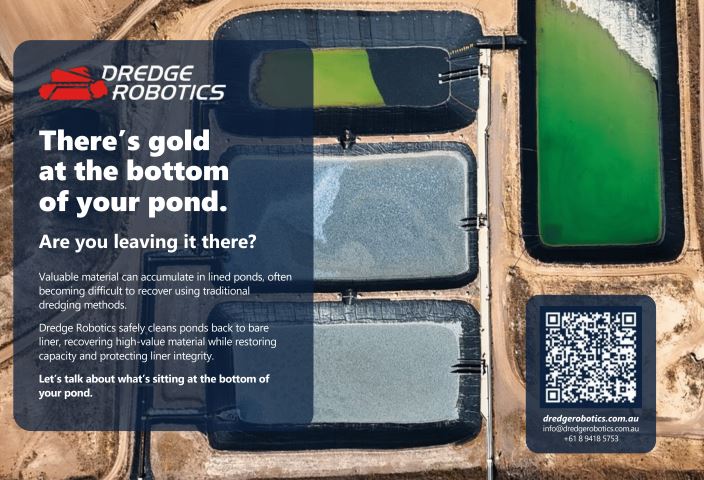
To protect fragile HDPE pond liners, operators typically instructed conventional dredging barges to maintain a safety buffer of one to two meters. While this buffer protected the liner, it also left extremely valuable, high-grade heavy minerals on the pond floor.
“However, operators had not realised just how much passive revenue they were missing out on,” he said.
“The financial impact of dredging right down to the bare liner is startling.”
Due to high specific gravity, heavy metals like gold, copper and nickel naturally migrate and stratify at the lowest points of the pond.
Because conventional dredges had to operate outside of a buffer zone, this rich material sat untouched and, in some cases, this material accumulated over years.
On one gold mining campaign, Dredge Robotics ability to feed the bottom-layers ediment back into the circuit yielded such a boost that the operators were repeatedly requested to slow or halt the dredging operation in order to allow the plant to process the additional recovered grade.
“They realised we were picking up incredible grades that were sitting on top of the liner and they were getting really significant recovery of gold that had been trapped or lost in their circuit,” Mr Tiller said.“We’ve since done numerous campaigns across gold mines and we’ve found a repeating pattern where there appears to be a higher recoverable grade in the lower stratified layers.”
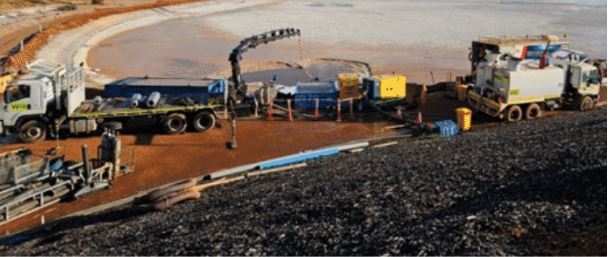
The superiority of this approach was recently demonstrated at a major copper mine. A conventional dredging barge had spent over two years attempting to clean a process pond with limited progress. Dredge Robotics’ system completed the same campaign in just a matter of weeks, fully restoring pond capacity while reclaiming valuable lost grade all while the asset remained online.
“The ability to preserve the integrity of the liner is fundamental to what we do,” Mr Tiller said.
“The technology is totally different to anything else globally available, has been purpose built for dredging lined ponds and it is becoming an essential toolkit element for operators globally.”
What was once an expensive and disruptive chore has now become a potential revenue-generating strategy. By proving that the bottom of a pond is a source of profit rather than a liability, Dredge Robotics is permanently reshaping the economics of mining maintenance.
Visit us at Stand 10 at the
Mill Operators Conference 2026