Hormuz disruption risks putting Australia in dire straits as fuel costs surge
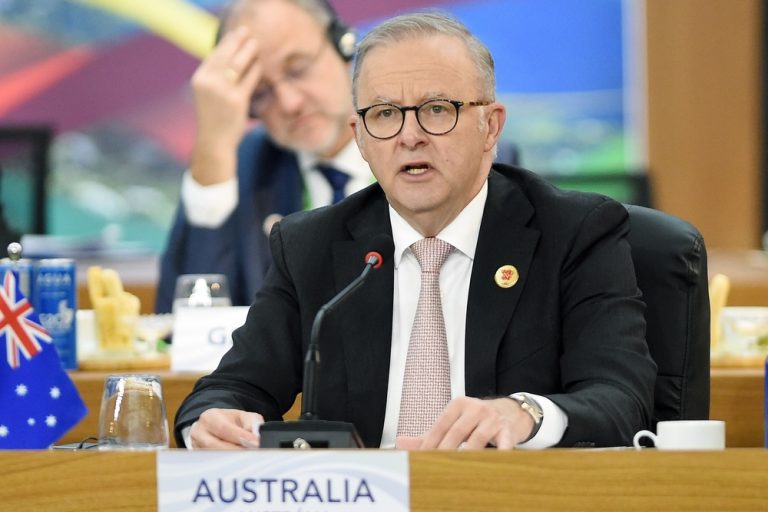
Not a single oil tanker passed through the Strait of Hormuz on March 3, maritime monitors said, as the key oil and LNG chokepoint remained effectively closed amid escalating conflict between the US, Israel and Iran.In 2024, the Strait of Hormuz normally saw about 20 million barrels per day, the equivalent of about 20% of global petroleum liquids consumption. The historical daily average for all vessels through the strait is about 138 ships, according to the Joint Maritime Information Centre (JMIC).At least four vessels in or near the strait have been struck since the conflict began with continued threats reportedly coming from Iran adding to the fear and uncertainty effectively keeping the strait shuttered for the foreseeable future.Asia is likely to see the biggest hit from supply disruptions at Hormuz, with Australia following as a result of its reliance.According to the EIA, 84% of the crude oil and condensate and 83% of the liquefied natural gas that moved through the Strait of Hormuz went to Asian markets in 2024.Although a significant bulk commodity exporter to Asia, Australia is a price-taker when it comes to refined oil products.Australia only has two refineries remaining which only supply around 20% of Australia’s liquid fuel demand, leaving the country heavily exposed to import availability from Asia.Federal Climate Change and Energy Minister Chris Bowen has moved to reassure the public not to panic, saying the country is “currently in excess of the minimum stock obligations” for petrol, diesel and jet fuel.But those minimum stock obligations, instituted in 2023, are measured in days.Minister Bowen says Australia has 36 days’ worth of petrol, 34 days’ worth of diesel and 32 days’ worth of jet fuel on hand at present.“That's in addition to the petrol and diesel that's in service stations sitting in tanks around the country as we speak and, of course, the petrol that's already in cars,” he said.“That is just the reserve that is kept for these circumstances.”The International Energy Agency (IEA) requires member countries to hold emergency oil stocks equivalent to at least 90 days of net imports.Although Australia is well-below this threshold, the government argues its domestic Minimum Stockholding Obligation is designed around domestic fuel security rather than securing stock to sell or release to the global market in case of supply disruptions.Minister Bowen says Australia’s major refining companies have informed the government that they have confidence in the oil supplies through to May with contracts in place which they expect to be honoured and delivered.Although there is clarity around how long Australia’s access to oil is secured for, the very real issue of price remains.“Look, there will be pressures,” Minister Bowen said.“The biggest impact on petrol prices in Australia will always be oil prices, and oil price will come under pressure. But for those Australians who are concerned about our supply of oil and petrol, I'm pleased to say that we are in good shape.”Beyond the consumer’s shock at the pump — or even before, with queues potentially extending for kilometres — the mining industry’s financials could also take a hit.The mining industry is largely exposed to diesel prices for haulage and mobile equipment, which continues to be one of the hardest-to-abate inputs across the sector.According to the Institute for Energy Economics and Financial Analysis (IEEFA) one ultra class haul truck can use about 1 million litres of diesel in a year.Nationally, fuel combustion emissions in mining have doubled since FY11 to 21.8mt in FY23, growing at a steady rate of 6.8% per year, according to the IEEFA.If the prices of such a significant input rise due to shortages or uncertainty, operating costs at mining operations across the country could take a hit.Industry and government are well aware of the risks of this exposure. The Fuel Tax Credit (FTC) Scheme rebates the full federal fuel tax (51.6 cents/litre as of August 2025) on imported diesel used off-road in industry.According to Climate Energy Finance (CEF), mining accounts for the majority of the credits with $57.5b to August 2025, projected to exceed $84b by 2030.Based on CEF analysis, the top 15 consumers of diesel in Australia consumed almost 6 billion litres of diesel with the weighted-average fuel excise rate of 49 cents per litre providing over $2.9bn in forgone taxation over FY24.The largest beneficiaries included BHP (ASX: BHP) ($627m rebate), Rio Tinto (ASX: RIO) ($416m rebate) and Glencore ($364m rebate).Looking back at the haul truck example, the IEEFA calculates that the value of the diesel rebate over the truck’s 15-year lifespan is equal to the total purchase of the truck, meaning that the rebate effectively could pay for a truck’s worth of diesel over its life and, at scale, materially offset fleet operating costs across a mine.The strategic dilemma already facing the mining industry becomes even more prickly with the added geopolitical uncertainty.The largely touted, long-term solution is to reduce diesel dependence through electrification or alternative fuels. But in the short term, tax credits remain a more readily available pressure release for miners.Although the FTC has proven successful in softening fuel costs for industry, we have yet to see if it can prevent larger forces such as a war-linked price spike from hitting the industry’s costs.Beyond diesel, Federal Resources Minister Madeleine King has warned of impacts to Australia’s supply of urea, a type of nitrogen fertiliser.Minister King says Australia is quite dependent on imports from around the world of urea, with much of that coming through the Strait of Hormuz.
“Using liquid natural gas from offshore WA, it goes into the production of urea at the Perdaman project,” she said.“This is a $6b project in north WA. It is one of the largest manufacturing projects this country has ever undertaken.“The investment that our government has put into it is also of historic proportions. And that is to make sure we have that resilience for the production of urea which goes into fertiliser.”The project is supported by the Northern Australia Infrastructure Fund, with Minister King saying the package totals more than $300m, including $220m directed to Perdaman.Minister King says it is expected that about half of the urea produced by the project would remain in Australia, with the rest set for export.