




















Federal Government’s AI plan ‘abandons’ safety guardrails

The release of generative AI chatbot ChatGPT in late 2022 marked a turning point in technology as a previously fictional concept became readily available to the public.
Though AI as it stands is a far cry from Skynet — The Terminator’s highly-advanced AI hellbent on launching a nuclear attack on humanity — it may still be wise for society to proceed with caution.
At a UK AI Safety Summit in 2023, Elon Musk called for stricter regulations to be imposed on AI, which he called “one of the biggest threats” to society.
“For the first time in human history, we have something that is going to be far more intelligent than us,” he said.
“It’s not clear to me whether we can actually control such a thing.”
After ushering in a new era for AI, ChatGPT parent company, OpenAI, is now worth about $500b — making it the world’s most valuable private company.
As investment in the tech has grown globally, governments across the world have switched gears from hesitant interest to an all-out race to lead the increasing valuable industry.
In 2023, the European Union released a world-first AI action plan, affirming its commitment to becoming a global leader in AI while promoting a human-centric approach that safeguards society.
In July 2025, the US released its own plan, Winning the race: America’s AI action plan, a far more bullish approach which places innovation at its core — a significant contrast to the EU’s risk-sensitive plan.
This week, Australia took its turn.
The Federal Government released its long-awaited national AI plan, promising to develop an inclusive AI economy that protects workers, ensuring the technology “works for people, not the other way around” while making the Australian industry an attractive investment location.
The plan is a major backflip on the Federal Government’s proposal last year to introduce AI-specific laws, which included a set of mandatory guardrails that enforced standards for organisations across the AI supply chain.
Instead, Australia will leverage existing laws and prioritise creating a local AI industry that will spread the benefits throughout society.
The plan has been criticised for its lack of sufficient guardrails, which Greens Senator David Shoebridge says betrays Australians.
“Australians deserve real protections, not glib assurances that pretend our existing laws are up to the task of this new tech,” he said.
Under the plan, a $30m AI safety institute will monitor the development of AI from 2026 and advise industry, agencies and government where stronger responses may be needed, while the Federal Government continues to refine the plan.
Federal Industry and Innovation Minister Tim Ayres says AI is reshaping the global economy and transforming how Australians work, learn and connect with one another.
“The [Federal] Government’s ambition is to harness AI technologies to create a fairer, stronger Australia where every person benefits from this technological change,” he said.
“As technology evolves and confidence in its use grows, we will continue to refine and strengthen the plan to seize new opportunities and address emerging risks.”
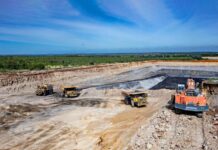
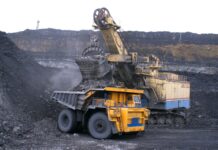
The Australian resources sector has been quick to adopt emerging AI technology across operations. The Federal Government may be able to leverage the mining sector’s AI leadership and proven applications in predictive maintenance, exploration analytics, infrastructure inspection and automation to accelerate AI adoption in priority sectors such as defence, education and infrastructure.
Minerals Council of Australia (MCA) chief executive Tania Constable says with investment, Australia can accelerate automation, strengthen competitiveness and position itself as a leader in AI innovations and applications.
“It is imperative that governments take a dynamic and light touch approach to AI regulation,” she said.
Following the rapid adoption of AI, Australian unions expressed concerns for the implications the technology will have on workers.
The Australian Council of Trade Unions (ACTU) reported that some businesses have been using AI technology to try and replace workers and to intrusively monitor their employees.
ACTU assistant secretary Joseph Mitchell says the national AI plan has workers’ rights at its heart.
“Workers aren’t afraid of AI but are rightly sceptical about letting it go unchecked, especially when the technology has already been used by big business to undermine wages, conditions and to wipe out jobs,” he said.
Business Council chief executive Bran Black says Australia already has comprehensive workplace, privacy, anti-discrimination and safety laws that provide world-leading safeguards.
“A comprehensive gap analysis of existing workplace protections should be done before any proposal to expand these laws is advanced,” he said.
“We must ensure we don’t inadvertently discourage investment or slow down the adoption of new technologies.”
The MCA warned in July that giving any external body — including unions — the power to block or veto innovation by minerals companies would drag the sector backwards and erode Australia’s competitiveness.
“Providing Australia’s mining sector with the freedom to test, deploy and refine new technologies will improve safety outcomes, drive efficiency and strengthen global competitiveness,” Ms Constable said.
“Australia’s reputation as a leader in the development and implementation of new technology to improve safety and productivity in all industries, especially mining, would be at grave risk under such an approach.
“A cooperative approach for mutual benefit including industry growth, improved safety and productivity would be vastly superior to new and unjustified veto powers.”
Though it seems we won’t be needing leather-clad Arnold Schwarzenegger to ride in on his motorcycle and save humanity any time soon, only time will tell if the Federal Government can reap the economic benefits of AI while protecting worker rights.