Author: Chloe Coutinho

The Aerosmith project is adjacent to the Albany-Fraser Orogen, which Catalina says is a setting recognised as favourable for large-scale mineral systems.
News
Catalina expands WA copper-gold exposure
Catalina Resources (ASX: CTN) has entered into a binding option agreement to acquire 100% of BGM Metals, including its exploration licenses in the Eastern Goldfields.The agreement covers the Aerosmith project, located on the south-eastern margin of the Yilgarn Craton.The package includes multiple prospects spanning volcanogenic massive sulphide (VMS) copper, structural gold and magmatic copper-nickel sulphide targets.Catalina executive director Ross Cotton comments on the acquisition.“The combination of mapped electromagnetic conductors, interpreted base-metal fertile stratigraphy and documented copper anomalism provides a compelling technical foundation for systematic exploration,” he said.“Importantly, the option structure allows Catalina to secure exposure to this opportunity in a disciplined manner while we undertake detailed technical assessment.“The acquisition expands our copper–gold exploration pipeline and positions the company to evaluate a prospective mineralised corridor within one of WA’s established mineral provinces."Importantly, this acquisition comes as Catalina continues to advance exploration across its broader project portfolio, with further results expected from ongoing programs, including the Central Yilgarn and Breakaway Dam.”Under the deal terms, Catalina will pay a $10,000 option fee for a 12-month option to acquire BGM. If exercised, the consideration will be $200,000 in Catalina shares based on a 20-day VWAP or a cash equivalent.
(Image source: MOVUS) Founded in 2015, MOVUS partners with decision-makers in complex industrial environments to transform asset and operational data into clear, practical actions.
News
MOVUS appoints new CEO to drive industrial AI growth
Brisbane-based industrial technology company MOVUS has appointed Sanjeev Kumar as chief executive officer to lead the company’s next phase of growth in asset reliability and industrial AI innovation.Mr Kumar succeeds Malcolm Schulstad, who will transition back to his role as chief operating officer.The appointment follows Infinite Uptime’s acquisition of MOVUS in August 2025. Mr Kumar joins MOVUS from parent company Infinite Uptime, where he most recently served as vice president and business head for ANZ, leading regional expansion across heavy industry sectors.MOVUS says Kumar’s experience scaling industrial AI across mining, energy, manufacturing and ports would support the company’s continued expansion into asset-intensive industries across the region.“MOVUS has built a strong reputation for turning industrial data into practical operational decisions,” Mr Kumar said.“Through PlantOS, we enable heavy industries to move closer to near-continuous operational uptime by combining advanced sensing technology, AI-driven analytics and human expertise.“Prescriptive AI represents the next evolution of maintenance strategy. By aligning maintenance activity with production priorities, organisations can move beyond reactive or scheduled maintenance toward real-time, outcome-driven decision-making.”Mr Kumar is slated to attend Total Plant Maintenance in Melbourne from March 16–18, where he will present a session titled Prescriptive AI for Plant Operations: Maximising Throughput and Efficiency.His session will examine why predictive maintenance can fall short in day-to-day operations and how prescriptive approaches can improve throughput, reduce risk and support sustainability outcomes.
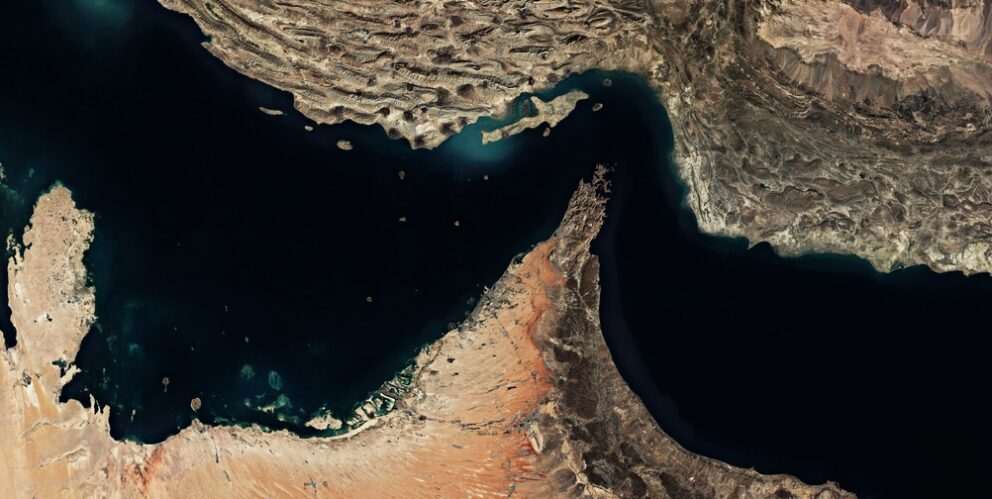
US and Israeli strikes began on February 28, with retaliatory attacks from Iran soon following.
News
Hormuz disruption risks putting Australia in dire straits as fuel costs surge
Not a single oil tanker passed through the Strait of Hormuz on March 3, maritime monitors said, as the key oil and LNG chokepoint remained effectively closed amid escalating conflict between the US, Israel and Iran.In 2024, the Strait of Hormuz normally saw about 20 million barrels per day, the equivalent of about 20% of global petroleum liquids consumption. The historical daily average for all vessels through the strait is about 138 ships, according to the Joint Maritime Information Centre (JMIC).At least four vessels in or near the strait have been struck since the conflict began with continued threats reportedly coming from Iran adding to the fear and uncertainty effectively keeping the strait shuttered for the foreseeable future.Asia is likely to see the biggest hit from supply disruptions at Hormuz, with Australia following as a result of its reliance.According to the EIA, 84% of the crude oil and condensate and 83% of the liquefied natural gas that moved through the Strait of Hormuz went to Asian markets in 2024.Although a significant bulk commodity exporter to Asia, Australia is a price-taker when it comes to refined oil products.Australia only has two refineries remaining which only supply around 20% of Australia’s liquid fuel demand, leaving the country heavily exposed to import availability from Asia.Federal Climate Change and Energy Minister Chris Bowen has moved to reassure the public not to panic, saying the country is “currently in excess of the minimum stock obligations” for petrol, diesel and jet fuel.But those minimum stock obligations, instituted in 2023, are measured in days.Minister Bowen says Australia has 36 days’ worth of petrol, 34 days’ worth of diesel and 32 days’ worth of jet fuel on hand at present.“That's in addition to the petrol and diesel that's in service stations sitting in tanks around the country as we speak and, of course, the petrol that's already in cars,” he said.“That is just the reserve that is kept for these circumstances.”The International Energy Agency (IEA) requires member countries to hold emergency oil stocks equivalent to at least 90 days of net imports.Although Australia is well-below this threshold, the government argues its domestic Minimum Stockholding Obligation is designed around domestic fuel security rather than securing stock to sell or release to the global market in case of supply disruptions.Minister Bowen says Australia’s major refining companies have informed the government that they have confidence in the oil supplies through to May with contracts in place which they expect to be honoured and delivered.Although there is clarity around how long Australia’s access to oil is secured for, the very real issue of price remains.“Look, there will be pressures,” Minister Bowen said.“The biggest impact on petrol prices in Australia will always be oil prices, and oil price will come under pressure. But for those Australians who are concerned about our supply of oil and petrol, I'm pleased to say that we are in good shape.”Beyond the consumer’s shock at the pump — or even before, with queues potentially extending for kilometres — the mining industry’s financials could also take a hit.The mining industry is largely exposed to diesel prices for haulage and mobile equipment, which continues to be one of the hardest-to-abate inputs across the sector.According to the Institute for Energy Economics and Financial Analysis (IEEFA) one ultra class haul truck can use about 1 million litres of diesel in a year.Nationally, fuel combustion emissions in mining have doubled since FY11 to 21.8mt in FY23, growing at a steady rate of 6.8% per year, according to the IEEFA.If the prices of such a significant input rise due to shortages or uncertainty, operating costs at mining operations across the country could take a hit.Industry and government are well aware of the risks of this exposure. The Fuel Tax Credit (FTC) Scheme rebates the full federal fuel tax (51.6 cents/litre as of August 2025) on imported diesel used off-road in industry.According to Climate Energy Finance (CEF), mining accounts for the majority of the credits with $57.5b to August 2025, projected to exceed $84b by 2030.Based on CEF analysis, the top 15 consumers of diesel in Australia consumed almost 6 billion litres of diesel with the weighted-average fuel excise rate of 49 cents per litre providing over $2.9bn in forgone taxation over FY24.The largest beneficiaries included BHP (ASX: BHP) ($627m rebate), Rio Tinto (ASX: RIO) ($416m rebate) and Glencore ($364m rebate).Looking back at the haul truck example, the IEEFA calculates that the value of the diesel rebate over the truck’s 15-year lifespan is equal to the total purchase of the truck, meaning that the rebate effectively could pay for a truck’s worth of diesel over its life and, at scale, materially offset fleet operating costs across a mine.The strategic dilemma already facing the mining industry becomes even more prickly with the added geopolitical uncertainty.The largely touted, long-term solution is to reduce diesel dependence through electrification or alternative fuels. But in the short term, tax credits remain a more readily available pressure release for miners.Although the FTC has proven successful in softening fuel costs for industry, we have yet to see if it can prevent larger forces such as a war-linked price spike from hitting the industry’s costs.Beyond diesel, Federal Resources Minister Madeleine King has warned of impacts to Australia’s supply of urea, a type of nitrogen fertiliser.Minister King says Australia is quite dependent on imports from around the world of urea, with much of that coming through the Strait of Hormuz. “Using liquid natural gas from offshore WA, it goes into the production of urea at the Perdaman project,” she said.“This is a $6b project in north WA. It is one of the largest manufacturing projects this country has ever undertaken.“The investment that our government has put into it is also of historic proportions. And that is to make sure we have that resilience for the production of urea which goes into fertiliser.”The project is supported by the Northern Australia Infrastructure Fund, with Minister King saying the package totals more than $300m, including $220m directed to Perdaman.Minister King says it is expected that about half of the urea produced by the project would remain in Australia, with the rest set for export.
The WPWSS is operated by Water Corporation and supplies the towns of Karratha, Wickham, Dampier, Roebourne, Point Samson and the industrial areas of Cape Lambert and the Burrup Peninsula.
News
Rio Tinto to expand $1.1b Dampier desalination plant
Rio Tinto (ASX: RIO) and the WA Government have entered into a 50:50 joint venture to complete both Stage 1 and Stage 2 of the Dampier seawater desalination plant.Stages 1 and 2 are intended to reduce pressure on regional aquifers after below-average rainfall over the past five years reduced groundwater recharge and put West Pilbara Water Supply Scheme (WPWSS) sources under increased strain.Rio Tinto says abstraction from these groundwater sources is of significant concern to Traditional Owner groups.Once fully operational, the plant will deliver 8GL of desalinated water per year to the WPWSS.WA Premier Roger Cook comments on the initiative.“WA has the strongest economy in the nation thanks largely to the Pilbara and our world-leading resources industry. That’s why we want to ensure the Western Australians who live in such an important part of our state have access to the quality infrastructure and services they deserve,” he said.“We are already working with Yindjibarndi Aboriginal Corporation to improve the Millstream aquifer’s sustainability. Now, we are investing hundreds of millions of dollars in a project that will deliver billions of litres of water to local households and businesses.”Rio Tinto iron ore chief executive Matthew Holcz says the company understands water is a scarce resource, especially in the Pilbara.“Bringing on the Dampier seawater desalination plant is an important step as we work to reduce our reliance on groundwater abstraction,” he said.“Stage 1 of the Dampier seawater desalination plant will reduce our draw on the Bungaroo aquifer, which we recognise is deeply important to the Robe River Kuruma People.”Construction of Stage 1 of the desalination plant is underway and is expected to begin delivering 4GL of annual desalination capacity later this year.Stage 2 construction, which will add a further 4GL of annual capacity, has commenced, with first water expected in 2027.
The Wheatstone Marine Terminal (WMT) services the Wheatstone LNG Plant and is part of the Port of Ashburton.
News
MinRes claims Pilbara Ports fee designed to reimburse Chevron
The WA Supreme Court has ordered Pilbara Ports to hand over further internal and contract documents in its ongoing dispute with Mineral Resources (ASX: MIN) over a Port of Ashburton “Channel Charge”.The port authority admits it levied the Channel Charge as a pass-through of the amount it is required to pay Chevron for access to the Port of Ashburton LNG shipping channel under arrangements linked to Chevron’s Wheatstone project.Pilbara Ports says it invoiced MinRes for the Channel Charge and MinRes refused to pay, prompting the court action.In the discovery ruling, the court ordered Pilbara Ports to produce additional board and executive materials concerning proposals and decisions to levy the Channel Charge, as well as specified agreements linked to the port arrangements and Port of Ashburton financial documents.Pilbara Ports says the Channel Charge is a “port charge”, characterising it as a charge for port services, an access charge or a port due. The matter is listed for a three-day trial commencing April 28, with the heart of the dispute being whether the charge is a valid port charge, which MinRes denies along with any liability for the invoices.MinRes has challenged the charge on multiple grounds, including that Pilbara Ports did not have the power to impose it, that it is not a port charge, that it was not made in accordance with prudent commercial principles and that it exceeds channel or port-services costs.MinRes also alleges the charge was imposed for an improper purpose, to reimburse Chevron and recover those amounts from MinRes.
Richards Bay Minerals (RBM) is 74% owned by Rio Tinto and currently operates four mines in the Zulti North lease area, a mineral separation plant and smelting facility.
News
Rio Tinto to restart South African mineral sands project
Rio Tinto (ASX: RIO) will invest $473m to extend the mine life of the Zulti South project to 2050 and lift the suspension that has been in place since January 2020.Construction is anticipated to commence in Q1 2026 and will take 30 months to be completed. Initial commercial production is expected in Q4 2028.The first phase of construction will support RBM’s supply of zircon and ilmenite, while the second phase will follow as part of the long-term development strategy.Rio Tinto says that as the orebody at Zulti North declines, Zulti South is important to RBM for maintaining a stable supply of zircon, rutile, and ilmenite and supporting titanium dioxide sales over the life of the mine.Rio Tinto iron & titanium Africa operations & RBM managing director Werner Duvenhage says lifting the suspension on Zulti South means securing the future of RBM.“This project is not about expansion; it represents our commitment to sustaining jobs and continuing to make a meaningful contribution to the province, the country and the host communities,” he said.“The decision to proceed also reflects improved security conditions and strengthened community partnerships.“The support of government, Amakhosi and host communities has been vital in getting us where we are today and establishing this stability. We are committed to working with all stakeholders to ensure the project’s continued success.”China Harbour Engineering Company (CHEC) has been appointed as the EPC contractor for the construction of Zulti South due to their performance and strong track record including a strategic partnership with Rio Tinto on the Simandou project in Guinea.
In the half, Fortescue entered into a binding agreement to acquire the remaining 64% of Alta Copper’s issued and outstanding common shares not already owned.
News
Fortescue lifts profit on record first-half shipments
Fortescue (ASX: FMG) has lifted its fully franked interim dividend to $.62/share after posting a strong first-half result, with record iron ore shipments, improved price realisations and lower unit costs driving higher earnings.The miner reported H1 FY26 revenue of about $11.86b (US$8.4b), up 10% on H1 FY25, while underlying EBITDA rose 23% to about $6.35b (US$4.5b) and attributable net profit after tax increased 23% to about $2.68b (US$1.9b).Fortescue said earnings were supported by higher sales volumes and a stronger Hematite realised price. Hematite realised price was US$90.87/dmt and Hematite C1 unit cost fell to US$18.64/wmt, down 3% from H1 FY25.Iron ore shipments reached a record 100.2mt for the half, up 3% year-on-year.Fortescue metals and operations chief executive Dino Otranto says this has been a standout first half.“We delivered record shipments of 100.2mt while keeping our people safe and costs low,” he said.“We have the lowest operating cost in the industry, and decarbonisation is pushing that even lower.“By removing diesel across our operations, we’re structurally improving our cost position. The more diesel we eliminate, the less exposure we have to price volatility, and the stronger and more predictable our margins become.“We’re now delivering decarbonisation at scale across the Pilbara. Around 3600 solar panels are being installed every day at our Cloudbreak mine, with another one gigawatt of solar in the immediate pipeline.“Construction is underway on our first wind farm, we’ve delivered two large battery energy storage systems at our sites, and we’re working with leading global manufacturers to roll out electric mining equipment, battery systems and large-scale renewable infrastructure.“A few years ago, this would have seemed ambitious. Today, it’s part of how we operate – and it’s lowering our cost base as we build it.”Fortescue’s board declared a fully franked interim dividend of $.62/share, up 24% on the FY25 interim dividend and representing a 65% payout of first-half NPAT.The company also saw strong cash generation, reporting net cash flow from operating activities of about $4.5b (US$3.2b) and free cash flow of about $2.1b (US$1.5b) for the half.Fortescue growth and energy chief executive Gus Pichot says the company continues to build a pipeline of projects to deliver the low-cost solutions the world needs.“Commercial discipline has underpinned solid progress across our global growth portfolio this half, including for our critical minerals and exploration strategy,” he said.“We expect to finalise shortly the acquisition of Alta Copper, strengthening our copper portfolio in Latin America. Subject to completion, our immediate focus will be on technical reviews, community engagement and advancing the studies required to inform future development decisions.“In Gabon, our teams have also further advanced studies at the Belinga iron ore project, and are progressing plans for an integrated mine, rail and port development.”FY26 guidance remains unchanged, including iron ore shipments of 195–205mt and Hematite C1 costs of US$17.50–US$18.50/wmt.
The expertise of geoscience professionals is a key enabler for governments, industry and community as they seek to capture new value across the minerals value chain.
News
AusIMM brings International Mining Geology Conference 2026 to Brisbane
AusIMM will host the International Mining Geology Conference 2026 on April 21–22, 2026 at the Brisbane Convention and Exhibition Centre, bringing together mining geology professionals, researchers and decision-makers from across the globe.Presenting at the International Mining Geology Conference are keynote speakers including Derisk Geomining Consultants director and principal geologist Mark Berry, Gold Fields mine and exploration geology senior manager Andrew Engelbrecht, Lihir Gold Mine principal ore deposit knowledge geologist Lauren Elliot and Mining3 chief executive Neville Plint.The event will also feature a Young Professionals Day on April 20, 2026, and include a dedicated program designed for early career professionals looking to build capability, expand their networks and help foster their next steps into a mining career.Northern Star Resources (ASX: NST) chief geological officer and International Mining Geology Conference 2026 Advisory Committee chair Daniel Howe comments on the conference.“The focus of the International Mining Geology Conference 2026 is to demonstrate how mining geologists create real-world value, through innovation, reconciliation, and practical case studies that show how new tools and technologies are helping set our profession up for the future,” he said.Whether looking to move from production to processing, or even into manufacturing, it all begins with exploration, resource definition and a careful assessment of mining-related opportunities based on what we know about the minerals beneath our feet.For more information visit: https://www.ausimm.com/conferences-and-events/mining-geology.
(Image source: Fortescue) Fortescue has also been expanding its electric mining equipment, with one electric drill and 12 electric excavators now operational across multiple sites in the Pilbara.
News
Fortescue moves to ditch diesel on Pilbara rail
Fortescue (ASX: FMG) has commenced commissioning of two new battery electric locomotives on its rail network as it moves to decarbonise its Pilbara iron ore operations.Delivered by Progress Rail, the battery electric locomotives will eliminate about one million litres of diesel each year all together, according to Fortescue.They house the world’s largest land-mobile batteries, with a capacity of 14.5MWh each and can recover 40–60% of energy through regenerative braking.The locomotives will operate on renewable power delivered via Fortescue’s Pilbara Energy Connect program.Fortescue metals and operations chief executive Dino Otranto comments on the milestone.“Real Zero is about transforming the way we power our assets, move our materials and run our operations, not offsetting emissions but eliminating them,” he said.“Decarbonising our rail network is a critical part of that task and the commissioning of these battery electric locomotives demonstrates that heavy-haul rail can operate reliably without fossil fuels.“For a mining operation of this scale, decarbonisation only works if renewable energy is firm, reliable and available 24/7. That’s why we’re building an integrated system combining large-scale solar and wind generation, battery storage and transmission infrastructure.“Through Pilbara Energy Connect, we’ve already constructed more than 480km of high-voltage transmission lines, physically linking our energy assets to our operations and rail network. This infrastructure enables renewable power to replace diesel and gas, in real time, across the Pilbara.”At North Star Junction, Fortescue already operates a 100MW solar farm, which will be supported by a recently installed 250MWh battery energy storage system (BESS) capable of delivering up to 50MW of power for five hours.The system plays a critical role in stabilising renewable supply for Fortescue’s operations.Construction is also progressing at Fortescue’s 190MW Cloudbreak solar farm, which is around two thirds complete.Fortescue has also received all primary approvals for the up to 644MW Turner River solar farm, with construction anticipated to commence later this year, while a 440MW solar farm at Solomon remains in the near-term pipeline.Fortescue growth and energy chief executive Gus Pichot says battery storage is the backbone of a renewable-powered mining system.“By integrating Fortescue Zero’s Elysia battery intelligence and management software, we’re able to optimise performance, extend battery life and intelligently balance energy across the network in real time,” he said.“This technology ensures the right power is available at the right time – whether that’s supporting rail operations, smoothing solar output or maximising the value of stored energy.”Fortescue is aiming to eliminate Scope 1 and 2 emissions from its Australian terrestrial iron ore operations by the end of 2030.
Back to of the page