Latest News

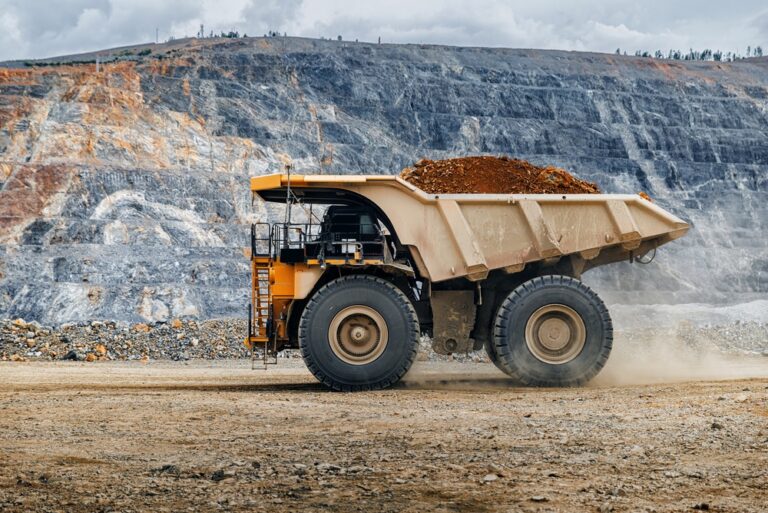
Rio Tinto consumes about 1.6b litres of diesel annually, around two-thirds in the Pilbara.
NewsProjects & Operations
Rio Tinto flags Middle East conflict after strong Q1
Rio Tinto (ASX: RIO) posted a 9% year-on-year increase in copper equivalent production and its second-highest Q1 Pilbara iron ore production since 2018, up 13% year-on-year.The miner said the quarter was impacted by two cyclones, while warning of growing uncertainty around supply chains and costs due to conflict in the Middle East.Rio Tinto recorded an 8mt impact to iron ore shipments from Tropical Cyclones Mitchell and Narelle and a .9mt impact to bauxite production from Cyclone Narelle.Rio Tinto chief executive Simon Trott comments on the Q1 results.“Operating excellence drove 9% YoY copper equivalent1 production growth across our portfolio as the Oyu Tolgoi copper mine continues to ramp up as planned and our integrated aluminium business, again, delivered a strong performance,” he said.“Our Pilbara iron ore mines performed strongly, while shipments were impacted by two cyclones in the quarter.“We achieved the historic land exchange at Resolution Copper, with our project team focused on unlocking the next phase of one of the world’s largest untapped copper deposits.“The unmatchable mix and scale of our portfolio has ensured growth and supply chain resilience against changing operating conditions as we continue to closely monitor the evolving situation in the Middle East.”Rio Tinto says the impacts of the Middle East conflict have been limited on the supply-side while commodity prices have responded favourably.Iron ore, copper and lithium operations remained largely unaffected.As for fuel, Rio says higher diesel prices steepened its cost curve while higher jet fuel prices did not disrupt the business.Fatal incidents at Simandou and Kennecott led to both operations shutting down during the quarter. The operations were progressively restarted once conditions allowed.“Safety is the foundation of our business,” Mr Trott said.“The tragic loss of two colleagues this year, at Simandou and Kennecott, is a stark reminder that we must ensure everyone goes home safely at the end of every shift.”A staged restart at the Kennecott underground project commenced April 16.
The MCA says progression of critical mineral projects requires policy settings that enable investment to proceed at scale, support skilled workforce development, maintain local and Aboriginal and Torres Strait Islander business participation and ensure that long-life projects can anchor the population levels, services and infrastructure that communities rely upon.
NewsPolitics & Regulation
MCA calls for critical minerals reform
The Minerals Council of Australia (MCA) has called on the Federal Government to reform critical minerals project approvals, warning that opportunities will only translate into regional economic strength if projects can move from approval to construction and into long-term operation.The MCA’s submission to Federal Parliament’s Inquiry into the factors shaping social licence and economic development outcomes in critical minerals projects across Australia notes that regions with a significant mining industry had a lower unemployment rate and higher median income than the national average.Based on ABS data, the MCA found that across the Australian Mining Cities Alliance regions of Mount Isa and Isaac, Broken Hill and Karratha, East Pilbara and Kalgoorlie-Boulder, the unemployment rate was 3.58%, lower than the Australian average rate at the time of 5.1% while median income was $33,000 higher ($74,490 in mining regions against $41,860 Australia-wide).“Mining is the central driver to the long-term development of many regions across Australia which may otherwise have declined or even disappeared,” MCA chief executive Tania Constable said in a statement.“Based on many decades of experience by MCA members of delivering significant long-lasting benefits to regional communities, it is clear that the burgeoning critical minerals sector will create and sustain region-building economic infrastructure.“In towns with a fine line between viability and decline with small population bases, limited housing, stretched health and education services and high infrastructure costs., critical minerals development can be a stabilising force.“Long-life mining is the stable foundation that makes every other development pathway possible, helping communities to grow, services (particularly health and education) to remain viable and local businesses invest with confidence.”The MCA has urged the Federal Government to make it easier and more predictable for critical minerals projects to get built and operated in regional Australia.The submission outlines a range of measures, including strengthening planning, environmental and project approval systems; reforming the Native Title Act 1993 future acts framework; aligning migration and workforce training measures; coordinated infrastructure planning; cross-jurisdictional policy alignment and expanding targeted capability programs for local and Aboriginal and Torres Strait Islander businesses.The inquiry has not yet reported, but it is expected to culminate in a parliamentary report that could shape future policy on approvals, regional development and social licence for critical minerals projects.
In Q1 CY26, the Geelong Refinery operated at full production with a crude intake of 10.2MBBL.
NewsProjects & Operations
Geelong refinery fire forces output cuts
Viva Energy’s (ASX: VEA) Geelong refinery will operate at reduced capacity in the short term following a fire last week, with diesel, jet fuel and petrol production all impacted. Diesel and jet fuel output will run at around 80% capacity, while petrol output will run at around 60%.The company says it has sufficient fuel stocks to cover the reduced production and expects to maintain normal fuel supply. “The Geelong refinery does not typically source Middle Eastern crude, with current crude sourced predominantly from North and South America, Southeast Asia, and Australia,” the company said. “These crude supply flows have not been impacted, and the Geelong refinery has firm crude supply through to July with high confidence that this supply can continue.” Viva Energy’s fuel sourcing has continued without interruption, supported by import cargo commitments through to the end of May. The company has also entered into an agreement with the Federal Government to purchase additional cargoes beyond its normal requirements. Viva Energy says the fire occurred in the alkylation unit which forms part of the gasoline complex. The other major processing units at the refinery, including the crude distillation units, reformer and residue catalytic cracking unit (RCCU) are unaffected, but the RCCU is offline while operations are stabilised. The company expects to be in a position to restart the RCCU and lift production of diesel, jet fuel and petrol to more than 90% of capacity in the next few weeks.  
Brightstar Resources (ASX: BTR) has executed a strategic framework agreement with Aquirian (ASX: AQN) for the supply of all drilling and energetics services at its Goldfields Hub in WA, as the company advances towards near-term production.
NewsProcurement & Suppliers
Brightstar locks in five-year drill and blast deal
Brightstar Resources (ASX: BTR) has executed a strategic framework agreement with Aquirian (ASX: AQN) for the supply of all drilling and energetics services at its Goldfields Hub in WA, as the company advances towards near-term production.The agreement has an initial term of up to five years. In addition, Brightstar has initiated a three-year agreement with Aquirian subsidiary Drillforce for the Lord Byron open pit mine. Mining activities at Lord Byron are expected to commence in the second half of CY26.Under the arrangement, Drillforce will deliver an integrated drill and blast solution, incorporating its proprietary Collar Keeper® technology on new Epiroc T45 rigs.Brightstar says the technology is designed to improve blast precision by balancing fragmentation with ore preservation to minimise dilution and enhance recovery.The approach is expected to deliver operational benefits including improved dig productivity, lower load and haul costs and reduced processing disruptions alongside safety improvements including reduced operator exposure during blasting activities.Brightstar managing director Alex Rovira says the agreement aligns with the company’s focus on operational discipline and long-term value creation.“We are excited to be partnering with Aquirian for our open pit drill and blast services for the Goldfields Hub,” he said.“Aquirian’s vertically integrated business provides a strong operational focus on ore preservation during the drill and blast sequence, which is anticipated to deliver material benefits to our open pit mining operations.”Brightstar is targeting first gold production from its Goldfields Hub in mid-2027.
Evolution Mining (ASX: EVN) has moved into a net cash position following a strong March quarter underpinned by higher gold prices and consistent operational delivery.
NewsProjects & Operations
Evolution surges on gold rally
Evolution Mining (ASX: EVN) has moved into a net cash position following a strong March quarter underpinned by higher gold prices and consistent operational delivery.The company generated $406m in group cash flow for the period, finishing the quarter with a $42m net cash position and total cash holdings of $1.37b.Gold production reached 170,000oz for the quarter alongside 11,000t of copper, at an all-in sustaining costs of $2,220/oz.Evolution says it remains on track to meet its FY26 gold production at lower than original cost guidance, with group copper production now expected to come in around the low end of guidance following weather disruptions at Ernest Henry.High-margin operations across the portfolio continued to drive performance, with record net mine cash flows achieved at both Mungari and Red Lake. Mungari delivered 51,000oz of gold for the quarter, while Red Lake maintained steady output above 30,000oz for the fourth consecutive quarter.Evolution managing director and chief executive Lawrie Conway says the results reflects consistent execution and disciplined capital management.“Evolution continues to generate significant cash flows from consistent operational delivery and disciplined capital allocation,” he said.“We have rapidly deleveraged by more than 31% in just over two years, reaching a net cash position by the end of March.”Across the portfolio, Evolution reported no material disruptions linked to the global fuel supply situation, noting existing supply contracts remain in place.The company also advanced several key growth projects during the quarter, including the E22 block cave and coarse particle flotation project at Northparkes and the Bert orebody at Ernest Henry. These developments are progressing on schedule and within budget, according to the miner.
BHP hit with first Pilbara strike of the century
NewsPeople & Workforce
BHP hit with first Pilbara strike of the century
Electrical workers across BHP’s (ASX: BHP) Pilbara operations began protected industrial action this morning.The Electrical Trades Union (ETU) says the action covers 60 workers across BHP’s Pilbara high-voltage network and includes a ban on overtime, out-of-hours callouts between 6pm and 6am (except in situations which may pose a threat to safety), stepping into supervisor roles and mentoring and training of new high-voltage operators.Some measures will run for a two-week period while others are expected to continue indefinitely.ETA WA secretary Adam Woodage says workers had taken a considered and responsible approach to industrial action.“The safety of the community and other workers is non-negotiable and will always come first,” he said.“Our members don’t take this step lightly, but they are serious about getting the company back to the bargaining table, and BHP’s refusal to bargain in good faith has left them with no alternative.”A BHP spokesperson said the company does not expect any operational impacts.CME chief executive Aaron Morey says the unions only motivation is a short-term cash grab.“They are seeking to effectively double remuneration to $400,000 while also dictating rostering and workforce composition,” he said.“Pilbara iron ore workers are already among the best paid in the country, a result that has been achieved through decades of direct bargaining grounded in the understanding that pay rises are only sustainable when linked to productivity gains.”Mr Woodage says this is not an extraordinary ask.“It’s the standard across workplaces in this country,” he said.“This is targeted, proportionate action… our members want to send a clear message to BHP that they want a genuine say in their wages and conditions, and they want to be treated fairly.“Industrial action and the threat of further escalation will recede the moment BHP stops hiding behind its expensive lawyers and starts bargaining properly with the workers who keep the company running.“Under our order, we’ve built in clear escalation points for industrial action, but this can be resolved quickly if BHP comes back to the table in good faith.”
Back to of the page