Latest News

The,Farm,Consists,Of,12,Giant,Wind,Turbines,,Each,At
Economics & Commodity PricesNews
Solar and wind to lead Australia’s decarbonisation effort
Solar and onshore wind form the basis for the least costly electricity mix for Australia moving towards the 2030 renewables target, according to CSIRO’s new GenCost draft report.CSIRO and Australian Energy Market Operator (AEMO) released their annual GenCost draft report in light of the timely debate surrounding Australia’s energy transition and taxpayer funds.Gas (4%), hydrogen (6%), coal (18%), solar PV (31%) and wind (41%) were projected to be the least-cost large-scale generation mix to achieve the 2030 renewable energies target.Battery technologies continue to show double digit cost reductions with a 15% reduction in FY26. Onshore winds costs are stabilising shown through a 5% drop in cost. Costs of solar rebounded to FY23 increases of 9% after experiencing two years of cost reductions.Contrastingly, nuclear, coal and gas open cycle cost trends have increased due to higher steam and gas turbine energy costs.CSIRO chief energy economist and GenCost project leader Paul Graham comments on the findings.“Electricity systems will always require a diversity of resources to deliver all their functions and so no single technology will meet all the system’s needs regardless of its relative cost position,” he said.The report found the average cost of wholesale electricity would be $91MWh, under the assumption of meeting 82% of the 2030 renewables target, including costs for new transmission lines.To deliver net zero by 2050, generation costs were projected to be $135-$148MWh including transmission or $114-$125MWh for wholesale generation costs alone. The National Energy Market (NEM) volume-weighted generation prices in FY25 were in line with these ranges at around $129MWh.To deliver net zero by 2050, the report found the efficient electricity sector emissions intensity estimated at .02–.05t of carbon dioxide equivalent/MWh.Eliminating all electricity sector emissions (currently estimated at 0.5t of carbon dioxide equivalent/MWh) was reported to be more costly than reducing emissions elsewhere in the economy. If the electricity emissions intensity sat higher than .05 of carbon dioxide equivalent/MWh, it would make achieving net zero more expensive overall.AEMO executive general manager system design Nicola Falcon comments on the report which will be available for public consultation.“CSIRO’s process to regularly monitor, consult on and update generation technology cost trajectories is incredibly valuable in planning for a reliable and least-cost electricity market,” she said.Formal consultation on the Draft 2025-26 Report is open from December 23 until February 2.
shutterstock_2019208727
NewsProjects & Operations
Westgold divests Mt Henry gold project for $64.6m
Westgold Resources (ASX: WGX) will divest the Mt Henry-Selene gold project in WA, closely following the announced spin-out of the company’s non-core Murchison projects.Alicanto (ASX: AQI) will acquire 100% of the 150moz project including all associated mining tenements, licences, heritage agreements, contracts and technical information.The Mt Henry project was acquired by Westgold in 2024 after being placed on care and maintenance in 2019 by Karora Resources. It hosts a combined mineral resource of 24.5mt at 1.2g/t gold for 915,000oz of contained gold and an ore reserve of 11.7mt at 1.3g/t gold for 478,300oz.Westgold will receive $15m cash and $19.6m via the issue of 19.9% of the ordinary shares in Alicanto post transaction close.Westgold says the transaction is aligned with its long-term strategic plans of focusing on larger, core operating assets rather than non-core assets such as Mt Henry.“This transaction delivers Westgold shareholders an attractive mix of cash, exposure to project upside via a large strategic shareholding and deferred consideration payable on specific project milestones,” Westgold managing director and chief executive Wayne Bramwell said.“Westgold is pleased to partner with Alicanto, whose board and management team are experienced and committed explorers and have a demonstrable record of rapidly advancing gold projects.“Westgold continues to progress discussions in relation to the potential sale of its Peak Hill and Chalice gold assets following strong inbound interest.”Alicanto interim executive chair Ray Shorrocks comments on the transaction.“The Mt Henry acquisition is an exceptional company-making opportunity for Alicanto,” he said.“It provides immediate scale, a high-quality, near-surface Resource and a clear platform for rapid growth and development.“The .9moz resource and pit shells were calculated when the gold price was one-quarter of its current level and the historic drilling data shows most holes ended in mineralisation.”The divestment follows Westgold’s recently announced demerger, with the company spinning out its non-core Reedy’s and Comet gold exploration assets to new stand-alone Valient Gold.The Reedy’s and Comet assets have a combined mineral resource of 15.6mt at 2.4g/t gold for 1.2moz.Both projects were previously in production before being placed on care and maintenance in FY23.“By establishing Valiant, we create an independent, well-funded gold company that can bring forward value from smaller assets such as the Comet and South Emu-Triton underground mines and unlock the exploration potential across the Reedy and Comet packages,” Mr Bramwell said.“Valiant will have a fast-track to cashflow with an ore purchase agreement (OPA) to be entered into with Westgold.“This collaborative, capital efficient model is proven, as demonstrated by Westgold’s investment and OPA with New Murchison Gold (ASX: NMG).“This model saw NMG transition from explorer to producer, with gold production from NMG’s Crown Prince deposit now delivering high grade oxide ore to Westgold’s Meekatharra processing hub.“Valiant can replicate this success. With several small underground mines in care and maintenance, a range of open pit opportunities and exploration upside, the Valiant team has multiple near-term restart and growth options to deliver near term cashflow.”Westgold will retain upside to exploration and production success through a substantial equity holding in Valiant.
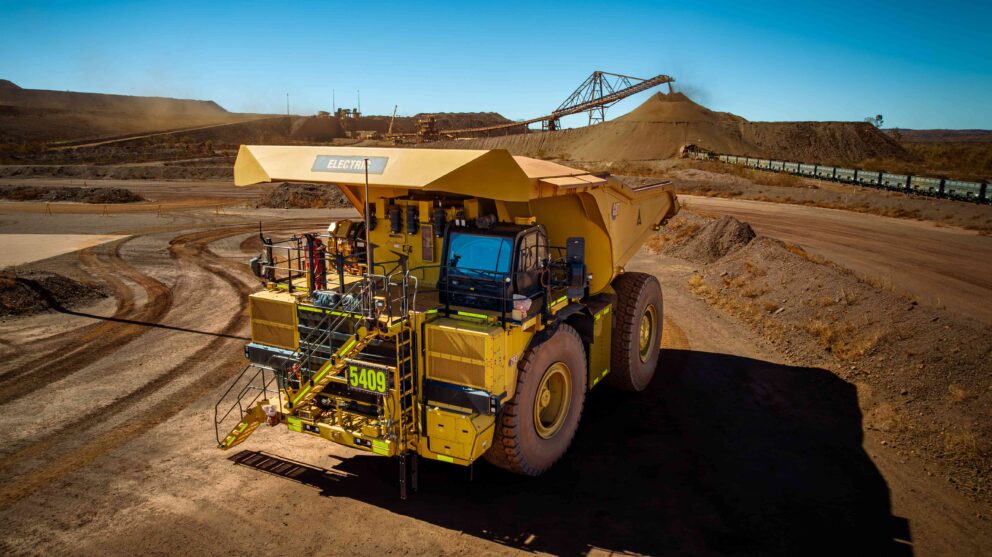
Haulage from Yilgarn's operations recommenced in September, with the first trainloads of iron ore reaching the Port of Esperance last month, reactivating transport corridors linking the Yilgarn Hub with the port.
NewsProjects & Operations
Yilgarn Iron completes first shipment
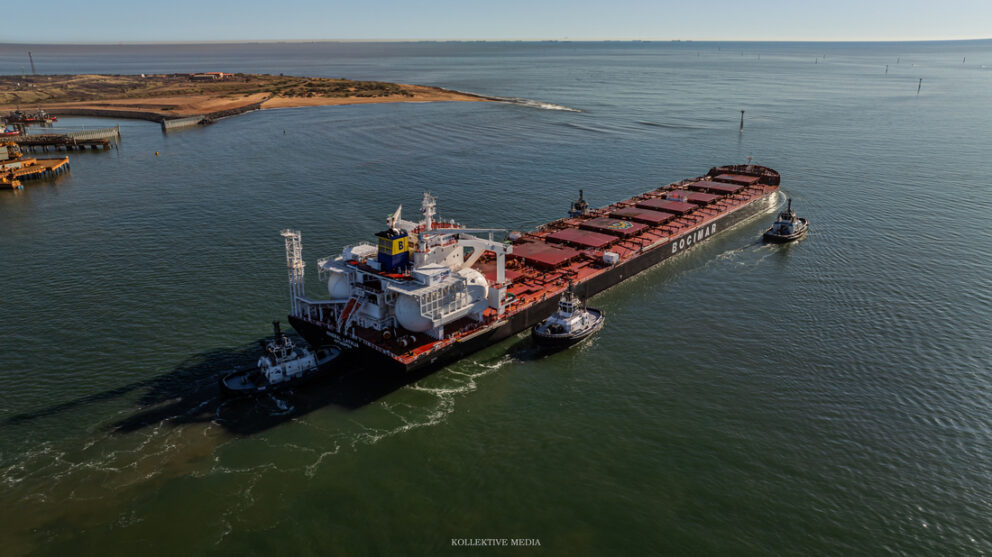
Yilgarn Iron completes first shipment Yilgarn Iron has completed its first shipment with more than 176,000t of iron ore loaded through the Port of Esperance in WA.The five-day operation saw iron ore loaded onto the bulk carrier MV Densa Shark, which departed for China on Saturday.The shipment comes less than 12 months after Mineral Resources' (ASX: MIN) final export from the Koolyanobbing operations in the Yilgarn Hub, which were acquired by Yilgarn Iron Investments in June.Southern Ports chief executive officer Keith Wilks says having Yilgarn Iron come on board as the Port of Esperance's second iron ore exporter less than a year on from the operations ceasing in the Yilgarn is a great result."Two customers using our iron ore infrastructure means more volume and more shipments from our Port of Esperance, which ultimately means more hours for our workforce on the ground,” he said."Trade losses are never easy to weather, but by proactively pursuing opportunities to diversify our customer base and commodity throughput we continue to be a reliable partner creating enduring value across our regions."At full production, Yilgarn Iron is targeting annual exports of more than 4mt, supporting the creation of up to 15 new operational roles at the Port of Esperance in early 2026 and increasing the port's operations workforce by more than a third.Yilgarn Iron Investments managing director Fergus Campbell comments on the shipment."Exporting our first 176,000t within less than four months of assuming control of the Yilgarn Iron Ore project is a testament to our hardworking and dedicated team, as well as to our suppliers and service providers, including Southern Ports and Aurizon,” he said.Yilgarn Iron becomes the second customer to use the port's iron ore circuit, joining Gold Valley, which has exported almost 2.5mt of iron ore through the Port of Esperance since its first shipment in October 2024.
Fortescue bets $152m on Peruvian copper takeover
NewsProjects & Operations
Fortescue bets $152m on Peruvian copper takeover
Fortescue bets $152m on Peruvian copper takeover Fortescue (ASX: FMG) has entered a binding agreement to acquire the remaining 64% of Canada- based Alta Copper for an implied value of $151m (C$139m).  Through the acquisition, Fortescue will gain full control of the Cañariaco copper project in Peru — considered a high potential long-life copper asset — which contains an estimated 1.1bt of measured and indicated resource at .42% copper equivalent as well as an additional .9bt of inferred resource at .29%. Fortescue already owns about 36% of Alta and, under the agreement, will pay Alta Copper shareholders about $1.53 (C$1.40) per share to acquire the remaining stake — a 50% premium on the company’s current 30-day volume weighted average price. Peru is a major copper-producing country, with companies including Anglo American and Glencore already extracting copper in the region. Fortescue has been operating in Latin America since 2018 and is positioned to leverage its well established technical, permitting and community engagement expertise to advance the project.  Fortescue’s recent diversification efforts have focused almost solely on clean energy products, including green hydrogen. The company is currently developing a 168,000tpa green hydrogen plant in Brazil at the industrial and port complex of Pecém, Ceará. The Cañariaco copper project aligns with Fortescue’s critical minerals diversification strategy and will form the cornerstone of the company’s copper portfolio.  Alta Copper’s board of directors, alongside officers holding 12.5% of shares, have unanimously recommended that Alta Copper shareholders approve the transaction. A vote is schedule for January 26 2026 and Fortescue will need about 66% of shareholder support for the acquisition to go ahead. The transaction is targeted to close in the Q1 CY2026. 
(Image Source: Rio Tinto) Yinhawangka country includes areas of the Angelo, Ashburton and Hardey River catchments, the Kunderong Range and the Mount Vernon, Rocklea and Turee Creek stations.
NewsPeople & Workforce
Rio Tinto signs interim agreement with Yinhawangka Aboriginal Corporation
Rio Tinto signs agreement with Yinhawangka Aboriginal Corporation Rio Tinto (ASX: RIO) and Yinhawangka Aboriginal Corporation have signed an Interim Modernised Agreement, establishing a pathway to a fuller agreement that will govern how the miner operates on Yinhawangka Country in the long term. The agreement introduces a co-management approach allowing Yinhawangka to be involved earlier in mine planning.  It will establishment a joint committee where both parties work together to make decisions regarding the protection and management of cultural heritage and Country as well as new projects and major operational changes.  The interim agreement builds on the 2013 Participation Agreement between the Yinhawangka People and Rio Tinto. Yinhawangka Aboriginal Corporation board chairwoman Robyn Hayden (née Tommy) comments on the agreement.  "Mining on our Country always comes with hard decisions, and we have always been clear that Yinhawangka People must be at the centre of those decisions,” she said.  “This agreement with Rio Tinto reflects both parties’ commitment to working in partnership, strengthening respectful communication, and ensuring Yinhawangka voices are heard.  “It creates opportunities for both our current and future generations, supporting a stronger and more sustainable future for both our People and our Country.” Rio Tinto iron ore chief executive Matthew Holcz says the agreement will allow the company to keep learning from Yinhawangka knowledge and perspectives as it works towards a fully modernised agreement, based on respect, transparency and shared responsibility. “We thank the Yinhawangka People for their continued leadership and guidance, as we work together to strengthen our partnership,” he said. Yinhawangka Aboriginal Corporation and Rio Tinto will continue working together to finalise the agreement in 2026. 
The smelter was founded in 1983 and produces up to 590,000tpa of aluminium — about 40% of Australia’s total production.
NewsProjects & Operations
Australia’s largest aluminium smelter to remain open beyond 2028
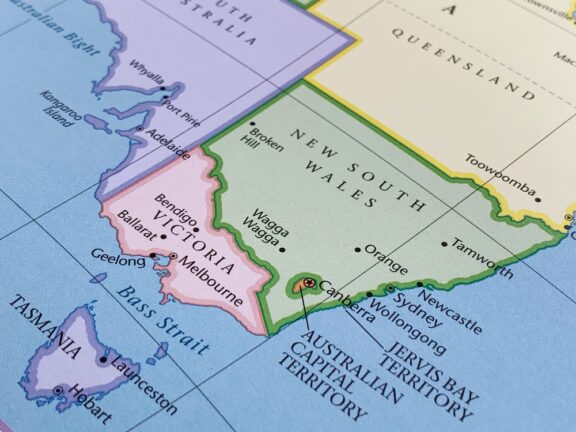
Australia’s largest aluminium smelter to remain open beyond 2028 The Federal Government will work with the NSW Government and Tomago Aluminium to keep the smelter open beyond 2028 after its current energy contract expires.In October, Tomago Aluminium had started consulting more than 1000 workers at the smelter as rising energy prices impacted the smelter’s viability.Over the coming months, Tomago Aluminium will work with the Federal and NSW Governments on a long-term renewable energy solution to support the smelter beyond 2028.“Tomago Aluminium has made it clear: to remain competitive and secure its future the smelter needs a reliable and affordable supply of renewable energy, with ageing coal-fired power options being prohibitively expensive,” Federal Climate Change and Energy Minister Chris Bowen said.As part of the new agreement, Tomago Aluminium will contribute at least $1b in capital and major maintenance investment over the next decade, which includes identifying further decarbonisation opportunities for the smelter.Prime Minister Anthony Albanese comments on the effort.“We want to ensure that Tomago continues to forge Australia’s prosperity, and it continues to create and sustain good, skilled jobs,” he said.“I want to thank the workers and the Hunter community who have faced uncertainty in recent weeks.“Tomago has a proud place in Australia’s history – and we will ensure it has a central place in Australia’s future.”
Billion-dollar mine felled by a blue banded bee
NewsPolitics & Regulation
Billion-dollar mine felled by a blue banded bee
Billion-dollar mine felled by a blue banded beeLast year, former Federal Environment Minister Tanya Plibersek derailed Regis Resources’ (ASX: RRL) $1b McPhillamys gold project in NSW with a controversial Indigenous heritage ruling.Now more than a year later, the Federal Court in Sydney is hearing Regis’ case — with the company pleading that the decision should be deemed invalid due to alleged issues and failures on behalf of Minister Plibersek.Regis Resources has argued that the view held by the Federal Department of Climate Change, Energy, the Environment and Water (DCCEEW) changed after additional evidence was produced by an independent Aboriginal elder more than a year after approval was granted.The Dreaming story that was given as evidence is considered controversial between Traditional Owners and Regis argues that further investigation should have taken place before the ruling was handed out.If Regis’ application is successful, the company will seek a declaration from a Federal Court judge that the Section 10 declaration is legally invalid and that the application be redetermined by a minister other than Minister Plibersek.Despite the contention, Minister Plibersek has remained adamant in her ruling.“The truth is we are living in a country where we've got thousands of years of continuous culture and heritage. We've done a pretty bad job of protecting it in the past,” Minister Plibersek said.“If we sincerely believe that we can't allow the destruction of cultural heritage in that way, then occasionally decisions like this have to be taken.“Protecting cultural heritage and development are not mutually exclusive. We can have both,” Minister Plibersek said.The ruling made in August 2024 — more than a year after the project was approved — denied the construction of a tailings dam near the Belubula River in an attempt to protect culturally significant land.“The Wiradjuri/Wiradyuri people, who traditionally lived around the Bathurst area, have significant spiritual and cultural connections to the headwaters of the Belubula River,” Minister Plibersek said at the time.“If this site were to be desecrated, it would be a threat to the continuance of Wiradjuri/Wiradyuri culture.“Crucially, my decision is not to stop the mine. The company has indicated to me that it has assessed around four sites and 30 potential options for the tailings dam.”Following the ruling, contrary to Minister Plibersek's declaration, Regis deemed the project as non-viable, stating it would take up to 10 years to identify and gain approval for an alternative tailings site, before taking out a non-cash impairment of $192m.The federal heritage protection system operates through Section 10 emergency declarations, which can override existing state approvals when sites face imminent threat of desecration. This power to operate independently from state mining approvals has created significant regulatory complexity.The Regis protection order challenge is an example of these two-tier regulatory system dynamics.During the initial assessment process, Regis consulted the Orange Local Aboriginal Council, who was believed to be the legally recognised Traditional Owner representatives of the region.In 2020, Wiradjuri Elder Aunty Nyree Reynolds lodged a protection application which failed to meet the required protection criteria. The application was made independent of the Orange Local Aboriginal Land Council and NSW Aboriginal Land Council.The NSW Government granted the McPhillamys project approval in 2023 but critical cultural evidence regarding the Blue Banded Bee Dreaming story emerged after approval was received, completely shifting the assessment trajectory.The federal protection orders were implemented in late 2024 despite the significance of the evidence being disputed between the Wiradjuri community.Under the federal protection system process, it was considered unnecessary to undertake additional consultation with Regis Resources.Following the ruling, Regis Resources chief executive Jim Beyer said the required restart of the approvals process with the NSW and Federal Governments could take up to 10 years, with no certainty of a viable alternative being realised.“Following the surprising and disappointing Section 10 Declaration by Minister Plibersek, Regis has commenced an assessment of the impacts on the economic value of our business,” he said.Regis Resources announced its decision to contest the ministerial decision shortly after, arguing the company was not afforded the opportunity to respond to the change in the application following the accumulation of new evidence.
Back to of the page