Category: People & Workforce

Union battlegrounds back in the Pilbara
NewsPeople & Workforce
Union battlegrounds back in the Pilbara
The Pilbara may see its first worker strike in decades as part of a major push from unions to re-enter the region. This week, the Electrical Trades Union (ETU) said it had applied for a protected action ballot covering 60 BHP (ASX: BHP) high-voltage workers — which the union says would mark the first industrial action at a major mining company in the Pilbara since the Fair Work Act took effect in 2009.The ballot follows a year of protracted negotiations between the employees and the company. The ETU says BHP workers are seeking their first workplace agreement, having been employed on disparate common-law contracts over the past two decades, with variance of more than 30% between people doing the same work.    ETU WA secretary Adam Woodage says the workers do an extraordinary job in tough conditions and remote locations. “For decades their employer has maintained a system of playing them off against one another with unequal individual contracts that provide no certainty or transparency, and place enormous power in the hands of individual managers to build empires through favouritism,” he said.  “ thought that the days of their employees taking industrial action in the Pilbara were history. They were wrong.”    These BHP workers are not the only ones pushing for change in the Pilbara. In February 2025, Rio Tinto (ASX: RIO) workers launched a majority support petition to initiate bargaining at the company’s Paraburdoo iron ore operations. The Mining and Energy Union (MEU) says the petition was an initiative of the Western Mine Workers Alliance (WMWA), a joint venture of the MEU and the Australian Workers Union. MEU iron ore train drivers have also been part of the broader reunionisation push throughout the Pilbara, securing improved agreements with both Rio Tinto and BHP.   The BHP ballot marks a new phase in the push to rebuild union presence in the Pilbara — a region historically associated with militant unionism. During the 1970s, workers spent an average of more than 10 days a year on strike, according to the Minerals Council of Australia (MCA).  The decline of union power throughout the Pilbara began in the 1980s when mining company Peko-Wallsend moved against entrenched union work practises and agreements at the Robe River mine. By the 1990s and through the mining boom of the 2000s, the region was a union wasteland. The introduction of the Federal Government's Closing Loopholes reforms, enacted through the 2023 and 2024 Acts, represented a significant re-orientation of Australia’s workplace relations system and a major opportunity for unions across the country. According to the Australian Resources and Energy Employer Association (AREEA) the reforms shifted the balance away from enterprise-based negotiation, commercial certainty and clear workforce boundaries, and toward expanded arbitration, increased union leverage and greater regulatory discretion. As part of the reforms, new Same Job, Same Pay provisions were introduced into the Fair Work Act to ensure labour hire employees were paid at least the same as employees who are directly hired and are doing the same job. The ruling meant that more than 2000 labour hire workers at BHP Mitsubishi Alliance (BMA) coal mines in Queensland were set to receive significant pay rises.  BHP challenged the ruling in the Federal Court, as it would affect workers at its Goonyella Riverside, Peak Downs and Saraji coal operations in Queensland, but the Full Federal Court upheld the FWC’s decision in December 2025. BHP has since sought special leave to escalate its challenge to the High Court. The Australian Council of Trade Unions (ACTU) is now advocating for the Same Job, Same Pay policy to cover additional employment conditions and to narrow the service contractor exemption — changes AREEA says would dramatically?expand the regime beyond what Australians were originally told it would do. AREEA chief executive Steve Knott AM says the Federal Government repeatedly assured the community that its policy would be limited to arrangements where labour hire was purportedly being used to undermine wage rates in certain workplaces. “This is no longer about ‘same job same pay’ for labour hire workers — it’s about the ACTU’s fantasy of creating ‘same employment package for everyone’, with no regard for how major projects and complex multi-employer workplaces actually operate,” he said. AREEA is concerned the push to broaden the regime ignored the well-established role of specialist contractors across Australia’s resources and energy sector.“Major LNG, mining and energy projects rely on specialist contractors delivering defined scopes of work such as maintenance, engineering and shutdown services,” Mr Knott said. “These are specialist service businesses performing defined work — they are not labour hire providers. “If unions succeed in collapsing that distinction, the FWC will effectively be asked to reshape how entire industries organise and contract work.“If Australia becomes a more expensive and inflexible place to deliver major projects, investment will simply flow to other jurisdictions — and the jobs will go with it.” 
The job cuts leave about 90 workers remaining at the mine.
NewsPeople & Workforce
238 jobs cut at troubled Tahmoor Coal mine
McGrathNicol restructuring partners Shaun Fraser and Jonathan Henry have cut Tahmoor Coal’s workforce by more than 70%, making 238 employees redundant following their initial assessment of the mine as liquidators.Workers affected by the cuts have been offered a limited period of unpaid leave.“The Tahmoor mine is a quality asset that has unfortunately been affected by issues facing the broader GFG Group and has lacked the capital necessary to continue mining operations,” Mr Fraser said.Tahmoor Coal entered voluntary administration in February, just hours after creditors led by Coal Mines Insurance moved to force the mine into liquidation over unpaid debts, including $4.7m in insurance premiums. Financial statements for FY24 were also bought before the court, showing unpaid creditor claims that exceeded $18.9m.The administration gave Sanjeev Gupta more time to pursue an alternative pathway for the idle mine, adding to pressure across his Australian operations following administrations involving other GFG-linked assets.According to the Mining and Energy Union, GFG Alliance had at the time rejected a $350m purchase offer from a consortium led by the site’s main contractor RStar, the employer of 250 of the 500 Tahmoor workers who were initially stood down without pay while the mine was idle.The liquidators have confirmed that they are urgently seeking expressions of interest for the Tahmoor mine in a sale process that commenced this week and that there is significant interest from several parties familiar with the mine.
Glencore Townsville workers to strike for better pay
NewsPeople & Workforce
Glencore Townsville workers to strike for better pay
Workers at Glencore’s refinery in Townsville have threatened to walk off the job this Friday if wage negotiations remain unresolved.Negotiations for a new enterprise agreement (EA) started March 25 last year before stalling amid uncertainty around the July 2025 closure of Mount Isa’s underground copper operations. Talks later resumed after the Federal and Queensland Government committed $600m to continue operations at the smelter and support its workers.This week, the Australian Workers Union (AWU) gave notice that members will be partaking in protected industrial action if the issues are not settled at a bargaining meeting scheduled for tomorrow.AWU northern district secretary Jim Wilson says Glencore is paying workers almost 15% less than neighbouring sites for the same work.“It’s simply unacceptable,” he said.“The Townsville community is sick of billionaires profiting from our town and leaving nothing but the crumbs for workers and their families.”The Queensland Electrical Trades Union (ETU) says across three EA meetings held since the bailout announcement, Glencore failed to make any meaningful movement.A Glencore spokesperson says the company has been engaging with copper refinery workers about the new EA for more than 12 months.“Glencore has tabled a competitive package which includes a salary increase over four years and we will continue to negotiate in good faith to get an agreement,” they said.“Despite securing a government funding package last year, the refinery is expected to continue losing money.“This political grandstanding from the unions is not helpful and undermines the constructive engagement to date with local EA bargaining representatives.”According to ETU, Glencore was offering wage increases of 6.9-10.4% across four years based on individual performance at the discretion of the company, saying this fell behind rising living costs and citing Australia’s consumer price index (CPI) of 3.8% per annum.Glencore publicly rejected these comments, reporting it tabled a 13% salary increase across four years.AWU Queensland secretary Stacey Schinnerl says the wage offer that Glencore has put on the table doesn’t meet the rising cost of living pressures faced by workers and their families.“We have a bargaining meeting on Thursday where we hope Glencore will finally come to the table to sort this out. The message to Glencore is clear, we won’t accept you short-changing our members.”
Funding will be directed at community development initiatives benefiting Traditional Owners and Native Title Holders in the areas of Tivan’s Central Australian projects, specifically the Molyhil tungsten project and the Sandover fluorite project.
NewsPeople & Workforce
Tivan to provide $1m in grant funding
Tivan (ASX: TVN) has established a community development initiative with the Central Land Council (CLC) to provide grant funding to support Traditional Owners and Native Title Holders in Central Australia.Tivan will provide up to $1m to fund regional community development initiatives, structured as $250,000 in initial funding, and three further annual funding stages of up to $250,000 over the next three years.Existing projects under the Community Development Program are targeted at delivering positive outcomes across health, cultural strengthening, education, infrastructure, employment and enterprise development.Tivan executive chairman Grant Wilson comments on the initiative.“The board of Tivan is proud to support this landmark initiative, that will provide much needed development funding to some of the most remote communities in Australia,” he said.“For too long resources companies in the Territory have adopted an adversarial and transactional approach to land access and have focused on bare minimum outcomes in respect of Aboriginal Australians. Tivan is different. The early and genuine inclusion of Traditional Owners and Native Title Holders is a foundational principle at our company, and we are committed to furthering a durable alignment of interests throughout the project development lifecycle.“Tivan will fundamentally reshape how resources projects are developed in the Territory in the years ahead.”Tivan says that wherever possible, initiatives are delivered in partnership with Aboriginal-controlled organisations and companies, strengthening local capability and economic participation.
Mining gender gaps persisting despite equality efforts
NewsPeople & Workforce
Mining gender gaps persisting despite equality efforts
In the Australian resources sector, women now represent a larger portion of roles as companies make progress to lower representation and wage disparities.Though significant progress has been made in recent years, there is still major room for growth with the percentage of women holding roles in the mining sector fluctuating between 22 - 23% since 2024, according to the Federal Government’s Workplace Gender Equality Agency (WGEA).Though progress across the board leaves a lot to be desired, there are a few companies that stand out as leaders in creating gender equality.In April 2025, BHP (ASX: BHP) reported 40% female representation in its global employee workforce — a world-first for a global listed mining company.Recent figures from Fortescue (ASX: FMG) show that 39% of senior leadership roles are held by women and an overall 25.1% female employment rate.At IGO (ASX: IGO), women hold the majority of board seats, accounting for 57% of members — well above the industry average of 24%.Lynas (ASX: LYC) chief executive Amanda Lacaze remains the only women to lead an Australian-based ASX-listed mining company, though she has announced plans to step down by the end of FY26.Natascha Viljoen was recently promoted to chief executive of US-based gold giant Newmont Corporation (ASX: NEM).Safety extends beyond physical protectionAustralia’s mining sector has made progress towards creating safer, more respectful and inclusive cultures.However, according to the Australian Human Right’s Commission’s 2022 survey, the mining industry holds the fifth highest incidence rate of workplace sexual harassment and one in three workers having experienced sexual harassment in the last five years.This is a safety issue.The extent of sexual harassment and bullying directed toward female FIFO workers in the mining sector was exposed in 2022 when the?WA Parliament published its landmark Enough is Enough report.The inquiry focused on the extent, nature and reporting of sexual harassment in FIFO workplaces and the workplace culture across the mining industry.The inquiry found that sexual harassment and assault were not being appropriately managed through failure of companies to report known incidents, fear of repercussions on those reporting incidents, limited or ineffective training across industry and a significant gender imbalance across the mining sector workforce.Responding to the 2022 inquiry, Federal Resources Minister Madeleine King called for the sector to step up and take action.“Female workers need to know they are safe at work, and that they have the right to have rewarding careers in the mining industry without being subjected to sexual harassment and assault,” she said.“Any case of sexual harassment is one too many. Sadly, the inquiry has found that sexual harassment and assaults are much too common for women who choose to work in the FIFO workforce.”As a result, a spotlight was placed on the adequacy of existing workplace practices and policies in protecting workers against harassment, assault and other psychosocial risks.In the same year, Rio Tinto (ASX: RIO) conducted an independent internal review of its operations and found 28% of its female workforce had experience workplace sexual harassment.As part of the independent review, several anonymous workers shared their lived experience.“I do believe Rio Tinto has made much progress, however there is still more to be done,” said one female operational manager.“There are some key areas. belief that women in senior roles are only there due to positive discrimination,” she said.“ perceived (perhaps) actual discrimination against mothers and expectant mothers…Despite my credentials, I have been called a token woman and treated that way as well.“I have had my opinions negated and I have many experiences challenged.”Building a respectful, supportive and high-performance culture remains integral to addressing the issues highlighted by this inquiry.Rio Tinto says it is making active efforts to drive this shift, including implementing respectful behaviour training modules and driving company-wide initiatives to create change.In response to the independent review finding, Rio created the Everyday Respect taskforce to implement the 26 recommendations to create a safe, respectful and inclusive workplace.Two years after releasing the initial report, Rio conducted a progress review which reported change is happening and progress is being made.Closing the gender wage gapAccording to the WGEA, the gender pay gap across the Australian mining sector is the third largest in the country.Gender pay gaps are the result of imbalances in gender composition and remuneration across the organisation.The gender pay gap is not the same as equal pay which has been the legal requirement in Australia since 1969 which ensure both men and women are paid the same for performing the same role.While progress has been made, work is still ongoing. Across most Australian operations, the average and median earnings of women remain lower than those of men.Figures vary significantly across companies. In 2025, Rio Tinto’s equal pay gap was less than 1.5% in favour of men while IGO, in FY24, reported a 10.7% gap in favour of men.PLS, recognising the need to drive further progress, reported a 14.1% gap in average total remuneration in favour of men as part of its Gender pay equality statement 2026.The company’s recent gender pay gap results are primarily influenced by structural factors and gender representation patterns across the workforce, rather than unexplained differences in pay for equivalent work.PLS reports that it is actively addressing these structural representation factors as part of its efforts to increase female participation and drive an absolute improvement in its gender pay gap.According to WGEA’s 2026 figures, 54.8% of employers across Australia reduced their average total remuneration gender pay gap year-on-year and 52.3% of employers reduced their median total remuneration gender pay gap year-on year.Encouraging future generationsThere are many initiatives across Australia, from both the private and public sectors, encouraging young women to take up careers in the mining sector.One such program is the Queensland Resource Council’s (QRC) girls in resources leadership skills (GIRLS) mentoring program. The program’s 2026 rendition saw twenty Year 12 students and their resources industry mentors gathering in Brisbane from across broader Queensland.Students travelled from 16 schools for the launch of the mentoring program and to meet their experienced industry mentors including geologists, engineers and experienced tradespeople.The popular program, now in its eighth year, has helped connect more than 120 students with the minerals and energy sector, with many alumni going on to carve out successful careers in the sector.QRC chief executive Janette Hewson says the mentors and their mentees will take part in a scaffolded and mentoring partnership over the next six months, supported by organisational psychologists."These young women will get expert guidance and advice from their mentors, who work in the fields they are aspiring to enter,” she said.GIRLS is a joint initiative between the Queensland Minerals and Energy Academy (QMEA) and Women in Mining and Resources Queensland (WMARQ).WIMARQ co-chair Catherine Cook says GIRLS was designed to assist young women keen to follow a STEM or trades career in the resources industry.“By the end of this six-month program the students will be filled with knowledge and confidence about potential careers in mining and energy,” she said.Today, QRC is also hosting the 2026 Resource Awards for Women to celebrate the exceptional achievements of women across the state’s resources sector.There are 20 finalists, including include field and trade supervisors, safety leaders, value analysts, diversity champions and executives, competing for seven prestigious awards.
AREEA celebrates female leaders in the resources sector
NewsPeople & Workforce
AREEA celebrates female leaders in the resources sector
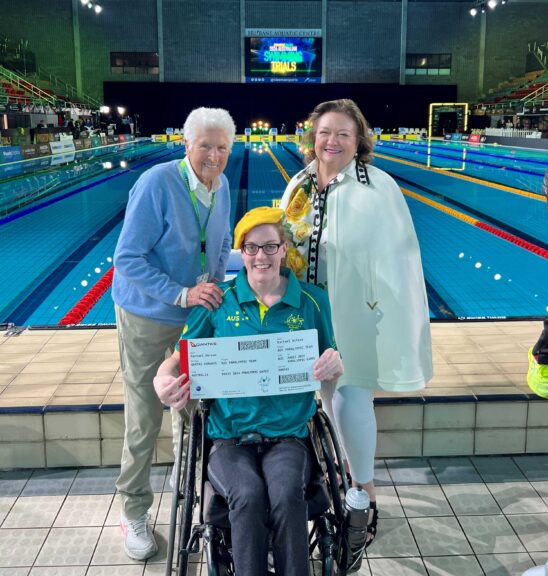
As the world marks International Women’s Day on March 8, the Australian Resources and Energy Employer Association (AREEA) is celebrating women who have shaped and those who continue to make their mark in Australia’s resources and energy sector.As part of its national TRAILBLAZERS campaign, AREEA is showcasing female pioneers and contemporary leaders contributing at every level of Australia’s resources sector — on site and offshore, in engineering and operations, in corporate and commercial roles and in executive leadership and boardrooms.In the Australian resources sector women hold only 25% of senior management roles, 32% of professional roles, 33% of apprentice roles and only 10% of technical and trades roles.Comparatively, 26% of chief executive role across all industries are held by women, yet only 8% of chief executive roles in the resources sector are held by women, according to AREEA.AREEA’s deputy chief executive Tara Diamond says these numbers highlight both the progress and the persistent gaps.“That’s why it’s critical that our industry actively recruits, retains and supports women so the next generation sees themselves reflected in the workforce, from site roles to the C-suite.”Some female industry TRAILBLAZER names are instantly recognisable, such as Hancock Prospecting executive chairman Gina Rinehart and Lynas Rare Earths (ASX: LYC) chief executive and managing director Amanda Lacaze.AREEA notes several other remarkable women whose achievements deserve recognition:Former Woodside executive vice president Eve Howell, who in 2006 assumed responsibility for the North West Shelf project, Australia’s largest and most complex resource development Marine Pilot shipmaster Carol Dooley, who in 2004 became the first woman in Australia to captain an LNG carrier and one of few female LNG captains in the world at that time“These Trailblazers demonstrate that incredible and groundbreaking role women have played and continue to play across technical excellence, leadership and innovation in the resources and energy industry,” Ms Diamond said.“International Women’s Day is a powerful reminder that while progress has been made, there is more to be done.“These women paved the way for future generations and helped build one of the most advanced, innovative and responsibly operated industries in the world.”Today, women continue to shape the future of Australia’s resources and energy sector, driving innovation, championing safety and sustainability and leading complex organisations through a rapidly changing energy and resources landscape.
Queensland to reform ‘weak’ safety frameworks
NewsPeople & Workforce
Queensland to reform ‘weak’ safety frameworks
The Queensland Government is reforming its resources safety framework after an independent review found Resources Safety and Health Queensland’s (RSHQ) governance to be lacking.The Resources Safety and Health Queensland and Other Legislation Amendment Bill 2026 would implement the Queensland Government’s response to the 2025 review, which was conducted by The University of Queensland.The review, prepared by Professor Susan Johnston, found serious weaknesses in RSHQ’s governance, confusion around roles and a lack of clear accountability.The legislation proposes to address these deficiencies by establishing an independent skills-based Governing Board to strengthen oversight and accountability, streamline advisory structures and remove duplication.It will also transfer the statutory functions of the Commissioner for RSHQ to the new board to provide clearer lines of responsibility and stronger accountability.Increasing the coal mining safety and health advisory committee and the mining safety and health advisory committee functions to provide independent advice and enhance resources safety and health policy is also a target.Queensland Natural Resources and Mines Minister Dale Last says the review’s findings were sobering.“Every worker deserves to make it home safe to their family,” he said.According to SafeWork Australia, Queensland had the highest number of workplace deaths in 2024 out of all Australian states, accounting for 53 deaths out of 188.In the first week of January this year, two mine workers were killed in separate incidents at Mammoth underground coal mine and a gold operation near Nebo, southwest of Mackay.“The legislation we’ve introduced is making Queensland safer for every mine worker and will restore confidence in the resources safety framework,” Minister Last said.The bill also reforms the funding model for the land access ombudsman (LAO). The LAO will continue to be funded by the Queensland Government, with revised arrangements linking the LAO advisory council to Coexistence Queensland and repealing the industry levy and cost recovery funding model.“The Queensland Government wants to see more investment in Queensland’s resources sector which is why we will repeal legislation that would put the onus on mining companies to fund the LAO, removing unnecessary red tape and financial burden,” Minister Last said.“We are delivering a better lifestyle through a stronger economy by reducing industry costs so mining companies can get on with delivering jobs for Queenslanders.”
Back to of the page