Category: People & Workforce

University graduates invited to work with Glencore
NewsPeople & Workforce
University graduates invited to work with Glencore
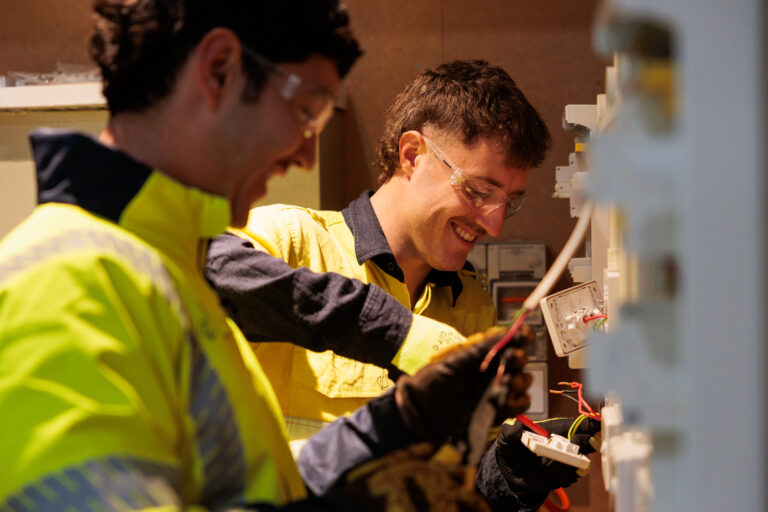
University graduates invited to work with Glencore Glencore has opened applications for its 2027 graduate program which offers university graduates the opportunity to launch their careers with the leading resources company.Open to graduates in engineering, environmental science, geology, accounting, health and safety, human resources and IT, the program begins in February 2027 and provides a strong foundation for long-term careers in the mining industry.The two-year program combines hands-on site experience with structured development, mentoring from industry leaders and access to a strong professional network, along with a competitive salary and comprehensive benefits.Since 2020, 668 graduates have joined Glencore’s Australian coal and metals operations, gaining practical experience while contributing to major regional projects and local communities.Glencore coal human resources manager Michelle Montgomery says the coal graduate program was designed to give graduates real responsibility, strong support and early exposure to operational environments.“Our Graduate Program gives emerging professionals the chance to learn, grow and thrive in a supportive and challenging environment, while building strong foundations for long-term careers,” she said."Beyond technical skills participants develop confidence in communication, teamwork and leadership, all underpinned by a strong safety culture, integrity and responsibility for solving real challenges.”For graduate geotechnical engineer Nicholas Grady, the coal graduate program offered opportunities he had not found elsewhere in the industry, particularly the chance to gain experience across both underground and open-cut operations.“I chose to apply for the Glencore graduate program because it offered opportunities other programs didn’t, particularly as a geotechnical engineer,” he said.“I’ve had the chance to work in both underground and open-cut coal operations and gain plenty of hands-on experience.“The support on site has been great. I have a direct supervisor who has been extremely helpful and someone I can always speak to, even when we’re not on site together. It’s a unique opportunity for graduates looking for real responsibility early in their careers, and I would encourage students to give it a go.”Glencore Mount Isa Mines human resources manager Shari Barwick says the metals graduate program is designed to give graduates meaningful responsibility while providing the support they need to succeed.“Our graduate program helps early-career professionals build skills, confidence and leadership capability in a supportive and challenging environment, laying the groundwork for rewarding careers in regional Queensland,” she said.“Alongside technical skills, graduates develop teamwork, communication and problem-solving abilities, guided by our strong focus on safety, integrity and real-world impact.”For metallurgist Mikayla McKenna the opportunity to challenge herself, gain practical experience and build confidence was a defining part of the program.“I joined the graduate program because I wanted hands-on experience, not just theory,” she said.“That is one of the best parts of the graduate program, learning from people who’ve been solving problems for years. That knowledge doesn’t exist in textbooks, you only get it by being here, amongst the action.“Within months of arriving, I was solving real operational problems and working with people who trusted me. That’s what made this experience unlike any other.”
MCA: Skilled migration to reverse mining talent crunch
NewsPeople & Workforce
MCA: Skilled migration to reverse mining talent crunch
MCA: Skilled migration to reverse mining talent crunch The Minerals Council of Australia (MCA) has outlined a range of programs and reforms to skilled migration policy to reduce a talent shortage in the nation’s minerals industry. In a submission to the Joint Standing Committee on Migration’s Inquiry into the value of skilled migration to Australia, the MCA’s recommendations include fast-tracking permanent residency for in-demand global talent, cutting processing delays and accelerating licensing.MCA chief executive Tania Constable says Australian mining is facing a severe skills shortage. “ threatens our ability to take advantage of growing global demand for critical minerals essential to daily life, the energy transition and defence and bulk commodities such as iron ore and coal,” she said. “Mining is facing a workforce crunch as demand for talent intensifies while nearly half of mining engineers are expected to retire within the next decade, yet hundreds of foreign engineers living in Australia are forced to drive Ubers or accept other work below their level of expertise for a living. “Employing Australians will always be the first priority of the minerals industry. “The industry provides more than 290,000 direct jobs and also creates jobs through supply chains and related industries — totalling around 1.25m jobs in direct and indirect jobs across the country — with projections indicating up to 35,400 jobs are to be added by 2028.” Skilled workers are also delivered through the vocational education and training system which supplies job-ready talent through apprenticeships, traineeships and targeted upskilling programs. Apprentices and trainees made up about 4.4% of the mining workforce for the last 15 years, with almost 11,000 mining apprentices and trainees in training. “At the same time, skilled migration fills urgent workforce needs, complements domestic training and supports long-term growth,” Ms Constable said. “Without skilled migration, mining labour shortages especially in critical and hard to fill specialised roles would put project timelines, export earnings and the broader national economy at risk.” Australian industry is struggling to fill critical roles including mining, geotechnical and processing engineers, metallurgists, geologists, electricians, mine surveyors, diesel fitters and drillers. “While Australia’s skilled migration intake is intended to align with industry needs, responsiveness is weakened by slow updates, credential barriers and settlement constraints,” Ms Constable said. “Australia’s mining, clean energy and technology sectors are all frustrated and impeded by these weaknesses, as their demand for specialised skills is growing faster than migration pathways can adapt.” Although skilled migrants comprise just 1.24% of the Australian minerals workforce, their contribution is critical. Since June 2020, skilled migrant industry participation hasmore than doubled, rising 122% from 1700 in 2020 to 3880 in 2025.  The MCA’s submission outlines several recommendations to improve skilled migration approach, including restoring responsiveness and streamlining pathways by aligning intake with verified industry needs and fast-tracking permanent residency routes to attract and retain global talent According to the MCA, eliminating structural barriers by cutting processing delays, simplifying requirements and modernising administration whilst empowering states and territories through flexible regional compacts and embedding clear residency, family and settlement support are also crucial. The MCA also recommends activating regional compacts that give states and territories flexible nomination quotas directly tied to verified local shortages and mobilising existing migrant talent by accelerating credential recognition and introducing targeted industry incentives for work experience placements and structured mentoring. Accelerating licensure and credential assessment through codesign with professional regulators will also help create frictionless, accelerated permanent residency routes for skills essential to national strategic priorities, including those required for the critical minerals, the clean energy transition and net zero targets, such as STEM, advanced manufacturing and specific trades, says the MCA. “A more agile and targeted skilled migration system will secure the skills that drive innovation, lift productivity and reinforce the nation’s position in the global economy, particularly in mining where leadership is critical to long-term prosperity,” Ms Constable said. 
300 jobs on the line at Australia’s largest power station
NewsPeople & Workforce
300 jobs on the line at Australia’s largest power station
300 jobs on the line at Australia’s largest power station Negotiations between Origin Energy and Centennial Coal over a coal supply contract for the Myuna mine in NSW have stalled after Origin put forward a short-term proposal that fails to secure the future of the mine or its workforce.The dispute comes after Origin announced it would extend the life of Eraring power station until at least 2029 to support the electricity grid as the station moves towards retirement.Origin Energy proposed a new 12 month extension of the mines operations, maintaining their current agreements, which Centennial rejected on the grounds of being commercially unviable.The mine employs about 300 direct staff, along with hundreds more across the supply chain in Lake Macquarie and the Hunter region.Myuna Colliery was built solely to supply coal to Origin’s Eraring power station and without a viable contract, faces an uncertain future.Federal Member for Hunter Dan Repacholi says Myuna was built to supply Eraring and there is no alternative market.“Origin’s offer yesterday was disgraceful,” he said.“It was spin, not a solution.  A short-term, take-it-or-leave-it proposal that provides no certainty for workers, their families or the local community is not good enough.“If Origin walks away, this mine closes and that is a deliberate commercial choice, not an unavoidable part of the energy transition.”Community anger and concern continue to grow, with strong local campaigns backed by unions pushing for Origin to take responsibility for the future of the mine and its workers.Origin energy supply and operations head Greg Jarvis says the offer provides Centennial time to implement employee support initiatives as part of the Energy Industry Jobs Plan that the Net Zero Economy Authority is currently finalising, along with other state and federal government support.“Eraring plays an important role in keeping the lights on for NSW households and businesses, and we are committed to operating it reliably through to its scheduled closure in April 2029,” he said.“However, it is extremely disappointing to see workforce related issues being brought into our commercial negotiations with Centennial. We remain of the view that Centennial’s focus should be on helping its workers prepare for their futures through the energy transition.“We’ve stepped up and demonstrated how we’re supporting our people as we approach Eraring’s retirement, and we now need Centennial to come to the table and confirm its support for its workforce through this transition period.“We believe workers and the community deserve greater transparency from Centennial Coal on how it will support them through the full implementation of the Energy Industry Jobs Plan, if the Net Zero Economy Authority recommends it be required.”
Industry mourns the passing of Tim Picton
NewsPeople & Workforce
Industry mourns the passing of Tim Picton
Industry mourns the passing of Tim Picton The family of Tim Picton has confirmed his death, after he spent more than three weeks in hospital following an alleged assault in Perth.Mr Picton served as Mineral Resources (ASX: MIN) strategy director after joining the company in 2022 following a distinguished career in senior political and government roles across Australia.MinRes says Mr Picton made an immediate impact working alongside senior leaders, current and prospective partners as well as government, industry and community stakeholders.His extensive industry knowledge and acumen helped drive significant MinRes projects, partnerships and transactions, which strengthened the company and delivered positive outcomes for its people, partners and communities.MinRes managing director Chris Ellison expressed profound sadness at Mr Picton’s passing and extended heartfelt condolences to his family on behalf of everyone at the company.“Tim was an exceptionally talented and dedicated leader whose enthusiasm, drive and brilliant mind will leave a lasting legacy at MinRes,” Mr Ellison said.“He inspired those around him and his loss will be devastating for colleagues across our business.“Tim was a trusted colleague and a friend whose insight and advice I valued greatly. His loss is deeply felt and I will miss him enormously.”CME chief executive Aaron Morey says Mr Picton was remembered foremost for the way he treated people — with integrity, generosity and genuine care for others.“Tim brought warmth, honesty and thoughtfulness to everything he did, and those qualities were felt well beyond the boardroom,” he said.“During his time on the CME Board, Tim made a significant contribution to the organisation and to the WA resources sector, always guided by a strong sense of responsibility and purpose.”South Australian Premier Peter Malinauskas extended heartfelt condolences to Mr Picton’s brother, South Australian Health Minister Chris Picton.“At this incredibly difficult time, our Government and our Parliamentary team will wrap our arms around Chris and his loved ones and offer every support we can,” he said.“Tim was highly respected across the Labor movement nationally. He served with distinction in Federal, South Australian and Victorian Labor Governments, and later as Western Australian State Secretary and Campaign Director during the 2021 WA State Election and the 2022 Federal Election campaigns.“Tim will be remembered with great warmth, respect and affection by those who had the privilege of knowing him.”
Lynas said it experienced a significant increase in demand from direct end customers and new metal and magnet maker projects following expanded export controls from China in September.
NewsPeople & Workforce
Lynas Rare Earths CEO to retire after 12 years
Lynas Rare Earths CEO to retire after 12 years Amanda Lacaze will step down from her role as chief executive of Lynas (ASX: LYC), having led the company’s shift from a “troubled startup” to the largest rare earths producer outside China.Lynas’ market value has grown about $14.6b since 2014, according to Lynas board chair John Humphrey.“Under leadership, the company’s production and operating footprint has grown and our market value has increased from around $400m in 2014 to $15b,” Mr Humphrey said.“The company was in a very difficult position when took on the role of chief executive.“It is thanks to hard work, drive and tenacity that Lynas is today a leading rare earths producer and critical supplier to global manufacturing chains.”Ms Lacaze will remain with the company until the end of FY25 to enable a smooth transition as the board begins its search process for a new chief executive, considering both internal and external candidates.“It has been a great privilege to lead the company from a troubled startup to an ASX50 company,” Ms Lacaze said.“Having successfully concluded the Lynas 2025 capital investments program and launched the Towards 2030 growth strategy, it is the right time to make this transition.”The announcement comes as Australia refocuses on its previously announced $1.2b Critical Minerals Strategic Reserve, with Federal Treasurer Jim Chalmers briefing G7 members on new details this week.Antimony, gallium and rare earth elements will be the first minerals targeted by the reserve.Lynas stands as an example of Australia’s potential as a refiner, a crucial component of critical minerals value chains that are significantly concentrated in China.“We are refining right now. Lynas Rare Earths in Kalgoorlie is doing an important stage of this,” Federal Resources Minister Madeleine King said.“Lynas Rare Earths from the deposit at Mount Weld is the only Western supplier of rare earths processing at the moment.”In 2025, Lynas emerged as the only commercial producer of separated dysprosium and terbium ex-China after achieving first production at Lynas Malaysia.
AREEA says it will continue to advocate for a fair, workable and balanced framework that protects productivity across Australia’s resources and energy sector.
NewsPeople & WorkforcePolitics & Regulation
Court strikes down award limits on union delegates
Court strikes down award limits on union delegates A Full Federal Court has ruled the Fair Work Commission (FWC) unlawfully narrowed workplace delegate rights in modern awards, ordering it to redo the award terms.The Federal Court found the FWC made three jurisdictional errors in varying modern awards to include a workplace delegates’ rights term.The court found the FWC impermissibly confined delegates’ representation rights to employees of the delegate’s employer, narrowed the statutory communication right and imposed absolute constraints that could unlawfully restrict the reasonable exercise of delegates’ rights.The ruling has sparked industry backlash, with Australian Resources & Energy Employer Association (AREEA) chief executive Steve Knott saying workers’ rights have been extended to engage with workplace delegates on the employer’s time and resources, provided only that they are eligible to be members of that union.“The laws create unprecedented new powers for unions, risk turning employees into de-facto union organisers, and apply across all workplaces, including non-union sites with no enterprise agreements,” he said.“ decision materially expands the scope of workplace delegate rights. It extends the right of workplace delegates, paid for by employers, to communicate with contractors and labour hire employees working at an enterprise, regardless of whether those workers are union members.”Minerals Council of Australia (MCA) chief executive Tania Constable has called the decision an “over-reach of union power”.“Today’s decision by the Full Federal Court to overturn the FWC’s orders that placed reasonable limits on the exercise of union delegate powers confirms that unions will continue to push for expanded powers which absolve union delegates of their obligations as employees and interfere with the normal performance of work,” she said.“The decision shows that the Federal Government’s Closing Loopholes legislation gives unions significantly more power than what the independent umpire determined was a fair and reasonable balance.“Australian mining companies are already feeling unprecedented cost pressures, including from industrial relations changes, mounting energy prices, lengthy and costly project approval delays and increased royalties – driving investment offshore to low-cost jurisdictions with poor environmental and emissions standards.”The MCA says it will work with other affected industries to closely review the decision and its implications and take further action as appropriate. 
(Image Source: Rio Tinto) Yinhawangka country includes areas of the Angelo, Ashburton and Hardey River catchments, the Kunderong Range and the Mount Vernon, Rocklea and Turee Creek stations.
NewsPeople & Workforce
Rio Tinto signs interim agreement with Yinhawangka Aboriginal Corporation
Rio Tinto signs agreement with Yinhawangka Aboriginal Corporation Rio Tinto (ASX: RIO) and Yinhawangka Aboriginal Corporation have signed an Interim Modernised Agreement, establishing a pathway to a fuller agreement that will govern how the miner operates on Yinhawangka Country in the long term. The agreement introduces a co-management approach allowing Yinhawangka to be involved earlier in mine planning.  It will establishment a joint committee where both parties work together to make decisions regarding the protection and management of cultural heritage and Country as well as new projects and major operational changes.  The interim agreement builds on the 2013 Participation Agreement between the Yinhawangka People and Rio Tinto. Yinhawangka Aboriginal Corporation board chairwoman Robyn Hayden (née Tommy) comments on the agreement.  "Mining on our Country always comes with hard decisions, and we have always been clear that Yinhawangka People must be at the centre of those decisions,” she said.  “This agreement with Rio Tinto reflects both parties’ commitment to working in partnership, strengthening respectful communication, and ensuring Yinhawangka voices are heard.  “It creates opportunities for both our current and future generations, supporting a stronger and more sustainable future for both our People and our Country.” Rio Tinto iron ore chief executive Matthew Holcz says the agreement will allow the company to keep learning from Yinhawangka knowledge and perspectives as it works towards a fully modernised agreement, based on respect, transparency and shared responsibility. “We thank the Yinhawangka People for their continued leadership and guidance, as we work together to strengthen our partnership,” he said. Yinhawangka Aboriginal Corporation and Rio Tinto will continue working together to finalise the agreement in 2026. 
Back to of the page