Category: Projects & Operations

shutterstock_2019208727
NewsProjects & Operations
Westgold divests Mt Henry gold project for $64.6m
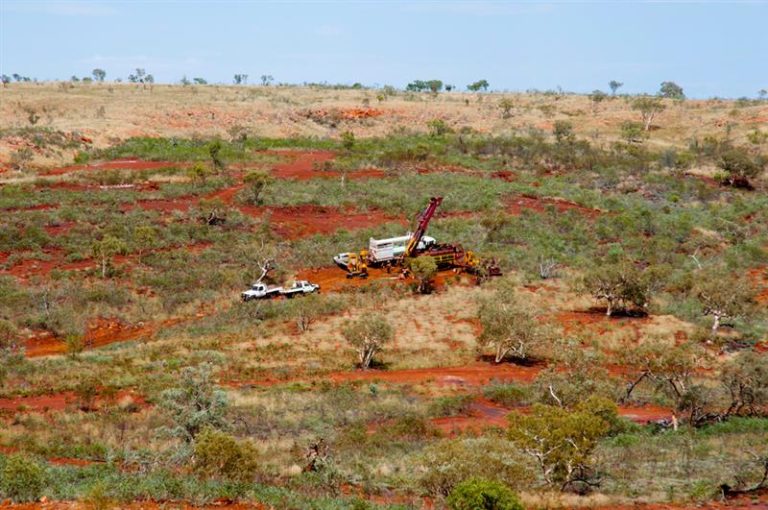
Westgold Resources (ASX: WGX) will divest the Mt Henry-Selene gold project in WA, closely following the announced spin-out of the company’s non-core Murchison projects.Alicanto (ASX: AQI) will acquire 100% of the 150moz project including all associated mining tenements, licences, heritage agreements, contracts and technical information.The Mt Henry project was acquired by Westgold in 2024 after being placed on care and maintenance in 2019 by Karora Resources. It hosts a combined mineral resource of 24.5mt at 1.2g/t gold for 915,000oz of contained gold and an ore reserve of 11.7mt at 1.3g/t gold for 478,300oz.Westgold will receive $15m cash and $19.6m via the issue of 19.9% of the ordinary shares in Alicanto post transaction close.Westgold says the transaction is aligned with its long-term strategic plans of focusing on larger, core operating assets rather than non-core assets such as Mt Henry.“This transaction delivers Westgold shareholders an attractive mix of cash, exposure to project upside via a large strategic shareholding and deferred consideration payable on specific project milestones,” Westgold managing director and chief executive Wayne Bramwell said.“Westgold is pleased to partner with Alicanto, whose board and management team are experienced and committed explorers and have a demonstrable record of rapidly advancing gold projects.“Westgold continues to progress discussions in relation to the potential sale of its Peak Hill and Chalice gold assets following strong inbound interest.”Alicanto interim executive chair Ray Shorrocks comments on the transaction.“The Mt Henry acquisition is an exceptional company-making opportunity for Alicanto,” he said.“It provides immediate scale, a high-quality, near-surface Resource and a clear platform for rapid growth and development.“The .9moz resource and pit shells were calculated when the gold price was one-quarter of its current level and the historic drilling data shows most holes ended in mineralisation.”The divestment follows Westgold’s recently announced demerger, with the company spinning out its non-core Reedy’s and Comet gold exploration assets to new stand-alone Valient Gold.The Reedy’s and Comet assets have a combined mineral resource of 15.6mt at 2.4g/t gold for 1.2moz.Both projects were previously in production before being placed on care and maintenance in FY23.“By establishing Valiant, we create an independent, well-funded gold company that can bring forward value from smaller assets such as the Comet and South Emu-Triton underground mines and unlock the exploration potential across the Reedy and Comet packages,” Mr Bramwell said.“Valiant will have a fast-track to cashflow with an ore purchase agreement (OPA) to be entered into with Westgold.“This collaborative, capital efficient model is proven, as demonstrated by Westgold’s investment and OPA with New Murchison Gold (ASX: NMG).“This model saw NMG transition from explorer to producer, with gold production from NMG’s Crown Prince deposit now delivering high grade oxide ore to Westgold’s Meekatharra processing hub.“Valiant can replicate this success. With several small underground mines in care and maintenance, a range of open pit opportunities and exploration upside, the Valiant team has multiple near-term restart and growth options to deliver near term cashflow.”Westgold will retain upside to exploration and production success through a substantial equity holding in Valiant.
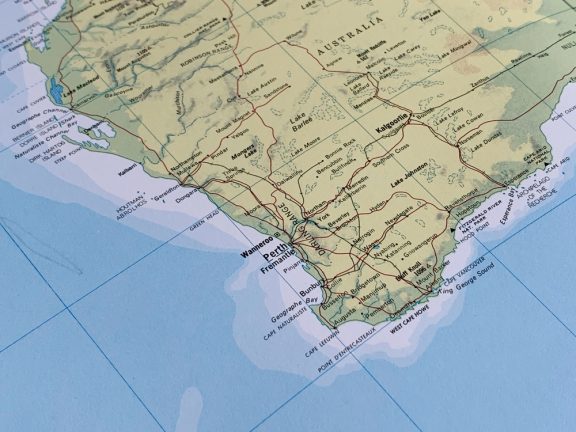
Haulage from Yilgarn's operations recommenced in September, with the first trainloads of iron ore reaching the Port of Esperance last month, reactivating transport corridors linking the Yilgarn Hub with the port.
NewsProjects & Operations
Yilgarn Iron completes first shipment
Yilgarn Iron completes first shipment Yilgarn Iron has completed its first shipment with more than 176,000t of iron ore loaded through the Port of Esperance in WA.The five-day operation saw iron ore loaded onto the bulk carrier MV Densa Shark, which departed for China on Saturday.The shipment comes less than 12 months after Mineral Resources' (ASX: MIN) final export from the Koolyanobbing operations in the Yilgarn Hub, which were acquired by Yilgarn Iron Investments in June.Southern Ports chief executive officer Keith Wilks says having Yilgarn Iron come on board as the Port of Esperance's second iron ore exporter less than a year on from the operations ceasing in the Yilgarn is a great result."Two customers using our iron ore infrastructure means more volume and more shipments from our Port of Esperance, which ultimately means more hours for our workforce on the ground,” he said."Trade losses are never easy to weather, but by proactively pursuing opportunities to diversify our customer base and commodity throughput we continue to be a reliable partner creating enduring value across our regions."At full production, Yilgarn Iron is targeting annual exports of more than 4mt, supporting the creation of up to 15 new operational roles at the Port of Esperance in early 2026 and increasing the port's operations workforce by more than a third.Yilgarn Iron Investments managing director Fergus Campbell comments on the shipment."Exporting our first 176,000t within less than four months of assuming control of the Yilgarn Iron Ore project is a testament to our hardworking and dedicated team, as well as to our suppliers and service providers, including Southern Ports and Aurizon,” he said.Yilgarn Iron becomes the second customer to use the port's iron ore circuit, joining Gold Valley, which has exported almost 2.5mt of iron ore through the Port of Esperance since its first shipment in October 2024.
Fortescue bets $152m on Peruvian copper takeover
NewsProjects & Operations
Fortescue bets $152m on Peruvian copper takeover
Fortescue bets $152m on Peruvian copper takeover Fortescue (ASX: FMG) has entered a binding agreement to acquire the remaining 64% of Canada- based Alta Copper for an implied value of $151m (C$139m).  Through the acquisition, Fortescue will gain full control of the Cañariaco copper project in Peru — considered a high potential long-life copper asset — which contains an estimated 1.1bt of measured and indicated resource at .42% copper equivalent as well as an additional .9bt of inferred resource at .29%. Fortescue already owns about 36% of Alta and, under the agreement, will pay Alta Copper shareholders about $1.53 (C$1.40) per share to acquire the remaining stake — a 50% premium on the company’s current 30-day volume weighted average price. Peru is a major copper-producing country, with companies including Anglo American and Glencore already extracting copper in the region. Fortescue has been operating in Latin America since 2018 and is positioned to leverage its well established technical, permitting and community engagement expertise to advance the project.  Fortescue’s recent diversification efforts have focused almost solely on clean energy products, including green hydrogen. The company is currently developing a 168,000tpa green hydrogen plant in Brazil at the industrial and port complex of Pecém, Ceará. The Cañariaco copper project aligns with Fortescue’s critical minerals diversification strategy and will form the cornerstone of the company’s copper portfolio.  Alta Copper’s board of directors, alongside officers holding 12.5% of shares, have unanimously recommended that Alta Copper shareholders approve the transaction. A vote is schedule for January 26 2026 and Fortescue will need about 66% of shareholder support for the acquisition to go ahead. The transaction is targeted to close in the Q1 CY2026. 
The smelter was founded in 1983 and produces up to 590,000tpa of aluminium — about 40% of Australia’s total production.
NewsProjects & Operations
Australia’s largest aluminium smelter to remain open beyond 2028
Australia’s largest aluminium smelter to remain open beyond 2028 The Federal Government will work with the NSW Government and Tomago Aluminium to keep the smelter open beyond 2028 after its current energy contract expires.In October, Tomago Aluminium had started consulting more than 1000 workers at the smelter as rising energy prices impacted the smelter’s viability.Over the coming months, Tomago Aluminium will work with the Federal and NSW Governments on a long-term renewable energy solution to support the smelter beyond 2028.“Tomago Aluminium has made it clear: to remain competitive and secure its future the smelter needs a reliable and affordable supply of renewable energy, with ageing coal-fired power options being prohibitively expensive,” Federal Climate Change and Energy Minister Chris Bowen said.As part of the new agreement, Tomago Aluminium will contribute at least $1b in capital and major maintenance investment over the next decade, which includes identifying further decarbonisation opportunities for the smelter.Prime Minister Anthony Albanese comments on the effort.“We want to ensure that Tomago continues to forge Australia’s prosperity, and it continues to create and sustain good, skilled jobs,” he said.“I want to thank the workers and the Hunter community who have faced uncertainty in recent weeks.“Tomago has a proud place in Australia’s history – and we will ensure it has a central place in Australia’s future.”
d8149e4d-09d3-40d9-a87c-a13006bce68a
NewsProjects & Operations
UGL to construct Stage 3 of Western Downs battery
UGL to construct Stage 3 of Western Downs batteryThe CIMIC Group’s specialist engineering and services provider, UGL, has been selected by Neoen and Tesla to construct Stage 3 of the 305MV/1220MWh Western Downs battery in Queensland.This follows UGL’s successful delivery of Stage 1 and early completion of Stage 2 (270MW / 540MWh) in November.For Stage 3, UGL will install 312 Tesla Megapack 2XL units, along with high-voltage infrastructure, control and switchroom facilities, earthworks and footings. UGL will also provide testing and commissioning support to ensure seamless integration to the grid.Together, Stage 1 and Stage 2 provide 540MW/1080MWh of storage capacity. Once Stage 3 becomes operational, the battery will offer a combined total of 845MW/2.3GWh.ACS group and HOCHTIEF chief executive and CIMIC Group executive chairman Juan Santamaria comments on the major renewable energy storage project.“Stage 3 of the Western Downs Battery will add 305MW/1220MWh of storage capacity to Queensland’s energy network, building on the success of Stages 1 and 2 delivered by UGL,” he said.“This expansion strengthens grid reliability and supports the integration of renewable generation in one of Australia’s most important energy corridors.”UGL managing director Doug Moss comments on Stage 3.“Western Downs Battery Stage 3 will be our tenth battery installation project and our seventh in partnership with Neoen and Tesla,” he said.“As a leader in constructing and commissioning renewable energy assets and connecting them to the grid, we are helping to accelerate Australia’s energy transition.”Construction on Western Downs Battery Stage 3 will commence February 2026 with completion expected in the summer of 2027/28.
The Great Fingall and Golden Crown mines are two of WA’s most storied gold producers.
NewsProjects & Operations
Westgold restarts Cue gold mine
Westgold restarts Cue gold mine Westgold Resources (ASX: WGX) has successfully fired the first high-grade stope at its Great Fingall mine — now accessing virgin areas last mined more than a century ago.Gold grades from initial stopes are in line with expectations, averaging between 3-4 g/t.Located near the town of Cue in WA, the Great Fingall mine produced 1.2moz of gold between 1891 and 1918 — from just 1.9mt of ore, notably without the benefit of modern mining technology.Westgold managing director and chief executive Wayne Bramwell comments on the restart.“The recommencement of stoping at Great Fingall is a proud achievement for all at Westgold and the WA underground mining community,” he said.“This historic mine, which produced over 1.2moz of gold at outstanding grades in the early 1900s, has now been revitalised as a modern, high-grade operation through our strategic investment in the Murchison portfolio.“The high-grade output from Great Fingall will complement the volume from Big Bell, strengthening our operations and creating lasting value for our shareholders.”At steady state production from 2027, Great Fingall will deliver about .5mtpa of high-grade ore to Westgold’s Cue processing hub, supplementing ore feed from its nearby +1mtpa Big Bell mine.The Great Fingall mine is forecast to ramp up steadily through FY26 toward a combined steady state production rate of about 40,000t per month by late FY27.Westgold continues to drill the lower open extents of the multiple lodes at Great Fingall from underground, targeting extensions to the current six-year mine life.
The Dwellingup MAZ is currently 8,344ha.
NewsProjects & Operations
Alcoa doubles no-mining zone
Alcoa doubles no-mining zoneAlcoa Australia (ASX: AAI) will expand its Mining Avoidance Zone (MAZ) around Dwellingup to 26,000ha, equivalent to the size of about 860 Optus stadiums.The expanded MAZ is adjacent to several designated conservation areas, including sections of old growth forest which will never be mined.The expanded area now includes part of Lane Poole Reserve, Recreational tracks and trails including sections of the Munda Biddi Trail, Bibbulmun Track and Nyingarn Bidi Loop and a new zone around the Inglehope community east of Dwellingup.Alcoa Australia regulatory approvals director Kane Moyle says the move shows Alcoa is listening and responding to community feedback.“The decision follows environmental studies and extensive community consultation,” he said.“We are committed to engaging with the community to find ways to minimise impacts and protect the cultural values and sense of place that makes Dwellingup special.“We know these areas are treasured by the local community and visitors alike. We respect the community’s expectation that these forest areas and trails remain part of our natural heritage for generations to come.“We are really pleased we can offer increased certainty around their protection as part of our broader commitment to balance critical resources needs with environmental and social values.”This expansion follows Alcoa’s November withdrawal of around 47,000ha from its proposed exploration footprint in the Perth Hills.Alcoa says that while the new MAZ includes areas of mineral prospectivity, there is no immediate financial impact from the Dwellingup no mining commitment.
onslow
NewsProjects & OperationsTechnology & Innovation
Onslow Iron transitions to gas
Onslow Iron transitions to gasOperations at the Port of Ashburton, a critical link in Mineral Resources’ (ASX: MIN) Onslow Iron supply chain, are now running entirely on natural gas.The complete transition from diesel to natural gas for port operations will reduce greenhouse gas emissions whilst streamlining operations through the removal of extensive diesel logistics and handling, according to the miner.The change will result in displacing about 60 million litres of diesel every year for power generation at the port.Site infrastructure includes a 14MW gas-fired power station which is now connected to the Wheatstone Ashburton West Gas Pipeline.MinRes power station operations manager Gary Stevens comments on the milestone.“The introduction of a gas-fired power station at the port represents a major step towards delivering cleaner and more sustainable mining and export infrastructure,” he said.“Bringing something of this scale together and operational is a huge piece of work and couldn’t be done without the team’s dedication, diligence and expertise.”The Port of Ashburton, located about 150km from Ken’s Bore mine site in West Pilbara, plays a critical role at Onslow as it is where iron ore is loaded onto purpose-built 20,000t transhippers for transfer to bulk carriers offshore.MinRes general operations and development manager Rowan Hill commented on the company’s commitment to investing into greener technologies.“We consider clean energy critical to the sustainability of our industry and the communities where we operate,” he said.“We’re continually exploring ways to reduce emissions across our operations and by connecting the port to the gas lateral, we’re reducing our diesel consumption and taking another positive step towards more cost-effective and cleaner operations.”
Back to of the page