How smarter tank inspections can help miners with savings
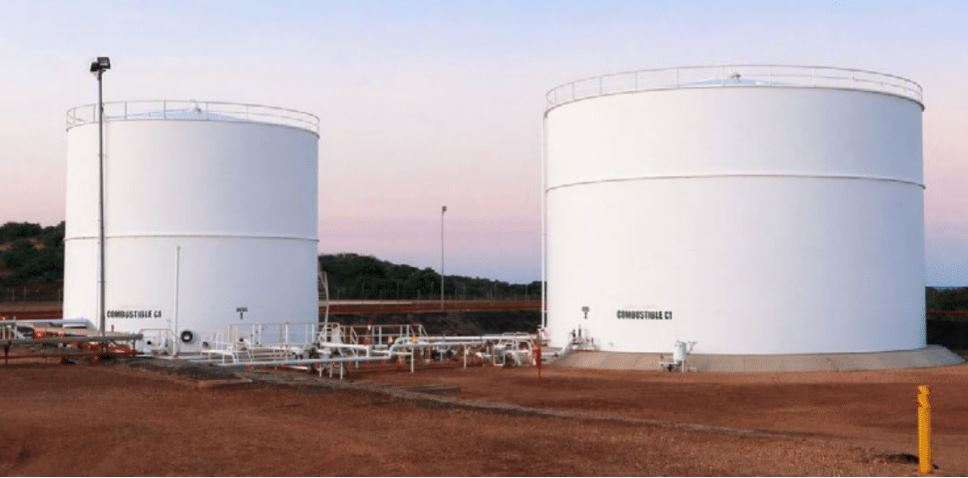
Australian mining companies are forecast to spend more than $13b on maintenance this financial year.*
With costs continuing to rise, operators are under increasing pressure to find savings without compromising safety, reliability or production.
One area that is attracting renewed attentionis fuel and lubricant storage infrastructure.
Storage tanks rarely feature in discussions about productivity when they’re doing their job, but when a problem surfaces unexpectedly, the consequences can be significant. Unplanned shutdowns, costly repairs and premature replacement can quickly turn a routine maintenance issue into a major operational expense and downtime.
That’s why more mining companies are taking a closer look at their storage tank infrastructure and organising for detailed assessments to verify tank infrastructure integrity.
Knowing more, spending smarter
For many operators, maintenance decisions are driven by the age of a storage tank, regulatory inspection requirements or emerging issues rather than a detailed understanding of the asset and related infrastructure itself.Construction methods, operating conditions,stored product, previous maintenance or repairs and environmental factors can all influence the damage mechanisms of a storage tank over time. Understanding damage mechanisms and how they affect a storage tank allows operators to focus investment where it’s required and avoid unnecessary work.
For Michael Stanic, Senior Integrity Engineer for Viva Energy’s Hydrocarbon Solutions Business, the starting point is understanding that not all tanks are the same.
“The age of a tank tells you only part of the story,” he said.
“Condition assessments require credible inspection data and a deep understanding of failure mechanisms.”
Looking beyond age and inspection intervals
Historically, the internal storage tank inspection program is time-based and it’s a system that is widely used throughout the industry. An effective storage tank internal inspection program can be established using a risk-based inspection (RBI) procedure. This is an assessment of the likelihood and the consequence of all credible degradation mechanisms.
Two tanks built in the same year can have vastly different deterioration rates depending on operating conditions, maintenance history, product type and environmental exposure. As a result, understanding the condition of each asset has become more valuable than relying solely on an asset’s age.
The Viva Energy Hydrocarbon Solutionsteam offers above-ground storage tank inspections conducted in accordance with the requirement of API 653, the internationally recognised standard for the inspection, repair and alteration of storage tanks. In Australia, where there is no dedicated tank inspection standard, many operators use API 653 as a basis for tank inspection and integrity management.
According to Mr. Stanic, a modern tank inspection involves far more than checking for corrosion.
“An in-depth review of each storage tank is required to plan for future maintenance and repairs, fitness-for-service assessments, corrosion rate and remaining-life calculations and ultimately into the risk-based inspection program,” he said.
“Using a risk-based internal inspection program, a business extends a storage tank service interval and at the same time can reduce or eliminate unnecessary downtime and costs.”
In many cases, operators may achieve significant savings by avoiding unnecessary outages altogether.
Connecting inspection data to better decisions
A common challenge for mining operatorsis turning inspection findings into practical actions.
One contractor may perform inspections, another may manage repairs, while others provide compliance support, maintenance services or equipment supply. While each provider may perform their role effectively, asset information can become fragmented, making strategic decision-making more difficult.
Increasingly, mining companies are looking for a more integrated approach.
By working with a single partner that understands the asset across its entire lifecycle, from inspection and maintenance planning through to remediation and compliance, operators gain clearer visibility of asset health and a more coordinated strategy for managing risk.
The benefit isn’t simply fewer contractors. A more integrated approach can help operators make maintenance dollars work harder by providing clearer asset insights, improving decisions, strengthening accountability and supporting a stronger connection between inspection findings and long-term asset performance. That’s why many operators are seeking a trusted partner that can integrate inspection data, engineering expertise and maintenance planning into a single, coordinated approach. For many mining businesses, Viva Energy Hydrocarbon Solutions is helping fill that role.
Experience matters in the field
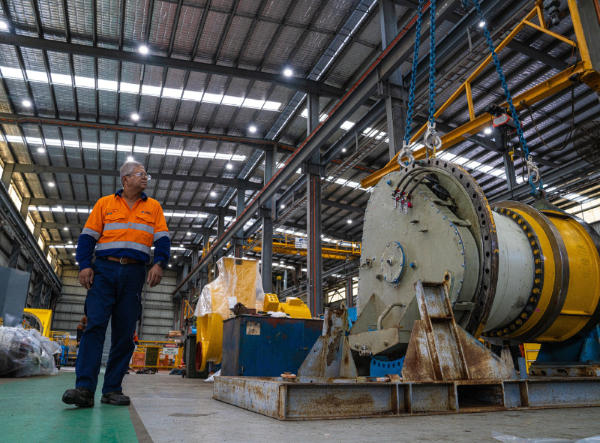
Hydrocarbon tank integrity is not just about engineering reports and inspection data. It’s about applying technical expertise in a way that works within the reality of an operating mine site.
That requires an understanding of maintenance schedules, shutdown requirements, production pressures and the practicalchallenges site teams manage every day.
For a large WA mining customer, Viva Energy Hydrocarbon Solutions has supported hydrocarbon tank programs through services including risk-based inspections, fitness-for-service assessments and major tank-turnaround inspections.
A key benefit of the relationship has been the ability to tailor inspection programs and maintenance timelines to operational requirements while ensuring compliance obligations are met.
It’s a model that reflects what many mining operators are seeking today: not simply technical expertise, but a trusted partner capable of translating asset integrity data into practical business outcomes.
Making maintenance dollars work harder
With growing pressure to improve reliability, control costs and maximise return on capital, mining operators need more than compliance inspections. They need trusted insights that support smarter maintenance and investment decisions.
Through a combination of asset integrityexpertise, engineering assessment and risk-based methodologies, Viva Energy Hydro-carbon Solutions helps customers unlockgreater value from critical fuel and lubricant infrastructure throughout its entire lifecycle.
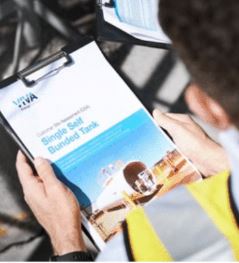
To learn more about how your business can benefit from a single, accountable partner for tank maintenance, self-bunded tanks and tank farm installation, contact Viva Energy Hydrocarbon Solutions today: solutions@vivaenergy.com.au | 1300 134 205. Or visit our stand R15 at IMARC this October.*
Reference: Oxford Economics Australia maintenance expenditure forecasts, as reported by Australian Mining and Mining.com.au