









Fortescue to develop green iron technology with Chinese steelmaker
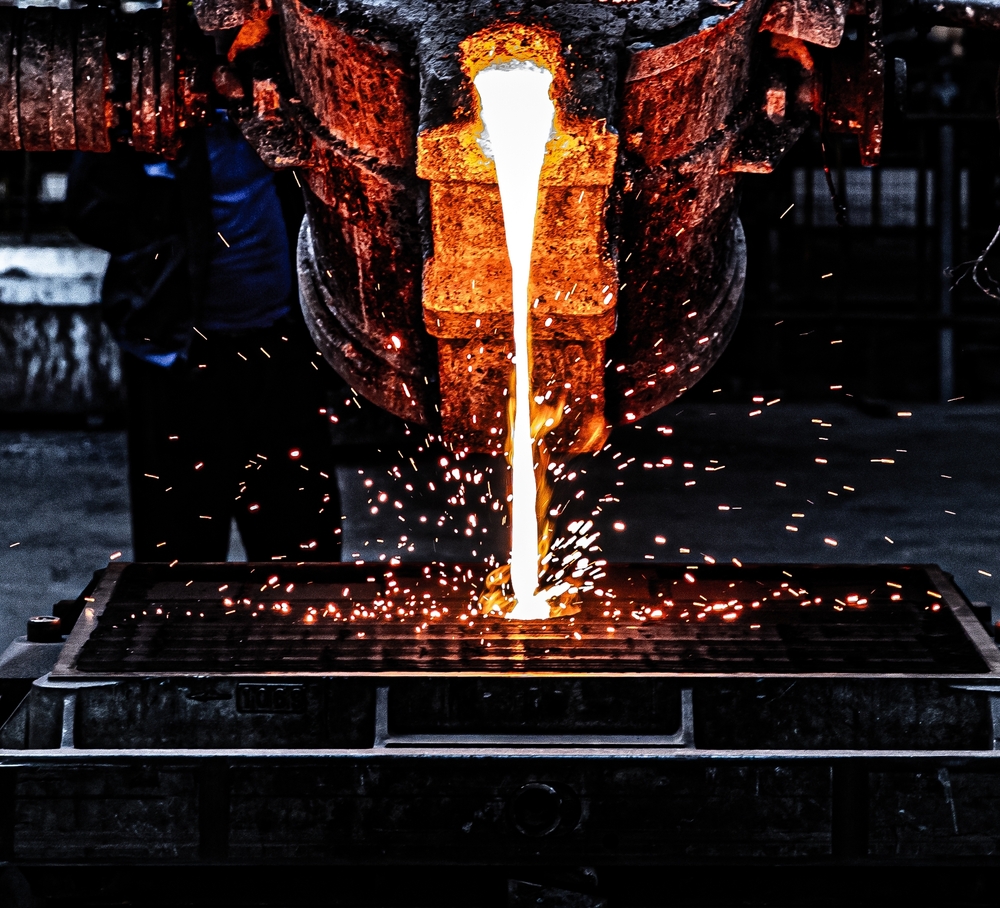
Fortescue (ASX: FMG) will collaborate with Taiyuan Iron and Steel Group (TISCO), a subsidiary of China Baowu, to trial an emerging green ironmaking technology.
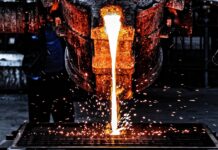
The companies have signed a technology development agreement to collaborate on the design, construction and operation of a pilot industrial test line — capable of producing up to 5000tpa of molten iron — trialling of hydrogen-based plasma-enhanced iron and steel metallurgy technology that may be compatible with Pilbara iron ores.
The technology has the potential to create a more compact, energy-efficient and hydrogen-enabled ironmaking process, removing the need for sintering, pelletising and coking.
Fortescue growth and energy chief executive Gus Pichot says hydrogen-based plasma technology shows real promise.
“We want to see how it can support green ironmaking using Fortescue Pilbara ores, and whether it can run reliably in continuous production,” he said.
“TISCO brings a huge amount of experience and working together gives us a powerful platform to trial emerging technologies. It’s another way we’re backing innovation that could reshape how green iron is made.”
According to the Institute for Energy Economics and Financial Analysis (IEEFA) the development of green ironmaking projects across Australia is progressing slowly, well below the pace needed for a nation aiming to lead the emerging global green iron market.
There are promising prospective green iron projects across Australia which could open major economic opportunities for regions like the Pilbara and Central Queensland.
One such project is Fortescue’s $75m Christmas Creek project in the Pilbara which aims to demonstrate the production of high-purity green metal using renewable energy for hydrogen-based reduction and smelting technologies.
Another iron ore major, Rio Tinto (ASX: RIO), recently signed an agreement to invest more than $35m to support the construction of Calix’s Zero Emissions Steel Technology (ZESTY) demonstration plant in WA.
The Zesty process is compatible with lower grade iron ore, abundant in the Pilbara, and uses electric heating and hydrogen reduction to produce reduced-emissions iron.
The IEEFA found that despite a growing pipeline of projects, most remain in the early stages of scoping or pre-feasibility studies, with smaller pilot-scale facilities advancing more rapidly than commercial-scale ventures, often based on novel technologies.
Earlier this year, the Federal Government announced a $1b green iron investment fund to aid in the setup of new facilities and supply chains top facilitate domestic green iron manufacturing.